
When a fleet vehicle gets into an accident, the clock starts ticking-not just for repairs, but for claims, recovery, and minimizing downtime. Many fleet managers assume insurance will handle everything, but that’s a dangerous assumption. The difference between a smooth resolution and a months-long headache comes down to one thing: how well you manage the accident from the first second it happens.
What Happens in the First 10 Minutes After an Accident?
It’s not about who’s at fault. It’s about what you document. If a driver doesn’t take photos of the damage from four angles, doesn’t get the other driver’s license number, or skips calling the police when required, the entire claims process gets stuck before it even begins.Every fleet needs a clear, written protocol for drivers to follow right after an accident. No guesswork. No relying on memory. The steps are simple:
- Check for injuries. Call 911 if anyone is hurt.
- Move vehicles out of traffic if safe. If not, turn on hazard lights and set up cones or flares.
- Call the police-even for minor fender benders. A police report is often required by insurers.
- Take at least six photos: front, back, both sides, damage close-ups, and the accident scene with street signs or landmarks.
- Collect the other driver’s name, phone, insurance info, license plate, and vehicle make/model.
- Get names and numbers of any witnesses.
- Record the time, location, weather, and road conditions.
- Write down what happened in your own words before you forget.
These aren’t suggestions. They’re your insurance claim’s foundation. Missing even one photo or a witness contact can give the other side’s insurer room to deny liability. One fleet in Ohio lost $18,000 in recovery because their driver didn’t photograph the skid marks-evidence that proved the other driver ran a red light.
How Claims Get Processed-And Why Timing Matters
Once the scene is secured, the next step is calling your insurer. Don’t wait until the next day. Call within the hour. The sooner you notify them, the faster they can start the investigation and assign a claims adjuster.Your insurer doesn’t pay you upfront and say, “Good luck.” They pay under the principle of “pay first, recover later.” That means they cover repairs and rental costs immediately so your fleet keeps running. But they’re not giving away money-they’re building a case to get it back from the at-fault party.
To make that happen, you need to send them a complete package:
- Photos of all damage (front, rear, sides, undercarriage if applicable)
- Police report number and copy
- Driver’s statement and logbook entry
- Dashcam footage (if available)
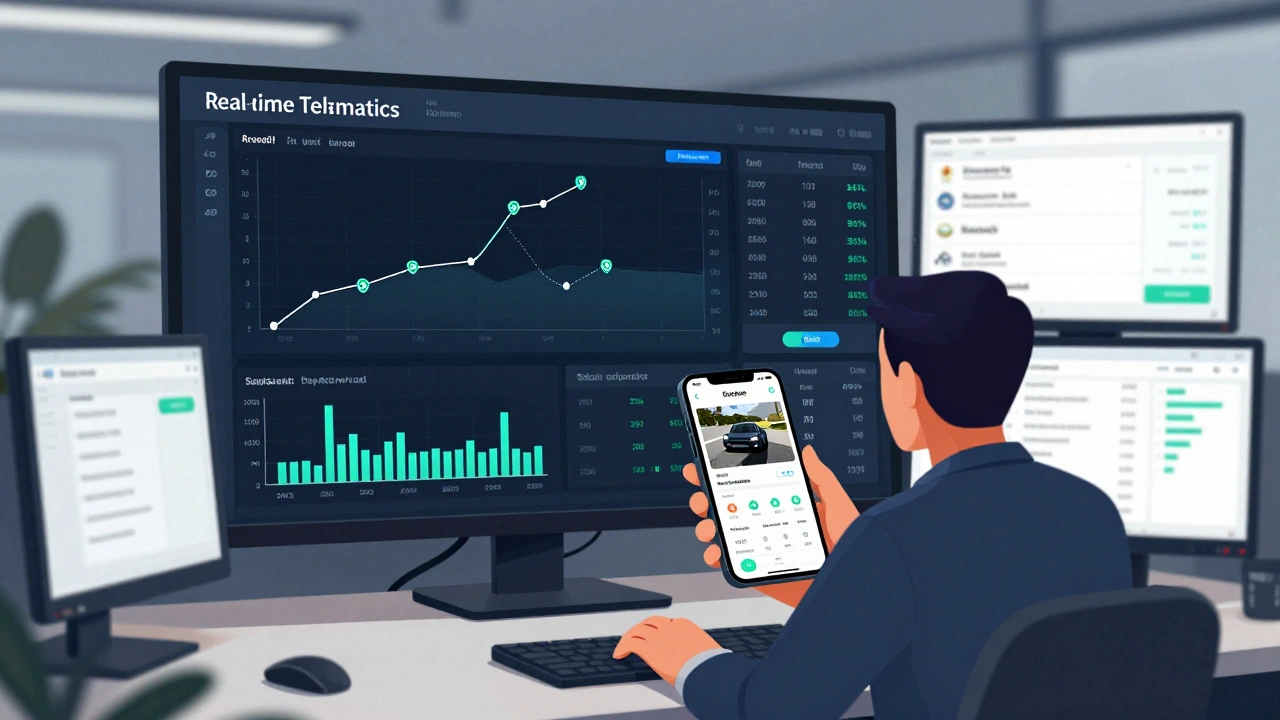
- Telematics data-speed, braking, location, and time of impact
- Witness statements (written or recorded)
Missing any of this? Your claim slows down. Insurance companies have systems that flag incomplete submissions. Delays mean longer downtime for your trucks, which means lost revenue. One fleet manager told us their average repair delay dropped from 14 days to 5 days after they started requiring drivers to upload everything via a mobile app right at the scene.
Subrogation: How You Get Your Money Back
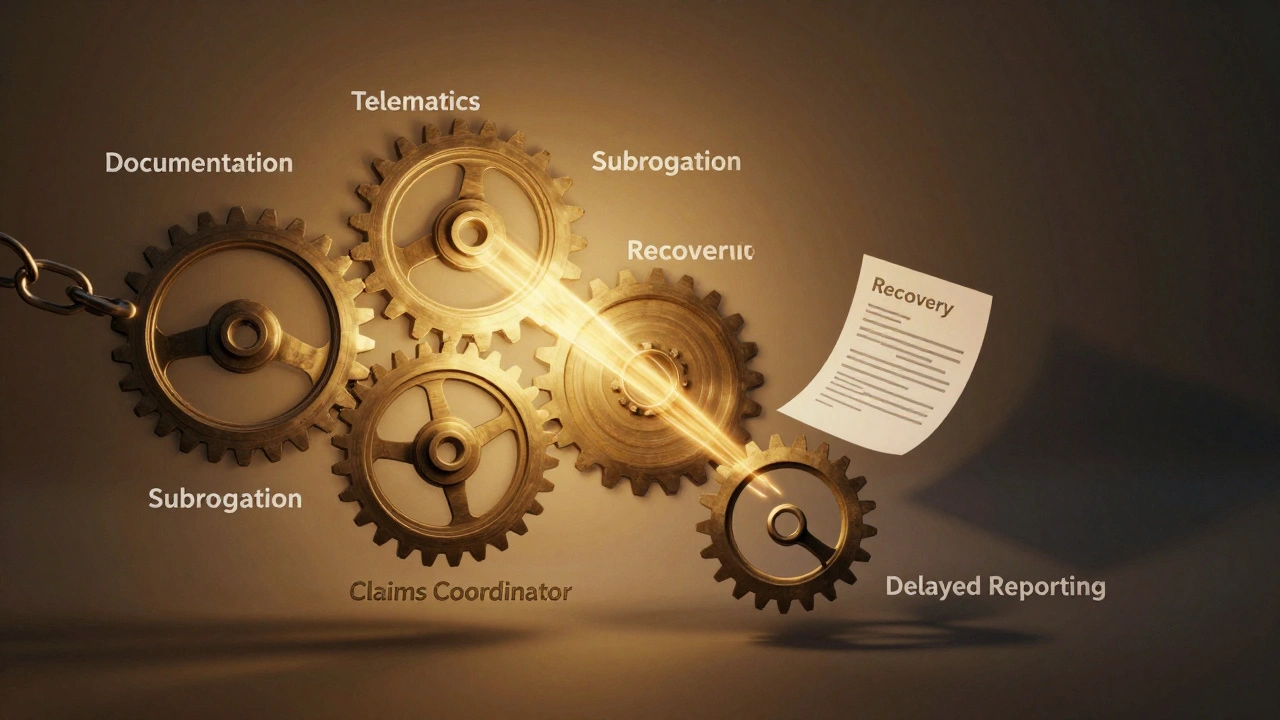
This is where most fleet managers get lost. Subrogation isn’t a buzzword-it’s your financial recovery engine. After your insurer pays for repairs, they file a claim against the at-fault driver’s insurance to get reimbursed. But here’s the catch: the quality of your documentation decides whether they recover 100% or 30%.The process has five clear steps:
- Claim payment: Your insurer pays for repairs and rental costs.
- Subrogation demand: They send all evidence to the at-fault party’s insurer.
- Negotiation: Both insurers review evidence and argue liability.
- Resolution: If they agree, payment is made. If not, they move to mediation or arbitration.
- Litigation (last resort): If all else fails, it goes to court.
Recovery isn’t just about the repair bill. It includes:
- Your deductible
- Rental vehicle costs
- Lost revenue from downtime
- Administrative fees
- Medical costs if there were injuries
One fleet in Texas recovered $217,000 in subrogation claims in 2025-not because they had good insurance, but because they had detailed telematics data showing exactly when and how the collision happened. That data made their case undeniable.
Your Role as Fleet Manager: Don’t Wait for the Insurance Company
You’re not just a customer-you’re a partner in the claims process. The best fleet managers don’t sit back. They actively manage every step:- Assign a claims coordinator: One person tracks every incident, follows up with insurers, and keeps records. No more lost emails or forgotten calls.
- Track every claim: Use a simple spreadsheet or software to log submission dates, adjuster names, and settlement status.
- Don’t admit fault: Even saying “I’m sorry” can be used against you. Stick to facts: “The light was red,” not “I think I didn’t stop.”
- Keep maintenance logs: If the other side claims your brakes failed, your service records prove they didn’t.
- Verify insurance details: Make sure your drivers have the current claims number and contact info saved on their phones. Outdated info delays reporting.
One fleet in Georgia cut their claims processing time by 40% after they hired a dedicated claims coordinator. That person became the bridge between drivers, insurers, and repair shops. No more confusion. No more waiting.
Technology That Actually Moves the Needle
You don’t need a fancy ERP system. You need tools that solve real problems:- Dashcams: 72% of claims where dashcam footage was available were resolved in favor of the fleet. Footage stops false claims before they start.
- Telematics: Data on speed, acceleration, and braking can prove whether a driver was speeding, braking late, or hit from behind.
- Fleet management software: Platforms like Fleetio or Geotab let drivers upload photos, notes, and videos directly from their phones. All data auto-saves to a digital file linked to the VIN.
- Automated notifications: When a claim is filed, the system alerts the coordinator, the repair shop, and the driver-all at once.
A fleet of 150 trucks in California saved $380,000 in 2025 by using automated claims tracking. They reduced duplicate reporting, cut communication gaps, and recovered 92% of subrogation claims-up from 61% the year before.
Prevention Is the Best Claim
The cheapest repair is the one that never happens. Prevention isn’t optional-it’s the core of smart fleet management.- Driver training: Conduct quarterly safety briefings. Cover defensive driving, accident response, and how to document incidents. Keep attendance records. If you’re audited, you need proof.
- Vehicle inspections: Weekly checks on brakes, tires, lights, and mirrors prevent mechanical failures that lead to accidents.
- Policy enforcement: No phone use while driving. No speeding. No ignoring maintenance. Make consequences clear.
- Use data: If telematics show one driver has 3x more hard brakes than others, talk to them. Don’t wait for an accident.
One fleet reduced accidents by 58% in 18 months after they started using telematics to identify risky behavior and gave drivers personalized coaching. That’s not just safer-it’s cheaper.
What If the Other Driver Has No Insurance?
It happens more than you think. In 2025, 1 in 7 drivers in the U.S. were uninsured. If you’re hit by one, your insurer’s uninsured motorist coverage kicks in-but only if you have it.Check your policy. If you don’t have this coverage, you’re stuck paying for repairs yourself. Some fleets choose to pursue recovery directly through small claims court. But that’s time-consuming. Most hire a subrogation recovery specialist who knows how to navigate the legal system without dragging your team into it.
Don’t assume your insurer will handle it. Ask them: “Do we have uninsured motorist coverage? What’s the limit?” If the answer is “I’m not sure,” it’s time to switch providers.
Final Thought: It’s a System, Not a Reaction
Accident management isn’t about reacting when something goes wrong. It’s about building a system that prevents chaos before it starts. The best fleets don’t have fewer accidents-they have better processes. They know exactly what to do, who to call, and what data to collect. They turn accidents from disasters into manageable events.Start today. Update your driver handbook. Train your team. Install dashcams. Assign a coordinator. Track your claims. The next accident won’t wait for you to get ready. But if you’re prepared, it won’t break you either.
What’s the first thing a driver should do after a fleet accident?
The first priority is safety: check for injuries, call emergency services if needed, and move vehicles out of traffic if possible. Then, document everything-take photos of all damage from multiple angles, get the other driver’s information, collect witness details, and call the police. Never assume a minor incident doesn’t need reporting.
How long do we have to report a fleet accident to our insurer?
Most policies require reporting within 24 hours. Delaying beyond that can lead to claim denial or reduced payouts. Even if the damage seems minor, report it immediately. Insurance companies start their investigation clock the moment they’re notified.
Can we choose our own repair shop, or does the insurer decide?
You can choose your own shop, but the insurer may only guarantee repairs done at their approved network. If you pick your own, you might have to cover any cost difference. Always confirm coverage limits before authorizing repairs. Keep a written estimate from your shop to avoid disputes later.
What’s the difference between subrogation and a regular insurance claim?
A regular claim is when your insurer pays you for damages. Subrogation is when your insurer goes after the at-fault party’s insurance to get that money back. Subrogation is how you recover your deductible, rental costs, and lost revenue. It’s not automatic-it depends on how strong your documentation is.
Do we need dashcams and telematics to manage claims effectively?
You don’t absolutely need them, but they’re the difference between winning and losing a claim. Dashcam footage proves fault. Telematics data shows speed, braking, and location-critical when liability is disputed. Fleets without this data lose subrogation claims 3x more often than those with it.
What happens if we don’t have uninsured motorist coverage?
If you’re hit by an uninsured driver and you don’t have this coverage, you’ll likely have to pay for repairs out of pocket. Some fleets pursue small claims court, but it’s time-consuming and often not worth the cost. The best move is to review your policy annually and ensure you have sufficient uninsured motorist coverage.