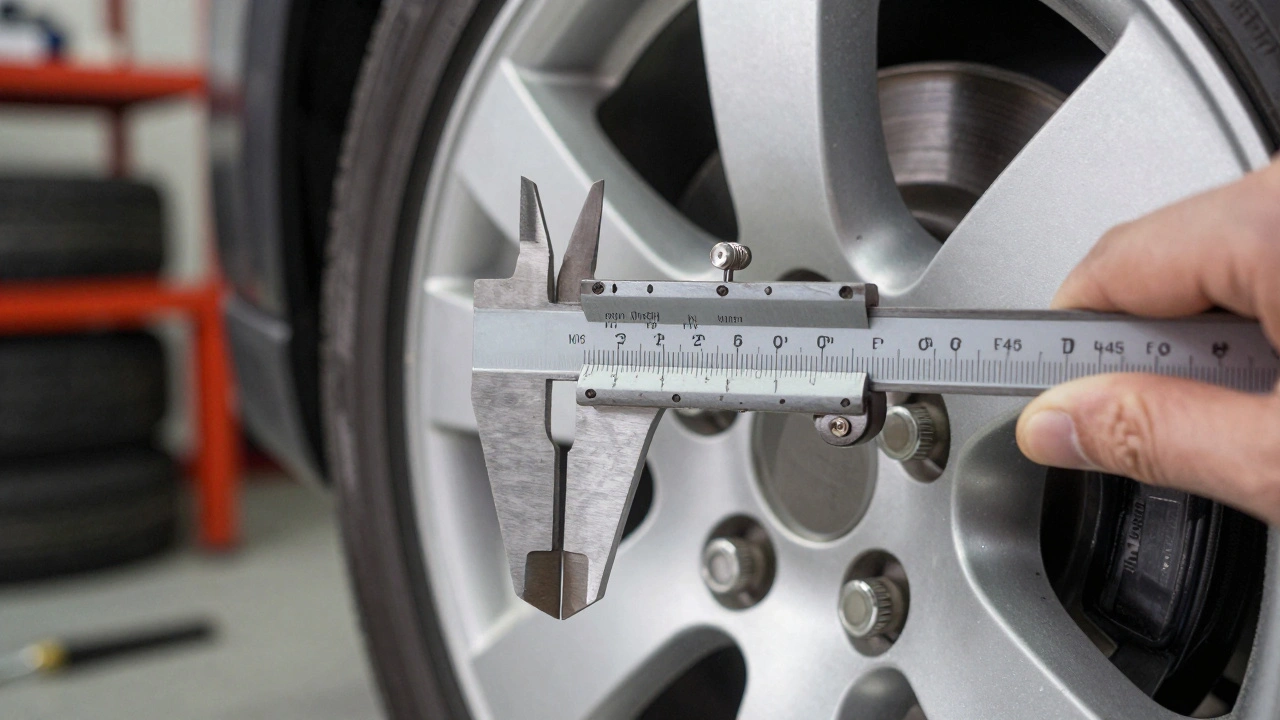
Choosing aftermarket wheels isn’t just about making your car look cooler. Get it wrong, and you could end up with rubbing tires, damaged brakes, or even a wheel that comes loose while driving. The truth is, aftermarket wheels can improve handling, reduce weight, and boost performance-but only if they’re chosen and installed correctly. This guide cuts through the noise and breaks down exactly what you need to know about fitment, offset, and tire size so you don’t waste money or risk safety.
What Is Wheel Fitment, Really?
Fitment isn’t a buzzword. It’s the exact match between your car’s hub, lug pattern, and suspension clearance, and the wheel you’re trying to put on it. If any part of that doesn’t line up, you’ve got problems. The five key measurements you need to check are:- Bolt pattern (PCD) - The number of lug holes and the diameter of the circle they form. For example, a 5x120 means five holes spaced evenly around a 120mm circle.
- Wheel diameter - Measured in inches, from one bead seat to the other. Common sizes range from 17 to 22 inches.
- Wheel width - The distance between the two inner bead seats. A 9-inch wide wheel holds a wider tire than an 8-inch one.
- Offset - How far the wheel’s mounting surface sits in relation to its centerline. This determines whether the wheel sticks out or tucks in.
- Hub bore - The hole in the center of the wheel that fits over your car’s hub. If it’s too big, the wheel wobbles until the lugs tighten.
You can find your factory wheel specs stamped on the back of the original wheel, usually in a format like 18x8.5 ET45. That means 18-inch diameter, 8.5-inch width, and 45mm offset. If you can’t read the stamp, search your car’s year, make, and model + "wheel specs" online. Sites like Wheel-Size.com list OEM data for almost every vehicle on the road.
Offset: The Hidden Number That Changes Everything
Offset is the most misunderstood part of wheel fitment. It’s measured in millimeters and tells you how far the wheel’s mounting surface is from the centerline of the wheel. There are three types:- Positive offset - The mounting surface is closer to the front face of the wheel. Most stock wheels have this. It tucks the wheel inward, giving you more fender clearance.
- Negative offset - The mounting surface is closer to the back of the wheel. This pushes the wheel outward, giving that aggressive "flush" look. But too much negative offset can rub suspension parts or strain wheel bearings.
- Zero offset - The mounting surface is exactly at the centerline. Rare on street cars, common in off-road or racing wheels.
Changing offset affects more than just looks. A wheel with too little offset (too negative) can hit your strut or brake caliper when turning. Too much offset (too positive) can cause the wheel to rub against the inner fender liner or suspension components during full compression. The sweet spot? Stay within ±5mm of your factory offset unless you’re modifying suspension or fenders.
Tire Size: Don’t Just Match the Wheel
A wheel doesn’t work alone. Your tire size has to match the wheel width and diameter, and also fit inside your fenders. The tire’s aspect ratio (the middle number in 245/45R18) tells you how tall the sidewall is. Lower numbers mean shorter sidewalls, which give sharper steering but a harsher ride.Here’s a simple rule: For every 0.5-inch increase in wheel width, increase the tire width by 10mm. So if your stock tire is 225/45R18 on an 8-inch wheel, going to a 9-inch wheel means switching to a 245/40R18 or 245/45R18. Use a tire size calculator like willtheyfit.com to visualize how the tire will stretch or bulge over the wheel. Too wide a tire on a narrow wheel? It’ll balloon outward and wear unevenly. Too narrow? It won’t support the wheel properly and can come off under load.
Also, never go more than ±3% in overall tire diameter. Going too tall can mess with speedometer accuracy, gear ratios, and ABS. Going too short can cause the tire to bottom out on potholes or hit the fender when turning.
Hub Bore and Hub-Centric Rings
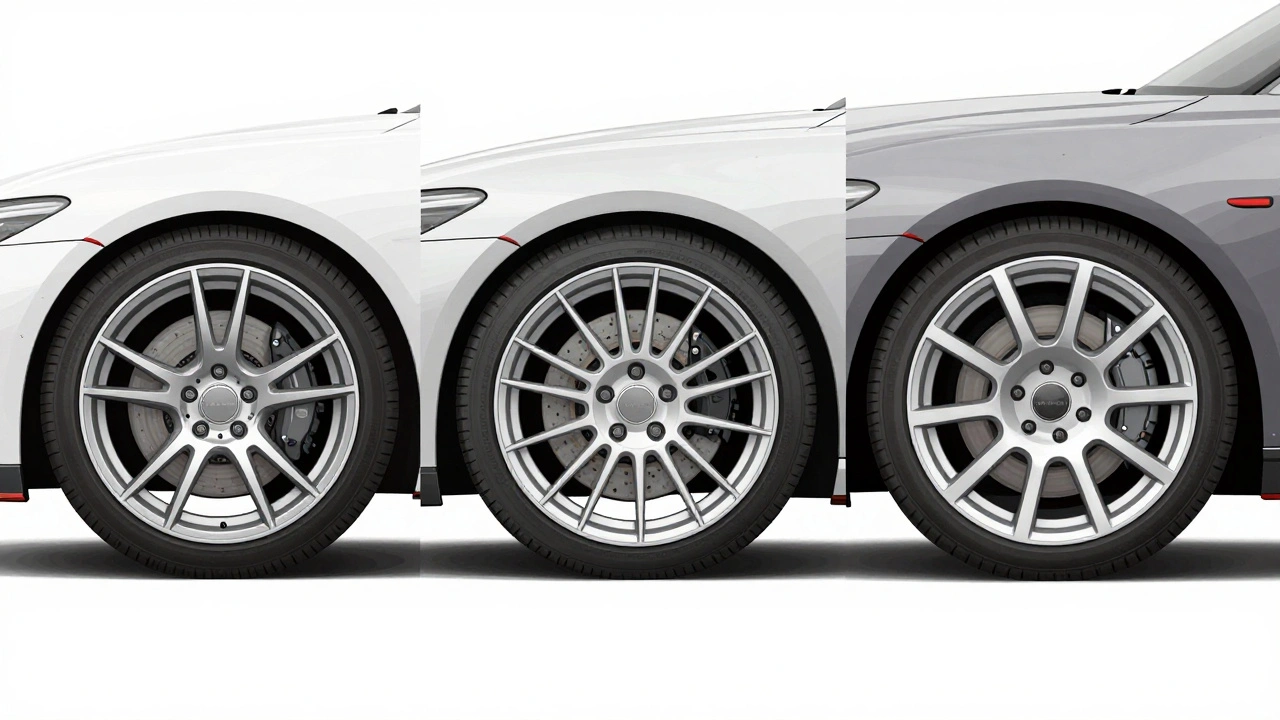
Most aftermarket wheels have a larger hub bore than your car’s hub. That’s normal. The wheel doesn’t rely on the hub to hold its weight-it’s held by the lug nuts. But if there’s too much gap between the wheel’s center hole and your hub, the wheel wobbles slightly before the lugs tighten. That wobble can cause vibrations, uneven wear, and even cracked lug studs over time.Solution? Hub-centric rings. These are small plastic or aluminum spacers that fit snugly between the wheel’s hub bore and your car’s hub. Aluminum rings last longer and handle heat better than plastic. Make sure the inner diameter matches your hub (usually 54mm-73mm on most cars) and the outer diameter matches the wheel’s bore (often 70mm-80mm). You can buy these for under $10 online. Skip them, and you’re gambling with ride quality.
Lug Nuts: The Small Part That Can Break Everything
Not all lug nuts are created equal. Your new wheels likely need a different style than your factory ones. The three main seat types are:- Conical (60-degree taper) - Most common. Fits most aftermarket wheels. Has a pointed tip that centers itself.
- Ball seat (rounded) - Used on many European cars. Looks like a small ball. If you use a conical nut here, it won’t seat right and can loosen.
- Flat seat (mag style) - Has a flat washer under the head. Common on older or heavy-duty wheels.
Check the wheel’s lug hole shape. If it’s tapered, use conical. If it’s curved, use ball seat. Using the wrong one can cause the wheel to wobble, leading to vibration or worse. Always torque them to spec-usually between 80-100 lb-ft, depending on your car. Tighten in a star pattern, not clockwise. And don’t forget to re-torque after the first 50-100 miles. Wheels settle. Lug nuts loosen. This step saves your life.
Test Fit Before You Buy
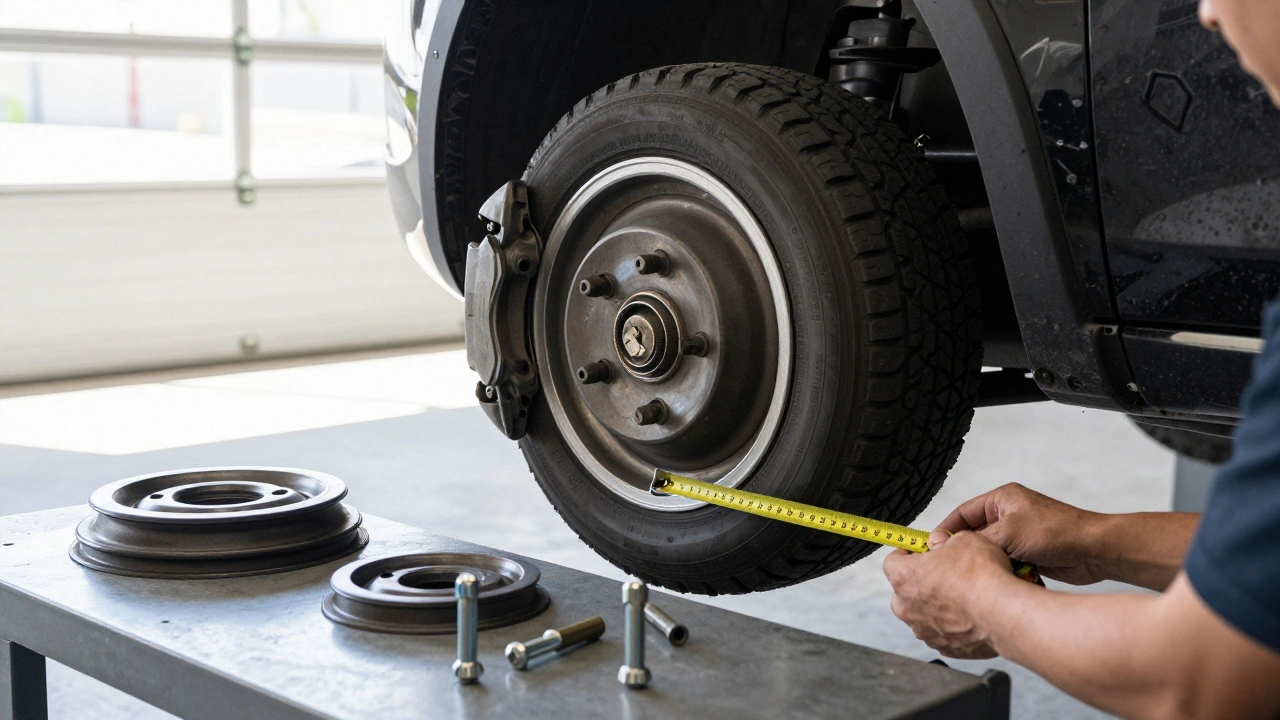
Never skip this. Even if the specs say it fits, real life doesn’t always match the numbers. Take your new wheels (with tires mounted) to a shop or do it yourself. Bolt them on without tightening fully. Spin each one. Look for:- Clearance between brake caliper and inner wheel lip
- Space between the outer wheel and fender at full steering lock
- Clearance with suspension components when the wheel is compressed
Use a ruler or tape measure. You need at least 5mm of clearance everywhere. If you’re even 1mm short, you’ll get rubbing. That leads to tire damage, noise, and eventually a blowout. Some people buy wheels, mount them, drive a few miles, then realize they’re rubbing. By then, they’ve ruined a tire, warped a rim, or damaged their suspension. Don’t be that person.
Tools and Resources That Actually Help
You don’t need to guess. There are free, reliable tools to get this right:- willtheyfit.com - Enter your car, then pick wheel size, offset, and tire. It shows you side-by-side visuals of how the setup will look and whether it’ll rub.
- Wheel-Size.com - Pulls OEM specs for your exact model. Great for checking what your car came with.
- Custom Wheels Fit Guide on OnlineCarStereo.com - Filters wheels by your vehicle and shows only compatible options.
- YouTube tutorials - Search "[Your Car] aftermarket wheel fitment". Automotive Superstore’s 2025 guide is one of the clearest beginner videos out there.
These tools don’t just save time. They save thousands. A single wrong wheel can cost you $1,200 in returns, tire damage, and alignment repairs.
Final Checklist Before You Buy
Before you hand over your money, run through this:- Confirm bolt pattern matches your car exactly.
- Check offset is within ±5mm of stock.
- Match wheel width to tire width (10mm tire increase per 0.5-inch wheel width).
- Verify hub bore size and order hub-centric rings if needed.
- Choose the correct lug nut type (conical, ball, or flat).
- Test fit before final installation.
- Re-torque lugs after 50-100 miles.
Aftermarket wheels can transform your car. But they’re not a fashion accessory. They’re a mechanical component. Treat them like one. Get the specs right, and you’ll enjoy better handling, longer tire life, and peace of mind. Get it wrong, and you’re just one pothole away from disaster.
Can I use any wheel as long as the bolt pattern matches?
No. Even if the bolt pattern matches, the offset, hub bore, and wheel width must also fit your car’s suspension and fenders. A wheel with the wrong offset can rub the brake caliper or inner fender, and a hub bore that’s too large can cause vibrations. Always check all five fitment specs before buying.
What happens if I install wheels with too much negative offset?
Too much negative offset pushes the wheel outward, which can cause rubbing on the fender or suspension parts, especially when turning or going over bumps. It also puts extra stress on wheel bearings and ball joints, leading to premature wear. In extreme cases, it can make steering feel loose or unstable.
Do I need to change my tire size when I change wheels?
Not always, but you should. Tire size should match the wheel width for optimal performance and wear. Going from an 8-inch to a 9-inch wheel usually means switching from a 225mm tire to a 245mm tire. Also, keep overall tire diameter within ±3% of stock to avoid messing with speedometer readings or transmission shift points.
Why do I need hub-centric rings?
Hub-centric rings center the wheel on the hub before the lug nuts are tightened. Without them, the wheel can wobble slightly, leading to vibrations, uneven tire wear, and even damaged lug studs over time. They don’t carry weight-they just ensure perfect alignment during installation.
Can I use my factory lug nuts with aftermarket wheels?
Sometimes, but not always. Aftermarket wheels often have different lug seat designs (conical, ball, or flat). Using the wrong type can cause the wheel to not seat properly, leading to vibration or loosening. Always match the lug nut seat type to the wheel’s lug hole shape. If in doubt, buy new lug nuts designed for your new wheels.
Is it safe to install wheels without test fitting?
No. Even with perfect specs, real-world clearance can vary due to suspension wear, fender liners, or brake caliper size. Test fitting catches rubbing issues before you drive. Skipping this step risks tire damage, brake interference, or dangerous wheel movement. It takes 15 minutes and can save you hundreds-or more.