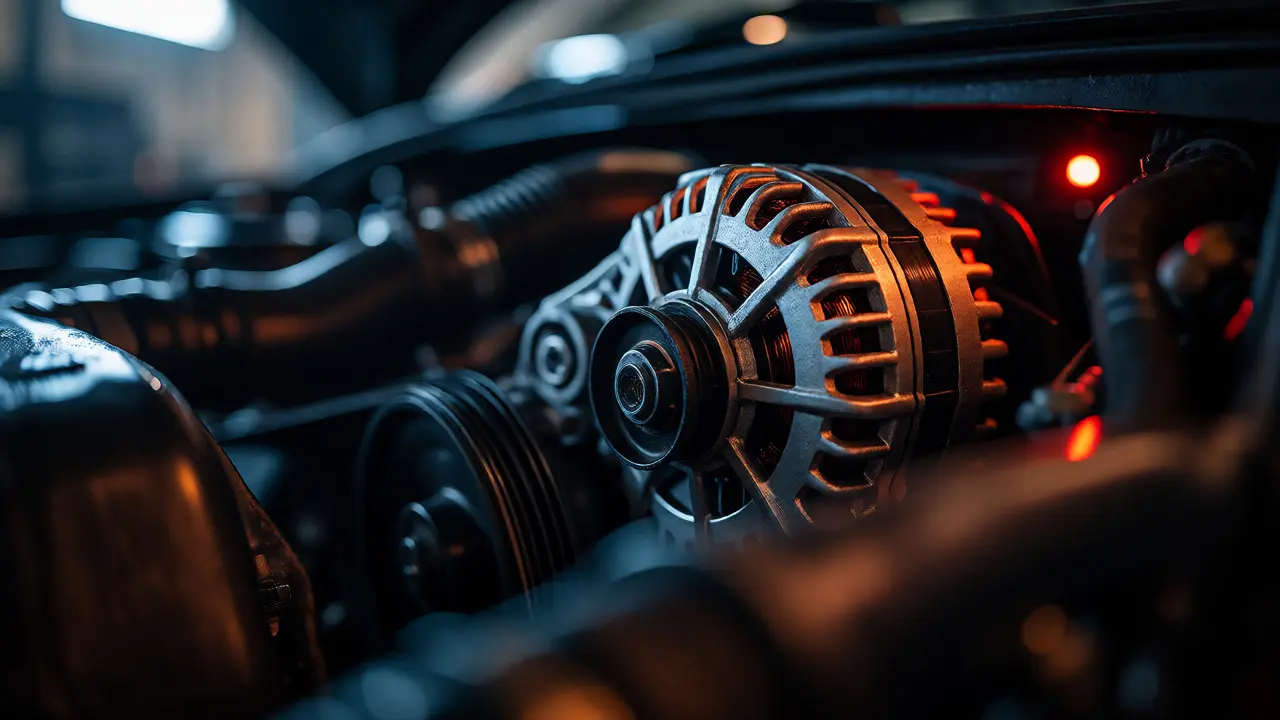
You turn the key, and the engine cranks but won’t catch. Or maybe you drive for an hour, park at the store, and when you come back, the headlights are dim and the radio cuts out. You replace the battery, only to have it die again two weeks later. If this sounds familiar, your alternator is likely working, but its internal diodes are failing. It’s a sneaky problem that mimics a bad battery or a faulty starter, leading many drivers to spend hundreds on parts they didn’t need.
Here’s the reality: modern cars rely on a delicate balance of electrical components. The alternator doesn’t just charge your battery; it powers everything from your ECU to your infotainment system while the engine runs. When the diodes inside fail, that power flow gets corrupted. This article breaks down exactly what happens during an alternator diode failure, how to spot it before you’re stranded, and why a simple multimeter test can save you from unnecessary repairs.
The Hidden Culprit Behind Your Dead Battery
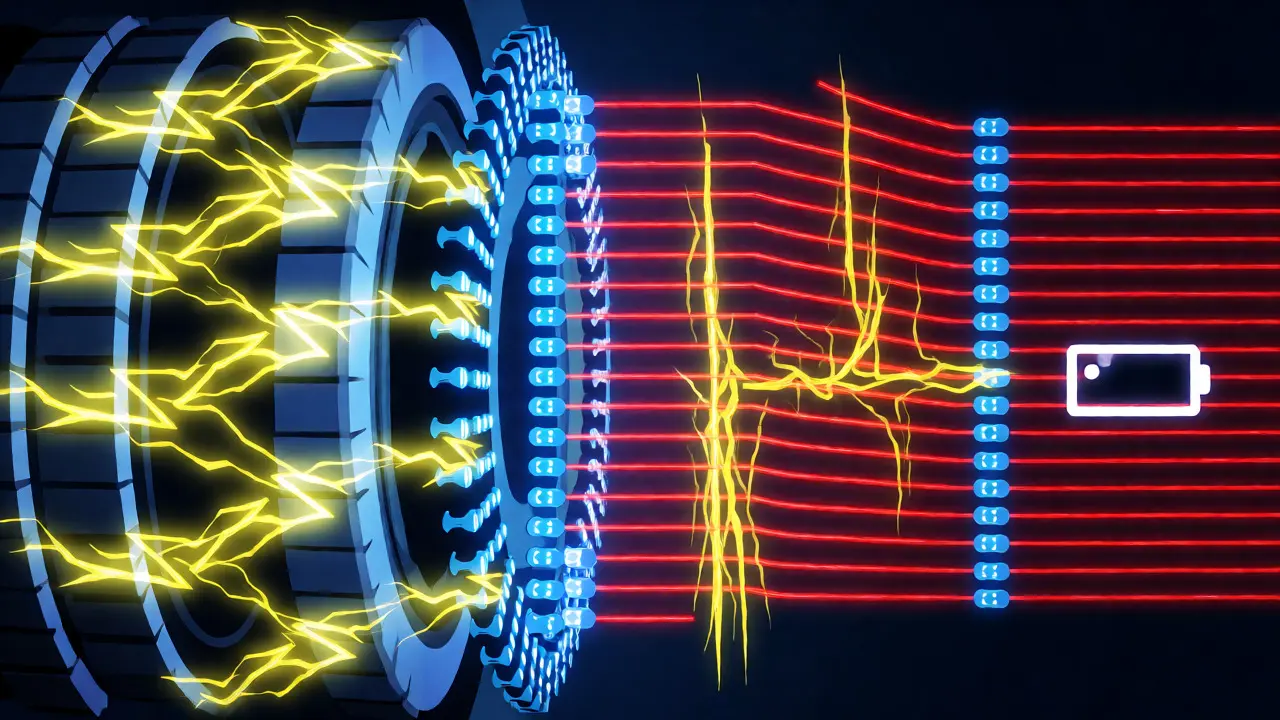
Most people think of the alternator as a single unit that either works or doesn’t. But it’s actually a complex assembly of copper windings, bearings, brushes, and a critical component called the rectifier bridge. This bridge contains six diodes-three positive and three negative-that convert the alternating current (AC) generated by the stator into direct current (DC). Your car’s electronics run exclusively on DC. If even one diode fails, the conversion process breaks down.
When a diode shorts out, it allows AC ripple to leak into your DC system. This isn’t just inefficient; it’s damaging. That ripple creates heat, which can fry sensitive electronic modules like the transmission control unit or the body control module. Worse, a shorted diode can cause the alternator to discharge the battery even when the engine is off. Yes, you read that right. A bad diode can act like a parasitic drain, pulling energy from your battery overnight, leaving you with a dead car in the morning despite a brand-new battery.
How Diodes Work and Why They Fail
To understand the failure, you need to know the job. Diodes are essentially one-way valves for electricity. They allow current to flow in one direction but block it in the other. In an alternator, the stator produces three-phase AC power. The rectifier uses these six diodes to chop that AC wave and push it all in one direction toward the battery and loads.
| Component | Function | Failure Symptom |
|---|---|---|
| Stator | Generates AC power via magnetic induction | No charge, low output voltage |
| Rotor | Creates rotating magnetic field | Intermittent charging, noise |
| Rectifier Bridge | Converts AC to DC using diodes | Battery drain, AC ripple, dim lights |
| Voltage Regulator | Controls output voltage level | Overcharging or undercharging |
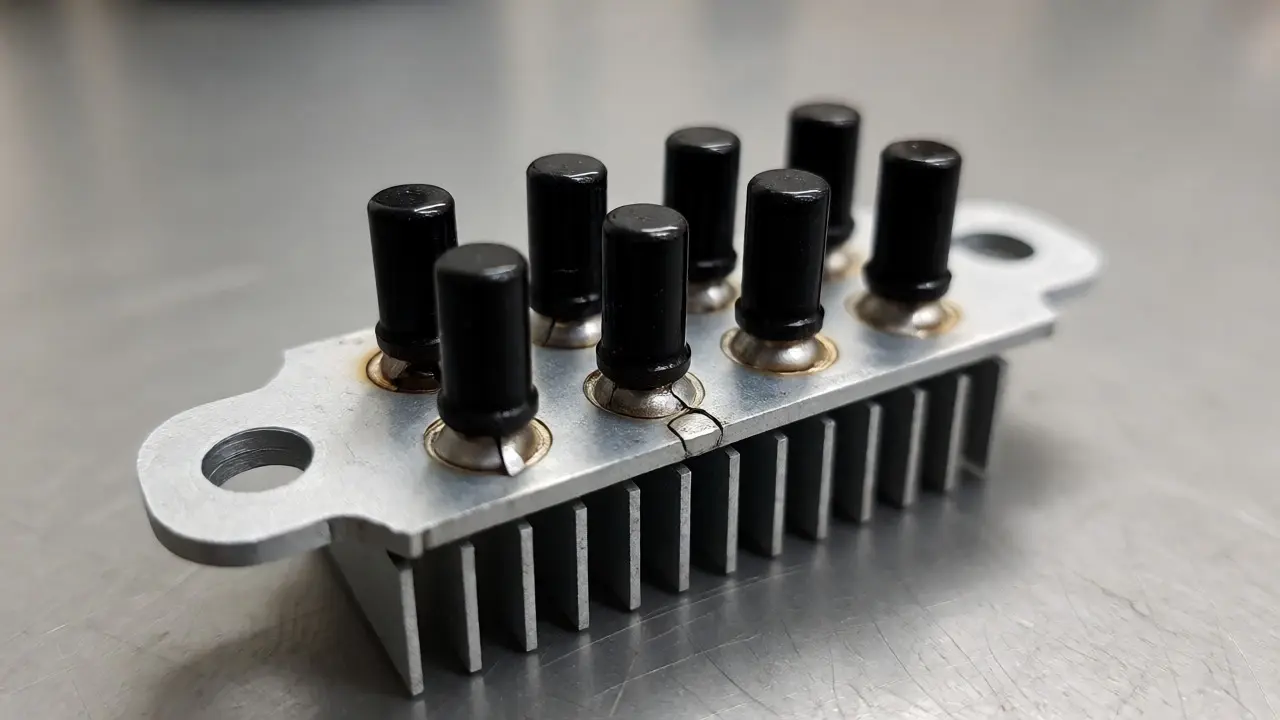
So why do they fail? Heat is the number one enemy. Alternators live in hot engine bays, often surrounded by turbochargers or exhaust manifolds. Over time, thermal cycling weakens the solder joints connecting the diodes to the heatsink. Once a joint cracks, resistance increases, generating more heat, which eventually burns out the diode. Another common cause is water intrusion. If you’ve ever driven through deep puddles or had a leaking intake manifold gasket drip coolant onto the alternator, moisture can corrode the diode connections. Short circuits from jump-starting errors can also blow a diode instantly.
Symptoms That Scream "Diode Problem"
Distinguishing a diode issue from a general alternator failure requires attention to detail. A completely dead alternator usually shows up as a battery warning light on the dashboard and a rapid drop in voltage. Diode failures are subtler. Here’s what to look for:
- Charging System Warning Light Flickering: Unlike a steady light indicating total failure, a flickering bulb suggests inconsistent voltage regulation caused by missing phases in the AC-to-DC conversion.
- Dimming Headlights at Idle: If your lights brighten when you rev the engine but dim at idle, the alternator might be struggling to maintain steady output due to rectification issues.
- Battery Drain Overnight: If your battery tests good but dies after sitting for 12-24 hours, suspect a reverse current leak through a shorted diode.
- Electrical Gremlins: Erratic behavior from windows, seats, or dash displays often points to AC ripple interfering with digital signals.
- Whining Noise: Sometimes, a high-pitched whine that changes pitch with RPM indicates loose diode leads vibrating against the housing.
I once worked on a 2018 Ford F-150 where the owner complained about "random resets" of the infotainment screen. He had already replaced the battery and checked the fuses. A quick scope test revealed significant AC ripple on the main power feed. The culprit was a cracked solder joint on the positive diode trio. Replacing the rectifier bridge cost $40 versus a $300 new alternator.
DIY Testing: How to Confirm Diode Failure
You don’t need expensive diagnostic tools to check for bad diodes. A standard digital multimeter set to diode mode or resistance mode will do the trick. However, safety first: disconnect the negative battery terminal before removing the alternator. While you can perform some tests with the alternator installed, removing it gives you accurate results without interference from the vehicle’s computer.
- Visual Inspection: Look for burnt marks, melted plastic, or corrosion around the diode plate. If the solder looks dull or cracked, that’s a red flag.
- Test Positive Diodes: Place the red probe on the B+ terminal (positive output) and the black probe on each of the three stator terminals. You should get a reading between 0.4V and 0.7V. Swap the probes (black on B+, red on stator). The meter should read OL (open loop/infinity). If you get continuity both ways, the diode is shorted.
- Test Negative Diodes: Place the black probe on the ground case (negative) and the red probe on each stator terminal. Again, expect 0.4V-0.7V forward bias. Reverse the probes for infinity. Continuity in both directions means a failed diode.
- Check for Ground Faults: Ensure there is no continuity between the B+ terminal and the case. Any reading here indicates a catastrophic short.
If any of these tests fail, the rectifier bridge needs replacement. Note that on many modern vehicles, the diodes are integrated into a sealed unit with the voltage regulator, meaning you’ll replace the whole rear assembly rather than individual diodes.
Repair vs. Replace: Making the Smart Choice
Should you rebuild the alternator or buy a new one? This depends on labor costs and part availability. For older trucks or classic cars, rebuilding is often cheaper. A local auto electrician can swap the diodes and brushes for $100-$150. However, for newer European or Japanese vehicles, the complexity of disassembly often makes a remanufactured or new unit more practical.
| Option | Average Cost (Parts + Labor) | Lifespan Expectancy | Best For |
|---|---|---|---|
| Rebuild (Local Shop) | $150 - $250 | 3-5 years | Classic cars, heavy-duty trucks |
| Remanufactured Unit | $200 - $350 | 3-4 years | Daily drivers, budget-conscious owners |
| New OEM Part | $400 - $800+ | 5-7 years | Leased vehicles, warranty concerns |
| DIY Rectifier Swap | $50 - $100 | Variable | Enthusiasts with tool access |
Keep in mind that labor rates vary wildly. In Portland, Oregon, independent shops might charge $100/hour, while dealerships hit $150+. If the alternator is hard to reach (like on some transverse V6 engines), the labor cost alone can exceed the price of a remanufactured unit. Always ask for a core exchange option if buying new, as this can save $50-$100.
Preventing Future Diode Failures
You can’t stop physics, but you can slow down degradation. First, keep your engine bay clean. Dirt and grease insulate the alternator, trapping heat. Use a degreaser carefully, avoiding direct spray into the vents. Second, check your belt tension. A slipping belt causes the alternator to work harder, generating excess heat. Third, avoid installing high-draw accessories like massive sound systems without upgrading the alternator’s capacity. If you add 200 watts of audio gear, ensure your stock alternator can handle the extra load.
Finally, pay attention to your battery health. A sulfated or internally shorted battery forces the alternator to work continuously at maximum output, overheating the diodes. Replace aging batteries proactively rather than waiting for them to leave you stranded. Regular maintenance checks every oil change can catch early signs of corrosion or loose connections before they become catastrophic failures.
Can I drive my car with a bad alternator diode?
Yes, but only for a short distance. If one diode fails, the alternator loses one-third of its output capacity. You may still generate enough power to run essential systems at highway speeds, but at idle, the battery will drain rapidly. Driving further risks damaging other electrical components due to voltage instability and could leave you stranded if the battery depletes completely.
Will a bad diode kill my new battery?
Absolutely. A shorted diode allows current to flow backward from the battery to the alternator when the engine is off, causing a parasitic drain. Additionally, the AC ripple produced by a failing rectifier can overcharge or undercharge the battery, reducing its lifespan significantly. Always test the charging system before replacing a battery.
Is it cheaper to replace diodes or the whole alternator?
Replacing just the diodes (or the rectifier bridge) is cheaper in parts ($20-$50) but requires skilled labor and specific tools. For most modern cars, buying a remanufactured alternator ($200-$300) is often more cost-effective when factoring in shop labor time. DIY enthusiasts may find swapping the rectifier worth the effort, but professional mechanics usually recommend full replacement for reliability.
What does AC ripple mean for my car?
AC ripple is unwanted alternating current mixed into the direct current output. It appears as jagged spikes on a voltage graph. High ripple (>0.5V) confuses computer-controlled modules, leading to erratic sensor readings, premature LED bulb burnout, and potential damage to the ECU or transmission controller. It is a definitive sign of rectifier failure.
Can jump-starting a car blow an alternator diode?
Yes. Connecting jumper cables incorrectly (reverse polarity) or starting the donor vehicle while connected can send a voltage spike through the system. This surge can instantly destroy the delicate semiconductor junctions in the diodes. Always connect cables correctly and start the donor car last to minimize risk.