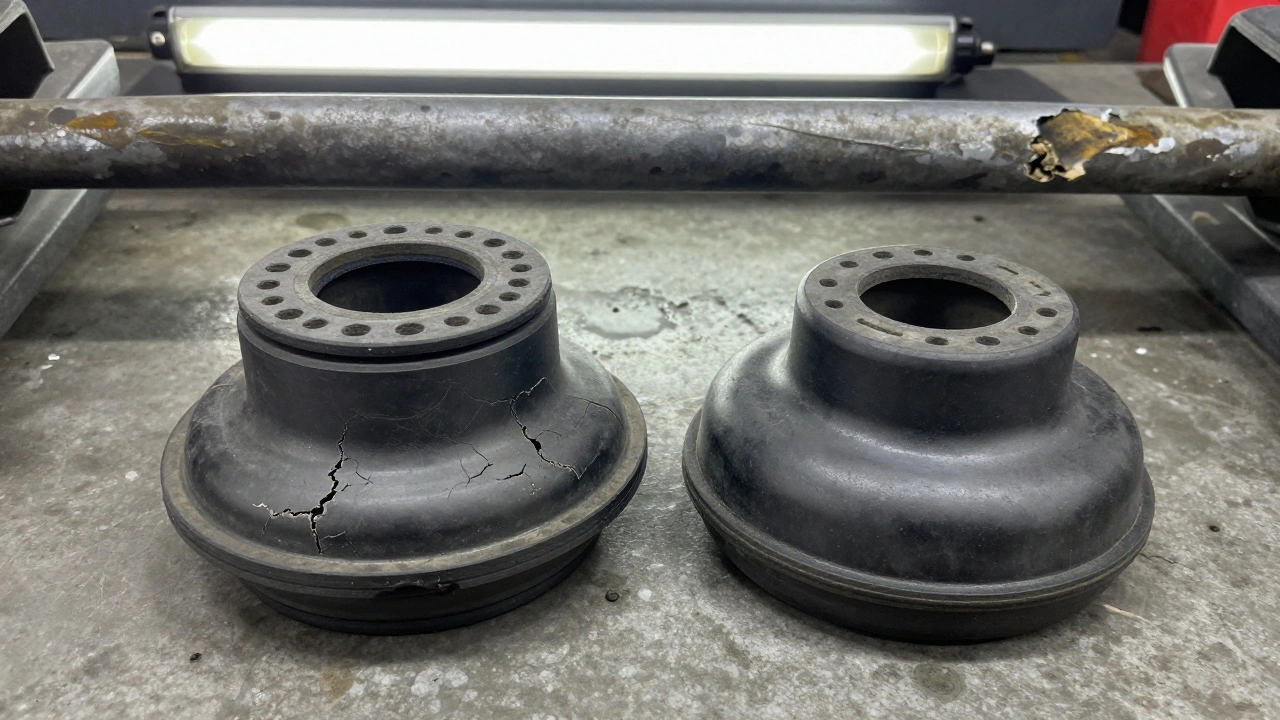
Ever hear a loud clunk when you hit a bump or go around a corner? That noise isn’t just annoying-it’s a sign your anti-roll bar bushings are worn out. These small parts don’t get much attention, but they play a huge role in keeping your ride quiet and stable. If you’ve noticed more road noise, loose handling, or that metallic knock coming from under the car, it’s time to understand what these bushings do-and how to fix them.
What Are Anti-Roll Bar Bushings?
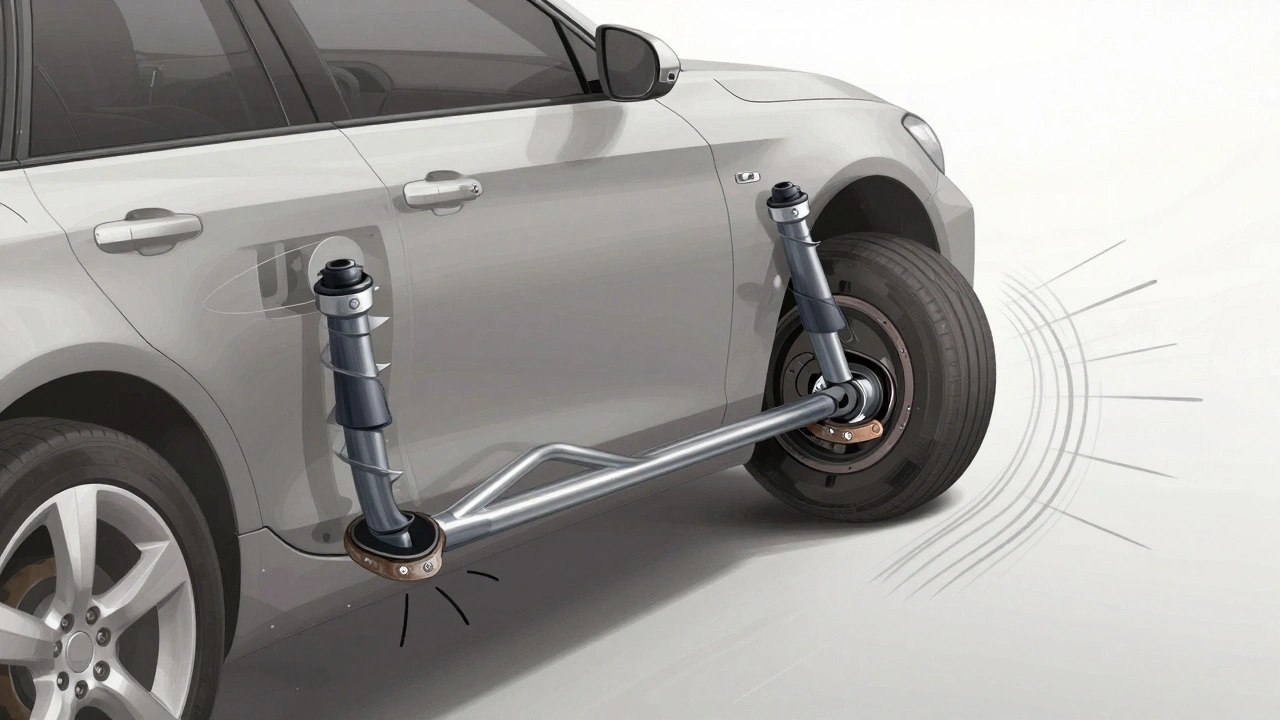
Anti-roll bar bushings, also called sway bar bushings, are the rubber or polyurethane cushions that hold the anti-roll bar to your car’s frame. The anti-roll bar itself is a metal rod that connects the left and right wheels on an axle. When you turn, it twists to reduce how much the car leans over. But without bushings, that metal bar would bang directly against the frame every time it moved. That’s where the bushings come in.
They’re not just spacers-they’re shock absorbers. They let the bar move smoothly while blocking vibrations from traveling into the chassis. Think of them like shock absorbers for the sway bar. When they’re new, they’re soft enough to muffle noise but firm enough to keep the bar in place. When they wear out, metal hits metal. And that’s when the clunking starts.
Why Rubber vs. Polyurethane Matters
Not all bushings are made the same. Most factory cars use rubber. It’s cheap, flexible, and great at soaking up noise. But rubber breaks down over time. Sun, heat, road salt, and constant flexing turn it brittle. Once that happens, it cracks, loses shape, and stops doing its job.
Aftermarket options like Energy Suspension and Superpro use polyurethane. It’s stiffer, lasts longer, and doesn’t deform like rubber. But that stiffness comes with a trade-off: more road noise. Polyurethane bushings transmit more vibration into the cabin because they don’t flex as easily. That’s why performance cars sometimes use them-they want sharper steering response, not silence.
Here’s the real takeaway: if you drive daily on rough roads, stick with rubber. If you track your car on weekends and want tighter handling, polyurethane might be worth the noise. But don’t assume stiffer = better. Too much stiffness can make the ride harsh and even hurt traction on uneven surfaces.
How Worn Bushings Affect Your Ride
When bushings go bad, you don’t just get noise-you lose control. Here’s what happens:
- Clunking sounds over bumps or during turns-this is the metal bar slapping against the frame.
- Loose steering-the car feels vague or delayed when you turn the wheel.
- Uneven tire wear-if the bar isn’t holding the suspension properly, weight shifts unevenly.
- More body roll-your car leans more in corners because the bar can’t twist effectively.
These symptoms often show up after 60,000 to 100,000 miles, but they can happen sooner if you drive on rough roads, carry heavy loads, or live in a snowy climate where road salt eats away at rubber. Some owners notice the problem after a single winter. Others drive for years without issues.
How to Tell If Your Bushings Are Done
You don’t need a lift to check them. Here’s how to do it yourself:
- Open the hood and look under the car near the front or rear axle. The anti-roll bar runs across the chassis, usually with two bushings on each end.
- Try to wiggle the bar by hand. If it moves more than a quarter inch, the bushings are worn.
- Look for cracks, splits, or chunks missing from the rubber. If it’s dry, brittle, or looks like it’s crumbling, replace it.
- Listen for the noise when you drive slowly over a speed bump. A single clunk? That’s the bushing.
Pro tip: If you hear noise only when turning left or right, it’s likely one side. If it’s both sides, both bushings are bad. Always replace them in pairs-even if one looks fine, the other is probably close to failing.
Aftermarket Upgrades: Do They Work?
Companies like Energy Suspension, Whiteline, and Racing Beat make bushings that promise better handling. Some owners swear by them. Others regret the noise.
One driver in Portland upgraded the front bushings on his 2018 Subaru WRX with polyurethane units. The steering felt tighter, and cornering was more precise. But after a few months, he noticed more road noise over cracked pavement. He kept them-he liked the handling-but he now avoids bumpy back roads.
Another driver tried the same upgrade on his 2020 Honda Civic hatchback. The clunking stopped, but the ride got harsher. He switched back to OEM rubber after 3 months.
The key? Match the bushing to your driving style. If you commute on highways and city streets, stick with OEM rubber. If you track your car or drive aggressively on twisty roads, consider polyurethane-but be ready for the trade-off.
What About the End Links?
Bushings aren’t the only part that wears out. The sway bar end links-those metal rods connecting the bar to the control arms-also go bad. They can rattle, squeak, or loosen over time. Many mechanics recommend replacing the end links at the same time as the bushings. It’s cheaper to do both at once than to come back in six months.
Some kits even include new bolts and hardware. Always use the right torque specs. Over-tightening can crush the bushing. Under-tightening lets it rattle. Follow the manufacturer’s instructions. A torque wrench isn’t optional here.
When to Replace Them
There’s no fixed mileage for replacement. It depends on:
- Climate (salt = faster wear)
- Driving style (aggressive = more stress)
- Road conditions (potholes, gravel, construction zones)
Most manufacturers don’t list bushings as a scheduled maintenance item. That’s why so many people ignore them until something breaks. A good rule of thumb: if your car is over 8 years old and you hear clunking, check the bushings. If you’ve done any suspension work recently (struts, shocks, control arms), inspect them then too.
Off-Road and Performance Considerations
If you drive off-road, bushings work differently. In rock crawling or trail driving, you want wheels to move independently. A stiff anti-roll bar can lift a tire off the ground, reducing traction. That’s why many off-roaders install quick-disconnect kits. These let you unhook the sway bar when you need maximum wheel travel.
For performance driving, some racers use solid metal mounts instead of bushings. That eliminates flex entirely-but it’s not for daily drivers. The noise and harshness are extreme. It’s a track-only setup.
Most drivers don’t need this. But it shows how much the bushing affects the whole system. A small rubber part can change how your car behaves on every kind of road.
Final Thoughts
Anti-roll bar bushings are one of those parts you forget until they fail. But when they do, they ruin your ride. Noise isn’t just annoying-it’s a warning sign. Poor handling isn’t just inconvenient-it’s unsafe.
Replacing worn bushings is a straightforward fix. You don’t need to replace the whole suspension. Just swap out the bushings, and often the end links too. It’s one of the best value upgrades you can make. You’ll get back a quiet, stable ride without spending thousands.
Choose rubber for comfort. Choose polyurethane for control. But always match the part to how you drive-not what a forum says. Your car will thank you.
How do I know if my anti-roll bar bushings are worn out?
You’ll hear a metallic clunk or knock when driving over bumps or turning sharply. Visually inspect the bushings for cracks, dry rot, or excessive movement. If you can wiggle the sway bar more than a quarter inch by hand, they’re worn. Also, if your steering feels loose or your car leans more than usual in corners, worn bushings could be the cause.
Should I replace anti-roll bar bushings with rubber or polyurethane?
Rubber bushings are best for daily driving-they absorb noise and vibrations, giving you a smoother ride. Polyurethane is stiffer and lasts longer, making it better for performance driving or track use. But it transmits more road noise and can make the ride harsher. Choose rubber if you prioritize comfort. Choose polyurethane if you want sharper handling and don’t mind extra noise.
Can I replace anti-roll bar bushings myself?
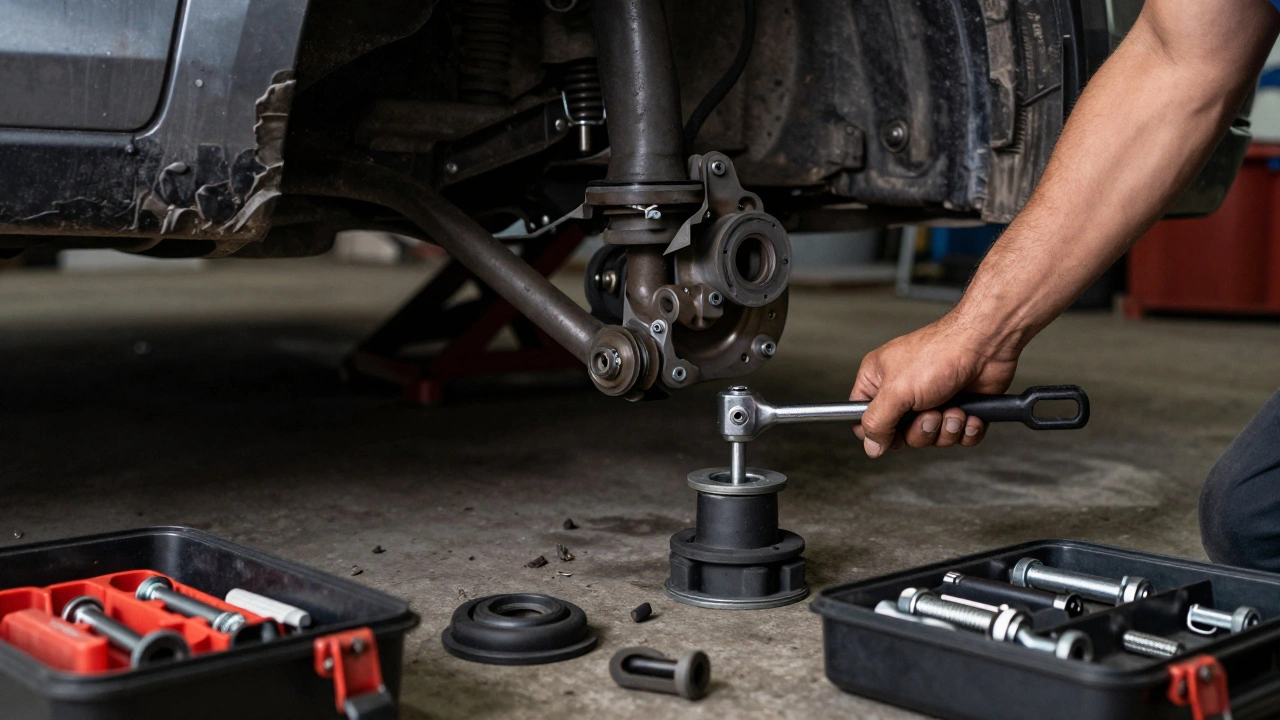
Yes, if you have basic tools: jack, jack stands, socket set, and a torque wrench. You’ll need to raise the car, remove the end links, unbolt the old bushings, and install the new ones. Always replace them in pairs. If you’re unsure about alignment or torque specs, have a professional do it. Incorrect installation can cause more noise or even damage the sway bar.
Do I need to replace the sway bar end links too?
It’s highly recommended. End links wear out at a similar rate and often cause noise too. Replacing them with the bushings saves time and labor. Many aftermarket bushing kits include new end links and hardware. Even if the end links look okay, they’re likely worn internally. Replacing them ensures the whole system works as designed.
How long do anti-roll bar bushings last?
Rubber bushings typically last 60,000 to 100,000 miles, but this can drop to 30,000 miles in harsh climates with road salt or heavy use. Polyurethane bushings last longer-often beyond 150,000 miles-but they’re not immune to wear. Always inspect them during suspension work or if you notice new noises.