There is a specific sound an Audi RS makes when you hit the throttle that feels less like a car starting and more like a jet engine waking up. It’s aggressive, precise, and deeply satisfying. But here is the thing about owning one of these German beasts: stock settings are just the beginning. If you are in Portland or anywhere else with winding roads, you know that factory specs leave headroom on the table. Finding a true Audi RS specialist isn’t just about finding someone who can change oil; it’s about finding a partner who understands the delicate balance between turbo pressure, all-wheel-drive torque distribution, and braking thermal limits.
You might be wondering why your standard mechanic won’t cut it for an RS3 or an R8. The answer lies in complexity. These cars use technology that borders on aerospace engineering. A generic shop might swap a part but miss the calibration data that keeps the drivetrain from tearing itself apart under load. When you upgrade a turbo or tweak the Quattro system, you aren’t just bolting on new metal; you’re rewriting how the car thinks. This guide breaks down what actually matters when you decide to push your Audi beyond its factory comfort zone.
The Heartbeat: Turbocharger Upgrades
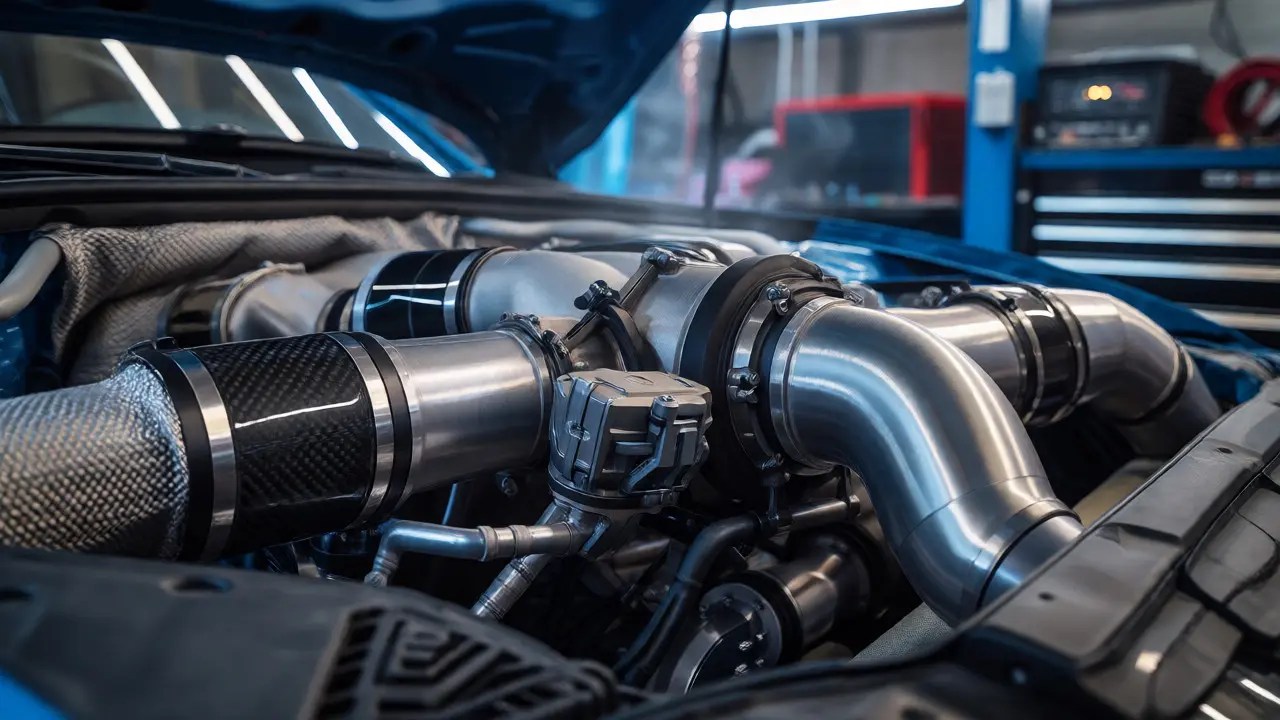
Let’s talk power. Most modern Audi RS models, from the TFSI four-cylinders in the RS3 to the V10s in older generations, rely heavily on forced induction. Stock turbos are designed for emissions compliance and daily driveability, not maximum boost. When you look at turbo upgrades, you are essentially trying to feed the engine more air so it can burn more fuel.
But bigger isn’t always better. There is a concept called "turbo lag" that every enthusiast fears. If you install a massive turbo on a small displacement engine, you lose response at lower RPMs. You press the gas, wait two seconds, and then-boom-power arrives too late for corner exits. A good specialist will recommend a hybrid turbo or a larger single-scroll unit that balances top-end power with low-end snap. For example, upgrading the turbo on a 2.5-liter five-cylinder (found in the RS3) requires careful attention to exhaust manifold flow. If the exhaust gases can’t exit quickly enough, the turbine spins slower, and you gain nothing.
| Upgrade Type | Best For | Power Gain Potential | Complexity Level |
|---|---|---|---|
| Hybrid Turbo | Daily drivers wanting more mid-range punch | +40-60 HP | Moderate |
| Bolt-On Big Turbo | Track days and high-speed highway runs | +80-120 HP | High |
| Twin-Turbo Conversion | V8/V10 engines seeking linear delivery | +100+ HP | Very High |
Another critical factor is intercooling. More boost means hotter intake air. Hot air is less dense, which kills power and increases knock risk. Many specialists recommend front-mount intercooler upgrades or even water-to-air systems for sustained track use. Without proper cooling, your fancy new turbo is just a heat generator.
Grip and Control: Mastering the Quattro System
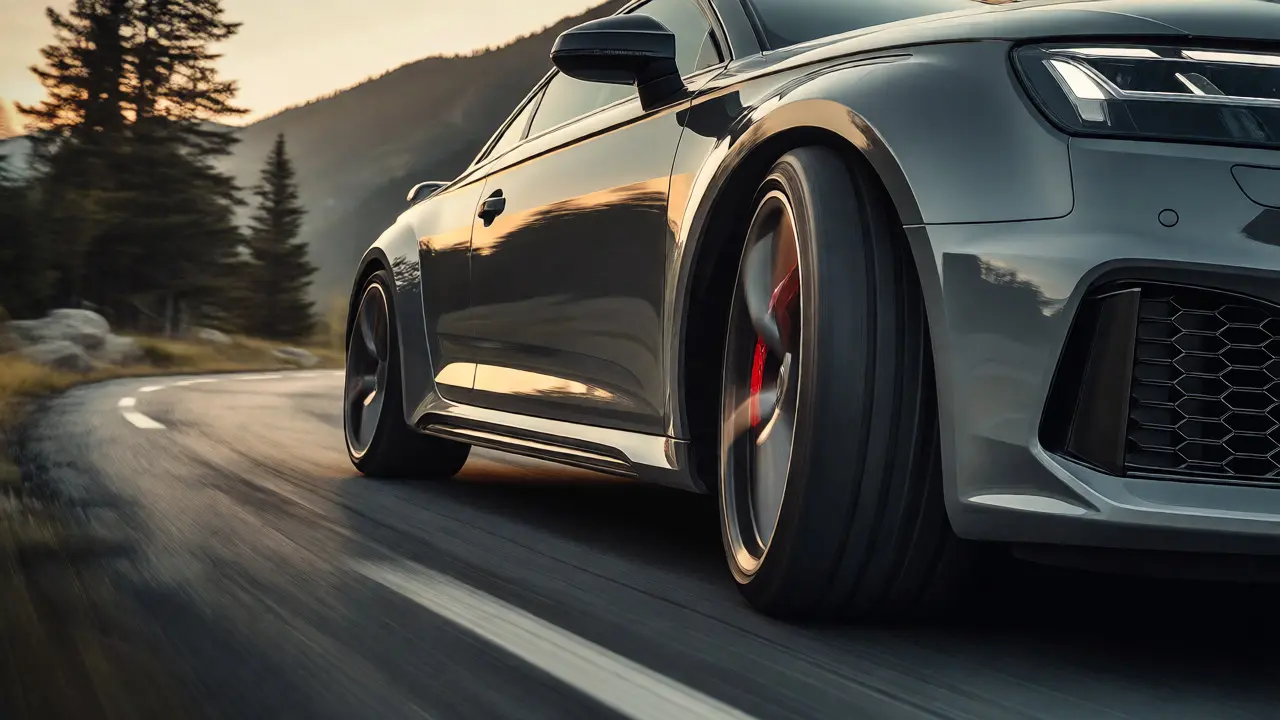
If the turbo provides the muscle, the Quattro system provides the brains. Audi’s all-wheel-drive reputation is built on this hardware. In recent years, Audi has moved away from the traditional Torsen mechanical differential in many models, opting for electronic clutch packs that can send up to 100% of torque to either axle. While this improves efficiency, it changes how the car behaves during hard acceleration.
Upgrading the Quattro system often starts with the tires. Yes, tires. You can have the best differentials in the world, but if you’re running cheap summer compounds, you’ll spin before you grip. Specialists usually suggest moving to semi-slicks or high-performance street tires like Michelin Pilot Sport Cup 2s. But beyond rubber, there are mechanical tweaks. Some owners upgrade the rear differential fluid to higher-viscosity options to improve heat resistance during repeated launches. Others look into aftermarket control arms that allow for negative camber adjustments, helping the outside tire bite harder through corners.
Software plays a huge role here too. Modern Audis use complex algorithms to determine torque split. A specialist can tune the transmission control module (TCM) to shift faster and hold gears longer, ensuring the wheels never lose traction unnecessarily. If you notice your car feeling "lazy" off the line, it might not be a mechanical failure-it could be a conservative mapping strategy waiting to be unlocked.
Stopping Power: Brake Upgrades That Save Your Skin
Here is a controversial take: brakes are more important than horsepower. Adding 50 horsepower to your RS model is fun. Being able to stop safely from 100 mph without your pedal sinking to the floor is essential. Factory brakes on RS models are decent, but they fade quickly under track conditions. Heat is the enemy. When brake rotors get too hot, the pads lose friction coefficient, and you end up pumping the pedal while sliding toward a barrier.
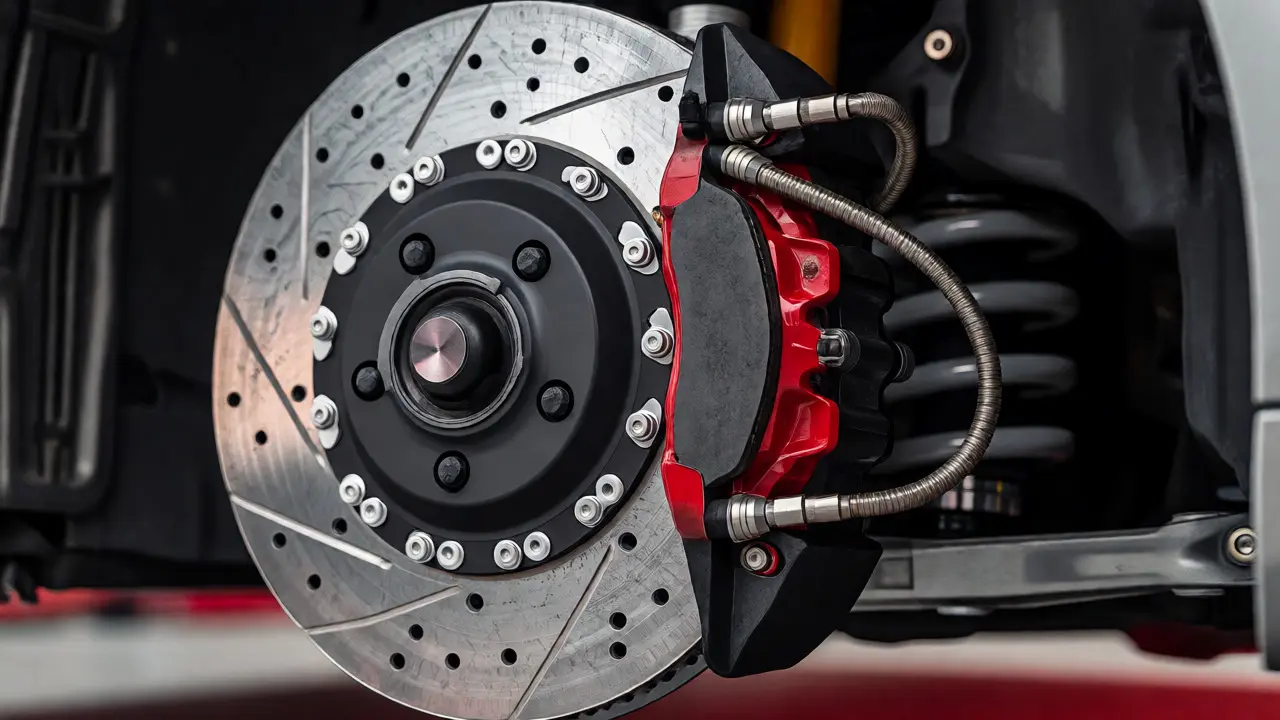
Brake upgrades generally fall into three categories: pads, rotors, and lines. Let’s start with pads. Stock pads prioritize low dust and quiet operation. Performance pads, like those from Hawk or EBC, prioritize friction stability at high temperatures. They might squeak a bit when cold, but they won’t fade when you’re hammering them on a mountain road.
Next, consider drilled and slotted rotors. These designs help dissipate heat and clear away brake dust and gasses that build up between the pad and rotor. However, be careful: drilling holes can sometimes lead to cracking under extreme stress. Slotted rotors are often preferred for durability. For serious track use, big brake kits (BBK) with six-piston calipers offer vastly improved clamping force and thermal mass. These kits replace the factory setup entirely, providing consistent pedal feel lap after lap.
- Pads: Choose based on usage. Street = moderate friction, low dust. Track = high friction, high wear.
- Rotor Material: Cast iron is standard. Carbon-ceramic is lighter but expensive. Two-piece floating rotors reduce unsprung weight.
- Lines: Stainless steel braided lines prevent hose expansion under pressure, giving you a firmer pedal feel immediately.
Don’t forget the fluid. DOT 4 or DOT 5.1 racing fluids have higher boiling points than standard DOT 3. Swapping fluid is the cheapest upgrade you can make, yet many owners skip it. If your brake pedal feels spongy after a few hard stops, it’s likely the fluid boiling, not a leak.
Choosing the Right Audi RS Specialist
Not every garage knows Audi. In fact, most don’t understand the nuances of longitudinal engine layouts and sophisticated electronics. How do you find a real specialist? Look for shops that advertise specific Audi tools, like VCDS or ODIS diagnostic software. Generic OBDII scanners often miss proprietary codes related to the Quattro system or turbo wastegate actuators.
Ask questions. A good specialist will ask you about your driving habits before recommending parts. Do you commute? Do you track the car? Do you care about warranty? If a shop pushes a full big-turbo kit on someone who only drives 5,000 miles a year to the grocery store, they are selling ego, not expertise. Conversely, if you tell them you want to go to the track monthly and they say stock brakes are fine, walk away.
Check their portfolio. Have they worked on your specific model generation? An RS6 C7 is very different from an RS6 C8. The former uses a twin-turbo V8; the latter uses a mild-hybrid V8. Understanding these generational shifts is crucial for correct part selection. Also, look for reviews mentioning "tuning," "dyno results," and "drivability." Dyno graphs prove the work was done correctly; drivability comments prove the tuner didn’t create a rough-running monster.
The Cost-Benefit Analysis of Performance Mods
How much should you spend? It depends on your goals. A simple Stage 1 tune (software only) costs between $800 and $1,200 and can add 50-80 horsepower to turbocharged models. This is the highest ROI mod available because it doesn’t require new parts. Stage 2 adds intake and exhaust components, pushing gains to 100+ horsepower but costing $2,500-$4,000. Stage 3 involves internal engine work or major turbo swaps, easily exceeding $10,000.
Consider reliability. Every modification adds stress. A stronger turbo puts more pressure on pistons and rods. Heavier brakes add unsprung weight, affecting suspension longevity. A specialist will help you balance performance with reliability. They might recommend reinforcing certain components proactively. For instance, upgrading the clutch or transmission mounts can handle the extra torque from a tuned engine, preventing premature failure.
Finally, think about resale value. Highly modified cars can be harder to sell. Buyers often fear hidden issues. Keeping original parts in storage allows you to revert the car to stock condition before selling. This practice preserves value and reassures potential buyers that the modifications were reversible and professional.
Do I need to upgrade my turbo first?
No, typically you should start with a software tune (Stage 1). This optimizes existing hardware. Only upgrade the turbo if you’ve maxed out the stock unit’s efficiency map or if you want significantly more top-end power than software alone can provide.
Will brake upgrades affect my warranty?
In the US, under the Magnuson-Moss Warranty Act, manufacturers cannot void warranties simply because you installed aftermarket parts. However, they can deny claims if the aftermarket part caused the failure. Using quality parts and keeping receipts helps protect your claim.
Is the Quattro system maintenance-free?
No. The Quattro system relies on differentials and transfer cases that require fluid changes. Neglecting this can lead to whining noises and eventual gear wear. Most specialists recommend changing diff fluids every 30,000 to 40,000 miles.
Can I install turbo upgrades myself?
If you have advanced mechanical skills and specialized tools, yes. However, turbo swaps often involve custom fabrication, piping, and complex wiring. Mistakes can lead to boost leaks or check engine lights. For most owners, hiring a specialist ensures proper installation and calibration.
What is the biggest mistake people make with RS mods?
Ignoring brakes and suspension. People add power without improving stopping ability or handling. This creates a dangerous imbalance where the car accelerates fast but handles poorly and stops slowly. Always upgrade brakes alongside significant power increases.