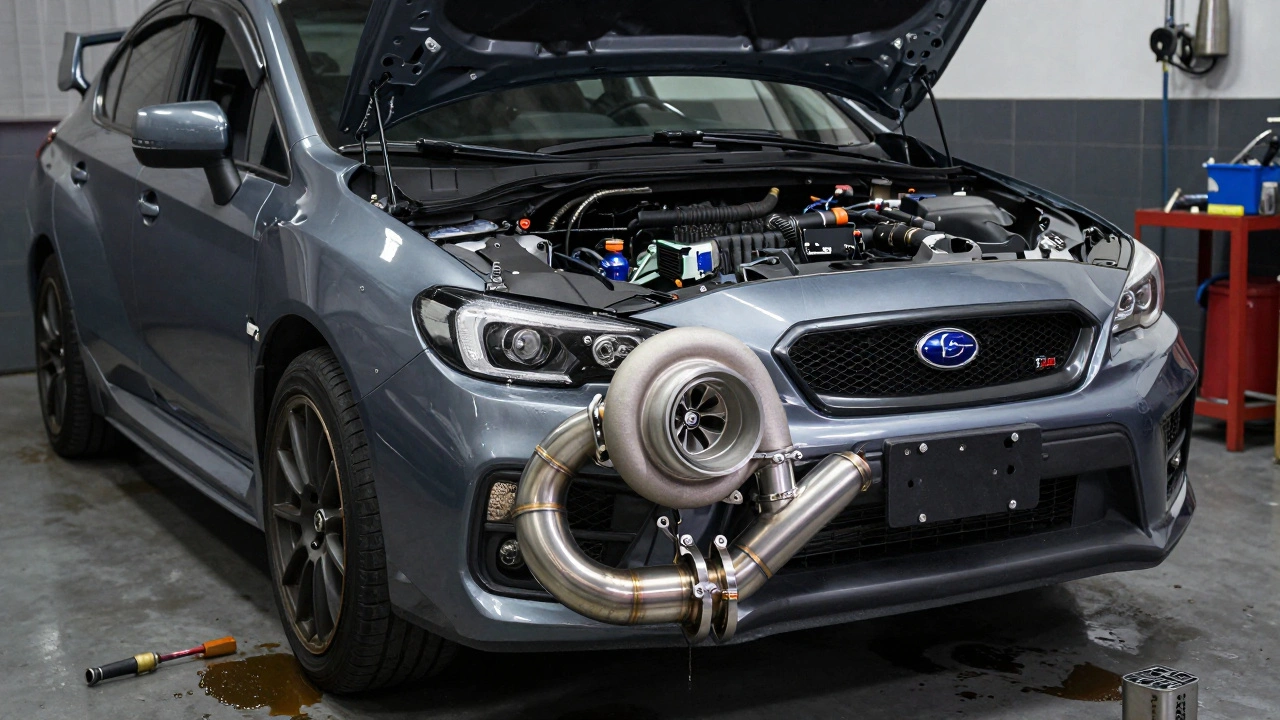
When you're chasing more power from your car, the turbocharger is where the real magic happens. But not all turbos are created equal. Two popular paths-big turbo and hybrid turbo-offer dramatically different results, costs, and driving experiences. If you're trying to decide which one fits your goals, you need to understand what each system actually does, not just how much horsepower it claims to make.
What Is a Big Turbo?
A big turbo is exactly what it sounds like: a larger, more aggressive turbocharger unit that replaces your stock unit entirely. These are often models like the Garrett 2867, 3076, or even bigger. They’re designed to flow massive amounts of air, which means they can push out way more power-especially at high RPMs. Think 400, 500, or even 600+ horsepower, depending on your engine and fuel setup. But here’s the catch: big turbos don’t like to spool early. They need high exhaust flow to get going. That means if you’re driving in city traffic or trying to merge onto the highway, you’ll feel a delay-a noticeable lag-before the boost kicks in. This isn’t a bug; it’s by design. Big turbos are built for top-end dominance, not low-end responsiveness. To make a big turbo work right, you can’t just bolt it on. You’ll need:- A custom exhaust manifold
- Upgraded fuel injectors and fuel pump
- A larger intercooler
- A standalone engine management system or major ECU tuning
- Often, an aftermarket wastegate and boost controller
What Is a Hybrid Turbo?
A hybrid turbo isn’t a completely new turbo. It’s a modified version of your stock unit. The factory housing stays, but the internal components-like the compressor wheel and turbine wheel-are swapped out for larger, more efficient ones. This is often called a "bolt-on" upgrade because it fits right into the stock mounting points, uses the stock oil and coolant lines, and often works with your existing wastegate and bypass valve. The real advantage? It eliminates turbo lag without sacrificing low-end torque. A hybrid turbo delivers strong boost from as low as 2,000 RPM, which means smoother acceleration, better throttle response, and more usable power on the street. You don’t have to wait for the engine to scream to 4,000 RPM just to feel the push. Hybrid turbos also keep things simple. Since they’re built around your stock setup, you can often keep your factory ECU, at least for a while. That means less tuning complexity and lower overall cost. Most hybrid turbo kits are designed to work with pump gas, so you don’t need to switch to E85 or run expensive race fuel to make power. In real-world terms, a quality hybrid turbo upgrade for a common 2.0L or 2.5L turbo engine (like those in Subarus, VWs, or Hondas) costs between $1,100 and $1,800 installed. That includes the unit, labor, and basic tuning. No custom piping. No fuel system overhaul. Just a noticeable, reliable jump in performance.Performance Comparison: Power Delivery
Let’s break down how these two systems actually feel behind the wheel. With a big turbo, power comes in waves. It’s like hitting a switch. Below 3,500 RPM, the engine feels sluggish. Around 4,500 RPM, the boost hits hard-sometimes too hard. If you’re not ready for it, you can lose traction, spin the tires, or even overload the drivetrain. This works great on a track, where you’re staying in the power band. But on the street? It’s unpredictable. A hybrid turbo feels more like a natural extension of your engine. Power builds smoothly from low RPMs, climbs steadily, and doesn’t drop off until high in the rev range. You get 20% to 30% more torque across the entire range, not just at the top. That means quicker 0-60 times, better passing power, and less stress on the transmission. One real-world example: A 2015 Subaru WRX with a hybrid turbo (like the GTX2867RS) makes about 320 horsepower and 300 lb-ft of torque on pump gas. The same car with a big turbo (like the GTX3582R) can hit 450+ horsepower-but only after upgrading the fuel system, intercooler, and tuning. And even then, it feels sluggish until 4,000 RPM.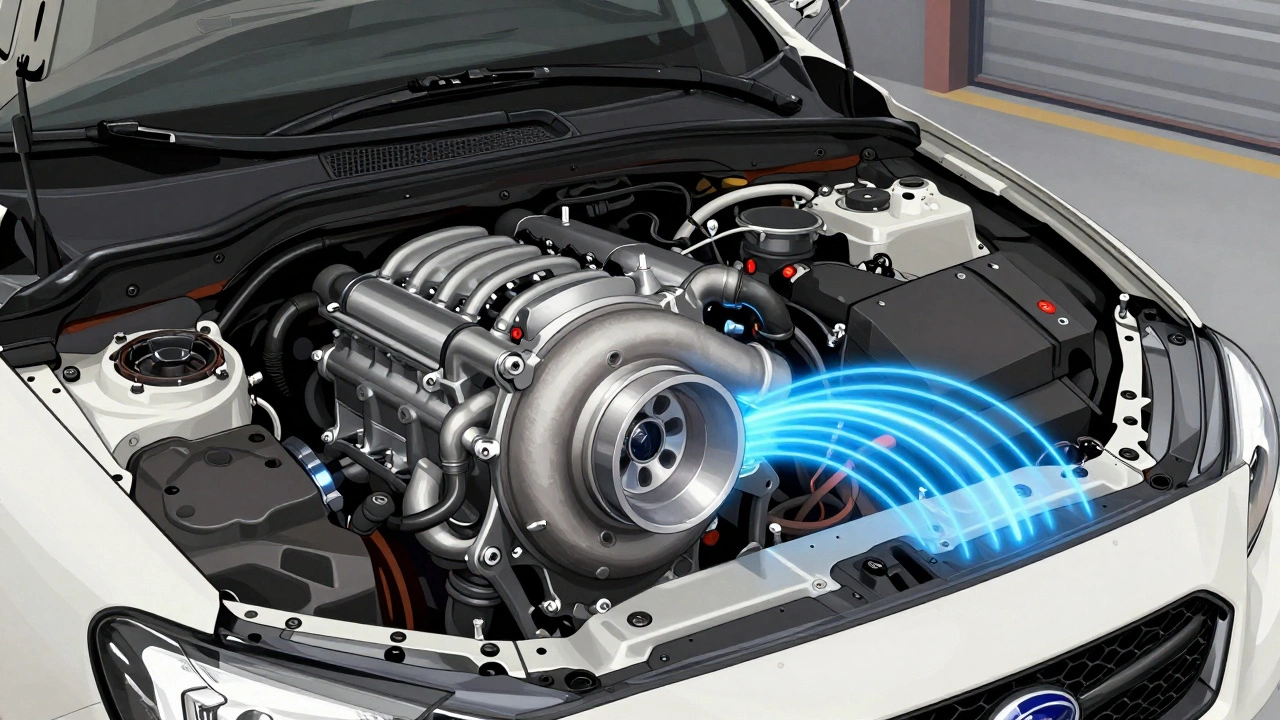
Cost and Installation: The Hidden Price of Power
The numbers don’t lie. A hybrid turbo is almost half the cost of a full big turbo setup. But it’s not just about the price tag. Big turbos demand:- Custom fabrication (exhaust, intake)
- Upgraded fuel system (pump, injectors, lines)
- Advanced tuning (often requiring a professional dyno session)
- Additional cooling (intercooler, oil cooler)
- Stronger clutch or transmission (in some cases)
Reliability and Longevity
Both systems are reliable-if installed and maintained properly. But reliability isn’t just about the part itself. It’s about the system around it. Big turbos run hotter. They push more air, which means higher exhaust gas temperatures. That puts more stress on the turbine, bearings, and seals. If your oil isn’t flowing cleanly, or your coolant lines are clogged, you’re asking for trouble. Many big turbo failures happen because people skip regular oil changes or ignore boost spikes. Hybrid turbos run cooler because they’re closer to stock. They don’t need extreme boost levels to make power. That means less thermal stress, less wear on internal components, and longer life. Most hybrid turbo units last well beyond 100,000 miles with routine maintenance. Both systems benefit from the same care: clean oil, regular inspections, and letting the engine idle for 30-60 seconds after hard driving. But the hybrid turbo is far more forgiving if you miss a few oil changes or drive it hard every day.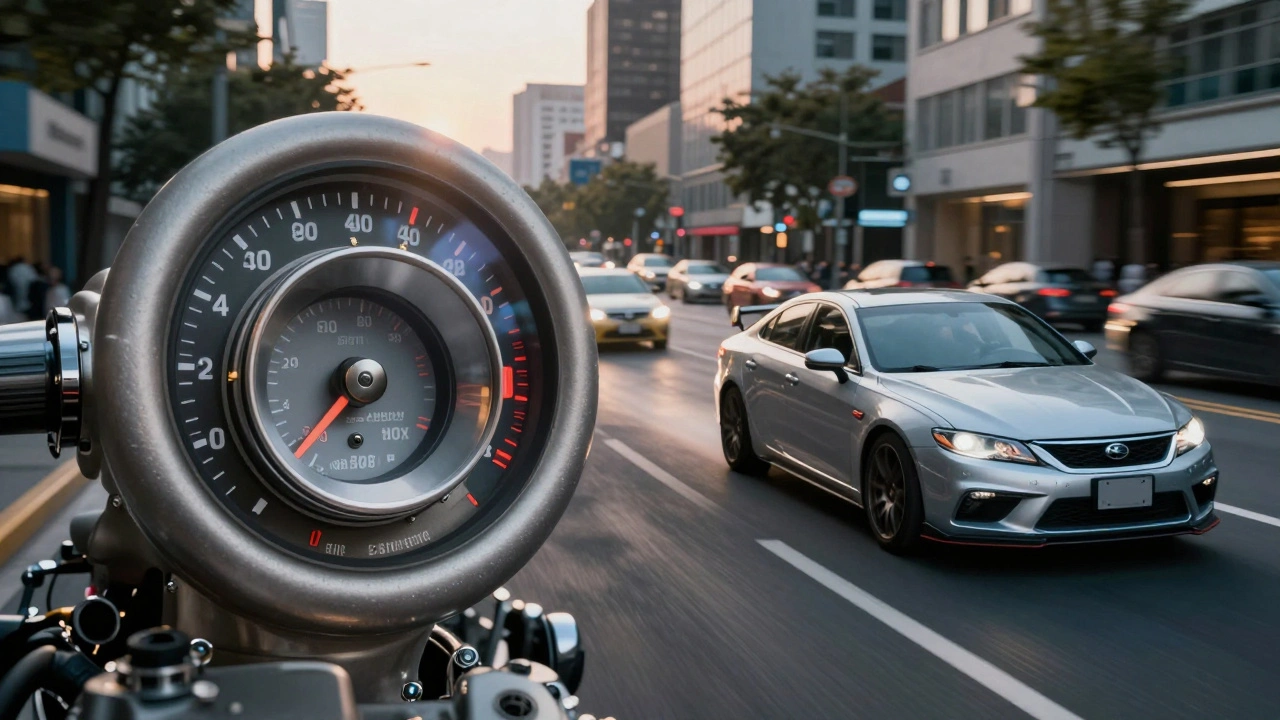
Who Should Choose Which?
If you’re asking yourself which path to take, ask these questions:- Do you drive your car daily? If yes, go hybrid. The smooth, responsive power makes it far more usable in traffic.
- Do you want to win drag races or set track records? Then a big turbo might be worth the investment-but only if you’re prepared for the cost and complexity.
- Are you on a tight budget? Hybrid turbo gives you the biggest bang for your buck.
- Do you plan to upgrade further? A hybrid turbo can be a stepping stone. Many people start with a hybrid, then later swap to a big turbo once they’ve saved up.