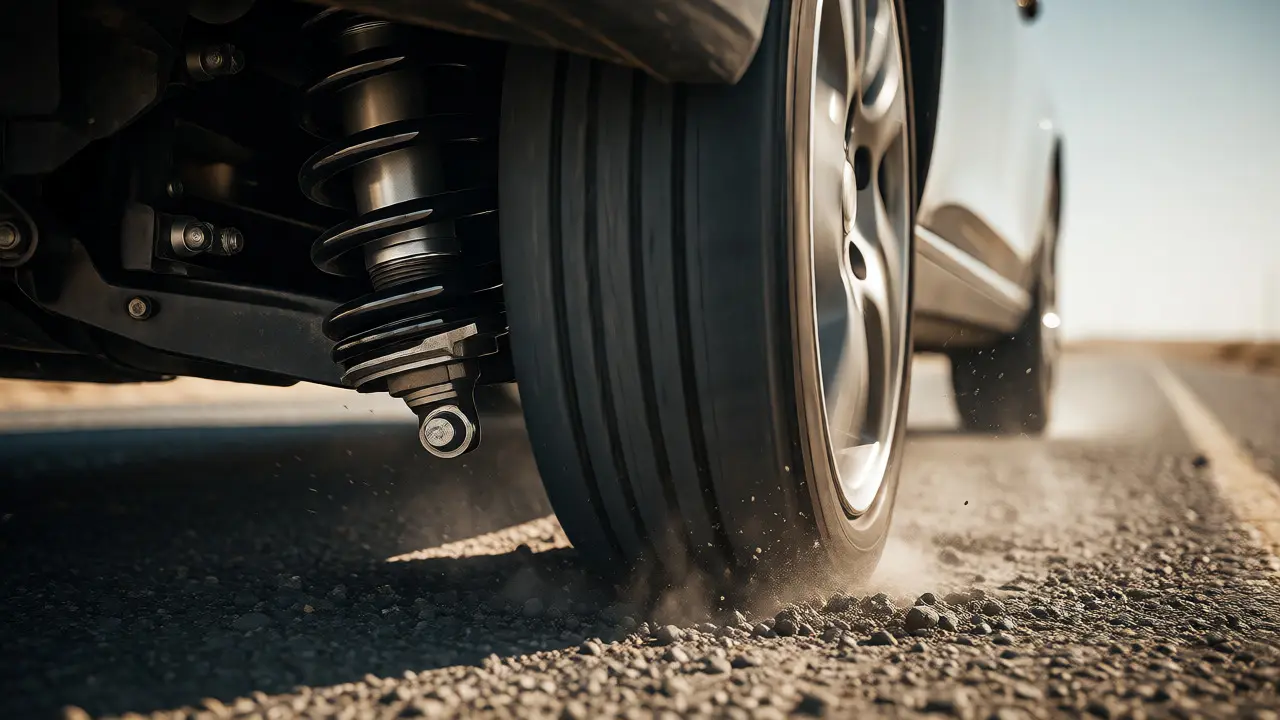
You’re driving down a familiar stretch of road, maybe the one with that nasty dip near your office. Instead of gliding over it smoothly, your car hits the bump and then... keeps moving. It bounces once, twice, maybe three times before settling down. That unsettling feeling isn’t just annoying; it’s your shock absorber telling you it has given up on its job of damping spring oscillation. Most drivers ignore this until their brakes feel mushy or they start hydroplaning in the rain, but catching worn shocks early saves you money and keeps you safe.
If you’ve ever wondered why your car feels like a shopping cart with a wobbly wheel, you’re likely dealing with failing suspension components. Here is how to spot the signs before they turn into a roadside emergency.
What Shock Absorbers Actually Do
To understand why wear matters, you have to know what these parts are doing. A suspension system consists of springs and dampers working together to keep tires in contact with the road. The spring handles the impact of a bump by compressing. But without a damper, the spring would rebound too quickly and cause the vehicle to oscillate uncontrollably. That’s where the shock absorber comes in. It uses hydraulic fluid and valves to convert kinetic energy from the suspension movement into heat, which dissipates through the metal body of the shock.
When the internal seals degrade or the fluid leaks out, the damper loses its ability to control that rebound. You aren’t just losing comfort; you are losing traction. In dry conditions, this might mean a longer stopping distance. In wet conditions, it can mean the tire skips across the water surface instead of cutting through it, leading to hydroplaning at lower speeds than usual.
The Bounce Test: Your First Line of Defense
You don’t need a lift or expensive tools to check your shocks. The "bounce test" is the quickest way to get a preliminary read on your suspension health. Park your car on a flat, level surface. Go to one corner of the vehicle-say, the front driver’s side. Press down firmly on the fender or bumper until you hit resistance, then release abruptly.
Watch how the car settles. A healthy shock absorber should stop the bouncing immediately after one rebound. If the car bounces two, three, or more times, that corner’s shock is likely worn out. Repeat this for all four corners. Keep in mind that heavy vehicles or those with very soft factory tuning might bounce slightly more, but distinct, prolonged oscillations are a red flag.
| Rebound Count | Diagnosis | Action Required |
|---|---|---|
| 0-1 Rebounds | Healthy Damping | No action needed. Monitor regularly. |
| 2-3 Rebounds | Moderate Wear | Schedule an inspection. Check for leaks. |
| 4+ Rebounds | Failed Component | Replace immediately. Safety risk increased. |
Visual Clues: What to Look For Under the Hood and Wheel Well
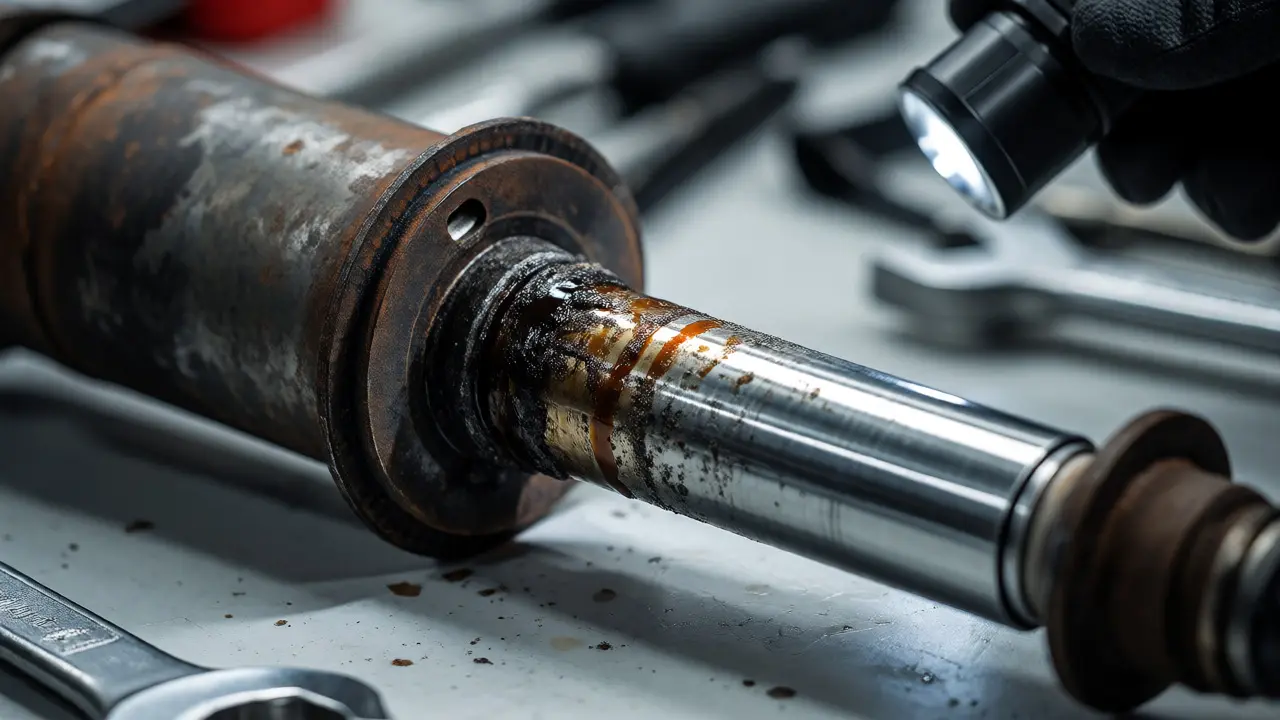
While the bounce test tells you about function, visual inspection tells you about cause. Pop the hood and look at the top mounts of the struts (the assembly combining the shock and spring). If you see oil residue around the mounting nut or dust caked onto the shaft, that’s a leak. Hydraulic fluid is essential for damping; if it’s leaking, the shock is dying.
Next, inspect the rubber bushings. These are the flexible mounts that connect the shock to the car’s frame. Over time, exposure to road salt, UV rays, and temperature swings causes them to crack or tear. Broken bushings allow metal-on-metal contact, creating clunking noises when you go over bumps. They also alter the alignment geometry, causing uneven tire wear.
Check the shock body itself. Is it bent? Did you hit a deep pothole recently? A dented cylinder prevents the piston inside from moving freely, rendering the shock useless regardless of fluid levels. Also, look for excessive rust. While surface rust is normal, heavy corrosion can weaken the structural integrity of the mounting points.
Driving Symptoms Beyond the Bounce
Your car communicates problems through feedback while you drive. Pay attention to these specific sensations:
- Nose Dive During Braking: When you slam on the brakes, does the front end plunge downward excessively? This indicates weak front shocks. It shifts weight forward too aggressively, reducing rear tire grip and potentially triggering ABS unnecessarily.
- Rear Squat During Acceleration: Conversely, if the back end drops when you accelerate hard, your rear shocks may be compromised. This affects stability and can make the car feel loose.
- Body Roll in Corners: Take a curve at moderate speed. Does the car lean heavily to one side? Healthy shocks resist this lateral movement. Excessive roll suggests the dampers aren’t controlling the chassis motion effectively.
- Steering Wheel Vibration: At highway speeds, do you feel a shimmy through the wheel? While often attributed to tire balance issues, worn shocks can transmit road irregularities directly to the steering rack because they aren’t absorbing the high-frequency vibrations.
- Uneven Tire Wear: Inspect your tread. If you see cupping or scalloping (small dips in the tread pattern spaced evenly around the tire), your tires are hopping against the pavement due to poor damping. This is irreversible damage to the tire.
Why Ignoring Worn Shocks Costs More Than Just Comfort
Some drivers think, "It’s just a little bumpy, who cares?" But the cost of neglect goes beyond a rough ride. Worn shocks accelerate the wear of other expensive components. When the suspension doesn’t absorb impacts, those forces transfer to the ball joints, tie rod ends, and control arm bushings. These parts begin to fail prematurely, turning a $300 shock replacement into a $1,500 suspension overhaul.
Furthermore, braking performance suffers significantly. Studies from automotive safety organizations indicate that worn shocks can increase stopping distances by up to 20% on wet roads. That extra distance is often the difference between a close call and a collision. Tires also burn through faster. Cupped tires lose traction and must be replaced sooner, adding another layer of expense.

Replacement Strategy: Pairs vs. Full Set
When you decide to replace your shocks, you face a choice: replace just the bad ones, both on an axle, or all four? Mechanics generally recommend replacing shocks in pairs (both fronts or both rears) at minimum. Mixing new, stiff shocks with old, weak ones creates an imbalance in handling characteristics. One side of the car will react differently to inputs than the other, making the vehicle pull or feel unstable during emergency maneuvers.
Replacing all four is ideal, especially if the mileage is high (typically 50,000 to 100,000 miles depending on driving conditions). It ensures uniform damping and restores the original factory ride quality. If you drive a performance vehicle or tow frequently, consider upgrading to gas-charged shocks or adjustable coilovers for better response, though standard OEM replacements are sufficient for daily commuters.
DIY Tips for Inspection and Maintenance
You can extend the life of your shocks by adjusting your driving habits. Avoid hitting potholes at full speed. Slow down before crossing railroad tracks or speed bumps. Keep your tires properly inflated; under-inflated tires force the shocks to work harder to compensate for the lack of cushioning.
For DIY enthusiasts, checking the torque on strut mount nuts is a quick win. Vibrations can loosen these fasteners over time, leading to rattles and premature wear. Use a torque wrench to tighten them to manufacturer specifications. However, removing the struts themselves requires specialized spring compressors and careful handling, as compressed springs store significant energy. If you aren’t comfortable with mechanical repairs, leave the removal to a professional shop.
Remember, suspension health is cumulative. Regular inspections every 10,000 to 15,000 miles help catch small leaks before they become catastrophic failures. By staying alert to the signs of worn shock absorbers, you maintain control, protect your investment, and ensure a smoother journey ahead.
How long do shock absorbers typically last?
Most manufacturers suggest inspecting shocks every 10,000 to 20,000 miles. Replacement intervals vary widely based on driving conditions, but many cars need new shocks between 50,000 and 100,000 miles. Driving primarily on smooth highways extends this lifespan, while frequent city driving with potholes shortens it significantly.
Can I drive with bad shock absorbers?
Yes, you can physically drive with worn shocks, but it is not recommended. Poor damping reduces tire contact with the road, increasing stopping distances and the risk of hydroplaning. It also puts extra stress on other suspension parts, leading to more expensive repairs later. If the shocks are completely blown, the ride becomes dangerously unstable.
Do worn shocks affect my car's alignment?
Worn shocks themselves don't change alignment angles, but broken bushings associated with shock assemblies can shift the geometry. Additionally, worn shocks cause uneven tire wear (cupping), which can mimic alignment issues. After replacing shocks, it is wise to get a wheel alignment to ensure optimal tire life and handling.
What does a leaking shock absorber look like?
A leaking shock usually shows oily residue on the piston rod (the shiny silver shaft extending from the main body). You might also see dirt and grime sticking to the oily area. In severe cases, you’ll find puddles of dark fluid under the car near the wheel well. Surface rust on the body is normal, but active dripping indicates failure.
Is it better to replace shocks or struts?
Shocks and struts are different components. Struts are part of the suspension structure and support the vehicle's weight, while shocks only dampen movement. Many modern cars use struts on the front and shocks on the rear. You cannot simply swap one for the other. Always replace the specific component type designed for your vehicle’s location.