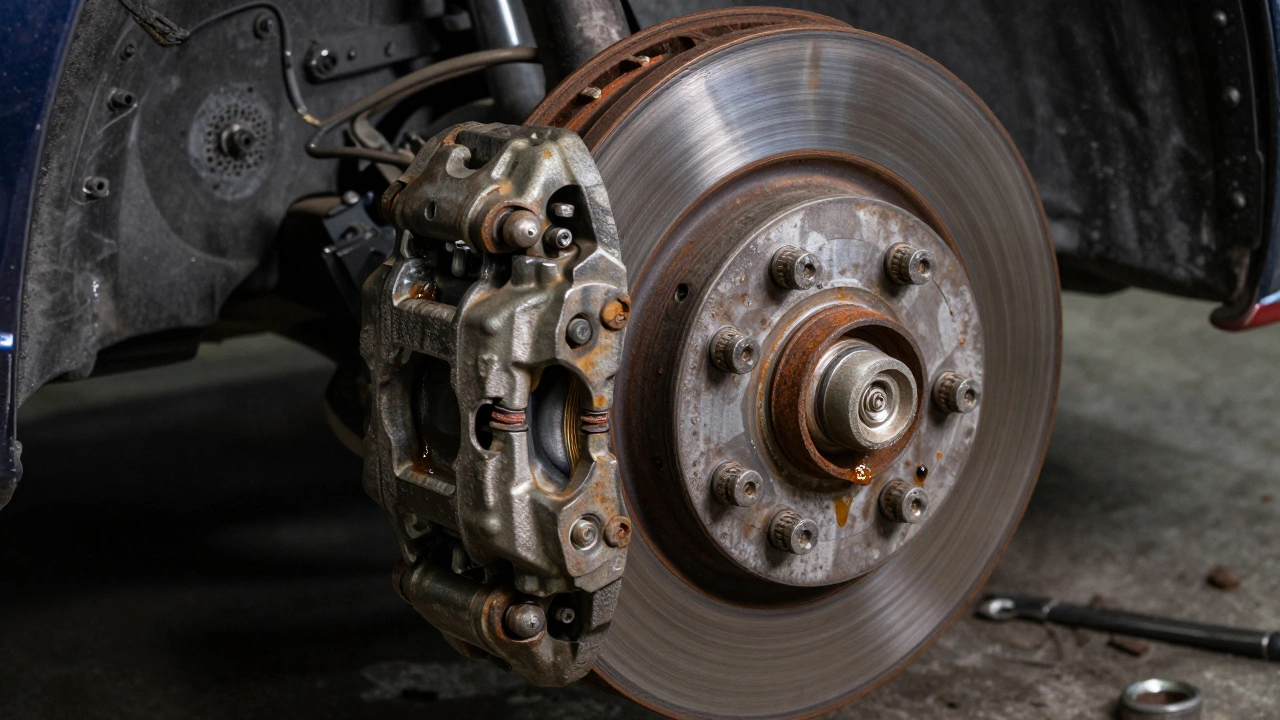
When your car doesn’t stop like it used to, or pulls to one side when you press the brake pedal, it’s not just a minor annoyance-it’s a safety issue. Most people blame worn brake pads or dirty rotors, but the real culprit could be a brake caliper that’s failing silently. Brake calipers are often overlooked until something goes wrong, and by then, you might already be risking your life-or someone else’s.
What Exactly Is a Brake Caliper?
A brake caliper is the clamp-like device that squeezes your brake pads against the rotor every time you hit the brake pedal. It’s not just a housing-it’s a hydraulic system with pistons inside that push the pads when brake fluid pressure builds. Each caliper holds one or two pistons, depending on the vehicle, and works with the brake lines, fluid, pads, and rotors to turn motion into stopping power. Without a functioning caliper, your brakes don’t work evenly-or at all.
Modern calipers are built to last, but they’re not indestructible. They’re exposed to road salt, moisture, dirt, and extreme heat from braking. Over time, these elements wear down the seals, rust the pistons, and cause leaks. When that happens, your brakes become unreliable.
Why Brake Calipers Fail
Calipers don’t just wear out from age. Here’s what actually kills them:
- Corrosion - Rust builds up inside the caliper, especially in places with snowy winters or coastal humidity. This stops the piston from sliding smoothly, causing uneven pad wear or sticking brakes.
- Fluid leaks - A cracked seal or damaged hose lets brake fluid escape. No fluid means no pressure, which means no stopping power.
- Piston seizure - If the piston gets stuck in the extended position, the brake pad stays pressed against the rotor. That creates constant friction, overheating the rotor, burning the pad, and even warping the disc.
- Contaminated brake fluid - Brake fluid absorbs moisture over time. That moisture boils under heat, creating air bubbles that make your pedal feel spongy. It also corrodes internal parts.
- Physical damage - Hitting a pothole or curb hard enough can crack the caliper body or bend the mounting bracket.
These problems don’t happen overnight. They creep up. That’s why most drivers miss the signs until it’s too late.
When You Know It’s Time for Replacement
You don’t need to wait for your brakes to fail completely. Here are the real-world signs that your caliper is failing:
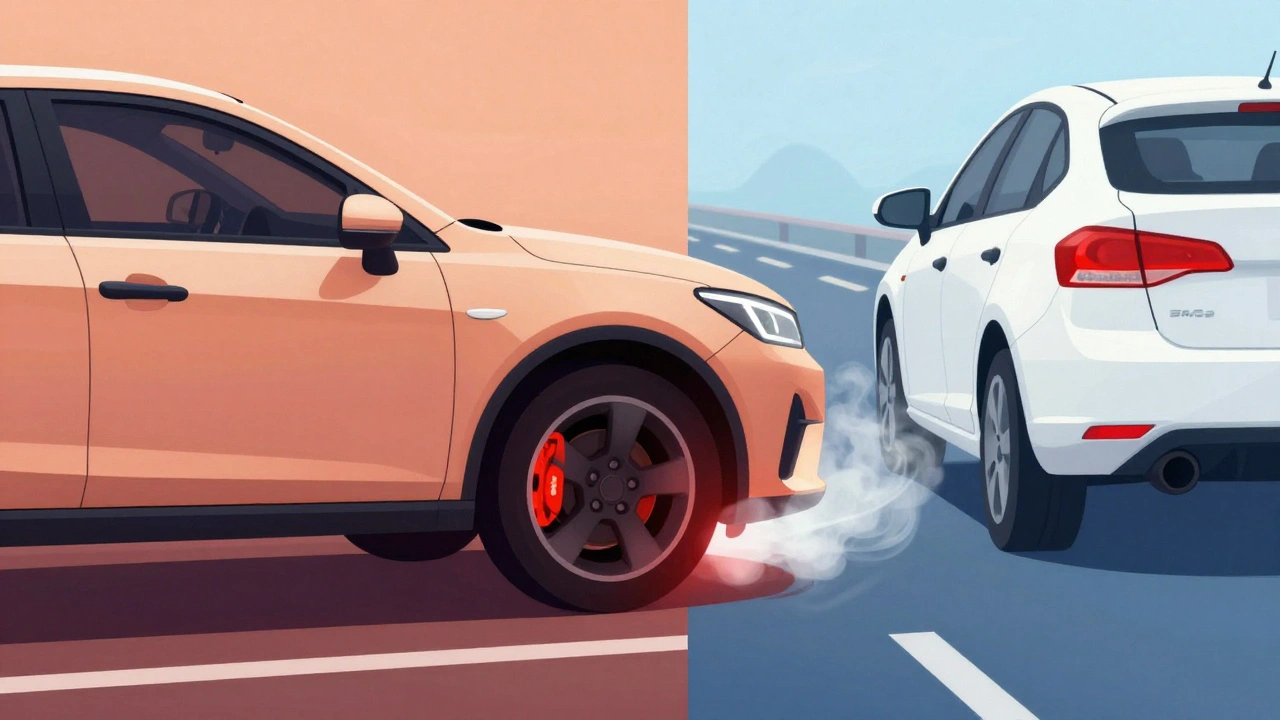
- Car pulls to one side - If you let go of the steering wheel and your car drifts left or right when braking, one caliper is sticking or not releasing properly.
- Squealing or grinding after releasing the pedal - If you hear a continuous scraping sound even when you’re not braking, the caliper piston is stuck and the pad is dragging.
- Brake pedal feels spongy or goes to the floor - This usually means air in the lines or fluid leakage. If bleeding the brakes doesn’t fix it, the caliper is leaking internally.
- Uneven brake pad wear - If one pad is worn down to the metal while the other still has 70% life left, the caliper on that side isn’t releasing or applying evenly.
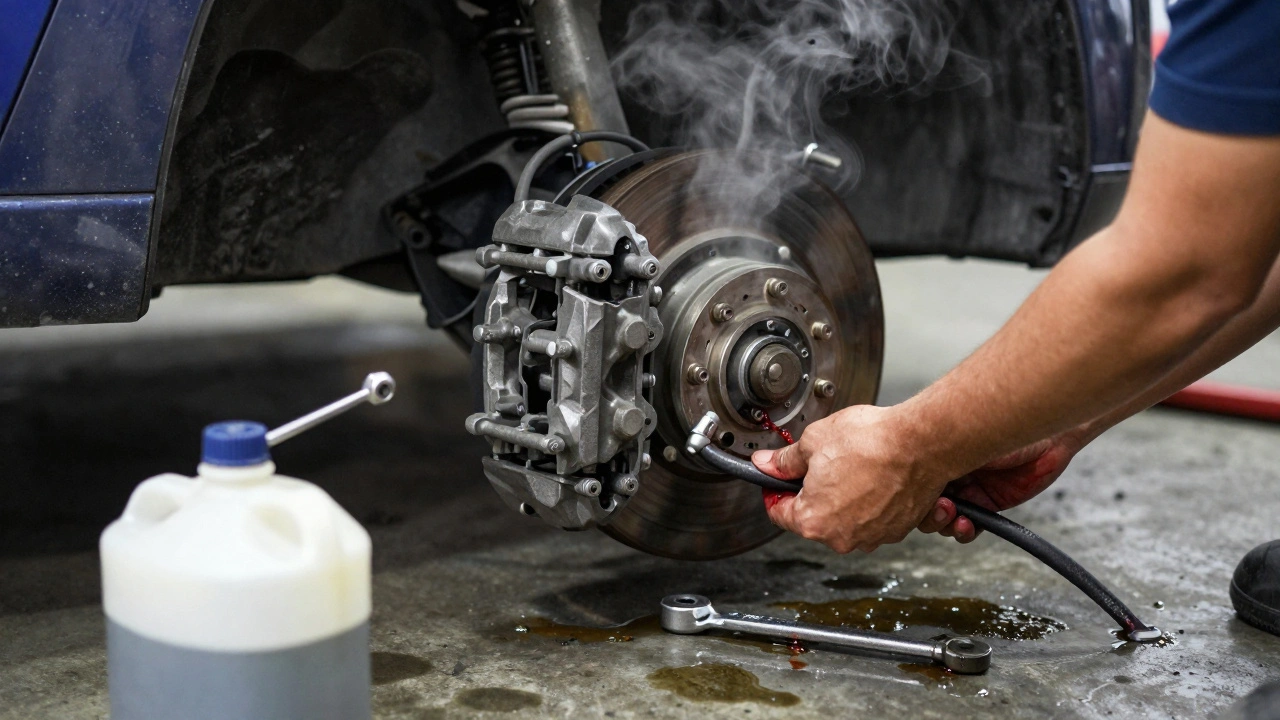
- Smoke or burning smell from one wheel - This is serious. A stuck caliper creates so much friction that the rotor gets red-hot. That’s a fire risk.
- Warning light on dashboard - Modern cars will trigger the ABS or brake warning light if a caliper sensor detects uneven pressure or fluid loss.
These aren’t "maybe" signs. If you notice even one of these, get your brakes checked immediately. Don’t wait for the next oil change. Don’t think "it’s fine for now."
How Long Do Brake Calipers Last?
There’s no set mileage. Some last the life of the car. Others fail at 60,000 miles. It depends on:
- Driving habits - Aggressive braking, frequent stop-and-go traffic, and towing heavy loads heat up the system faster.
- Climate - If you live in a place like Portland, Oregon, where it rains often and road salt is used in winter, corrosion sets in quicker.
- Maintenance - Replacing brake fluid every 2-3 years prevents internal corrosion. Skipping this cuts caliper life in half.
- Quality of parts - Cheap aftermarket calipers can fail in under a year. OEM or high-grade replacements last longer.
Most mechanics agree that if your car is over 10 years old and you’ve never replaced the calipers, you’re playing Russian roulette. Even if they seem fine, the seals are likely dried out and the pistons are corroding.
What Happens If You Ignore a Bad Caliper?
Ignoring a failing caliper doesn’t just mean slower stops. It triggers a chain reaction:
- Overheated rotors - A stuck caliper causes constant friction. Rotors warp, crack, or even melt.
- Burnt brake pads - The pad on the stuck side wears out completely, then grinds metal-on-metal.
- Brake fluid loss - Leaks get worse. You might lose all braking power suddenly.
- Damage to wheel bearings - Constant dragging heat kills the bearing, which can seize while driving.
- Costly repairs - Replacing a caliper costs $200-$500. Replacing a warped rotor, two new pads, a new bearing, and bleeding the whole system? That’s $800-$1,500.
One ignored caliper can turn a simple repair into a major overhaul. And if you’re in a hurry, or on a highway, that delay could cost you more than money.
Replacement Process: What to Expect
Replacing a caliper isn’t a DIY job for beginners, but it’s not rocket science either. Here’s what happens:
- The car is lifted and the wheel is removed.
- The brake line is disconnected carefully to avoid fluid spillage.
- The caliper bolts are removed. Sometimes they’re rusted-heat or penetrating oil helps.
- The old caliper is taken off. The brake pads are inspected. If they’re still good, they can be reused.
- The new caliper is installed. New mounting bolts are used, tightened to manufacturer specs (usually 30-40 Nm).
- The brake line is reconnected and the system is bled to remove air.
- The wheel is put back on, and the brakes are tested at low speed before driving normally.
Pro tip: Always replace calipers in pairs. If one side is bad, the other isn’t far behind. Uneven braking is dangerous.
After replacement, your brake pedal should feel firm again. If it still feels soft, there’s air left in the system-or another caliper is failing.
Should You Buy New or Remanufactured?
There are three options:
| Type | Cost | Lifespan | Pros | Cons |
|---|---|---|---|---|
| OEM (Original Equipment) | $300-$600 | 10+ years | Perfect fit, factory-tested, warranty | Expensive, harder to find |
| Remanufactured | $150-$300 | 5-8 years | Rebuilt with new seals and pistons, good warranty | Quality varies by supplier |
| Aftermarket (cheap) | $80-$180 | 1-3 years | Low upfront cost | Often use inferior seals, prone to leaks |
For most drivers, remanufactured calipers from reputable brands like Brembo, Cardone, or ACDelco are the smart choice. They’re rebuilt with new internal parts, tested for leaks, and come with a warranty. Cheap ones? They’re a gamble. I’ve seen too many customers come back with the same problem six months later.
What to Do After Replacement
Don’t just drive off. After a caliper replacement:
- Test the brakes gently in a safe area-no highway speeds yet.
- Listen for unusual noises. A clicking or grinding means something’s misaligned.
- Check for leaks under the car after a few hours.
- Recheck the brake fluid level. It should stay steady.
- Get a professional brake inspection within 500 miles. This catches small issues before they become big ones.
And remember: brake fluid should be flushed every 2-3 years, no matter what. It’s the cheapest way to protect your calipers and extend their life.
Final Thought: Don’t Wait for Disaster
Brake calipers don’t scream before they fail. They whisper. A slight pull. A faint smell. A pedal that feels a little different. Those are your warning signs. Most people ignore them because they think, "It’s still stopping." But stopping isn’t enough. Stopping safely is what matters.
If your car is over 8 years old, lives in a wet or salty climate, or you’ve never had your brake system inspected since you bought it, get it checked now. A $300 caliper replacement today could save you $1,200 tomorrow-and maybe even your life.
How do I know if my brake caliper is bad?
Signs include the car pulling to one side when braking, a spongy brake pedal, uneven brake pad wear, a burning smell from one wheel, or the brake warning light turning on. If you notice any of these, don’t wait-have it inspected immediately.
Can I drive with a bad brake caliper?
Technically, yes-but it’s extremely dangerous. A stuck or leaking caliper can cause uneven braking, overheated rotors, or complete brake failure. You’re not just risking your car-you’re risking lives. Get it fixed before driving long distances or on highways.
How often should brake calipers be replaced?
There’s no fixed schedule. Calipers can last the life of the car if maintained. But if your vehicle is over 10 years old or you drive in harsh conditions (snow, salt, heavy traffic), consider replacement between 75,000 and 100,000 miles. Always inspect them during brake pad changes.
Do I need to replace both calipers at the same time?
Yes. Even if only one side is faulty, the other is likely close to failing. Replacing just one creates uneven braking force, which can cause instability and increase stopping distance. Always replace in pairs for safety and balance.
Can I replace a brake caliper myself?
If you have experience with brake systems, yes. You’ll need a jack, torque wrench, brake fluid, and bleeding tools. But if you’re unsure, don’t risk it. Brake systems are critical for safety. A mistake in bleeding or torque can lead to failure. Most mechanics recommend professional installation unless you’re confident.
Is it worth buying remanufactured calipers?
Yes-if they’re from a trusted brand. Remanufactured calipers are rebuilt with new seals, pistons, and hardware, tested for leaks, and often come with a lifetime warranty. They cost half as much as OEM parts and perform just as well. Avoid ultra-cheap aftermarket options-they’re prone to early failure.