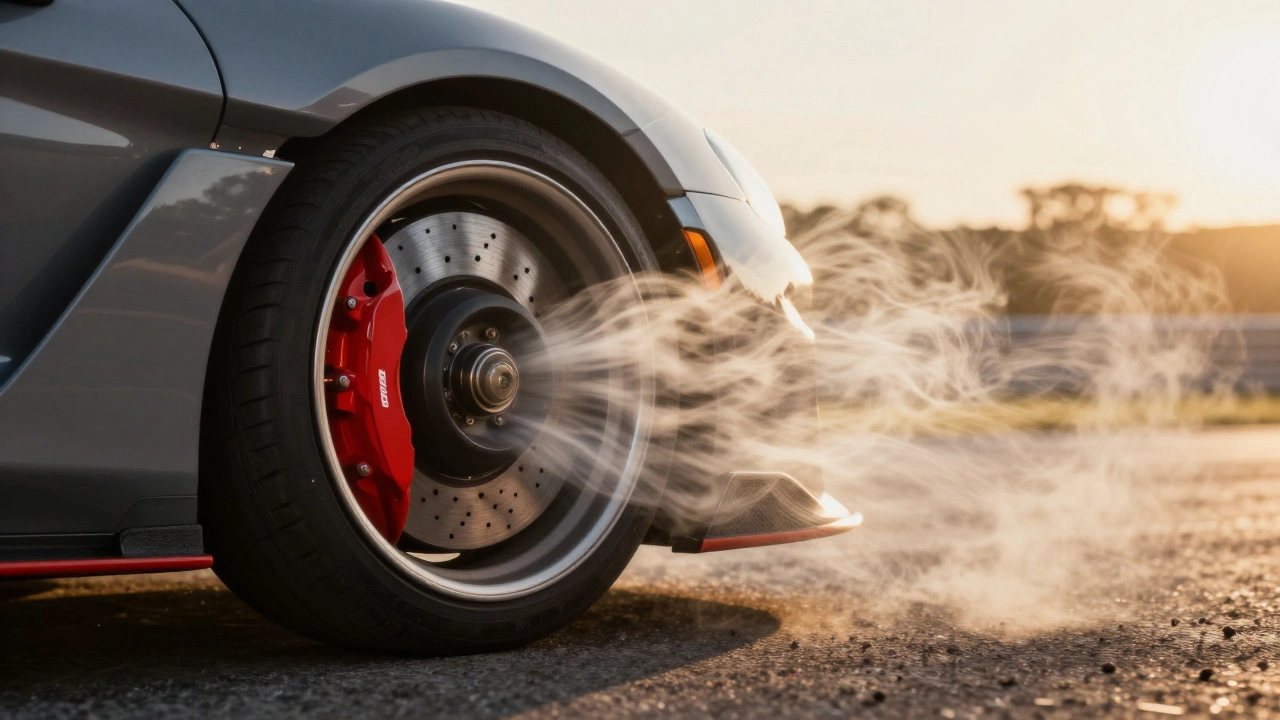
When you’re pushing a performance car hard on a track, the brakes don’t just work hard-they overheat. And when they overheat, they lose stopping power. That’s brake fade. It’s not a myth. It’s physics. And if you’ve ever felt your brake pedal go soft in the middle of a fast lap, you know exactly what I’m talking about.
Why Brakes Fade in the First Place
Brakes turn kinetic energy into heat. Every time you press the pedal, friction between the pads and rotors generates temperatures that can hit 1,200°F. On a track, those numbers climb even higher-some GT500s hit 1,600°F. That’s hotter than a pizza oven. But here’s the problem: brake rotors are designed to shed heat, not trap it. The air trapped inside the wheel well? It’s hot, slow, and useless. It doesn’t move fast enough to carry heat away. That’s why your brakes get hotter and hotter with every lap, until the pads start to glaze, the fluid boils, and the rotors warp. You’re not losing brake pressure because something broke. You’re losing it because the system is drowning in its own heat.How Brake Cooling Ducts Work
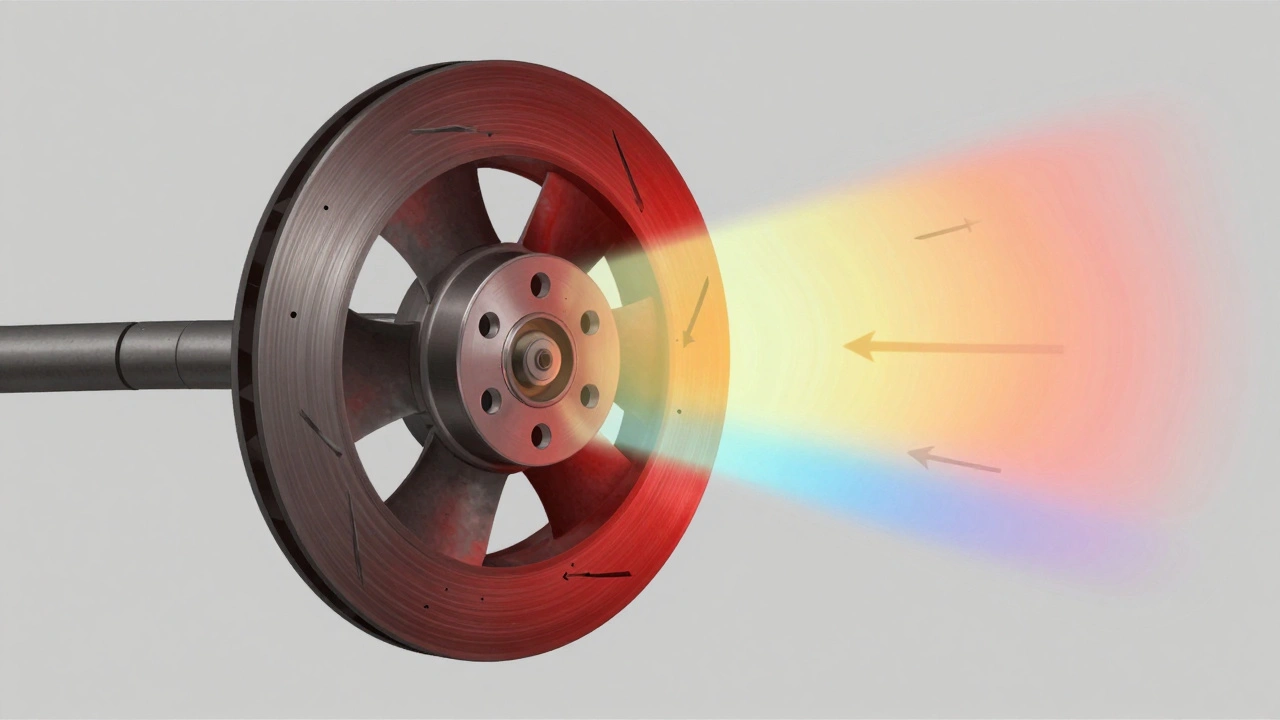
Brake cooling ducts solve this by cutting through the chaos. They don’t just blow air at the brakes-they channel it. These ducts connect directly to the front bumper or grille, where air pressure is highest. They then route that cool, dense air straight to the center of the rotor, where it can flow through the vanes and carry heat out the edges. It sounds simple, but the design matters. A poorly placed duct that blows air at the caliper instead of the rotor? It’s useless. A duct that’s too small? It won’t move enough air. A duct that rubs against a suspension component? It’ll break. The magic happens because rotors are built to pull air inward. The vanes inside the rotor act like a fan, drawing air from the center and flinging it outward. A good duct delivers air right where the rotor expects it-right at the hub. That’s why 3-inch ducts are the sweet spot for most performance cars. Big enough to move real air, small enough to fit without interference.Real-World Results: Numbers Don’t Lie
Singular Motorsports ran a side-by-side test on a track-driven sports car. One side had no ducts. The other had properly installed 3-inch ducts. After a 20-minute session:- Caliper temperature on the non-ducted side: 585°F
- Caliper temperature on the ducted side: 390°F
Beyond Fade: Longer Life, Less Cost
Brake fade isn’t the only problem. Heat kills components. Fast. - Brake pads: Overheat, glaze, and lose friction. Replace them too often? You’re burning money. - Rotors: Warp under thermal stress. Crack from uneven expansion. A warped rotor means vibration, noise, and expensive replacements. - Brake fluid: Boils, degrades, and loses performance. You’ll need to flush it more often. With ducts, users report pad life nearly doubling. Rotors last longer. Fluid stays clean longer. For someone who drives their car on weekends-both on the street and track-that’s not a luxury. It’s a savings account. One driver in Portland ran a track-focused Civic with OEM pads. Without ducts, he burned through a set every 4 track days. With ducts? He got 7. That’s a 75% increase in pad life. At $300 a set? That’s $1,200 saved over two years. The duct kit cost $220.What Happens If You Skip Them?
Some people think, “I don’t race. I just like going fast.” But going fast means braking hard. And braking hard means heat buildup. Even street driving on twisty backroads can push brakes into dangerous temps if you’re aggressive. Without ducts, you’re running your brakes at their limit every time you hit the pedal hard. That’s like running your engine at redline 24/7. Eventually, it breaks. And when it does, you’re not just out of pocket-you’re unsafe. You might think, “I’ll just upgrade to race pads.” But race pads need heat to work. They’re useless cold. On the street? They’ll feel like sandpaper and never grab properly. Ducts let you run street-friendly pads that actually work-because they stay in their ideal temperature window.
Installation: Don’t Wing It
Not all duct kits are created equal. A $50 Amazon kit with flimsy plastic hoses? It’ll crack, rattle, or fall off. A professional kit from Verus Engineering or Singular Motorsports? It’s designed for your exact car. Mounting points match factory holes. Hoses are reinforced. Outlets are shaped to aim air right at the rotor center. Installation isn’t rocket science, but it needs precision. You need to:- Find a clean, high-pressure air source (usually behind the front bumper or near the fog light area)
- Route the hose without kinks or sharp bends
- Mount the outlet so it’s 1-2 inches from the rotor face
- Ensure no interference with suspension, steering, or wheel movement