Quick Summary of Brake Part Options
- OEM Parts: Guaranteed fit and reliability, but usually more expensive and offer fewer performance customizations.
- Aftermarket Parts: More affordable and diverse options (ceramic, semi-metallic), but quality varies wildly between brands.
- Key Trade-off: OEM focuses on a balanced, quiet ride; Aftermarket can be tailored for high performance or extreme budgets.
Understanding OEM Brake Rotors and Pads
When we talk about OEM is Original Equipment Manufacturer parts, which are components produced by the same engineers and factories that built your car. These parts are designed to be a mirror image of what came with your vehicle. If you drive a Toyota or a Ford, the OEM rotors are built to the exact metallurgical specifications required for that specific model's weight and braking force.
The biggest win with OEM parts is the "perfect fit." You don't have to worry about a rotor being a fraction of a millimeter off or a pad that squeaks because it doesn't seat correctly. In terms of performance, OEM pads are typically designed for comfort. They are often softer, which means they are quieter and produce less dust on your wheels. However, this softness is a double-edged sword. Because they aren't as aggressive, they can wear down faster-typically lasting between 85,000 and 105,000 kilometers-and might struggle with "brake fade" if you're driving down a steep mountain road where the brakes get incredibly hot.
The Aftermarket Alternative: More Than Just Budget Parts
Many people think Aftermarket Brake Parts are just cheap knock-offs, but that's a misconception. In reality, these are parts made by independent companies to fit your vehicle. While some are indeed "budget" options, others-like those from Brembo-actually outperform the factory originals.
The real advantage of the aftermarket world is variety. You aren't stuck with one "standard" pad. You can choose your material based on how you actually drive. For instance, if you do a lot of city driving and hate cleaning black dust off your rims, you can opt for ceramic. If you tow a heavy trailer, you might want something more aggressive. This flexibility allows you to optimize your car's stopping power beyond what the factory intended.
Comparing Brake Pad Materials
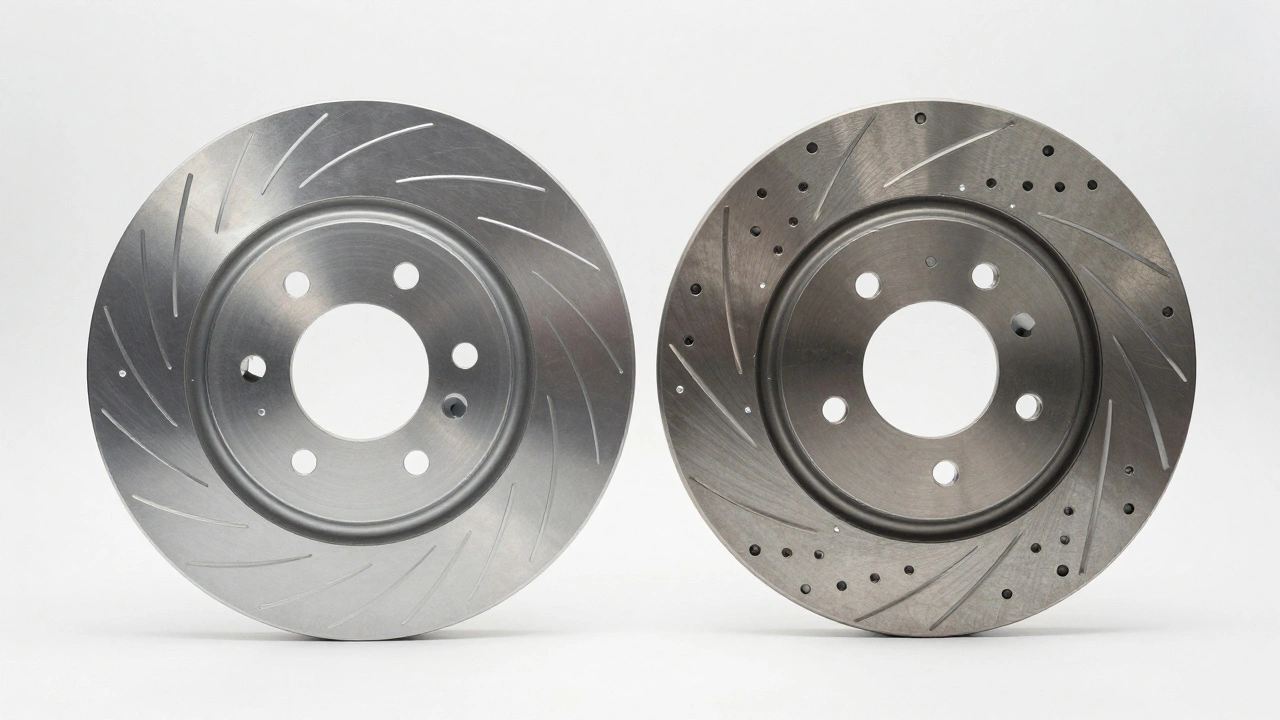
Since aftermarket brands offer so many choices, you need to know what the materials actually do. Not all pads are created equal, and picking the wrong one can lead to noisy brakes or, worse, longer stopping distances.
| Material | Best For | Pros | Cons |
|---|---|---|---|
| Ceramic | Daily Commuting | Low dust, very quiet, long rotor life | More expensive, requires more pedal pressure |
| Semi-Metallic | Towing & Performance | Great heat dispersion, strong stopping power | Faster rotor wear, noisy, high dust |
| Organic | Budget/Light Use | Cheapest, very soft pedal feel | Wears out quickly, low durability |
Cost and Warranty Realities
Let's talk money. OEM brake rotors and pads usually carry a premium. You're paying for the brand name and the guarantee of precision. It's not uncommon for OEM pads to cost significantly more per axle than a high-quality aftermarket set. If you're on a tight budget, the aftermarket route is almost always the winner.
Then there's the warranty. This is where aftermarket parts often surprise people. While an OEM part might come with a standard one-year warranty, reputable aftermarket brands like Duralast often provide limited lifetime warranties. This means if the pads wear down, you can get a replacement set for free. However, be careful: the cheapest "no-name" brands often have no warranty at all, and a failure in a cheap rotor can be a dangerous and expensive mistake.
Making the Choice: Which One Should You Buy?
So, how do you actually decide? It usually comes down to the age of your car and your driving habits. If you've just bought a brand new car or you're still under the manufacturer's warranty, sticking with OEM is the safest bet. It keeps the car's performance exactly as the engineers intended and ensures you don't void any factory guarantees.
On the flip side, if you're driving an older vehicle-say a 2015 sedan-spending a fortune on OEM parts might be overkill. This is the perfect time to look at high-quality aftermarket options. If you find yourself driving aggressively or hauling heavy loads, moving to a semi-metallic or performance-grade rotor can actually make your car safer by reducing the risk of overheating and brake fade.
The biggest pitfall with aftermarket parts is the "quality gap." Because anyone can manufacture a rotor, some low-end options don't meet the strict safety standards of the original equipment. To avoid this, don't just buy the cheapest option on a website. Look for brands with a proven track record, read actual user reviews, and check if the part is certified by industry standards.
Will aftermarket brake rotors make my car less safe?
Not necessarily. If you buy from a reputable brand, aftermarket rotors are just as safe as OEM parts and can sometimes be superior. The risk only arises when you buy "budget" or "no-name" parts from unverified sellers that may use inferior metals, which can lead to warping or cracking under high heat.
Why are OEM brake pads more expensive?
OEM parts are more expensive because they are engineered specifically for one vehicle model, ensuring a perfect fit and a balanced performance profile (noise, dust, and wear). You are also paying for the manufacturer's brand and the rigorous testing they conduct to meet original safety specifications.
Do I need to replace rotors every time I change pads?
Not always, but it's recommended. If your rotors are thin, warped, or have deep grooves, new pads won't seat properly, which leads to noise and reduced stopping power. At the very least, you should have your rotors "resurfaced" or turned if they are still thick enough to be safe.
Which is better for a daily driver: Ceramic or Semi-Metallic?
For most daily drivers, ceramic pads are the best choice. They provide a quiet ride, create very little brake dust, and last a long time. Semi-metallics are better for those who do heavy towing or high-performance driving, as they handle extreme heat better but are noisier and wear down rotors faster.
How can I tell if my rotors are warped?
The most common sign is a vibrating or pulsing feeling in the brake pedal or steering wheel when you slow down from high speeds. This happens because the rotor is no longer perfectly flat, causing the pads to "bounce" as they grip the surface.
Next Steps for Your Brake Service
If you're hearing a grinding noise or feeling a pulse in your pedal, don't wait. Your first step should be a professional inspection to see if your rotors can be resurfaced or if they need a full replacement. If you decide to go the aftermarket route, make a list of your priorities: is it low noise, maximum stopping power, or the lowest possible price? Once you have that, match your needs to the material (Ceramic vs. Semi-Metallic) and pick a brand with a strong warranty to protect your investment.