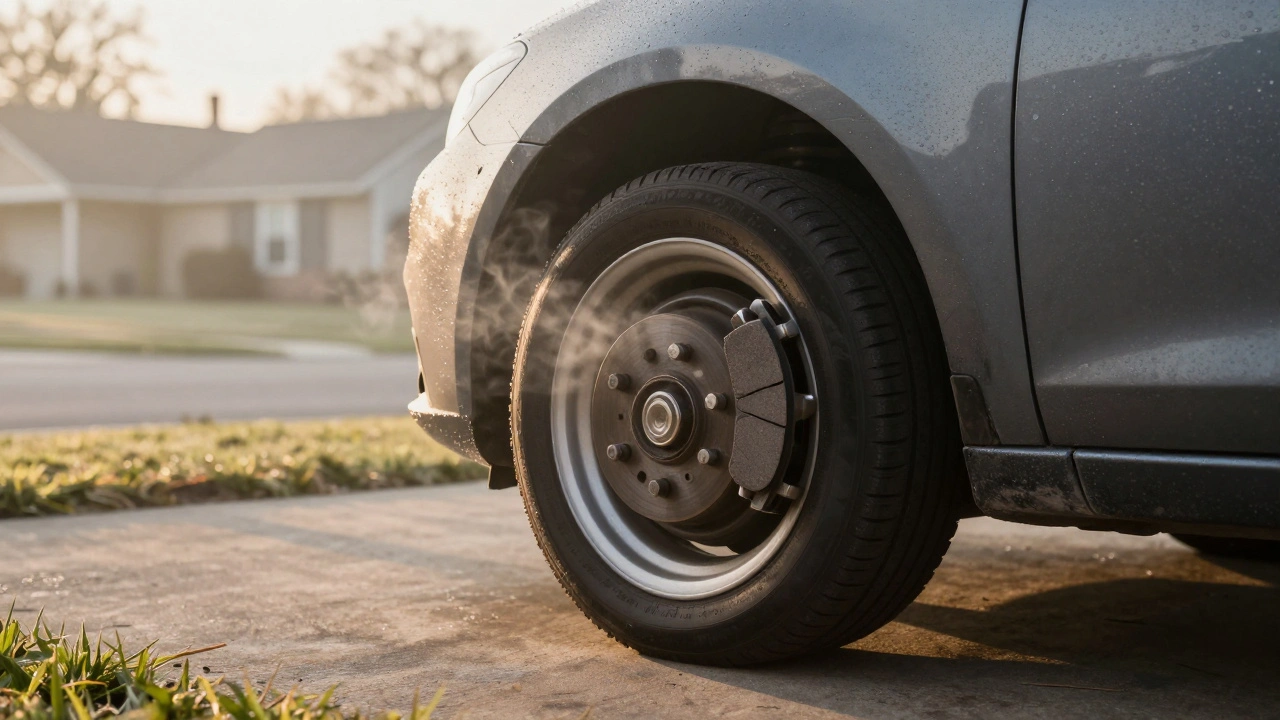
Ever had your car make a sharp, high-pitched squeal right after getting new brakes? You pull into the driveway, turn off the engine, and think: Did they mess up? You’re not alone. Most drivers panic when their brakes scream after a service. But here’s the truth: brake squeal after service is often completely normal-and not a sign of danger. The real issue isn’t the noise itself. It’s whether that noise comes with other warning signs.
Why Do Brakes Squeal After Replacement?
Your brakes work by squeezing pads against rotors. That friction turns speed into heat. And heat + vibration = noise. Think of it like rubbing your fingers across a glass bottle-it sings. New brake pads and rotors need time to settle into each other. This is called bedding-in. During this phase, tiny particles from the pad material transfer onto the rotor surface, creating an even, consistent friction layer. Until that layer forms, you’ll likely hear squealing, especially when braking gently or at low speeds.
Firestone Complete Auto Care confirms this: it’s normal to hear noise after new brake installation. The bedding process can take anywhere from 100 to 300 miles, depending on your driving habits. If you’re mostly driving in stop-and-go traffic, it’ll take longer. If you’re doing highway runs with occasional braking, it might quiet down in just a few days.
The #1 Cause of Post-Service Squealing: Dry Hardware
Here’s where things go wrong: improper installation. Many shops skip one simple step-lubricating the brake hardware. Brake pads don’t just touch the rotor. They slide on metal clips, caliper pins, and backing plates. If those contact points aren’t coated with high-temperature brake grease, metal rubs against metal. That’s not friction. That’s grinding. And it sounds like a squeal.
Kevin’s Mobile Automotive Repair sees this all the time. A customer comes in saying their new brakes are screaming. The mechanic lifts the car, checks the pads and rotors-they’re fine. But the caliper slide pins? Bone dry. A quick application of brake lubricant and the noise disappears. No replacement needed. Just a $15 tube of grease and 20 minutes of labor.
Shims matter too. Most OEM pads come with anti-vibration shims-thin metal or rubber layers between the pad and caliper. If those are missing, or if cheap aftermarket pads skip them entirely, you’ll get noise. Ceramic pads with shims? Quiet. Semi-metallic pads without shims? Loud.
Environmental Factors: Dew, Rust, and Cold
It’s 6 a.m. in Portland. The air is damp. Your car sat outside all night. You back out of the driveway, press the brake, and-squeal! That’s not your brakes failing. That’s moisture.
Brake rotors are steel. Steel + humidity + overnight air = a thin layer of surface rust. It’s harmless. It’s everywhere. When you brake, the pads scrape off that rust. That’s what causes the noise. It usually stops after one or two stops. If you live in a humid climate, this happens often. It’s not a defect. It’s physics.
Cold weather makes it worse. Metal contracts. Pads stiffen. The friction changes slightly. You’ll hear more noise in winter-even if your brakes were perfect last summer.
Material Matters: Ceramic vs. Semi-Metallic
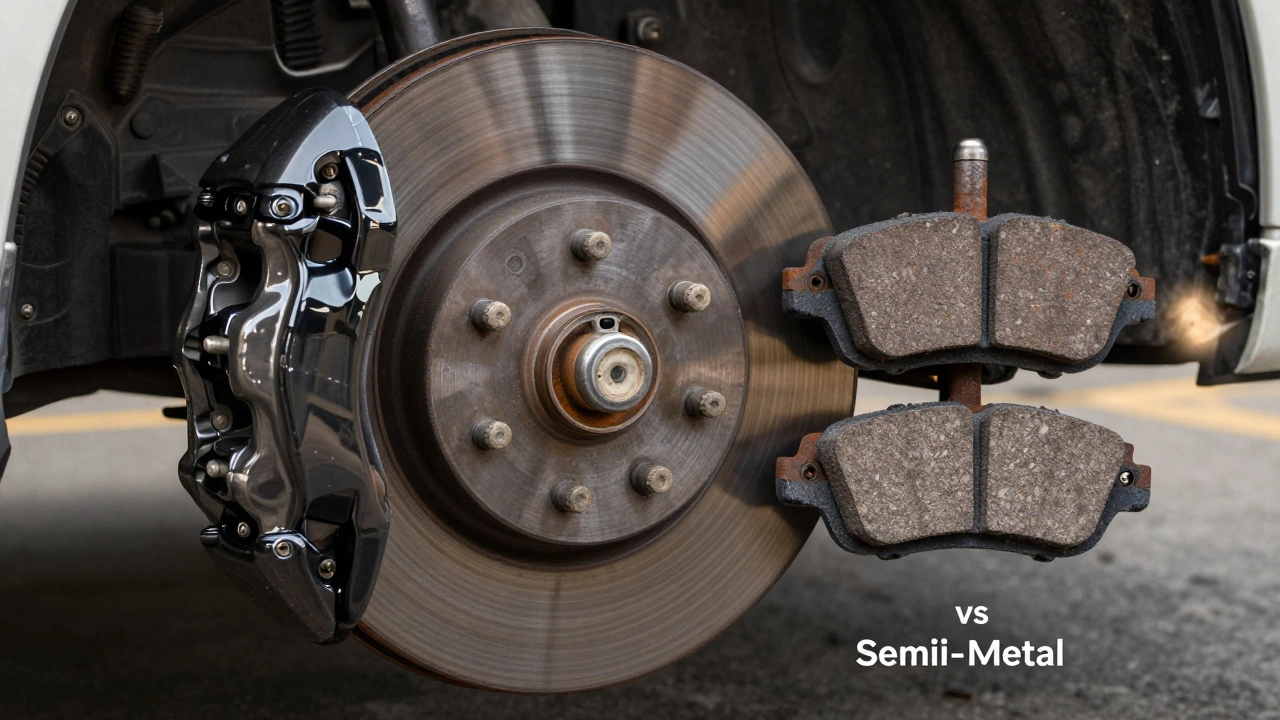
Not all brake pads are created equal. If your mechanic installed semi-metallic pads-common in budget replacements-you’re more likely to hear noise. These pads contain metal fibers that grip well but create more vibration. They’re durable and handle heat well, but they’re noisier.
Ceramic pads? They’re quieter, produce less dust, and last longer. But they cost more. If you’re getting squealing right after service and you didn’t ask for ceramic pads, you might’ve gotten the cheaper option. That’s not bad. It’s just different. Think of it like choosing between a sports car and a sedan. One’s louder. The other’s smoother.
When Squealing Is a Red Flag
Now, the part you’re scared of: when the noise means trouble.
Brake squeal alone? Probably fine. But squeal + other symptoms? That’s your signal to get it checked.
- Grinding noise-not a squeal, but a deep, metallic growl? That’s metal-on-metal. Your pads are worn out. If this happens right after service, it means the old rotors weren’t resurfaced or replaced. Bad job.
- Vibration or pulsing in the brake pedal or steering wheel? That’s warped rotors. Overheating from heavy braking can warp them. If the rotors weren’t checked or replaced during service, they’re likely the culprit.
- Burning smell? That’s overheated brakes. Maybe you drove aggressively right after the service, or the calipers are sticking. Either way, don’t ignore it.
- Brake warning light? That’s the system telling you something’s wrong-low fluid, worn pads, or a sensor issue.
- Car pulls to one side when braking? That’s a stuck caliper or uneven pad wear. Could’ve been missed during installation.
- Brake pedal feels spongy or too hard? That’s air in the lines or a hydraulic issue. Not normal after a pad job.
If you’re hearing any of these alongside noise? Don’t wait. Drive carefully. Get it looked at today.
What Should You Do After a Brake Service?
Here’s a simple checklist:
- Drive normally for the first 50 miles. Avoid heavy braking. Let the pads bed in.
- Listen. If the squeal fades over a few days? You’re good.
- If it gets louder, or you feel vibration, smell burning, or see the warning light? Stop driving and call your mechanic.
- Check for rust buildup in the morning. If it goes away after one stop? No problem.
- Ask your mechanic: "Did you lubricate the caliper pins and install shims?" If they say "I don’t know," find a new shop.
Most squealing after service is temporary. But a few minutes of attention now can save you $800 later. Replacing a warped rotor after ignoring the problem? That’s not cheap. Replacing calipers because they seized? Even worse.
When to Trust Your Gut
Some cars naturally make more noise. Performance models, trucks, and vehicles with metallic pads often have a light growl or squeak under heavy braking. That’s normal. But if your 2018 Honda Civic suddenly sounds like a banshee after a brake job? That’s not normal.
Your car knows its own rhythm. If the noise feels off, or if it’s worse than before the service, don’t dismiss it. You don’t need to be a mechanic to know when something’s wrong. Trust your ears. Trust your instincts. And if in doubt-get it checked.
Brakes are one of the most critical safety systems on your car. Noise is just noise. But when noise hides a bigger problem? That’s when you pay the price.