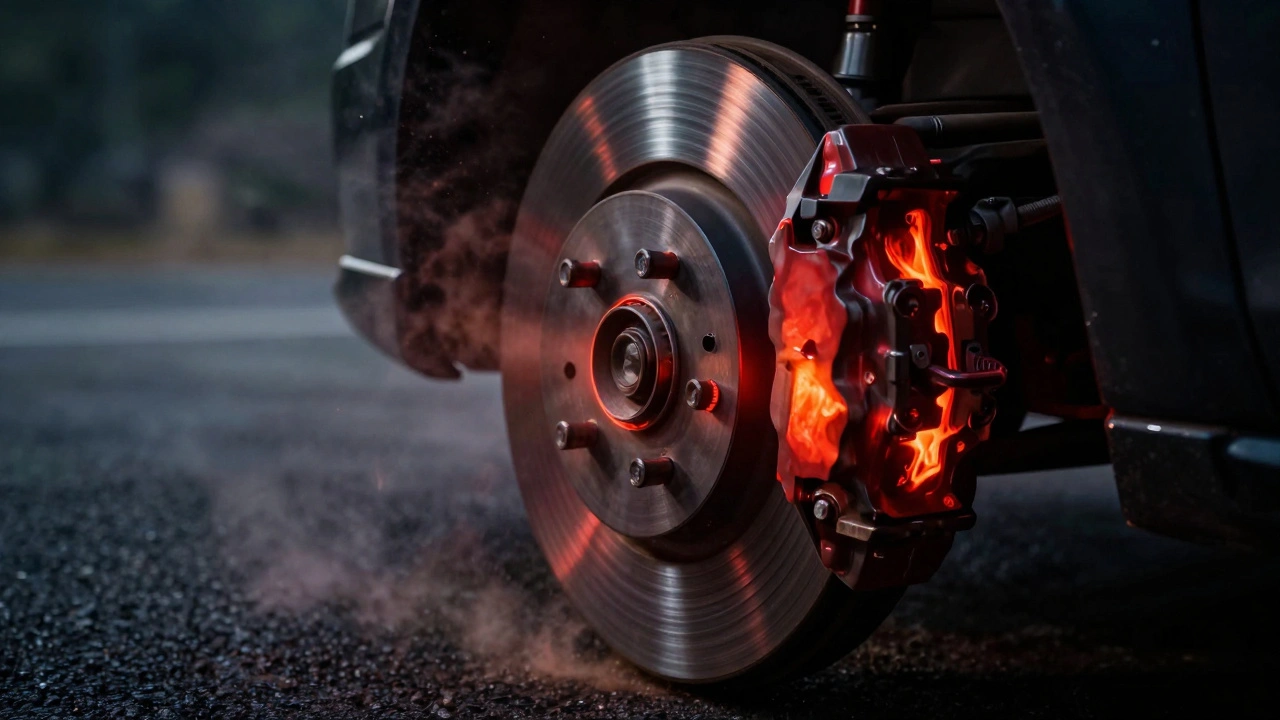
Why Your Stock Brakes Fail Under Pressure
When you hit the brakes hard at a track day or even navigating a steep mountain road, you are dealing with physics you cannot negotiate. Kinetic energy must go somewhere, and your stock brake system is designed for typical commuting, not sustained high-energy dissipation. Most modern factory brakes are excellent for daily life, but they reach thermal limits quickly when pushed beyond normal parameters. Once the heat exceeds the boiling point of the hydraulic fluid or the friction coefficient of the pads drops due to temperature, you experience brake fade-a spongy pedal that offers little stopping power.
This is where a dedicated brake upgrade becomes necessary, not just for speed, but for safety and consistency. Upgrading isn't about replacing everything immediately; it requires understanding the hierarchy of performance gains. Some enthusiasts spend thousands on oversized rotors while neglecting their brake fluid, effectively wasting money because the hydraulic integrity collapses before the metal components do.
The Foundation: High-Performance Brake Fluid
If you only change one part of your braking system, it should be the fluid. Factory fill is typically DOT 3 brake fluidStandard hydraulic fluid with a lower boiling point designed for street temperatures, which can boil under the extreme conditions of track driving. When brake fluid boils, gas bubbles form in the lines. Since gas compresses and liquid does not, your pedal sinks toward the floor, leaving you with zero clamping force.
Racing fluids like Motul RBF 600High-performance racing brake fluid known for high dry and wet boiling points or Castrol SRF are engineered to resist this thermal breakdown. These formulations withstand temperatures that would vaporize standard fluid instantly. The technical difference is stark: switching to a high-performance fluid is cheap maintenance that buys you immediate confidence and prevents catastrophic failure during aggressive driving. If you plan to run multiple hot laps, this is your absolute first step before buying expensive hardware.
Selecting the Right Brake Pad Compound
Pads are the friction source, and their chemical makeup dictates your performance window. You cannot buy a single "best" pad; the choice depends entirely on where you drive.
| Compound Type | Best For | Dust Level | Thermal Limits |
|---|---|---|---|
| Ceramic | Daily Driving | Very Low | Moderate |
| Semi-Metallic | Street & Light Track | Medium | High |
| Carbon-Ceramic/Race | Hard Track Use | High | Extreme |
Ceramic padsBrake pads using ceramic fibers offering low dust and noise are ideal for commuting. They run quietly, produce minimal dust on your wheels, and function well in street temps. However, they struggle on the track where the heat exceeds their operational range. Semi-metallic padsFriction material with metal shavings offering higher bite and heat tolerance offer a stronger initial bite and handle heat better, but they grind rotors faster and can sound squeaky. If you are doing serious competition, race-specific compounds deliver superior heat resistance but are often too noisy and rough for legal street driving. The wrong pad choice leads to poor modulation-grabbing unexpectedly or fading prematurely.
Rotors and Thermal Management
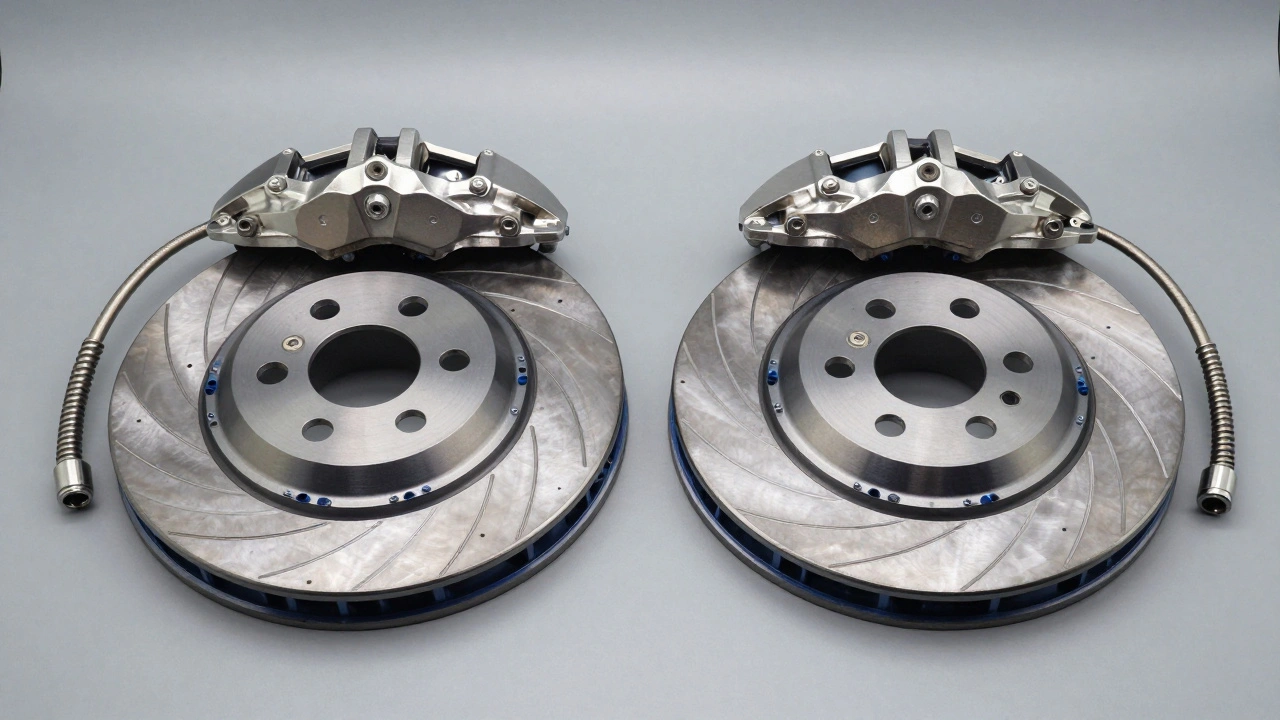
Your rotors act as heat sinks. Their ability to absorb and release thermal energy determines how quickly you can repeat hard stops. Standard rotors are solid discs, but performance upgrades utilize slotted or drilled designs. Slotted rotors help disperse water and gas, keeping the pad surface clean for consistent contact. Drilled rotors reduce weight, lowering unsprung mass, which improves vehicle handling dynamics.
For high-level builds, Two-piece rotorsHigh-performance brake rotor design separating hat and disc for weight reduction and heat isolation are the gold standard. They separate the mounting hub from the friction ring, reducing weight significantly. More importantly, they isolate heat. Because the heat stays in the disc rather than transferring through the hub to the wheel bearing, you avoid premature bearing failures and warping. A comprehensive stage kit featuring 12.5-inch two-piece rotors with cross-drilling has been shown to reduce braking distances by approximately 30% compared to stock setups, largely due to the increased surface area and superior heat dissipation rates.
Upgrading Hydraulics and Pedal Feel
A common oversight in brake upgrades is the hydraulic path itself. Factory rubber brake lines expand under pressure. Imagine squeezing a garden hose versus a rigid copper pipe; the hose swells, absorbing some of your pedal effort before reaching the caliper. Replacing rubber lines with Stainless steel braided linesFlexible high-pressure hoses with stainless steel braiding to prevent expansion eliminates this compliance. The result is a firmer pedal feel and more precise feedback. You know exactly how much pressure is being applied to the caliper.
Beyond lines, the calipers themselves dictate clamping force. Stock calipers often use a floating design with one or two pistons. Aftermarket fixed calipers can feature four, six, or even eight pistons. While more pistons increase potential clamping force, diminishing returns set in quickly. A well-sized six-piston billet aluminum setup provides significantly higher leverage over the rotor than stock units, allowing for shorter stopping distances when paired with larger rotors.
Integrating Cooling and Airflow
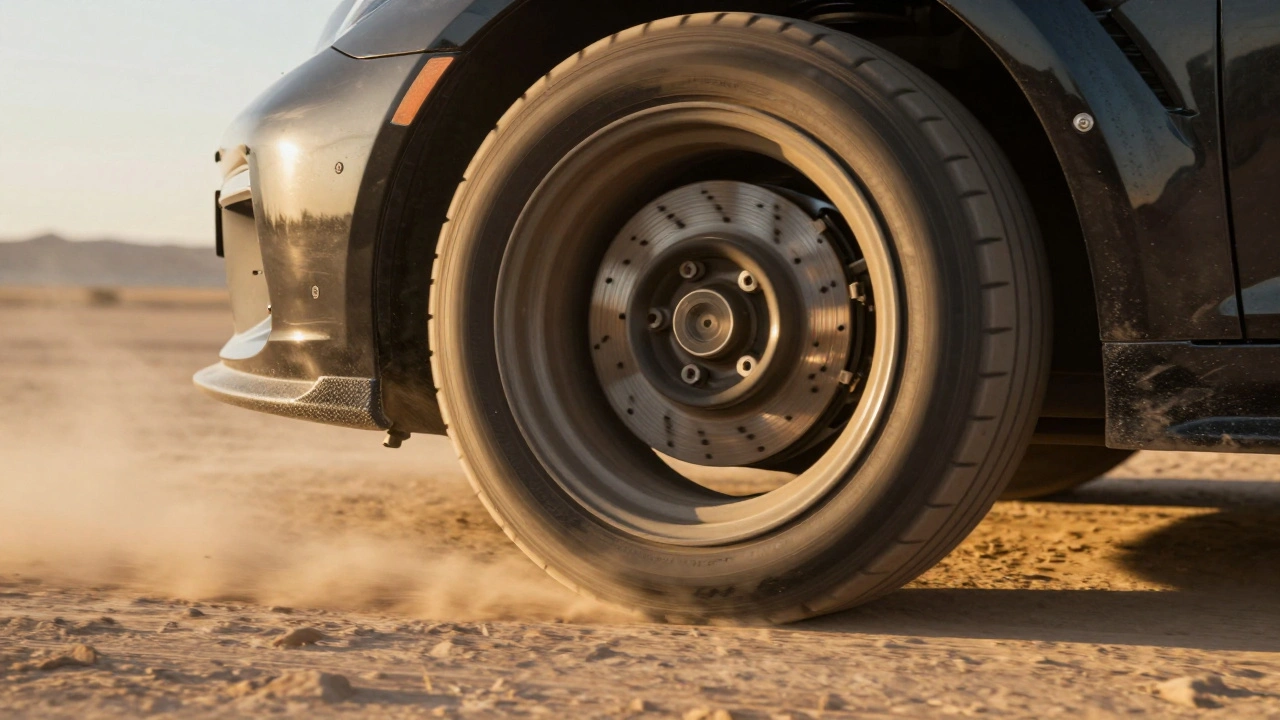
You can have the best pads and rotors, but without airflow, they will eventually overheat. Race cars feature large scoops directing cool air directly to the brakes. For street cars, ducts are essential for sustained performance. Proper cooling maintains components within their effective temperature windows. If the heat buildup rate exceeds the cooling rate, the system degrades regardless of component quality. Check for existing ducting on your fenders; often a simple bracket modification can route air much more efficiently than buying new parts.
Do You Need a Full Big Brake Kit?
Not every driver needs a massive upgrade. Vehicles like the latest Porsches or Corvettes already ship with oversized performance brakes. Adding a bolt-on kit to these cars offers negligible gains compared to the cost. Conversely, heavily modified trucks or SUVs with oversized tires carry significant rotational mass. Restoring braking capability on these machines requires hardware capable of managing the extra weight.
Focus on the system balance. Upgrading only one side (like front brakes only) shifts the bias and can cause instability under heavy deceleration. Always consider the interaction between your suspension geometry, tire grip, and brake force distribution. If your tires slide before your brakes lock, increasing brake power further won't help you stop sooner-you are limited by traction, not hydraulics.
Maintenance and Bedding-In Protocols
New high-performance parts require a break-in period. Bedding-in procedureProcess of heating and cooling new brake pads to transfer friction material ensures the pad surface transfers evenly onto the rotor. This minimizes noise and maximizes friction potential. Perform gradual acceleration and deceleration cycles to generate moderate heat, avoiding locking the wheels, then allow the system to cool completely. Rushing this step ruins the pad life instantly. Inspect pads and lines every 12,000 miles to catch wear early. Flush fluid regularly to prevent moisture absorption, which lowers the boiling point back down toward dangerous levels.