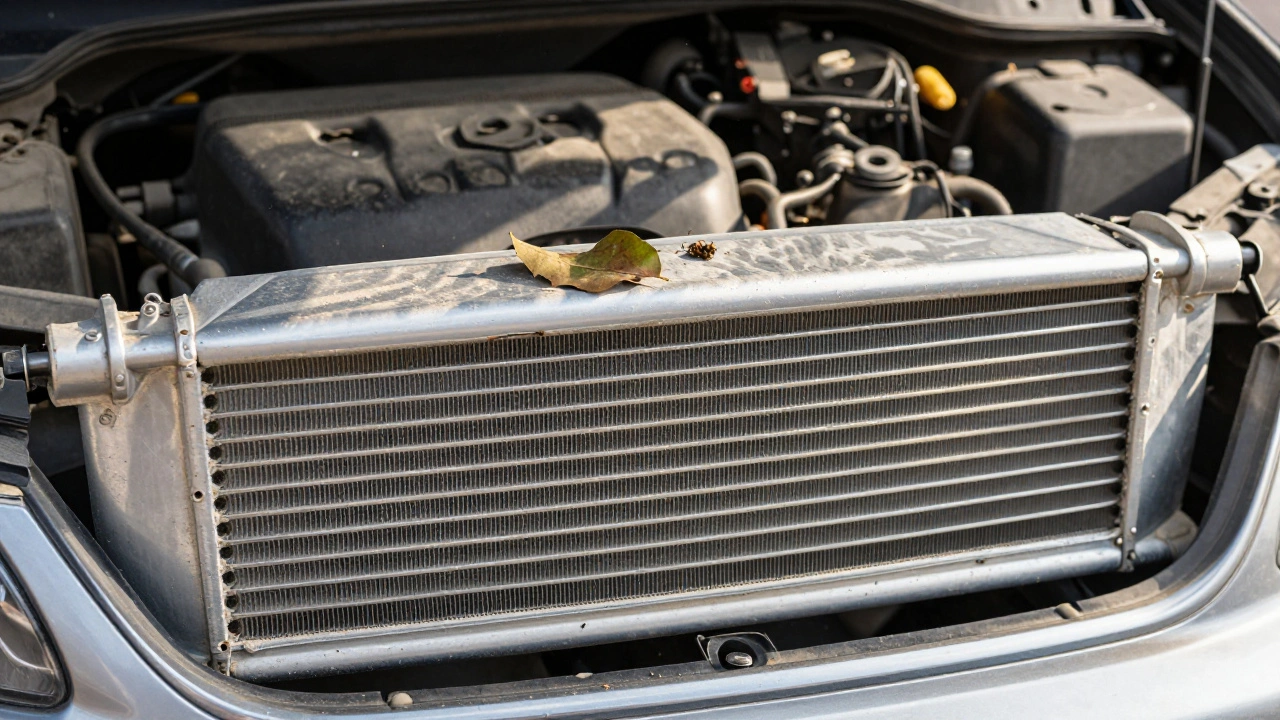
When your car’s air conditioning stops blowing cold air, most people assume it’s a refrigerant leak or a broken compressor. But before you spend hundreds on repairs, check something simpler - and often overlooked - the car AC condenser. Dirt, bugs, leaves, and road grime build up on it over time, blocking airflow and killing cooling efficiency. Cleaning it can bring your AC back to life without touching a single pipe or valve.
Why Your AC Isn’t Cooling Like It Used To
The condenser is the first heat exchanger in your car’s AC system. It sits right in front of the radiator, behind the grille, where it’s meant to dump heat from the refrigerant into outside air. But that spot is also where every bit of debris from the road gets trapped. A layer of dirt as thin as a credit card can cut airflow by 40% or more. When that happens, the refrigerant can’t cool down properly. That means higher pressure in the system, which forces the compressor to work harder. Over time, that extra strain breaks down the oil inside the compressor. Once the oil fails, the compressor locks up - and replacing it costs $800 to $1,500.Most people don’t realize this, but a dirty condenser doesn’t just make the cabin warm. It also stresses the engine. The AC system shares cooling resources with the engine, and when the condenser is clogged, heat builds up in the whole front end. That’s why you might notice your engine running hotter on hot days - even if the temperature gauge looks fine.
What You’ll Need to Clean It
You don’t need special tools or training. Just a few things you probably already have:- A garden hose with an adjustable nozzle (no pressure washer)
- A soft-bristle brush (an old toothbrush or a dedicated fin brush works)
- Mild dish soap or an automotive degreaser (like CalClean)
- Microfiber cloths
- Gloves and safety glasses
Don’t use aerosol cleaners or products labeled for evaporators. Those are for inside the cabin and can damage the condenser’s metal. Stick to condenser-specific cleaners. If you’re using a concentrated formula, mix one part cleaner to four parts water. Never go below a 1:3 ratio - weaker solutions won’t cut grease.
Step-by-Step Cleaning Process
- Turn off the engine and let it cool. Hot metal + water = steam and potential burns. Wait at least 30 minutes after driving.
- Locate the condenser. It’s right behind the front grille, usually next to the radiator. You can see it by looking through the grille or popping the hood and peering down.
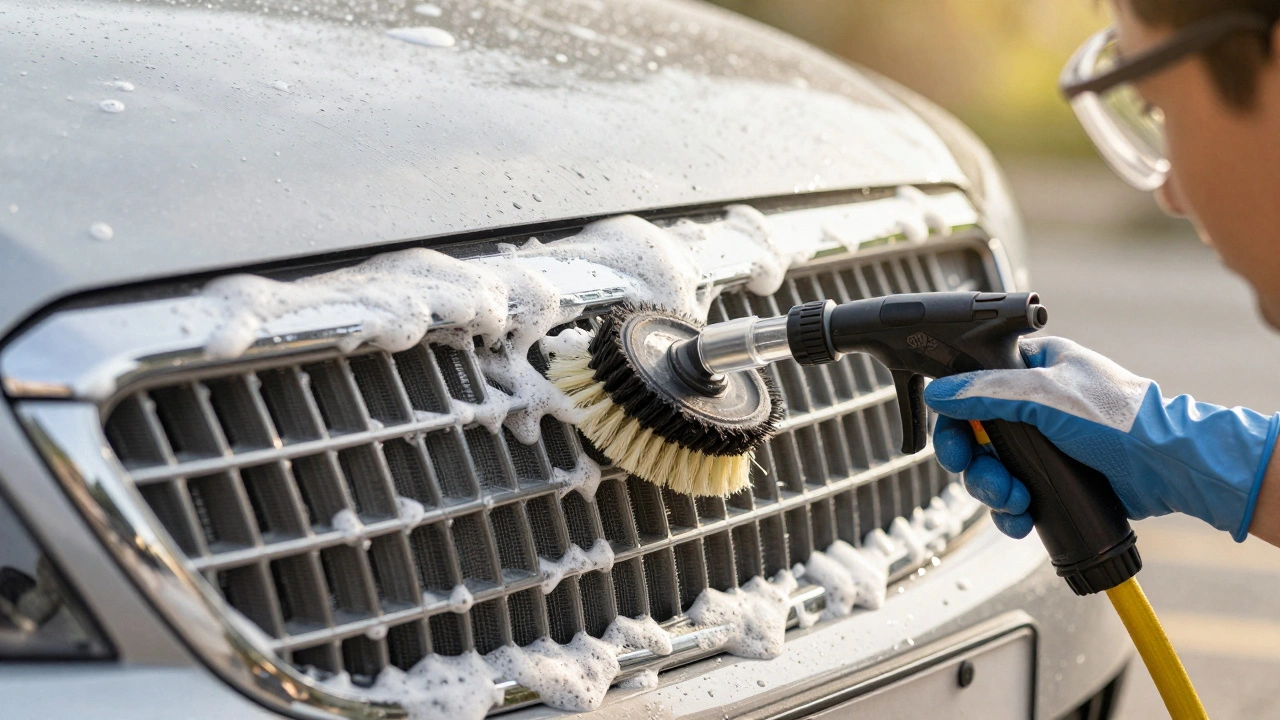
- Rinse gently. Set the hose to a low-pressure stream. Spray from the top down, letting gravity pull debris away. Don’t spray sideways - you’ll push dirt deeper into the fins.
- Apply cleaner. If there’s heavy grease or bug residue, spray the cleaner directly onto the surface. Let it sit for 5 to 10 minutes. Foam cleaners work best here - they cling and break down grime without running off.
- Brush gently. Use the soft brush to lightly scrub between the fins. Don’t pry or force it. The fins are thin aluminum - they bend easily. Brush in the same direction the fins run, not across them.
- Rinse again. Wash away all soap and loosened debris. Use the same low-pressure stream. If water still runs dark, repeat the cleaning step.
- Dry with a microfiber cloth. Wipe the surrounding area to prevent water spots. Don’t let it air-dry; mineral deposits can build up and attract more dirt.
What Not to Do
Here’s where most DIYers mess up:
- Never use a pressure washer. Even on low settings, the force can bend or collapse fins. Once bent, airflow is permanently reduced.
- Avoid harsh chemicals. Brake cleaner, engine degreasers, or household cleaners can eat away at the aluminum and rubber seals.
- Don’t skip the radiator. If the radiator is clogged too, cleaning the condenser won’t help much. Clean both at the same time.
- Don’t clean if the system is leaking. If refrigerant is escaping, cleaning won’t fix the root problem. You’ll just be wasting your time.
When to Clean It
You don’t need to clean it every month. But if you drive in dusty areas, near farms, or in places with heavy tree cover, check it every 6 months. In cities with less debris, once a year is enough. Look for signs: if your AC blows lukewarm air even on high fan, or if the compressor cycles on and off more than usual, it’s time.
Some owners notice a big difference after just one cleaning. One mechanic in Portland reported a 2023 Honda CR-V that had been running warm for months. After cleaning the condenser - no refrigerant added, no parts replaced - the cabin cooled 15°F faster and stayed colder longer. The owner saved $1,200 on a compressor replacement.
What Happens After Cleaning
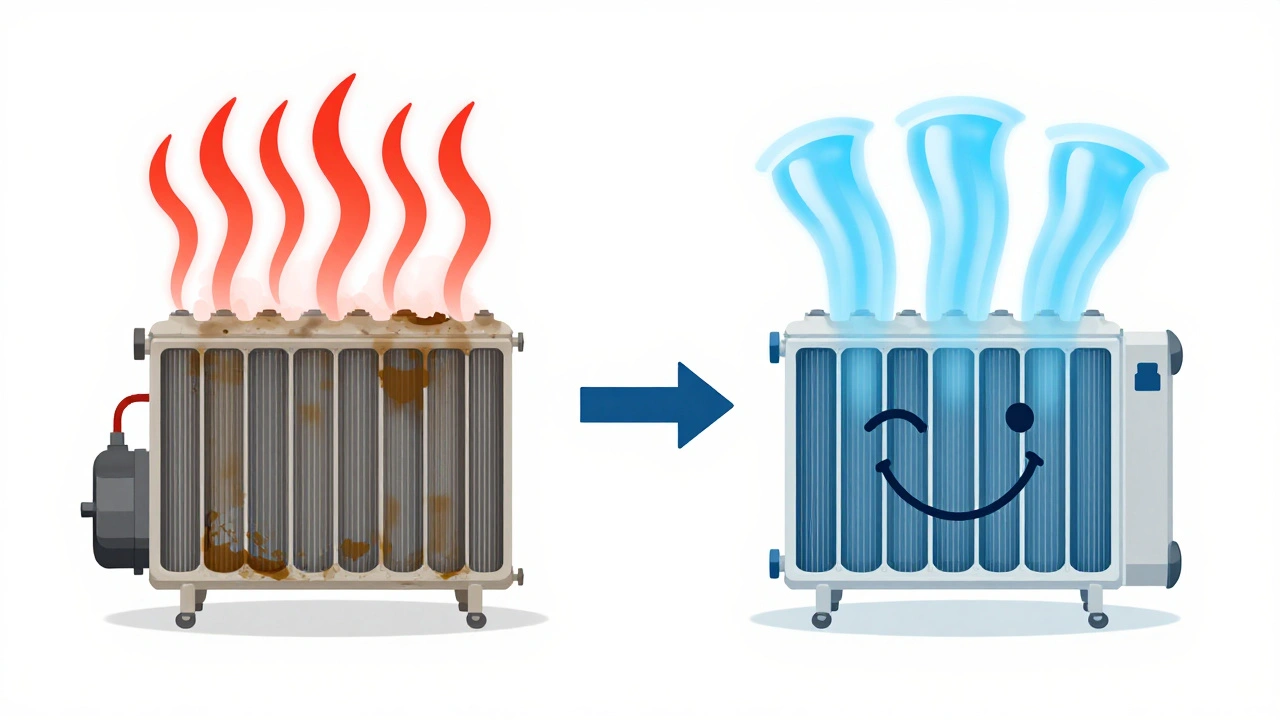
Once the condenser is clean, the refrigerant cools more efficiently. That means lower pressure in the system. Lower pressure = less stress on the compressor. That means longer life. You’ll also notice your car’s engine runs cooler because the AC isn’t fighting itself. Fuel efficiency might improve slightly too - the engine doesn’t have to work as hard to run the compressor.
Some people use protective coatings after cleaning. These are optional. They’re meant to repel bugs and dirt, but they don’t replace regular cleaning. And they won’t fix a damaged condenser.
Fin Combs: Fixing Bent Fins
If you notice bent fins after cleaning, don’t panic. You can fix them. Fin combs - small, metal tools with evenly spaced teeth - slide between the fins and gently straighten them. They cost under $15 online. Use them carefully. Don’t force them. The goal isn’t to make it look perfect - it’s to restore airflow.
Most people think bent fins mean the condenser is ruined. But with a comb and a little patience, you can often restore 80% of its original efficiency.
Is This Worth It?
A full AC recharge costs $100-$150. A compressor replacement? $1,000+. This cleaning takes 30 minutes and costs maybe $10 for cleaner. It’s the cheapest, safest, and most effective way to keep your AC working. Skip the guesswork. Clean the condenser before you assume the worst.
And if you’ve been ignoring your AC because it’s "not that bad"? Do it now. The longer you wait, the more damage you’re doing to the compressor. This isn’t a luxury. It’s preventive maintenance - like changing your oil, but cheaper and faster.
Can I clean the AC condenser with a pressure washer?
No. Pressure washers can bend or collapse the delicate aluminum fins on the condenser, permanently reducing airflow and cooling efficiency. Always use a garden hose with low pressure or no nozzle at all.
How often should I clean my car’s AC condenser?
If you drive in dusty, rural, or wooded areas, clean it every 6 months. In cities or dry climates, once a year is enough. Check it visually - if you see bugs, leaves, or grime packed between the fins, it’s time to clean.
Do I need to remove the bumper to clean the condenser?
No. Most condensers are accessible from the front without removing any panels. You can reach the entire surface by looking through the grille or opening the hood. Removing the bumper is only needed if you’re replacing the condenser, not cleaning it.
Can I use household cleaners like Dawn or Simple Green?
Mild dish soap like Dawn is safe in a diluted mix (1:4 with water). Avoid strong degreasers or chemicals not made for automotive AC. Simple Green can work if diluted, but avoid concentrated formulas - they can corrode aluminum over time. Condenser-specific cleaners like CalClean are the safest choice.
Will cleaning the condenser fix a refrigerant leak?
No. Cleaning removes dirt and improves airflow, but it won’t stop refrigerant from escaping. If your AC isn’t cooling and the system is low on refrigerant, you likely have a leak. Cleaning helps performance, but it’s not a fix for leaks.
Still not getting cold air after cleaning? Then it’s time to check the refrigerant level or have a pro inspect the compressor. But if your AC was weak and now feels normal? You just saved yourself hundreds - and maybe thousands.