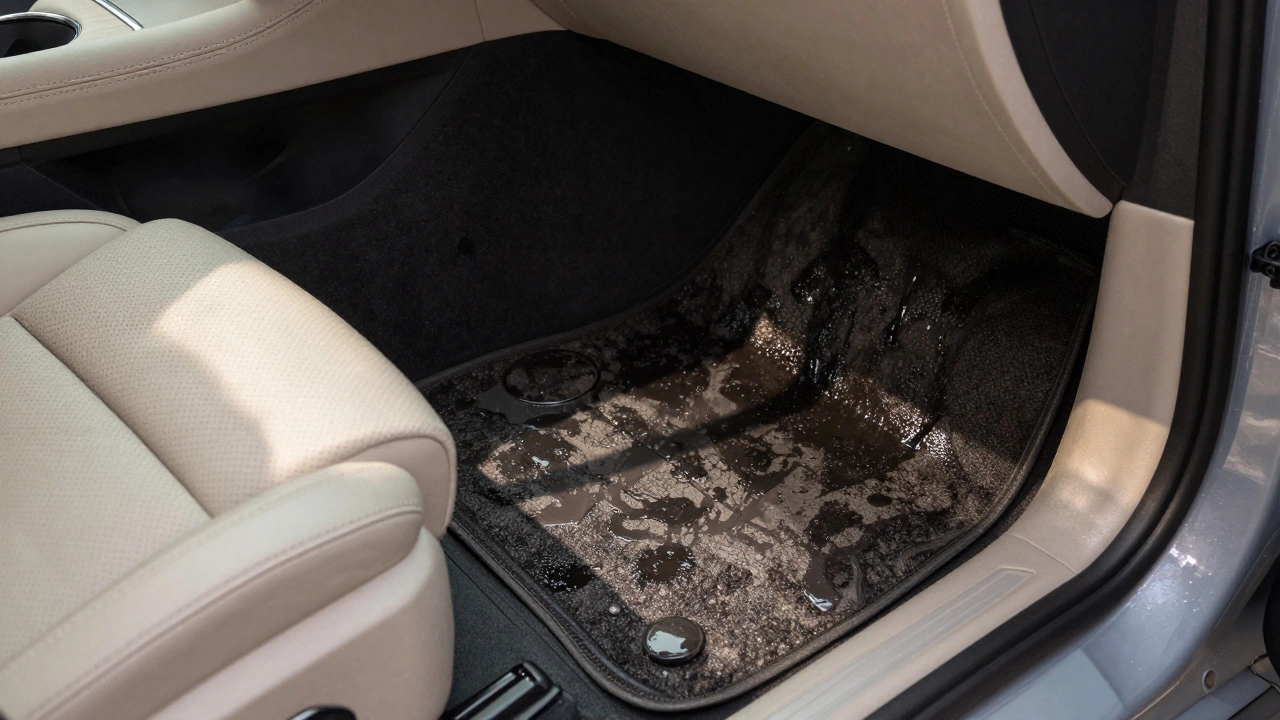
There is nothing worse than sliding into your car on a humid day, turning on the air conditioning, and feeling a cold draft hit your face-only to realize your passenger-side floor mat is soaking wet. It’s a frustrating scenario that many drivers face, especially during summer months. While seeing a small puddle under your car while parked is normal condensation, water leaking inside the cabin is not. It signals a failure in your vehicle's drainage system or HVAC components.
If you ignore this issue, it quickly turns from an annoyance into a costly repair job. Standing water breeds mold and mildew, creating that distinct "wet dog" smell that clings to your upholstery. Worse yet, moisture can seep into electrical connectors, damaging sensitive control modules or triggering warning lights on your dashboard. The good news? In most cases, the cause is simple and fixable. Let’s break down why this happens and how to get your car dry again.
Why Does Water Leak Into the Cabin?
To understand the leak, you first need to understand how the system works. When your AC runs, the evaporator core cools the air entering your cabin. This cooling process pulls moisture out of the air, which condenses into liquid water on the coils. Normally, gravity pulls this water into a collection pan, and it exits through a rubber hose called the AC drain line. You should see water dripping underneath the front passenger side of your car when the AC is running. If you don’t see water outside, but you feel it inside, the drainage path is blocked or broken.
| Cause | Symptoms | Difficulty Level |
|---|---|---|
| Clogged Drain Line | Wet carpet, no water under car | Low (DIY possible) |
| Disconnected Hose | Puddles near firewall, damp mats | Medium (Professional recommended) |
| Frozen Evaporator Coil | Weak airflow, ice buildup, sudden warm air | High (Requires diagnosis) |
| Cracked Drain Pan | Water pooling in engine bay or cabin | Medium (Part replacement) |
| Low Refrigerant | AC blows cool then stops, ice on lines | High (Professional service) |
The #1 Culprit: Clogged AC Drain Lines
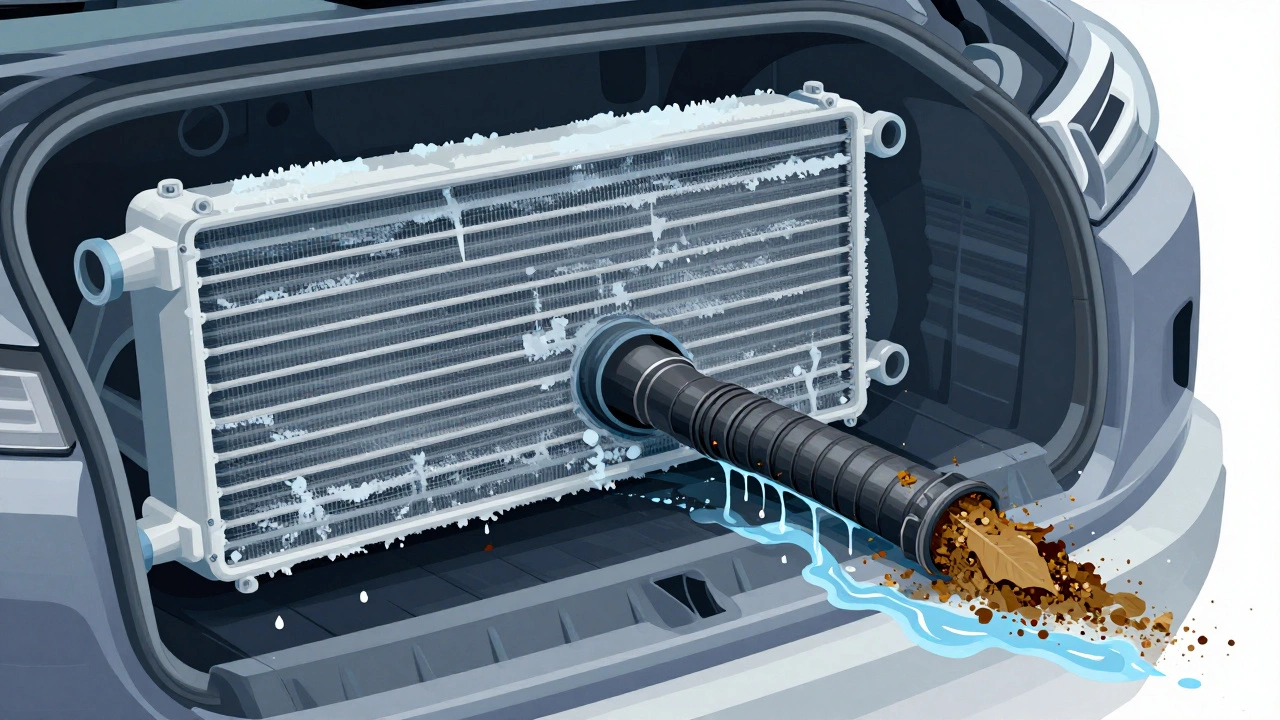
In the majority of cases, a simple blockage is to blame. Over time, dirt, dust, leaves, and even mold spores accumulate in the narrow rubber hose that carries water away from the evaporator. Think of it like a sink drain; if gunk builds up, the water has nowhere to go but backward. When the drain line clogs, condensation backs up into the HVAC housing and spills over onto the passenger floor mat.
You can often diagnose this yourself. Run your AC for five minutes with the fan on high. Get out and look under the passenger side of the dashboard. Do you see water dripping? If the ground is dry but your floor mat is wet, your drain line is likely plugged. For minor clogs, you might be able to clear it by blowing compressed air gently into the drain tube (usually accessible under the dash) or using a flexible wire to poke through the obstruction. However, be careful not to damage the soft rubber tubing.
When Components Fail: Hoses, Pans, and Seals
Sometimes the problem isn't a blockage, but a physical break in the system. The drain hose connects to the HVAC unit via clips or seals. If these connections loosen due to vibration, age, or improper previous repairs, water will spray or drip directly into the cabin instead of flowing out. Similarly, the drain pan itself can crack over time. These pans are often made of plastic that becomes brittle with heat cycles. A hairline fracture allows water to escape before it reaches the exit point.
Another subtle cause involves the seals around the evaporator case. Rubber seals dry out and shrink after years of use. When this happens, water seeps past the containment area. Fixing these issues usually requires removing parts of the dashboard or accessing the undercarriage, which is why professional diagnosis is often safer than guessing.
The Hidden Trigger: Frozen Evaporators and Dirty Filters
A less obvious cause is a frozen evaporator coil. When the AC system doesn't have enough refrigerant, or when airflow is restricted, the coil temperature drops too low and forms ice. Once the AC cycles off or the defrost mode engages, that ice melts rapidly. The volume of water produced exceeds the capacity of the drain line, causing an overflow into the cabin.
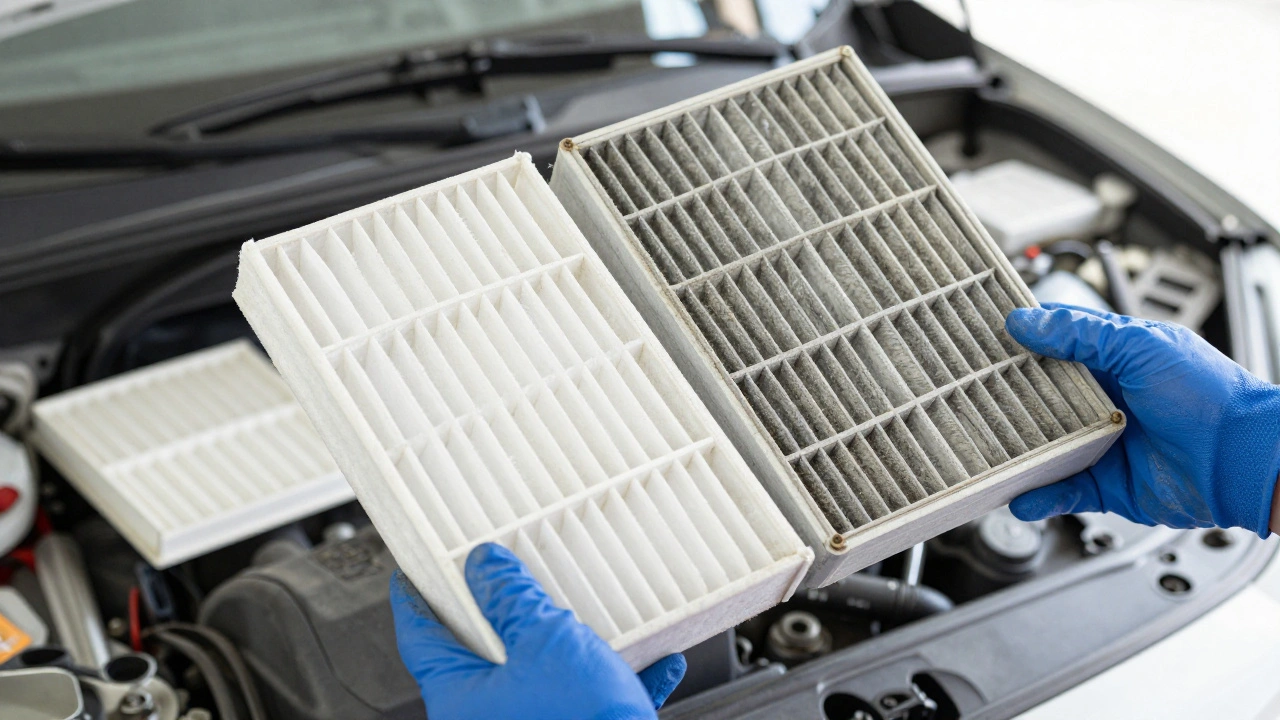
This is frequently linked to a dirty cabin air filter. If your filter is clogged with pollen and debris, air can't move freely across the evaporator. Restricted airflow causes the coil to freeze. Always replace your cabin air filter rather than trying to clean it; a new filter ensures proper airflow and prevents the coil from icing over. Check your owner’s manual for the replacement interval, typically every 15,000 to 30,000 miles.
Normal vs. Abnormal: Know the Difference
Before you panic, remember that some water leakage is completely normal. As noted by automotive experts, seeing a small puddle under the front passenger side of your car after driving with the AC on is expected behavior. That is simply condensation doing its job. Refrigerant, on the other hand, is a gas under normal operating conditions and does not leak as a liquid puddle. If you see oil-slicked fluid or brightly colored coolant, that is a different problem entirely.
The key distinction is location. Water under the car = normal. Water inside the car = problem. If the leak is frequent, heavy, or accompanied by a musty odor, it’s time to act.
How to Fix and Prevent Future Leaks
Fixing an interior leak depends on the root cause. For clogged drains, clearing the blockage solves the immediate issue. To prevent it from happening again, run your fan on high without the AC compressor engaged for the last few minutes of each drive. This helps blow residual moisture out of the system and keeps the drain line dry and clear of mold growth.
If the issue stems from low refrigerant, do not attempt to add freon yourself without diagnosing the leak. Low pressure indicates a breach in the sealed system. Adding refrigerant masks the problem and can damage the compressor. A technician needs to locate the leak, repair it, and recharge the system properly. For cracked pans or disconnected hoses, part replacement is required. These repairs vary in cost depending on labor intensity, but addressing them early prevents expensive mold remediation or electrical damage later.
Is it normal for my car to drip water when the AC is on?
Yes, it is normal to see water dripping from underneath the front passenger side of your vehicle when the air conditioning is running. This is condensation being removed from the cabin air. However, water leaking inside the cabin is never normal and indicates a drainage issue.
Can I unclog my AC drain line myself?
In many cases, yes. You can try using compressed air or a flexible wire to clear minor blockages in the drain tube located under the dashboard. Be gentle to avoid damaging the hose. If the clog persists or the hose is damaged, professional assistance is recommended.
What causes a musty smell in my car along with water leaks?
A musty or mildew-like smell usually indicates that stagnant water has accumulated in the HVAC system, leading to mold or bacterial growth. This often happens when the drain line is partially clogged or the evaporator coil remains wet for extended periods.
Does a dirty cabin air filter cause water leaks?
Indirectly, yes. A clogged cabin air filter restricts airflow, which can cause the evaporator coil to freeze. When the ice melts, it produces more water than the drain line can handle, resulting in an overflow into the cabin.
How much does it cost to fix an AC water leak inside the car?
Costs vary widely based on the cause. Clearing a clogged drain line may cost little to no money if done DIY, or $50-$150 for a shop visit. Replacing a drain pan or fixing refrigerant issues can range from $200 to $600+ depending on labor and parts. Early diagnosis keeps costs lower.