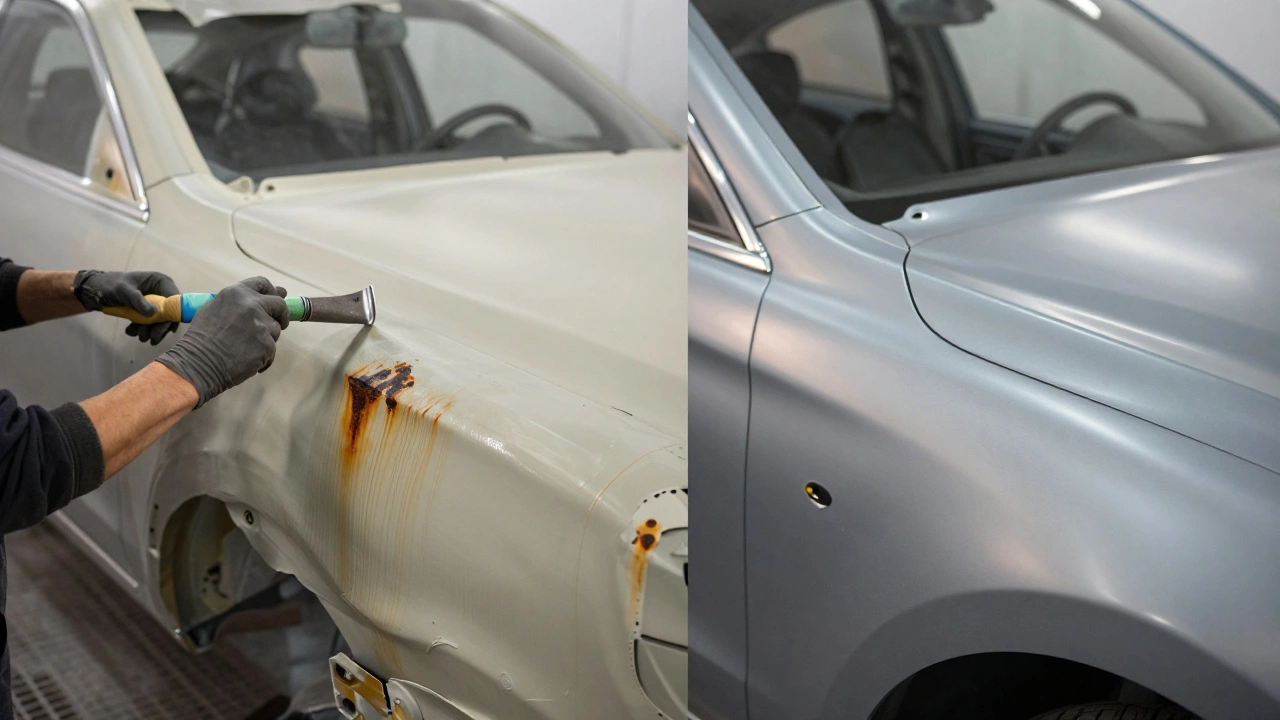
When your car takes a hit-a fender bender, a hailstorm, or even just a stubborn dent from a shopping cart-you’re faced with a choice: slap on some body filler, or dig into the metal and fix it right. It’s not just about looks. It’s about body filler versus real metal work, and which one actually lasts.
Most people think body filler (often called Bondo) is a quick fix. And sure, it is. But here’s the thing: if you use it the wrong way, it’s not a fix at all. It’s a time bomb. Rust doesn’t wait. It doesn’t care if you paid $50 or $500. If the metal underneath isn’t protected, it’s going to eat through that filler-slowly, quietly, and then suddenly, in a burst of rust bubbles.
What Body Filler Actually Is (And Isn’t)
Body filler isn’t glue. It isn’t rust proof. It’s not even a sealant. It’s a thick, paste-like polyester compound mixed with a hardener. When you combine the two, it cures into a hard plastic that you can sand smooth and paint over. That’s it. It’s designed to fill gaps, not protect metal.
Think of it like spackle on drywall. You use it to cover a hole, but you don’t expect it to stop moisture from seeping into the wall behind it. Same deal here. Body filler is porous. It breathes. On humid days, it pulls moisture in. On dry days, it pushes it out. That moisture doesn’t disappear-it finds the metal underneath. And once it does, rust starts growing. Not on the surface. Underneath. Where you can’t see it.
And here’s the kicker: body filler has zero rust inhibitors. Not a single one. It’s made to be sanded and painted, not to shield metal. If you skip the primer, you’re basically giving rust a free pass to live under your repair.
When Metal Work Is Non-Negotiable
Not every dent needs filler. Some damage needs metal work. And by metal work, I mean cutting out rusted sections, welding in new panels, reshaping bent metal, or reinforcing weak spots. This isn’t just for classic car restorations-it’s for any repair where the structure is compromised.
Here’s when you absolutely need metal work:
- There’s a hole in the panel
- The metal is rusted through, even a little
- The panel is warped or flexing when you push on it
- You can see rust on the backside of the panel
- The dent is in a structural area-like a rocker panel, fender flare, or quarter panel
Why? Because filler doesn’t flex. Metal does. When the panel moves-because of bumps, temperature changes, or just normal driving-the filler cracks. It lifts. It peels. And then rust moves in.
A common mistake? Covering oil canning with filler. That’s when a panel has a rippling effect, usually from poor manufacturing or past damage. Filler over that? It’s doomed. The metal keeps moving. The filler doesn’t. It breaks apart. You’re not fixing it-you’re hiding a problem that’s still active.
The Epoxy Primer Secret (And Why Shops Skip It)
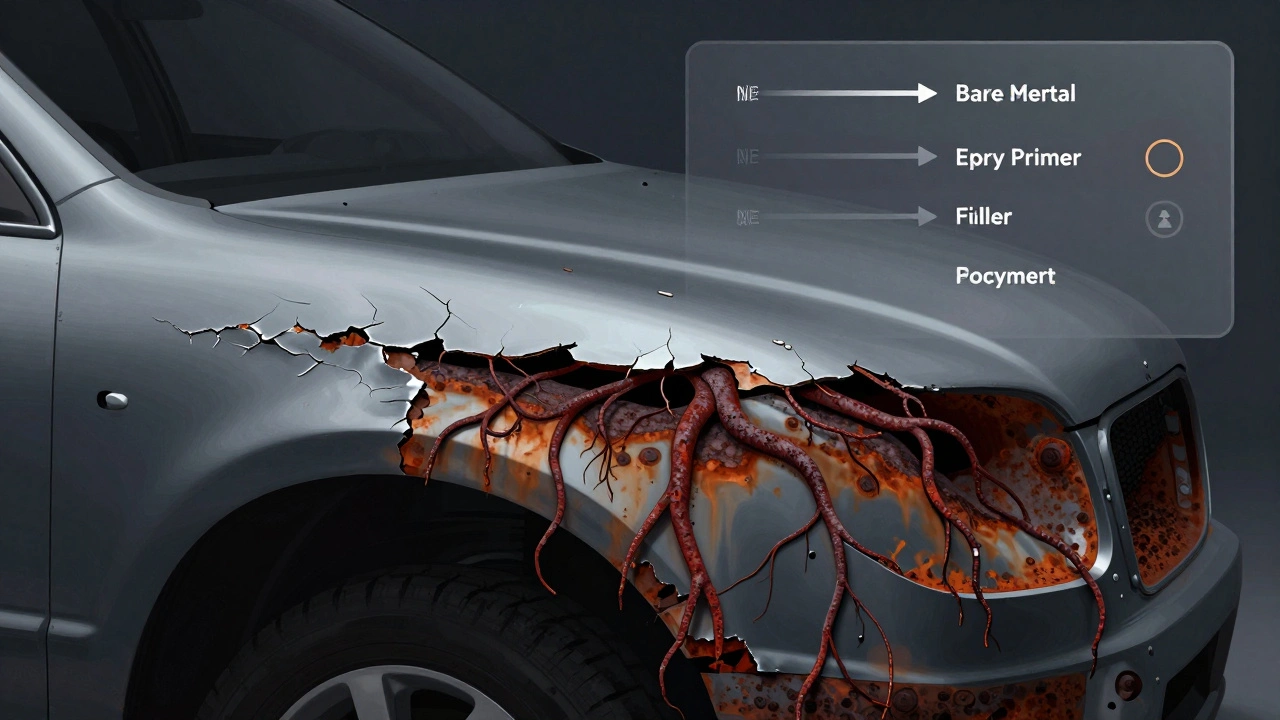
If you’re going to use body filler, there’s one step you can’t skip: epoxy primer. Not just any primer. Real epoxy. This stuff is designed to bond with bare metal and lock out moisture. It’s got rust inhibitors built right in. It’s the armor between your metal and the filler.
Here’s how it works:
- Strip the panel down to bare metal
- Apply epoxy primer within 30 minutes (yes, really-rust starts forming fast)
- Let it cure fully
- Lightly sand it with 220 grit
- Apply body filler
This isn’t just theory. There’s a documented case from a 1929 Dodge restoration where the owner had the rear panel repaired with filler directly on bare metal. Five years later, the filler started bubbling. When they peeled it back? The metal was completely rusted through. The filler didn’t fail. The metal did-because it was never protected.
So why do most collision shops skip epoxy? Time. Money. Pressure. A shop that needs to turn a car around in 48 hours isn’t going to wait 12 hours for epoxy to cure. They’ll sand the metal, apply filler, and call it done. It’s faster. It’s cheaper. And yes, it looks fine for a year or two.
But here’s the trade-off: you’re buying convenience, not durability. That repair might last until your next oil change. Or it might last until next winter. Or it might last until you sell the car. But if you plan to keep it longer than three years? You’re asking for trouble.
When You Can Get Away With Filler (And How to Do It Right)
Not all repairs need epoxy. If you’re fixing a small dent-say, a 2-inch dent from a rock or a door ding-you can get away with applying filler directly to bare metal… if you do it right.
Here’s the bare-minimum method:
- Use 36 or 40 grit sandpaper to rough up the metal. This gives the filler something to grip.
- Apply filler within 15 minutes of sanding. Don’t let the metal sit.
- Don’t use filler over rust. Scrape every speck away. Use a rust converter like Jasco if you see any red.
- Block sand the filler immediately after it cures-don’t wait days.
- Paint it within 24 hours. Don’t leave it exposed.
Even then, you’re still taking a risk. The filler will eventually pull in moisture. But if you’re doing a temporary fix on a car you plan to trade in next year? This might be acceptable.
There’s also a middle ground: Direct-to-Metal (DTM) primers. These are high-build primers that act like epoxy but don’t need as much curing time. They’re designed to be sanded and then topped with filler. They’re not perfect, but they’re better than nothing. And they’re becoming more common in modern shops.
The Big Red Flags (What Not to Do)
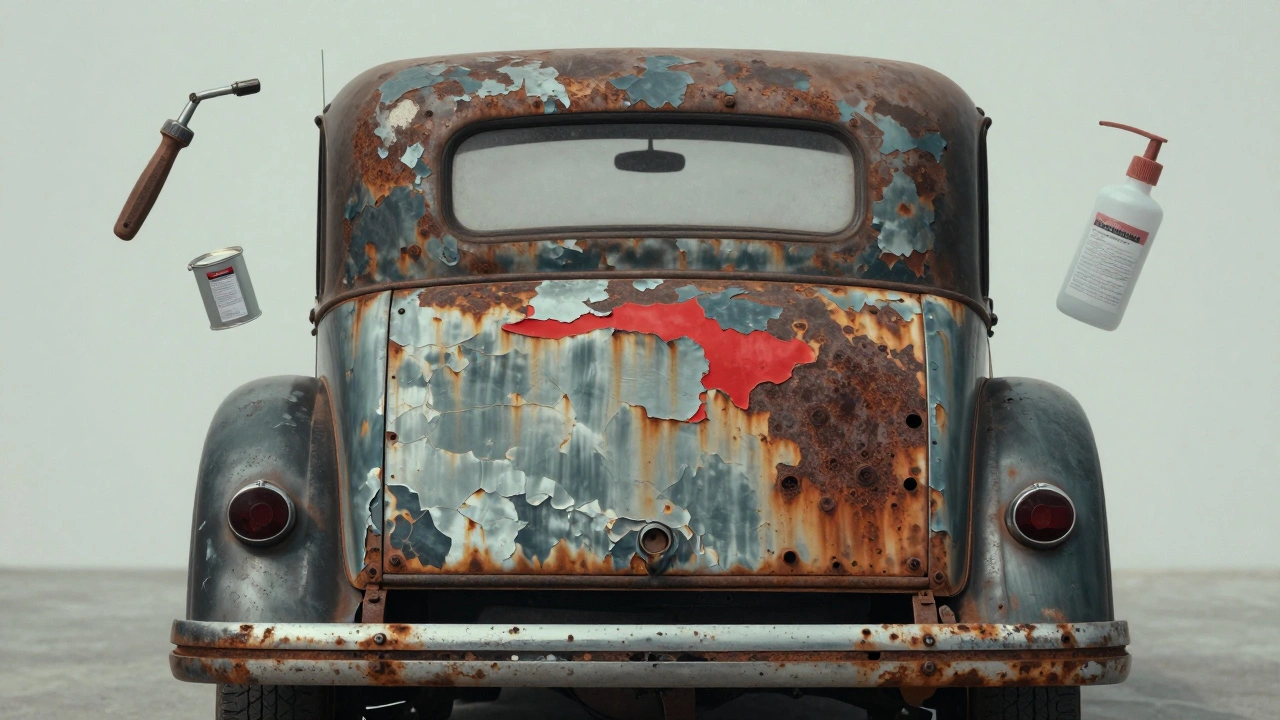
Here are the mistakes that turn a simple repair into a total disaster:
- Putting filler over old filler. It doesn’t bond. It just sits on top. Eventually, it cracks and lifts. Always remove old filler before starting over.
- Leaving holes in the metal. If there’s a hole behind the filler-like from a previous repair or rusted-out spot-moisture gets trapped. Rust grows from the inside out. Always weld or patch holes before applying filler.
- Waiting too long between steps. Strip the metal, walk away for a week, then come back? Rust is already there. You didn’t see it. But it’s there.
- Skipping paint. Filler exposed to sunlight? It chalks, cracks, and peels. Paint isn’t optional. It’s your last line of defense.
And one more thing: don’t use body filler to fix structural damage. If the frame is bent, or the unibody is compromised, filler won’t hold. You need real welding and alignment. Filler isn’t a band-aid for broken bones.
Final Call: Speed or Longevity?
There’s no one-size-fits-all answer. It depends on what you want.
If you’re fixing a daily driver you plan to keep for 10 years? Use epoxy primer. Always. It’s the only way to make sure this repair lasts.
If you’re fixing a car you’re about to sell? Maybe you can skip it. But don’t lie to yourself. You’re not saving money-you’re just pushing the problem to the next owner.
And if you’re restoring a classic? Epoxy primer isn’t optional. It’s mandatory. Every pro in the restoration world knows this. If you skip it, you’re not restoring-you’re just delaying the inevitable.
Body filler is a tool. Not a solution. Metal work is the foundation. Epoxy primer is the shield. Get those three right, and your repair will last. Skip one, and you’re just painting over rust.
Can I use body filler on rusted metal?
No. Filler won’t stop rust-it’ll trap it. Always remove all rust before applying filler. Use a rust converter like Jasco on light rust, or cut out heavily rusted areas and weld in new metal. Filler over rust is a recipe for future failure.
How long does body filler last without primer?
It depends on climate and exposure, but typically 2 to 5 years. In humid areas like Portland, you might see rust blistering in under a year. In dry climates, it might last longer. But it’s never reliable. Even if it looks fine, moisture is still getting in. The rust is growing silently underneath.
Is Bondo the same as body filler?
Yes. Bondo is a brand name, like Kleenex or Band-Aid. It’s one of the most common types of polyester body filler, but there are many others-3M, Evercoat, US Body. All work the same way. The brand doesn’t matter as much as how you use it.
Can I apply filler over epoxy primer?
Yes, and you should. Epoxy primer is the ideal base for body filler. It seals the metal, prevents rust, and provides a strong surface for the filler to bond to. Lightly sand the epoxy with 220 grit before applying filler to ensure good adhesion.
What’s the best way to prevent rust after a body repair?
Three things: use epoxy primer on bare metal, seal any holes or seams with rust-inhibiting cavity wax, and finish with a full paint job. Never leave filler exposed. Even the best repair fails if the paint is missing. Paint is your armor.