Your check engine light is on. You’re driving home from work, the dashboard glows amber, and your heart rate spikes. Do you pull over? Do you ignore it? Or do you just hope it goes away by itself? Most drivers freeze because they don’t know what the code behind that light actually means. But here’s the good news: modern cars speak a universal language called OBD-II, or On-Board Diagnostics II. If you can read the five-character code (like P0301 or C1204), you can pinpoint the problem before it becomes expensive.
What Are Diagnostic Trouble Codes?
Diagnostic Trouble Codes (DTCs) are standardized alphanumeric identifiers generated by your car’s computer when a sensor detects an abnormal condition. Since 1996, every vehicle sold in the United States must use the OBD-II standard, which ensures that a P-code for a misfire in a Toyota means the same thing as it does in a Ford. These codes aren’t random; they follow a strict logic tree. The first letter tells you which system is failing, and the next four digits narrow down the specific component.
Think of DTCs as the car’s medical chart. A doctor doesn’t guess where the pain is; they run tests. Your car’s Engine Control Module (ECM) runs constant self-tests. When a value falls outside the acceptable range-say, the oxygen sensor reads too lean-the ECM logs a code. This isn’t just a warning; it’s data. Ignoring it is like ignoring a fever. It might be a cold, or it might be something serious. The code tells you which one.
Decoding the Alphabet: What the First Letter Means
The most common confusion comes from thinking all codes start with 'P'. They don’t. The first character identifies the major subsystem. Here is the breakdown you need to memorize:
- P-codes (Powertrain): Covers the engine and transmission. This includes fuel injection, ignition, emission controls, and gear shifting issues. If your car feels sluggish or smells like gas, look here.
- C-codes (Chassis): Relates to steering, suspension, brakes, and tires. ABS and traction control systems live here.
- B-codes (Body): Involves electrical components like airbags, power windows, seat belts, and HVAC systems.
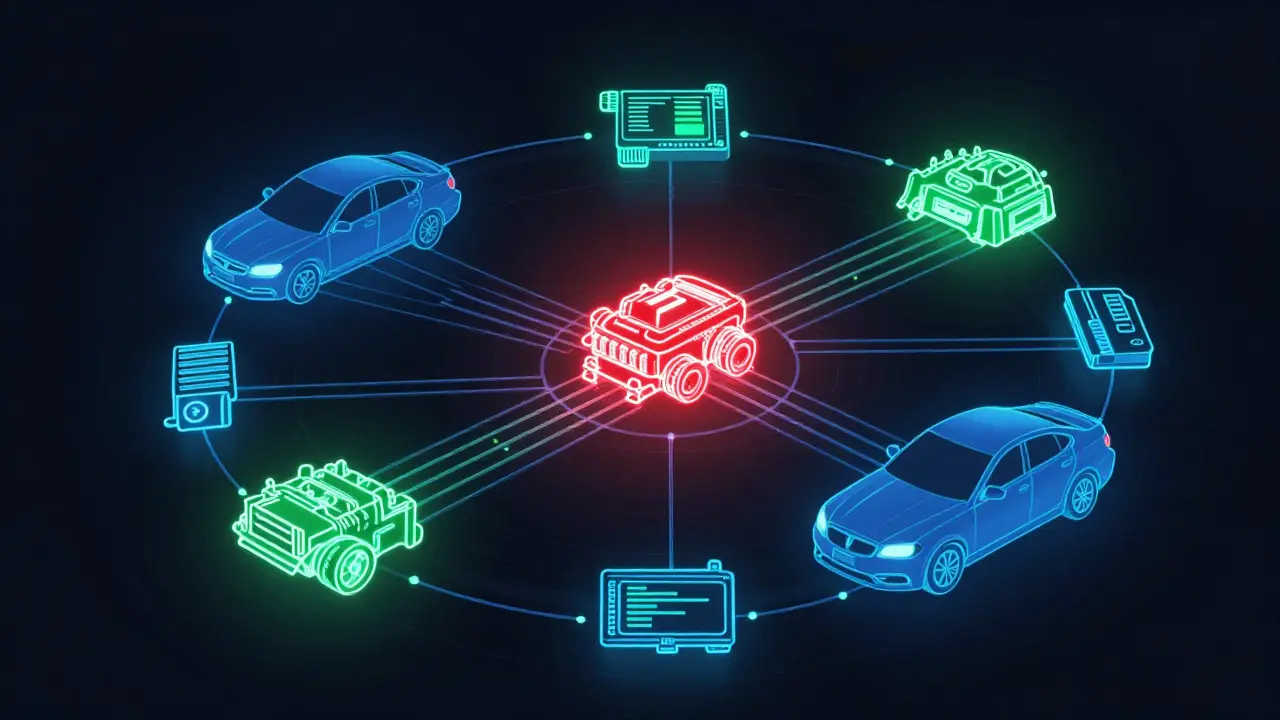
- U-codes (Network): Points to communication errors between different modules. If your car has multiple computers talking to each other and one stops listening, you get a U-code.
For example, if you see P0420, you know it’s an emission issue in the powertrain. If you see C0110, it’s likely a wheel speed sensor problem affecting the chassis. Knowing this distinction saves you time at the shop because you can tell the mechanic exactly where to look.
Common P-Codes and What They Actually Mean
While there are thousands of possible codes, a handful account for 80% of visits to the repair bay. Understanding these specific patterns helps you triage the issue yourself.
| Code | System Affected | Typical Symptom | Urgency Level |
|---|---|---|---|
| P0300-P0304 | Ignition / Misfire | Rough idle, loss of power, shaking | High (can damage catalytic converter) |
| P0171/P0174 | Fuel Trim / Air Intake | Hard starting, stalling, poor fuel economy | Medium (often vacuum leak) |
| P0420 | Catalytic Converter Efficiency | Sulfur smell, slight hesitation | Medium (expensive part replacement) |
| P0455 | Evaporative Emission System | Gas smell, no performance change | Low (usually loose gas cap) |
Notice the urgency column. A P0455 is often just a loose gas cap. Tighten it, drive for a few days, and the code may clear itself. A P0301 (cylinder 1 misfire) is dangerous. Running a misfire unburned fuel into the exhaust, which cooks the catalytic converter. That converter costs $1,000+ to replace. The code is saving you money if you act fast.
How to Retrieve Codes Without a Shop Visit
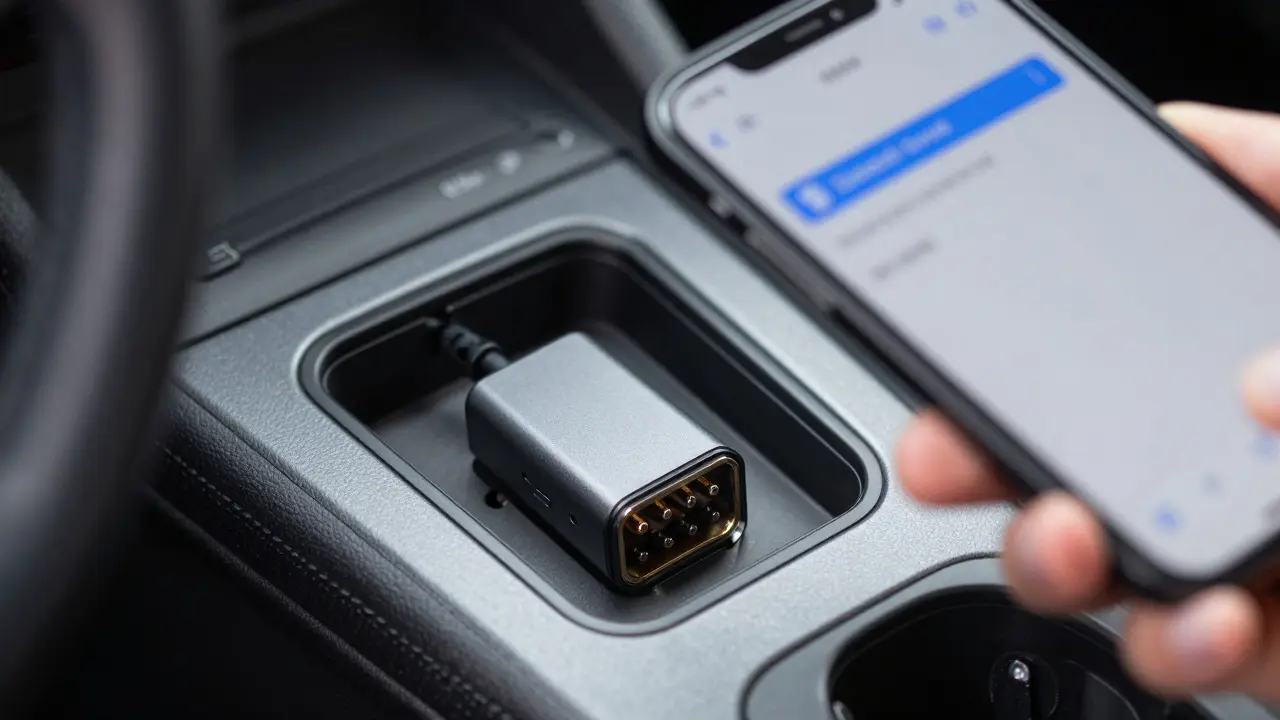
You don’t need a $500 professional scanner to read these codes. Every OBD-II port is located under the dashboard, usually within 10 inches of the steering wheel. It’s a 16-pin trapezoidal socket. You can buy a basic Bluetooth OBD-II adapter for about $30-$50. Pair it with your smartphone via a free app like Torque Pro or OBD Auto Doctor.
- Turn the ignition to "On" but don’t start the engine.
- Plug the adapter into the OBD-II port.
- Open the app and wait for the connection.
- Select "Read Codes" or "Scan."
- Note the codes displayed. Don’t clear them yet.
Here’s a pro tip: write down the code *and* the freeze frame data. Freeze frame data captures the exact conditions (RPM, temperature, load) when the error occurred. If the code says "Misfire" but the freeze frame shows high RPM and high load, it’s likely a spark plug or coil pack issue. If it happened at idle and low temp, it might be a vacuum leak. The context changes the diagnosis entirely.
Why Generic vs. Manufacturer-Specific Codes Matter
Not all codes are created equal. There are two types: generic (SAE) and manufacturer-specific. Generic codes are defined by the Society of Automotive Engineers and mean the same thing across all brands. For instance, P0128 always means "Coolant Thermostat Below Regulating Temperature."
Manufacturer-specific codes, however, are proprietary. A BMW might have a code 2E01 that refers to a specific turbocharger boost pressure sensor, while a Honda might use a completely different number for a similar issue. If your scan tool only reads generic codes, you might miss critical details. Always check if your vehicle has pending manufacturer codes using a tool that supports brand-specific definitions. This is why independent shops sometimes charge more than dealerships-they have access to deeper diagnostic layers.
Clearing Codes: When to Do It and When Not To
Many people think clearing the code fixes the problem. It doesn’t. Clearing the code simply erases the memory of the error. If the underlying issue remains, the light will come back on within a few drive cycles (usually 10-20 minutes of driving). However, clearing codes is useful in two scenarios:
- After a confirmed fix: If you replaced the faulty sensor, clear the code to reset the readiness monitors. This allows your car to pass emissions testing again.
- To test intermittent faults: If you suspect a wiring issue that happens randomly, clear the code and drive until it returns. Then, immediately capture the freeze frame data. This gives you a snapshot of the failure moment.
Never clear a code without understanding it. If you clear a P0420 and keep driving, you risk blowing the catalytic converter. The code was trying to save you. Respect the warning.
When to See a Professional
Self-diagnosis works for simple issues like loose caps, bad sensors, or minor leaks. But some problems require specialized tools. If you encounter any of the following, book a shop visit:
- Multiple related codes: If you have three different P-codes pointing to the same system (e.g., three misfire codes), it suggests a systemic issue like a clogged fuel filter or a failed mass airflow sensor.
- U-codes (Network Errors): These indicate communication failures between modules. Diagnosing CAN bus network issues requires advanced oscilloscopes and knowledge of bus architecture.
- Mechanical symptoms: If the car shakes, makes noise, or loses power, the code is just a symptom. The root cause could be mechanical wear, not electrical.
A good mechanic uses the code as a starting point, not the final answer. They verify the sensor reading against actual physical conditions. For example, if the oxygen sensor says the mixture is rich, the mechanic checks for fuel injector leaks or a stuck throttle plate. The code guides the investigation; it doesn’t conclude it.
Can I drive my car with a check engine light on?
It depends on the code. If the light is steady, you can usually drive carefully while diagnosing the issue. If the light is flashing, it indicates a severe misfire that can damage the catalytic converter. Pull over safely and avoid heavy acceleration. Always identify the code before deciding how far to drive.
What does a P0420 code really mean?
P0420 means the catalytic converter efficiency is below threshold. While the converter itself might be fine, the code often triggers due to a faulty oxygen sensor upstream or downstream, or an exhaust leak. Replacing the converter is the last resort, not the first step.
Where is the OBD-II port located?
In almost all vehicles manufactured after 1996, the OBD-II port is located under the dashboard, within arm's reach of the driver. Look near the steering column, glove box, or center console. It is a 16-pin trapezoidal connector.
Do I need a special tool to read manufacturer-specific codes?
Yes. Basic cheap scanners only read generic SAE codes. To read proprietary codes from brands like BMW, Audi, or Toyota, you need a scanner with enhanced database support or a dealer-level tool. Many mid-range Bluetooth apps now include this feature for a subscription fee.
Will clearing the check engine light erase the code permanently?
No. Clearing the light only resets the current status. If the fault persists, the module will re-set the code after one or two drive cycles. If the fault is intermittent, it may take several weeks to return. Always monitor the code after clearing to see if it recurs.