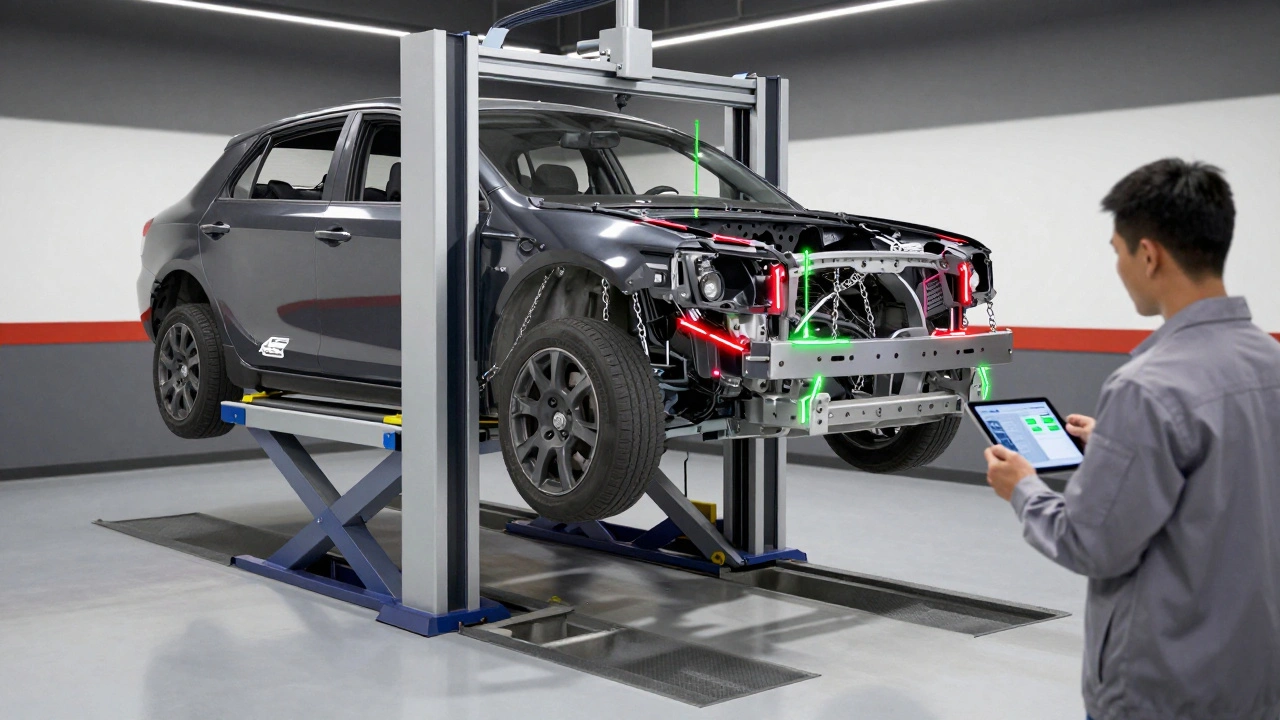
When a car takes a hard hit-whether from a crash, a curb, or a bad pothole-the damage isn't always visible. The frame, the backbone of the vehicle, can bend, twist, or warp without a single dent on the outside. If left uncorrected, this hidden damage affects handling, tire wear, braking, and most importantly, safety. Car frame straightening isn't just about making the car look right again. It's about restoring its original strength and crash performance so it protects you the way it was designed to.
Why Frame Damage Matters More Than You Think
Modern cars aren't built like old trucks with thick steel beams. Today's vehicles use high-strength steel, aluminum, and mixed materials to save weight and improve fuel efficiency. These materials are engineered to absorb impact in specific ways. The crumple zones in the front and rear are designed to collapse predictably during a crash, redirecting energy away from the passenger cabin. If the frame is bent, those zones won't work right. A misaligned frame can cause airbags to deploy late-or not at all. It can shift the steering axis, making the car pull to one side. It can even throw off the suspension geometry, leading to uneven tire wear and reduced control. A bent frame doesn't just make driving unpleasant-it makes it dangerous. Studies from the Insurance Institute for Highway Safety show that vehicles with uncorrected structural damage are 30% more likely to fail safety systems in a second collision. That's not a small risk. Frame straightening isn't optional for serious damage. It's a safety necessity.The Four-Step Process of Professional Frame Straightening
Professional frame straightening follows a strict sequence. Skipping any step risks incomplete repair or new damage. Here’s how it works.Step 1: Measure Before You Pull
You can't fix what you can't measure. Modern repair shops use computerized measuring systems like Car-O-Tronic or Vision2. These systems use laser sensors and digital probes to map the vehicle's frame in three dimensions. The data is compared against the manufacturer's original specs-down to the millimeter. This isn't guesswork. It's science. Technicians check key reference points: the suspension mounts, the firewall, the strut towers, and the rocker panels. Even a 5mm shift in one area can mean 20mm of misalignment elsewhere. Without this baseline, any repair is just a guess.Step 2: Secure the Vehicle Properly
The car has to be locked down. Not just parked on a rack. A professional frame machine uses hydraulic clamps and anchoring points that grip the frame at multiple strategic locations. These aren't cheap vise grips. They're engineered to hold up to 20 tons of pulling force without slipping. The vehicle is lifted slightly off the ground so it doesn't settle during the process. Jack stands hold the frame in place, especially when pulling from the rocker panels. If the car moves during pulling, you're not fixing damage-you're making it worse.Step 3: Apply Controlled Pulling Force
This is where the real skill comes in. Hydraulic pullers attached to the frame machine apply force slowly and precisely. Pulling too hard too fast can stretch the metal, thinning it out and weakening the structure. That's worse than the original bend. Technicians use different tools depending on the damage:- Pulling posts with winch systems let them adjust height and angle for better leverage.
- Pinch weld clamps attach to the rocker panel's reinforced edge, letting them pull from the side without crushing the metal.
- Wedge clamps tighten as force increases, gripping chains securely so they don't slip under tension.
- Chain shorteners let technicians combine or shorten chains to match exact pulling distances.
Step 4: Verify, Adjust, Repeat
After the last pull, the technician runs the full measurement again. If any point is even slightly off, they repeat the pull. This cycle continues until every critical measurement falls within the OEM tolerance range-usually ±2mm. This isn't about making it look good. It's about making it safe. Some repairs require welding in reinforcement plates or replacing damaged sections entirely. That's done only after the frame is perfectly aligned, so the new metal fits exactly right.Tools of the Trade: What Makes a Real Frame Machine Different
You've probably seen DIY videos where someone uses a ratchet strap and a tow hitch. Don't believe them. Those methods don't measure. They don't control force. They just yank. Professional frame machines like Car-O-Liner's BenchRack are designed with:- Hydraulic systems that allow fine-tuned pressure control-not just on/off pulling.
- Computer integration that stores repair data for insurance and warranty purposes.
- Adjustable anchor points that match the exact geometry of dozens of vehicle models.
- Laser-guided alignment tools that show real-time 3D maps of the frame.
Material Matters: Steel, Aluminum, and Mixed Frames
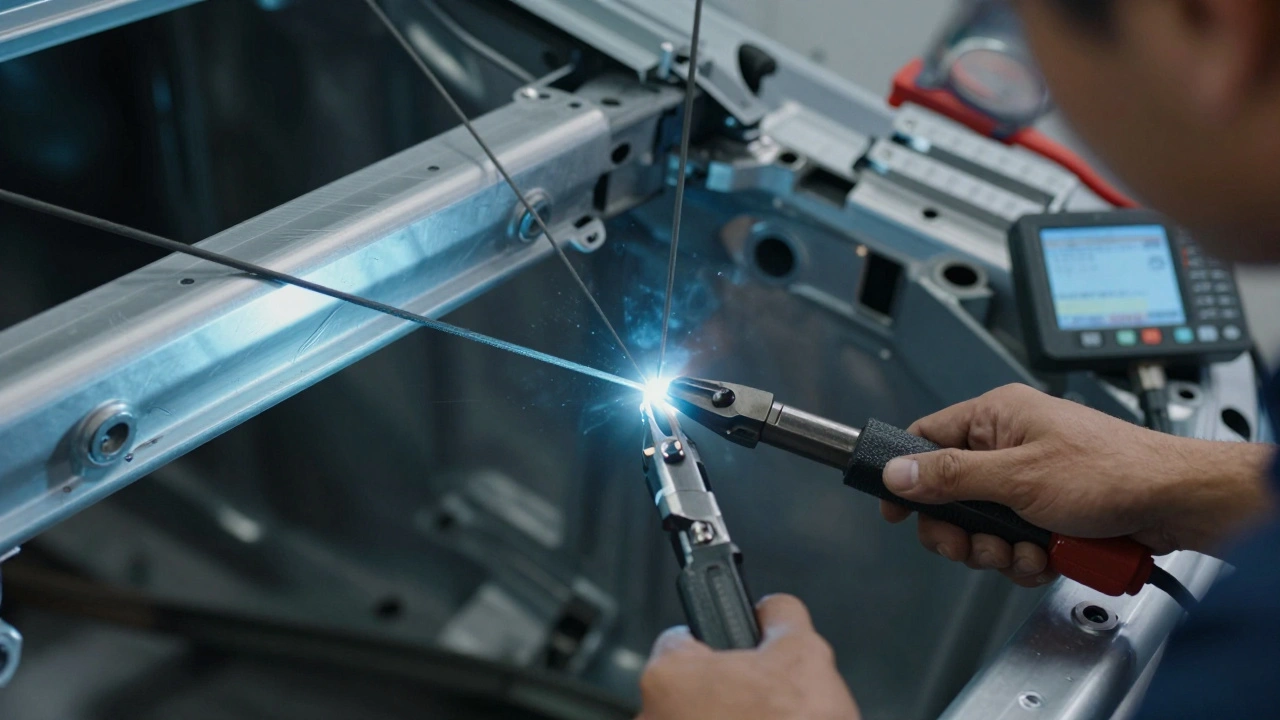
Not all frames react the same. A 2010 Ford F-150 with a steel frame responds differently than a 2025 Tesla Model Y with an aluminum unibody. Aluminum doesn't bend-it can crack. Steel can be heated and reformed. Aluminum can't. Pulling aluminum requires lower force, slower movement, and often, heat application to restore ductility. Mixed-material frames-common in newer cars-require technicians to know exactly which parts are steel, which are aluminum, and how each reacts under stress. This is why generic repair shops fail. If they treat every car the same, they'll either under-pull (leaving damage) or over-pull (creating new cracks). Only trained technicians with access to manufacturer-specific repair databases can handle this.DIY Frame Straightening: Why It's a Bad Idea
Some people try to fix frame damage with jack stands, pry bars, or tow straps. It might look like it works. The car might drive straight for a few weeks. But here's what you don't see:- Hidden micro-cracks in the metal that grow over time.
- Unbalanced suspension that wears out ball joints and control arms in months.
- Stress points that fail during a second crash, turning a survivable accident into a fatal one.
When to Skip Frame Straightening
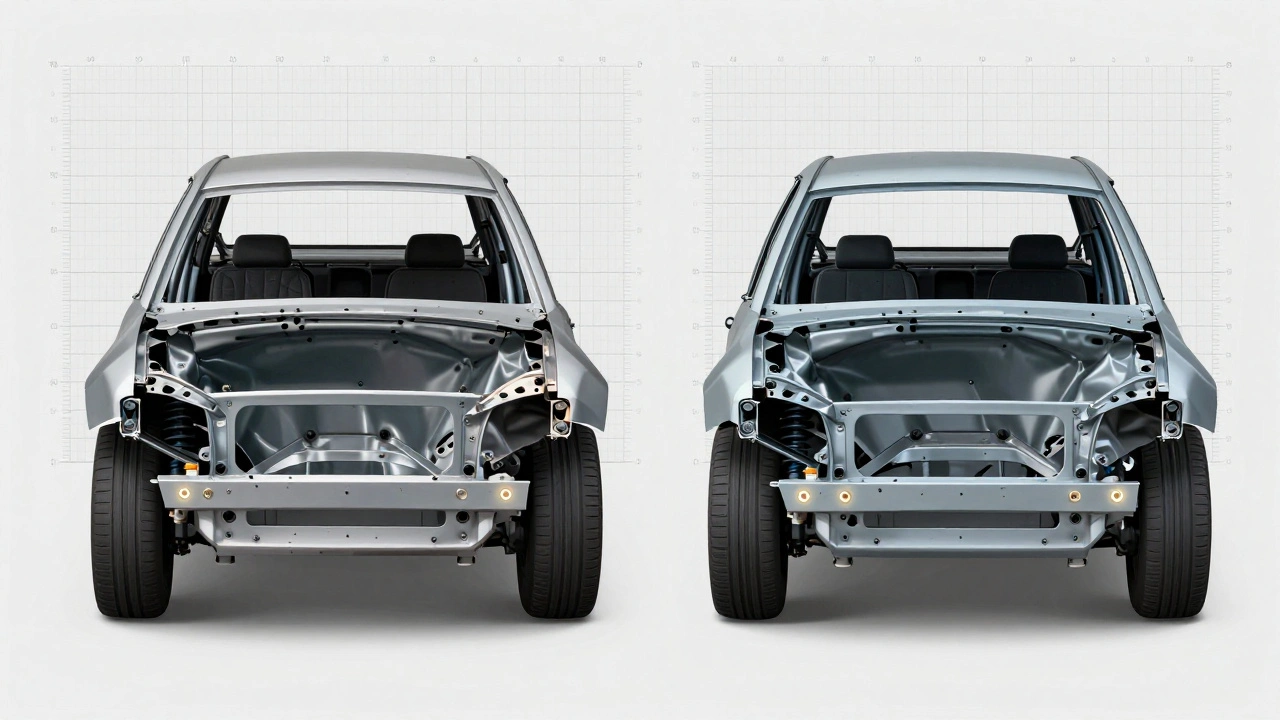
Not every dent means a bent frame. If the damage is limited to fenders, doors, or hood panels without affecting the core structure, it's just bodywork. But if the wheel is pushed backward, the suspension mount is misaligned, the floor pan is dented, or the car pulls hard to one side after an impact-you need a frame measurement. If the frame is crushed in multiple places, or if the core structure is split open, replacement might be safer than repair. A professional will tell you. A DIYer won't.Final Check: What a Proper Repair Should Look Like
After the job is done, ask for:- A printed report showing pre- and post-repair measurements.
- Confirmation that all OEM reference points are within tolerance.
- Proof that safety systems (airbags, sensors, cameras) were recalibrated after repair.
Can I drive my car if the frame is bent?
Technically, yes-but it's unsafe. A bent frame affects steering, braking, and suspension alignment. It increases tire wear, reduces control, and compromises crash safety. Driving a car with structural damage is like driving with worn brakes. You might get somewhere, but you're risking your life and others'.
How long does frame straightening take?
It usually takes 3 to 5 days, depending on damage severity. Simple misalignments might be done in 2 days. Severe damage involving multiple areas, welding, or material replacement can take up to a week. The time isn't about laziness-it's about precision. Rushing leads to mistakes.
Will my insurance cover frame straightening?
Yes-if the damage resulted from a covered incident like a collision or rollover. Most comprehensive and collision policies include frame repair. The shop will work directly with your insurer, providing measurement reports and repair documentation to ensure approval. Never accept a settlement that excludes frame repair if structural damage is confirmed.
Can frame straightening fix a twisted frame?
Yes, but it requires advanced equipment. Twisted frames are among the hardest to repair because the entire structure is out of alignment in multiple directions. Only shops with computerized measuring systems and multi-axis hydraulic pullers can safely correct this. Many shops refuse twisted frame jobs because they lack the tools. Always ask if they've handled a twist before.
How do I know if a shop is qualified for frame straightening?
Ask if they use a computerized measuring system like Car-O-Tronic or Vision2. Ask if their technicians are certified by I-CAR or ASE in structural repair. Check if they have a frame machine from a known brand like Car-O-Liner. If they say they "just use a rack," walk away. Real frame repair isn't done with a simple rack-it's done with precision tools and verified data.
Frame straightening isn't a repair-it's a restoration. It brings a car back to its original safety standards. Don't settle for shortcuts. Your life depends on the integrity of that metal.