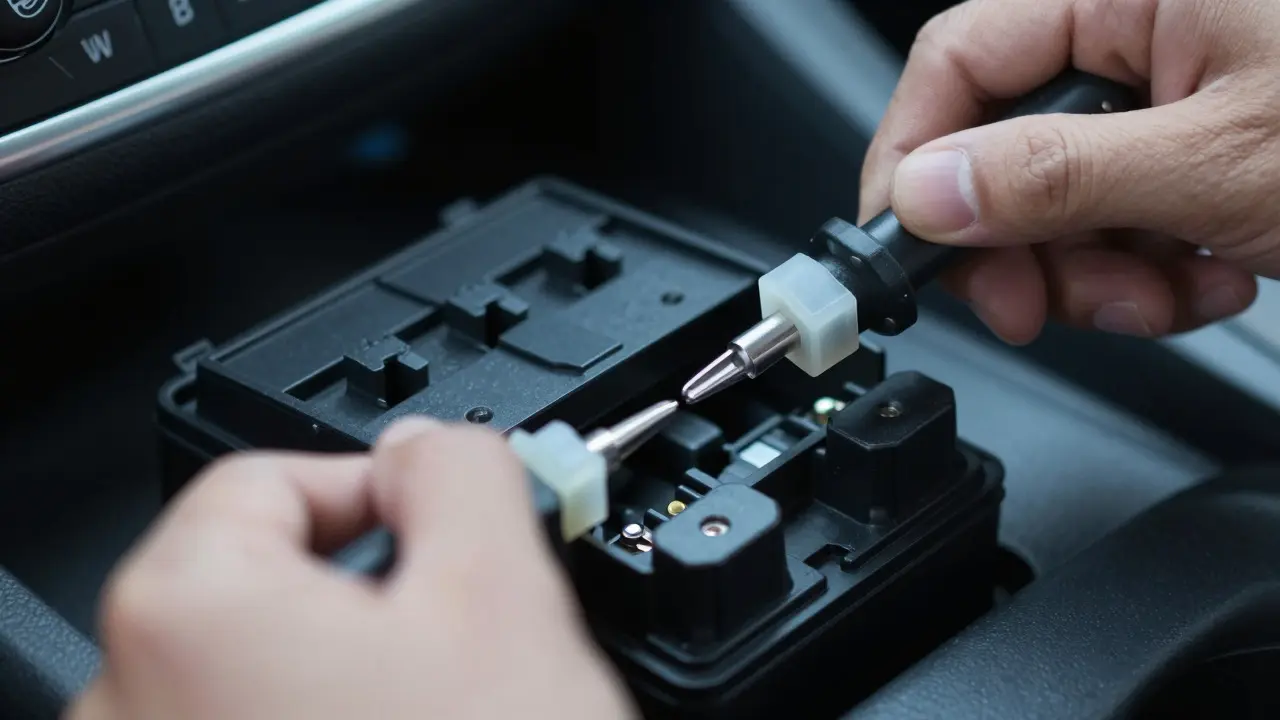
Nothing kills a road trip faster than the headlights going out or the radio dying mid-song. You check the battery, it’s fine. You check the alternator, it’s charging. So where is the problem? Usually, it hides in the small, unassuming boxes under your dashboard or in the engine bay: the circuit breakers of your car’s electrical system-specifically the fuses and relays that protect and control specific circuits. Most drivers think these are just "spare parts" you swap out when something breaks. But knowing how to diagnose them correctly can save you hundreds of dollars in unnecessary labor costs at the shop.
This guide walks you through exactly how to test a fuse and a relay without guessing. We’ll cover the tools you need, the safety steps most people skip, and how to read the results so you know for sure if the part is dead or if the wiring behind it is the real culprit.
Why Fuses and Relays Fail (And How They Protect Your Car)
Before you grab a multimeter, it helps to understand what you’re looking at. A fuse is a sacrificial link in the wire. Its job is simple: if too much current flows through a circuit-say, because of a short to ground-the metal strip inside melts. This breaks the connection and stops the flow of electricity, protecting expensive components like the ECU or power windows from burning out.
A relay, on the other hand, is an electrically operated switch. It allows a low-current signal from a button or sensor to control a high-current load, like the fuel pump or starter motor. Think of it as a remote-controlled breaker. When the coil inside the relay gets power, it pulls a lever that closes the main contacts. If the coil burns out or the contacts weld shut, the component controlled by that relay stops working.
The key difference in diagnostics is this: a blown fuse is obvious (you can see the broken wire), but a bad relay often looks perfectly fine until you test it. This is why many DIYers replace the fuse, only to have it blow again immediately. That usually means the relay or the wiring downstream is still faulty.
Tools You Need for Accurate Diagnostics
You don’t need a fancy diagnostic scanner to test basic fuses and relays. In fact, using a scanner for this often gives you misleading data codes that point you away from the physical hardware. Here is what you actually need:
- Multimeter: Set to continuity mode (the diode symbol) or DC voltage (20V range). This is non-negotiable for verifying power flow.
- Test Light: A 12V LED test light with a clip for ground is faster for quick checks than a multimeter, though less precise.
- Fuse Puller: Usually included with spare fuses. Don’t use pliers; they can crack the plastic housing and cause shorts.
- Screwdriver: A small flathead for prying open relay covers if necessary.
Make sure your multimeter is calibrated. A cheap $10 meter might work for checking if a fuse is open, but for diagnosing intermittent relay issues, a decent digital meter with a stable display is worth the investment. Also, keep a flashlight handy. The fuse box is rarely well-lit, and shadows can hide a hairline fracture in a fuse blade.
Step-by-Step: How to Test a Car Fuse
Testing a fuse is the first step in almost any electrical diagnosis. Here is the reliable method that works for both inline fuses and those in the junction box.
- Locate the correct fuse: Use the diagram on the lid of the fuse box. Note that diagrams can be outdated. If the label says "Radio" but the radio isn’t working, double-check the vehicle year and trim level.
- Turn off the ignition: For most circuits, this is safe. However, some fuses are always hot (like the cigarette lighter or OBD port). If you’re unsure, leave the key in the "Accessory" position rather than fully off.
- Pull the fuse: Use the puller tool. Inspect it visually. Look for a dark spot or a broken metal strip. If it’s clearly blown, replace it with one of the exact same amperage rating. Never use a higher amperage fuse; it defeats the protection purpose.
- Verify with a multimeter: Even if it looks okay, test it. Set your multimeter to continuity. Touch one probe to the top metal tab and the other to the bottom tab. You should hear a beep (or see 0.00 ohms). No beep? It’s blown.
- Check for power at the slot: This is the critical step most people miss. Put the new fuse back in. Set your multimeter to DC Volts. Place the black probe on a known good ground (like a bolt on the chassis) and the red probe on the center pin of the fuse slot. With the ignition on, you should read 12V. If you have no voltage here, the problem isn’t the fuse-it’s the upstream power feed or the main breaker.
If the fuse blows immediately after replacement, do not keep swapping them. Disconnect the component powered by that circuit. If the fuse stays in, the component has a short. If the fuse still blows, the wiring harness between the fuse and the component is damaged.
Step-by-Step: How to Test a Relay
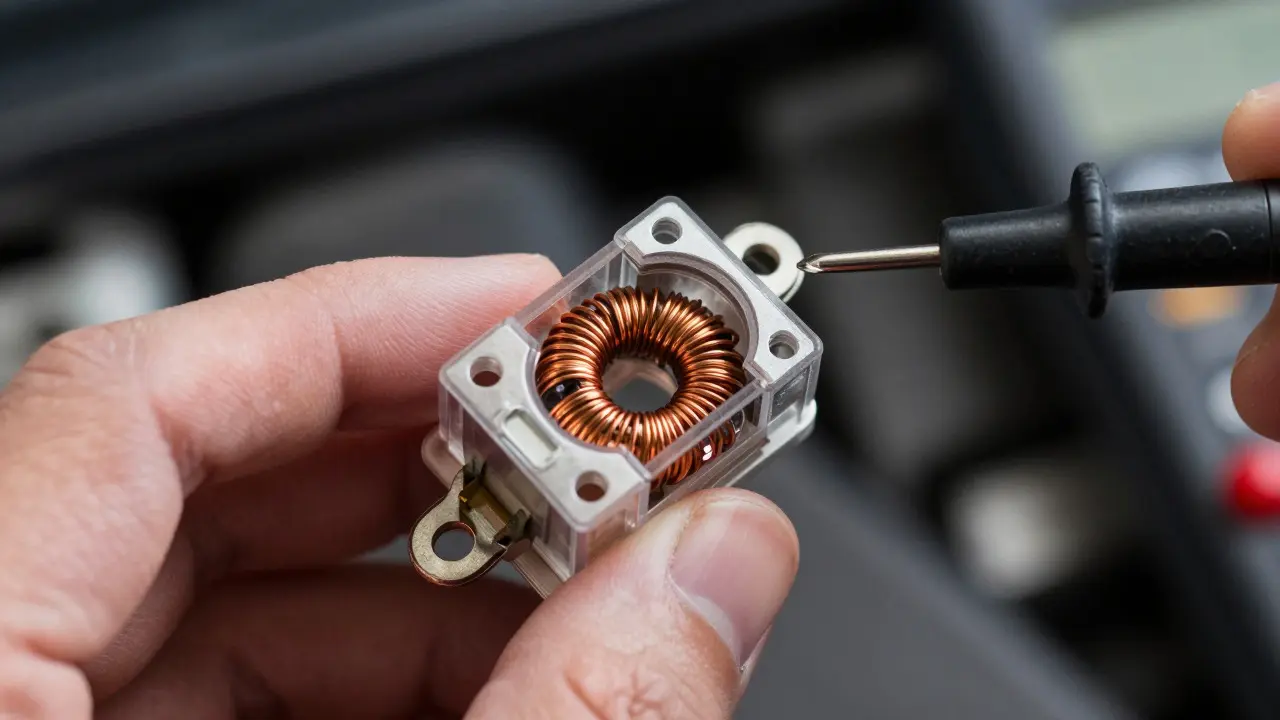
Relays are trickier because they have two separate functions: the control side (coil) and the load side (contacts). A relay can fail in three ways: the coil doesn’t energize, the contacts don’t close, or the relay clicks but doesn’t transfer power.
First, identify the relay pins. Most standard 4-pin relays follow a universal pattern, but always check your vehicle’s manual or the diagram on the fuse box lid. Typically:
- Pin 30: Constant power input (from battery/fuse).
- Pin 85: Ground control signal.
- Pin 86: Switched power input (from ignition/sensor).
- Pin 87: Power output to the load (e.g., fuel pump).
Here is how to test it systematically:
- The Click Test: Have a helper turn the key to "On" (without starting) or activate the relevant function (like turning on the headlights). Listen closely. Do you hear a distinct "click"?
- No click: The coil isn’t getting power or ground. Check Pin 85 and 86 for voltage/ground signals.
- Click heard: The coil is working. Now test the output.
- Output Voltage Test: While the relay is clicking, put your multimeter in DC Volts. Black probe to ground. Red probe to Pin 87. You should see ~12V. If you see 0V despite the click, the internal contacts are worn or dirty. Replace the relay.
- Continuity Test (Offline): Remove the relay. Set your multimeter to continuity. Touch probes to Pins 30 and 87. There should be no continuity (open circuit). Now, manually bridge Pins 85 and 86 with a screwdriver (simulating the coil energizing). Listen for a click. Now test Pins 30 and 87 again. There should be continuity. If there isn’t, the relay is dead.
A common pitfall is assuming a relay is bad because the component it controls isn’t working. Always verify that the load itself (e.g., the fuel pump motor) isn’t the issue before condemning the relay.
Common Mistakes That Lead to Wrong Diagnoses
Even experienced mechanics make these errors. Avoiding them will save you time and frustration.
- Ignoring the Main Fuse: Many modern cars have a large main fuse (often 80A-120A) near the battery. If this blows, half the car dies. It’s easy to overlook because it’s not in the driver-side fuse box.
- Using the Wrong Amperage Fuse: Replacing a 15A fuse with a 20A one might fix the symptom temporarily, but it increases the risk of fire if there’s a genuine short. Always match the rating.
- Forgetting About Grounds: A bad ground connection can mimic a blown fuse or dead relay. If a circuit works when you jiggle the wires but fails otherwise, suspect a corroded ground strap or terminal.
- Assuming One Fault Per Circuit: Sometimes, a single short can blow multiple fuses if they share a common power source. Trace the wiring diagram carefully.
When to Call a Professional
You can handle most fuse and relay swaps yourself. However, call a pro if:
- The main battery fuse keeps blowing repeatedly.
- You smell burnt plastic or see smoke (indicates active arcing or insulation failure).
- The problem involves the ECU or CAN bus network (complex wiring that requires specialized scanners).
- You can’t find the fault after testing all fuses and relays in the affected circuit.
Professional shops have access to factory wiring diagrams and high-amperage clamps to measure current draw accurately, which can pinpoint intermittent shorts that a simple voltage test misses.
| Symptom | Likely Cause | Diagnostic Action |
|---|---|---|
| Component dead, no error code | Blown Fuse | Check visual inspection and continuity of fuse. |
| Component intermittent, works when tapped | Bad Relay Contact or Loose Connection | Test relay output voltage while cycling function. |
| Fuse blows immediately upon replacement | Short to Ground in Wiring or Component | Disconnect component; if fuse holds, component is faulty. |
| Multiple related components dead | Main Fuse or Shared Power Feed Issue | Check main fuse near battery and primary distribution block. |
| Relay clicks but no power output | Worn Internal Contacts | Replace relay; do not attempt to clean contacts. |
Frequently Asked Questions
Can I drive my car with a blown fuse?
It depends on which circuit is affected. If it’s a non-critical system like the rear defroster or AC, yes, you can drive safely. If it’s the fuel pump, ignition, or ABS, you may lose essential functions or create a safety hazard. Always identify the circuit before deciding.
Do I need to remove the battery before changing a fuse?
Not usually. For most standard fuses, you can change them with the ignition off. However, for the main battery fuse or if you’re working near live high-current cables, disconnecting the negative battery terminal adds a layer of safety against accidental shorts.
Why does my fuse blow right after I replace it?
This indicates a persistent short circuit. The new fuse is doing its job by breaking the circuit before damage occurs. You must find and fix the short in the wiring or the component itself. Do not keep replacing fuses with higher amperage ratings.
How long do car relays last?
Quality automotive relays are rated for millions of cycles. In practice, they often last the life of the vehicle unless exposed to extreme heat, moisture, or vibration. If one fails early, check for environmental factors like water intrusion in the fuse box.
Can a bad ground cause a fuse to blow?
Yes. A poor ground connection creates resistance, which generates heat and can effectively increase the current draw in certain scenarios, leading to premature fuse failure. Always check ground connections if fuses are failing intermittently.