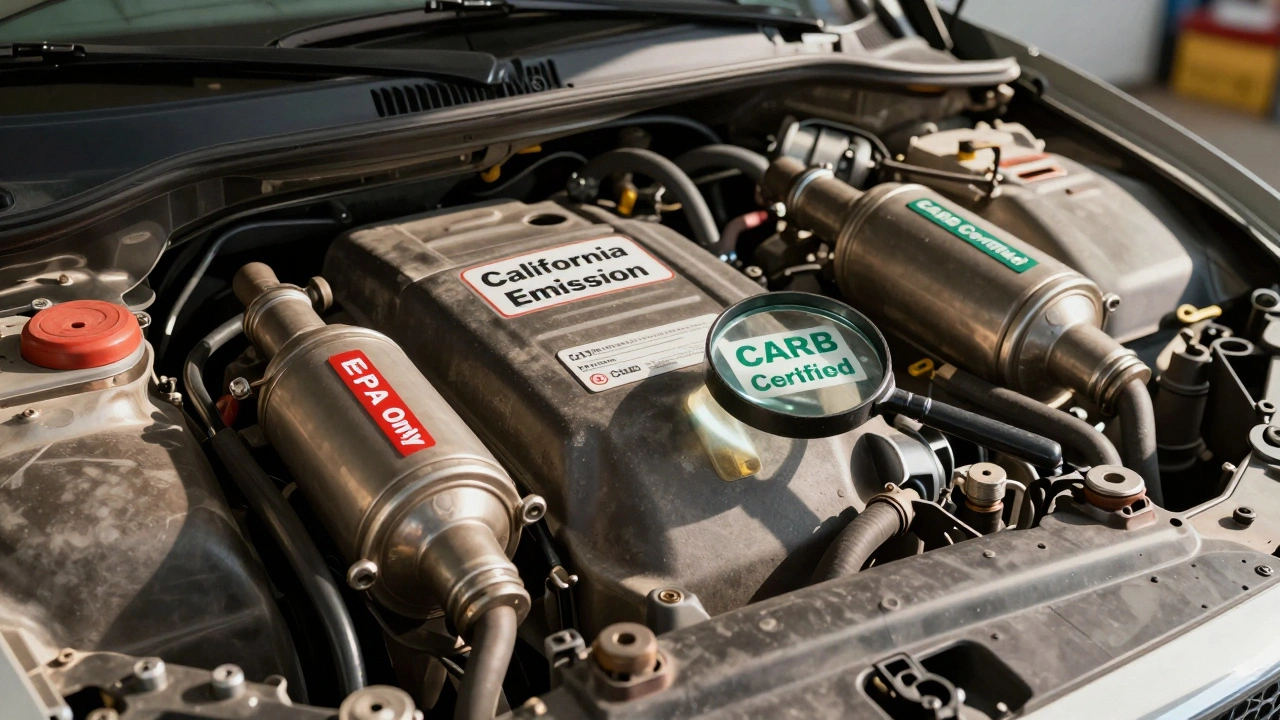
If you’ve ever been told you can’t replace your catalytic converter with just any part off the shelf, you’re not alone. In 2026, the rules around catalytic converters are more confusing than ever - and getting it wrong could cost you hundreds in fines, failed inspections, or even a denied registration. This isn’t about old-school smog checks. It’s about understanding which converter your car actually needs, where you live, and how federal policy changes in early 2026 have shaken the entire system.
Why Your Catalytic Converter Isn’t Just a Pipe
Your catalytic converter isn’t a simple exhaust part. It’s a precision emissions control device designed to break down harmful gases like carbon monoxide, nitrogen oxides, and hydrocarbons before they leave your tailpipe. Federal law requires every car sold in the U.S. to have one. But here’s the catch: not all converters are created equal.There are two main types of standards you need to know: EPA and CARB. The Environmental Protection Agency sets the baseline federal rules. But California, thanks to its unique air quality challenges, has long had the authority to set stricter standards through the California Air Resources Board (CARB). Because so many manufacturers build cars to meet California’s rules (it’s the largest state market), most vehicles sold nationwide are actually CARB-certified - even if you live in Texas or Ohio.
If your car was built for California emissions, it must have a CARB-approved converter. Installing a generic EPA-only converter on it? That’s a violation. And enforcement is real. In states like New York, Maine, and Colorado, inspectors check not just if the converter is present, but whether it’s the correct type. Fines can range from $250 to over $1,000.
State-by-State Rules: It’s Not the Same Where You Live
There’s no single national rule for catalytic converter replacement. What’s legal in Oregon might be illegal in Pennsylvania. Here’s what you need to know based on where you drive:
- California: All vehicles over five years old or out of warranty must have a CARB-certified converter. No exceptions.
- New York: Requires CARB-compliant converters for any vehicle originally sold in California - even if it never left the state. Also requires annual emissions testing.
- Colorado: Enforces CARB rules for vehicles older than five years. Inspectors use VIN lookup tools to verify original certification.
- Maine: Requires CARB converters for all model year 2001 and newer vehicles.
- Pennsylvania: Annual emissions inspection for all gasoline vehicles from 1975 and newer. Converter condition is checked.
- Texas: Annual emissions testing in major metro areas (Houston, Dallas, Austin, etc.). Non-compliant converters fail inspection.
- Utah: It’s illegal to remove or disable any emissions device. Tampering = fine.
- Vermont: Annual emissions testing with mandatory repairs if the converter fails.
- Virginia: Annual inspection required. Converter integrity is part of the test.
- Wyoming: Federal law prohibits private individuals from installing "converter replacement pipes" - even if the original converter is gone.
And don’t assume your county follows the state. Some counties in California, like San Bernardino, have additional local rules. Always check your local DMV or emissions testing center before replacing your converter.
The Big Change in February 2026: EPA Drops Greenhouse Gas Rules
On February 12, 2026, the EPA officially rescinded its 2009 finding that greenhouse gas emissions from new vehicles endanger public health. That means: manufacturers no longer have to measure, report, or control CO2 emissions from new cars. The EPA claims this action aligns with what it believes is the true intent of the Clean Air Act - that it was never meant to regulate greenhouse gases from vehicles.
This change doesn’t directly remove the requirement for catalytic converters. The devices still reduce carbon monoxide and hydrocarbons - gases the EPA still regulates under Section 202 of the Clean Air Act. But it removes the legal backbone for future emissions standards tied to climate goals.
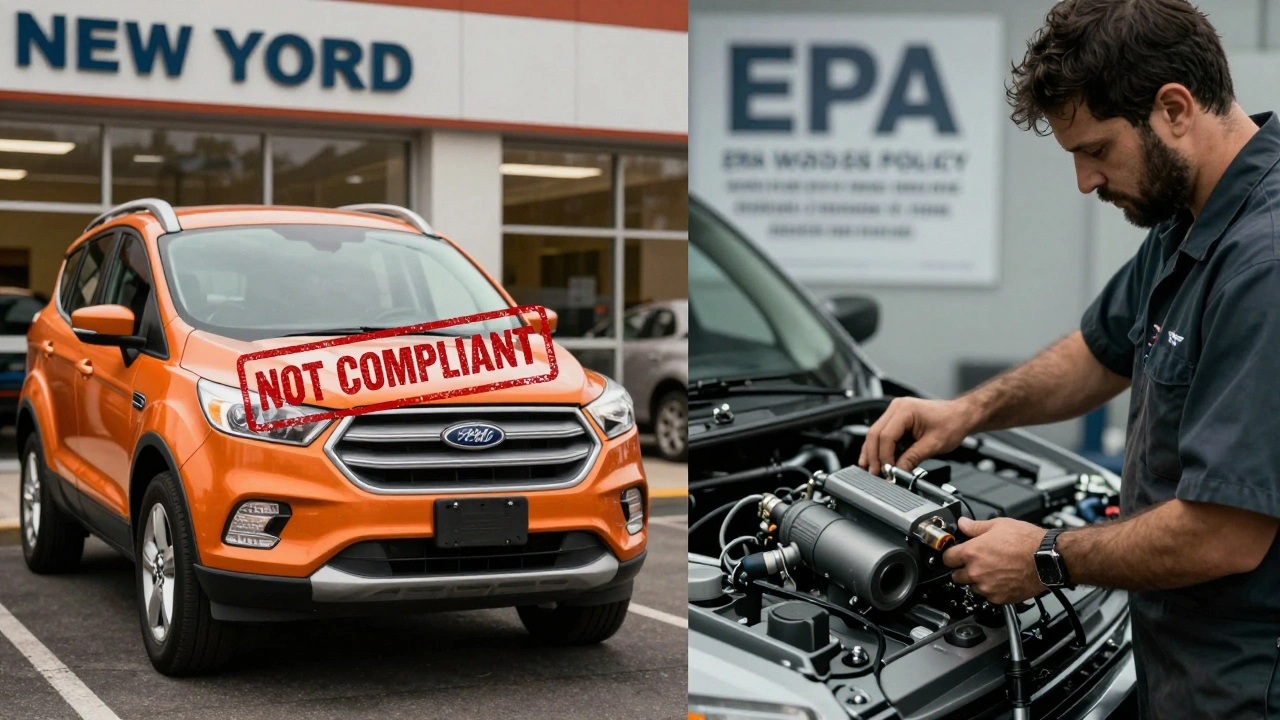
What does this mean for you? The biggest impact is on vehicle availability. Ford announced it would not deliver 2026 Ford Escapes to New York because the model no longer meets the state’s emissions requirements - requirements that were based on greenhouse gas targets now being dropped. Other automakers are adjusting production lines. Some dealers are pulling inventory from states with strict rules.
For owners of older vehicles, this change doesn’t erase existing rules. But it creates uncertainty. Will states still enforce CARB standards if federal support for climate-focused rules vanishes? Right now, yes - but the legal landscape is shifting.
What Happens If You Install the Wrong Converter?
Installing a non-compliant converter might seem like a quick fix. You save $200 on a cheap part. But here’s what can go wrong:
- Your car fails inspection - and you can’t register it.
- You get fined during a routine traffic stop or emissions check.
- Your vehicle’s onboard diagnostics (OBD-II) system detects a mismatch and triggers a check engine light.
- You void your vehicle’s emissions warranty (if still active).
- If you sell the car later, the buyer can demand repairs or a refund.
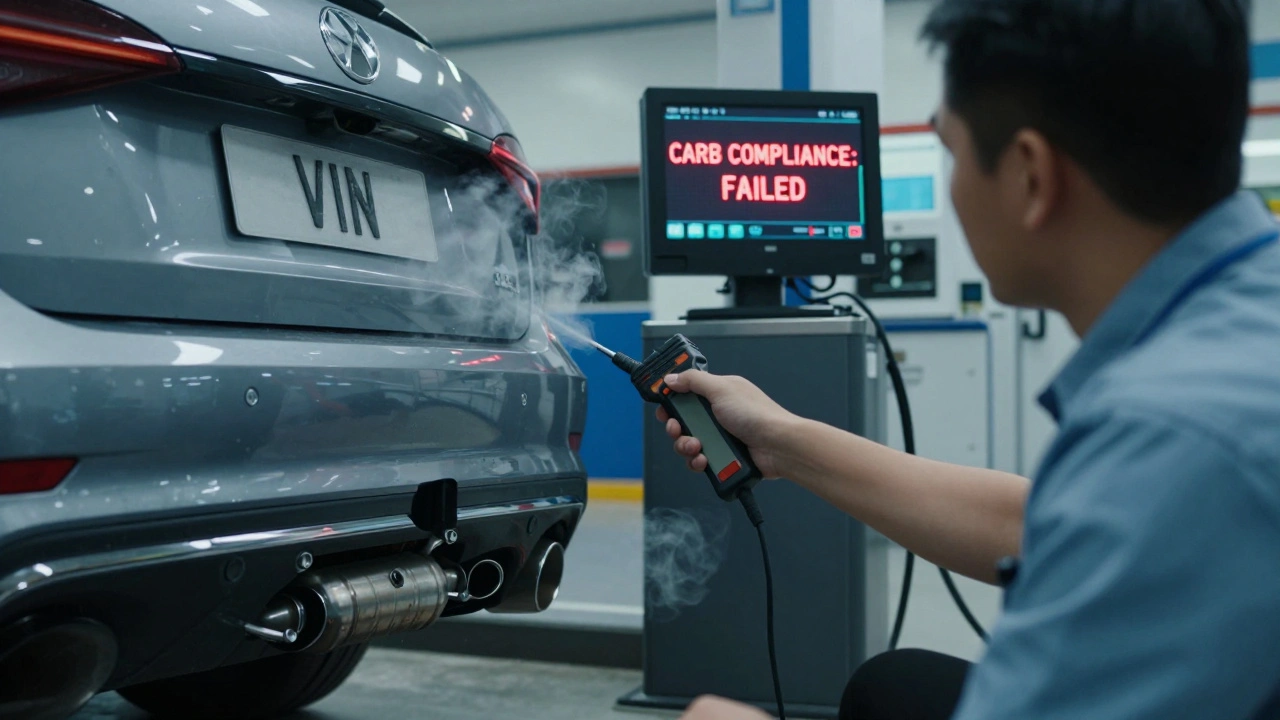
Inspection stations in high-enforcement states use VIN scanners that pull the vehicle’s original certification status. If your car was built for California, and you put in an EPA-only converter, the system flags it immediately.
How to Get the Right Converter
Don’t guess. Here’s how to make sure you’re compliant:
- Find your car’s certification label - it’s usually under the hood, near the radiator or on the firewall. It will say either "Federal" or "California" emissions.
- Check the converter packaging - legitimate CARB-compliant converters have a certification number stamped on them. Look for "CARB EO Number" followed by a string of letters and numbers.
- Use the CARB website - even if you’re not in California, you can search their approved converter database at www.arb.ca.gov (though you won’t need the link, the system is still active).
- Ask your repair shop - reputable shops will verify your vehicle’s emissions type before installing a part. If they don’t ask, walk away.
There’s no shortcut. A $150 converter that says "EPA compliant" won’t work on a CARB-certified vehicle - no matter how many reviews it has on Amazon.
What About Aftermarket or High-Performance Converters?
Some performance shops sell "high-flow" converters that claim to improve exhaust flow and engine power. These can be legal - if they’re CARB-certified. Look for the same EO number. If it doesn’t have one, it’s not legal for street use in any state that enforces CARB rules.
Even in states without inspections, installing a non-certified converter still violates federal law. The Clean Air Act prohibits tampering with emissions equipment, regardless of where you live. And if you’re pulled over in a state with strict enforcement, they can check your converter type.
What Should You Do Right Now?
Here’s your action plan for 2026:
- If your car is older than five years and you’re replacing the converter - confirm the emissions type first.
- If you live in a state with annual inspections - don’t wait until the last minute. Get it checked early.
- If you’re buying a used car - ask for proof the converter is correct. A missing or mismatched converter is a red flag.
- If you’re a mechanic or shop owner - update your parts ordering system. Stock both EPA and CARB-compliant converters.
The bottom line: catalytic converter compliance isn’t about being eco-friendly - it’s about staying legal. The rules are messy, they’re changing, and they’re enforced. Ignoring them doesn’t save you money - it costs you more.
Can I install a universal catalytic converter on my car?
Only if your car was originally certified to federal EPA standards. If your car was built for California emissions (most vehicles from 1996 onward), you must use a CARB-certified converter. A "universal" converter without a CARB EO number is illegal on those vehicles.
What happens if I drive with a missing catalytic converter?
You’ll likely fail emissions inspections, get fined, and trigger a check engine light. It’s also illegal under federal law to remove or disable any emissions device. Even in states without inspections, you can still be cited during traffic stops or vehicle registration checks.
Do I need a CARB converter if I live outside California?
Yes - if your vehicle was originally certified to California emissions standards. Over 90% of new cars sold in the U.S. since the 1990s meet CARB standards, even if they were never sold in California. Check your vehicle’s emissions label under the hood to confirm.
Is the EPA’s 2026 rule change affecting my existing car?
No, not directly. The rule removes greenhouse gas reporting requirements for new vehicles, but it doesn’t eliminate the need for catalytic converters that reduce carbon monoxide and hydrocarbons. Existing state rules - like CARB requirements - are still in effect. Your car still needs a compliant converter.
Can I get in trouble for buying a non-compliant converter online?
Yes. While the seller might not be held responsible, you are. Installing a non-compliant converter on a vehicle that requires a CARB-certified part is a violation of federal law. If caught during inspection or a traffic stop, you’ll be fined and required to replace it with the correct part.