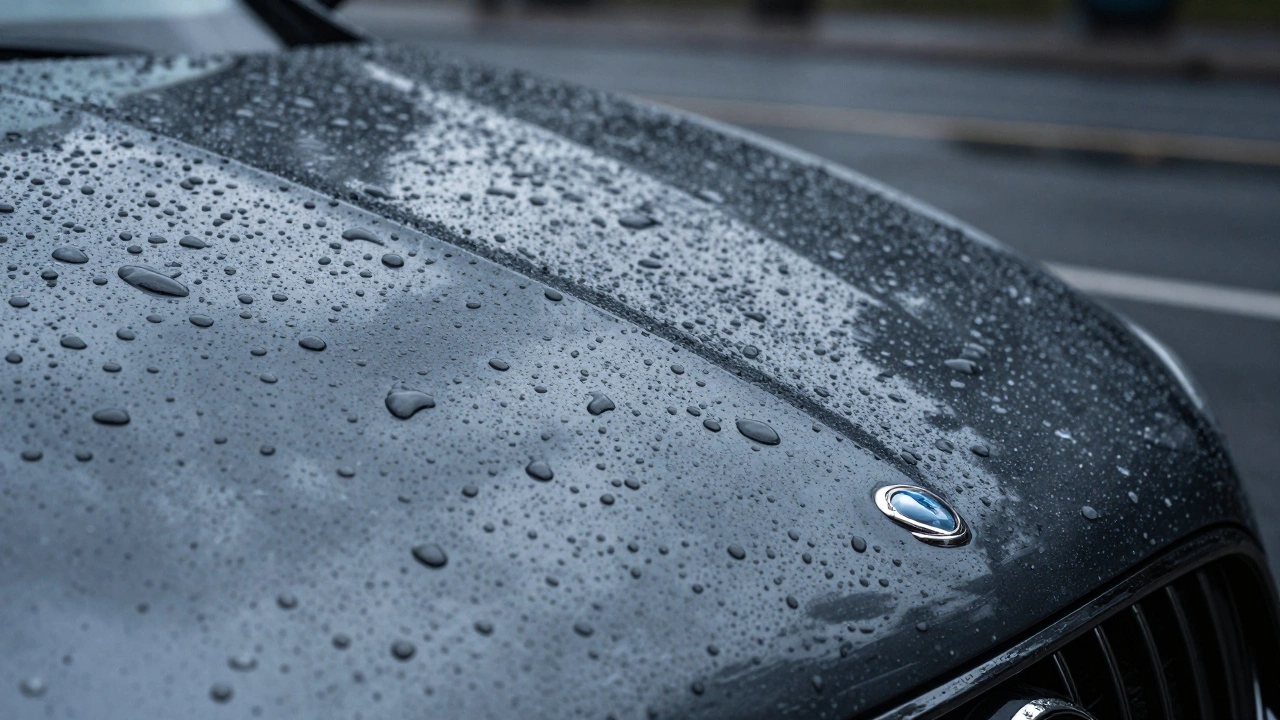
Imagine your car has a permanent, invisible shield that makes water slide off like magic and keeps the paint looking wet and glossy for a decade. That is the promise of ceramic coating for cars is a liquid polymer that chemically bonds with your vehicle's factory paint to create a semi-permanent layer of protection. It is not just a fancy wax; it is a feat of nanotechnology that changes how we maintain our vehicles.
| Feature | Ceramic Coating | Traditional Wax |
|---|---|---|
| Longevity | 5 to 10+ years | 2 to 6 weeks |
| Hardness | Comparable to solid quartz | Soft and malleable |
| Hydrophobicity | Extreme water beading | Moderate water resistance |
| Application | Professional/Chemical bond | Surface layer/Physical bond |
How Nano-Technology Actually Protects Your Paint
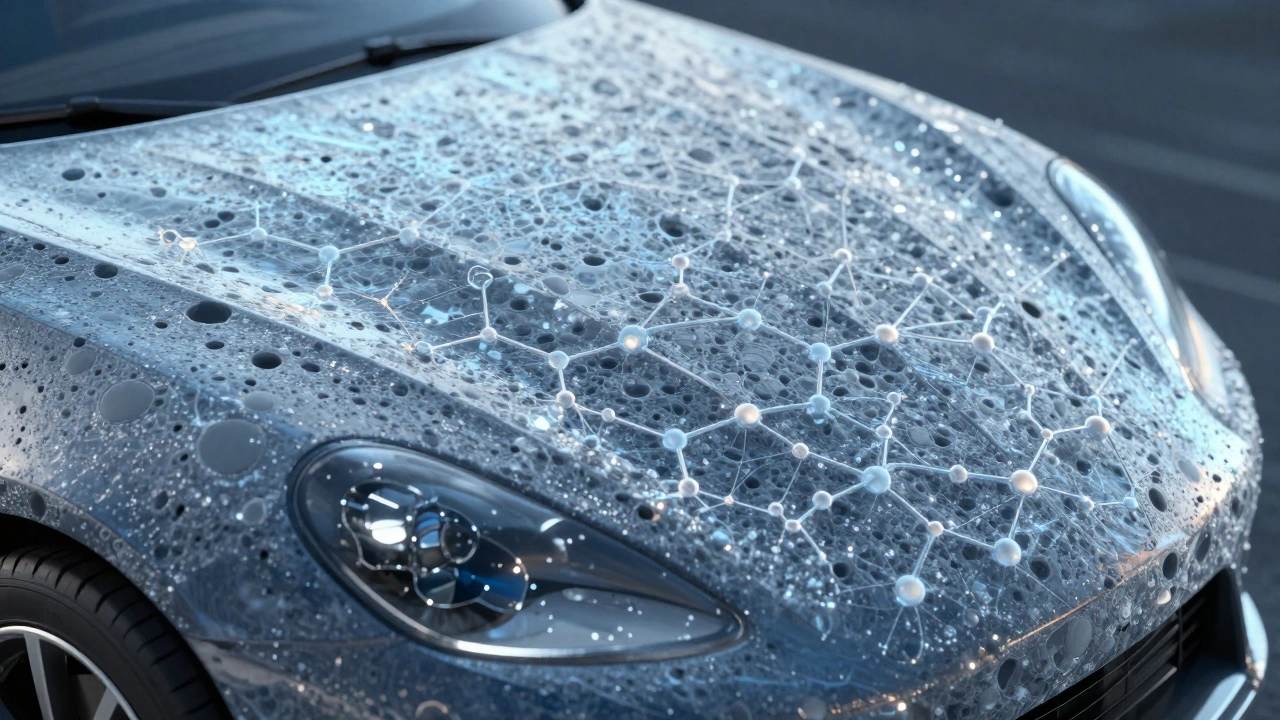
To understand how this works, you have to look at your car's paint under a microscope. Even a brand-new car has tiny pores and microscopic imperfections. Silicon Dioxide (also known as SiO2), the primary ingredient in most coatings, fills these gaps at the nanoscale. This creates a smooth, hard surface that prevents dirt and contaminants from ever touching the actual paint.
Unlike a wax that sits on top of the paint, a ceramic coating uses supramolecular chemistry to fuse with the surface. This creates a molecular bond that is incredibly difficult to remove. Because the resulting layer is so hard-similar to the structural integrity of quartz-it resists micro-marring and the light etching caused by bird droppings or bug guts that usually eat through a clear coat.
The Big Benefits: More Than Just a Pretty Shine
The most immediate thing you will notice is the gloss. Because the coating is so smooth, it reflects light more efficiently, giving your car a "permanent wet look." But the real value is in the chemistry. Titanium Dioxide (TiO2) is often added to these formulas to provide a chemical shield against UV rays. This acts like a high-SPF sunscreen for your car, preventing the oxidation and fading that happens when your vehicle sits in the sun for hours.
Then there is the hydrophobic effect. "Hydrophobic" literally means water-fearing. When rain hits a coated surface, it doesn't flatten out; it beads up and rolls off. This process, called sheeting, carries away surface dirt and grime, meaning you don't have to wash your car nearly as often. If you are tired of spending every Saturday scrubbing your wheels and panels, this is the biggest win.
Ceramic Coating vs. Paint Protection Film (PPF)
There is a common misconception that ceramic coatings protect against rock chips. They don't. If a pebble flies off the highway at 70 mph, a nano-coating isn't thick enough to stop the impact. That is where Paint Protection Film, often called PPF or a "clear bra," comes into play. PPF is a thick, urethane layer that absorbs the physical impact of debris.
The pro move? Use both. Many enthusiasts apply PPF to the front bumper and hood to stop chips, and then apply a ceramic coating over the entire car-including the film. Since PPF isn't naturally as hydrophobic as ceramic, coating the film prevents it from yellowing and makes it much easier to clean.
The Professional Installation Process
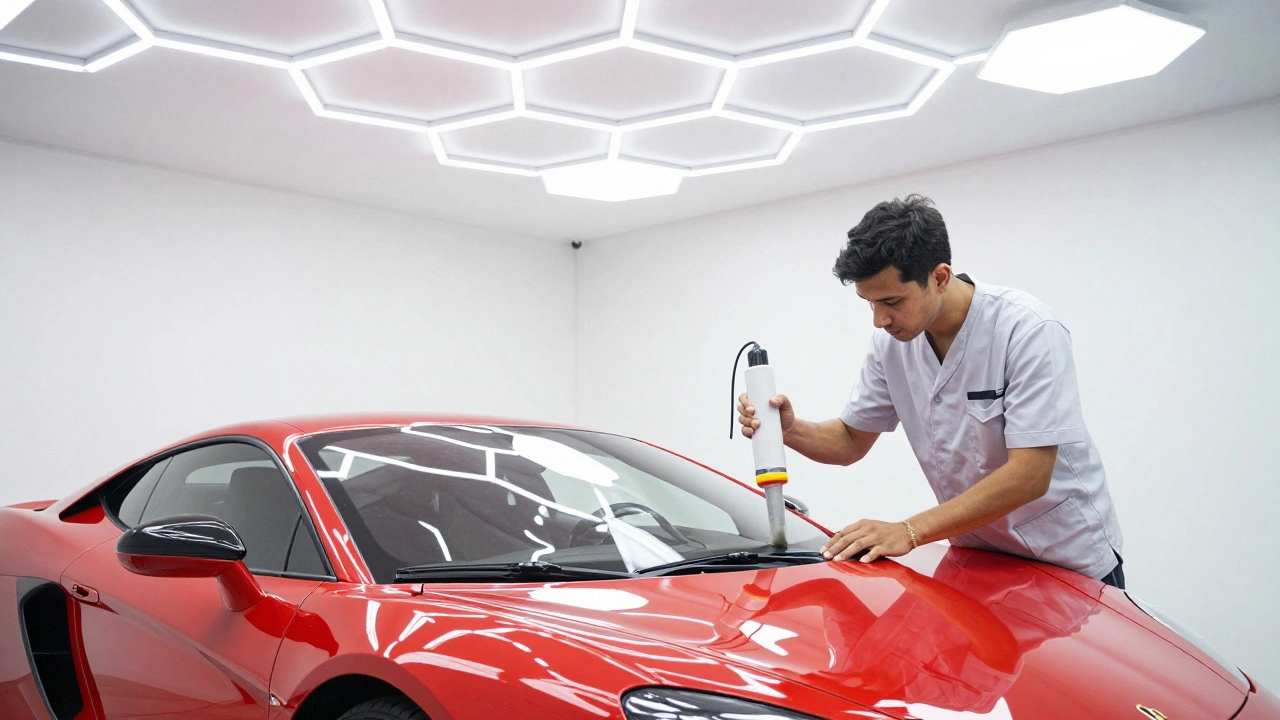
You might see "DIY kits" online, but for a coating that lasts 10 years, you need a certified professional. The magic isn't just in the liquid; it is in the preparation. A professional will perform a full paint correction, which involves sanding and polishing the paint to remove all swirls and scratches. If you apply a ceramic coating over a scratch, you essentially "lock in" that scratch for the next decade.
- Decontamination: The car is stripped of all waxes and oils using a chemical wash.
- Paint Correction: Technicians use machine polishers to ensure the surface is perfectly flat and debris-free.
- Application: The coating is applied in precise sections to avoid "high spots" or streaks.
- Curing: The coating must cure at specific temperatures and timeframes to reach maximum hardness.
Comparing the Top Industry Players
Not all coatings are created equal. Brands like Ceramic Pro and Gtechniq focus on high-grade molecular bonding, while Nasiol provides specialized solutions for paint preservation. Each uses slightly different proprietary solvents to achieve the same goal: a hard, glass-like barrier.
We are also seeing a shift toward Diamond Nano Diamond Technology. Some companies, like Diamond Protect, are moving away from silica-based formulas toward diamond-based nano coatings. These claim to be even harder than traditional ceramics and can be applied to more than just paint-think leather interiors, glass, and even wheels.
Maintenance: How to Keep the Shield Alive
While ceramic coatings are low-maintenance, they aren't "no-maintenance." You still need to wash your car, but the process is different. You should avoid harsh alkaline soaps that can degrade the coating over time. Instead, use a pH-neutral shampoo. Because the coating is so slick, you'll find that a simple two-bucket wash removes almost everything without needing to scrub hard.
Every few months, it is a good idea to use a ceramic "top-up" or booster. These are lightweight sprays that fill in any microscopic wear and tear on the top layer of the coating, keeping the water-beading properties at their peak.
Does ceramic coating prevent all scratches?
No. It protects against "micro-marring" and light swirls caused by improper washing. However, it will not stop deep scratches from keys or heavy impact damage like rock chips. For those, you need Paint Protection Film (PPF).
How long does the application actually take?
Because the preparation (paint correction) is the most important part, a professional job can take anywhere from a few days to a week. The actual coating application is fast, but the curing process requires the car to stay in a controlled environment for several hours.
Can I still wax my car after getting a ceramic coating?
You can, but you shouldn't. Traditional wax fills in the pores of the ceramic coating and actually reduces the hydrophobic performance. If you want to add shine, use a ceramic-specific sealant or booster.
Is it worth the money compared to a sealant?
If you plan on keeping your car for more than three years, yes. While a poly sealant is cheaper upfront, you have to reapply it every few months. A professional ceramic coating is a one-time investment that lasts years and maintains the vehicle's resale value.
Will it make my car's paint look different?
It won't change the color, but it will enhance the depth. It creates a high-gloss, glass-like finish that makes colors look more vibrant and "pop" more than they would with just a standard clear coat.