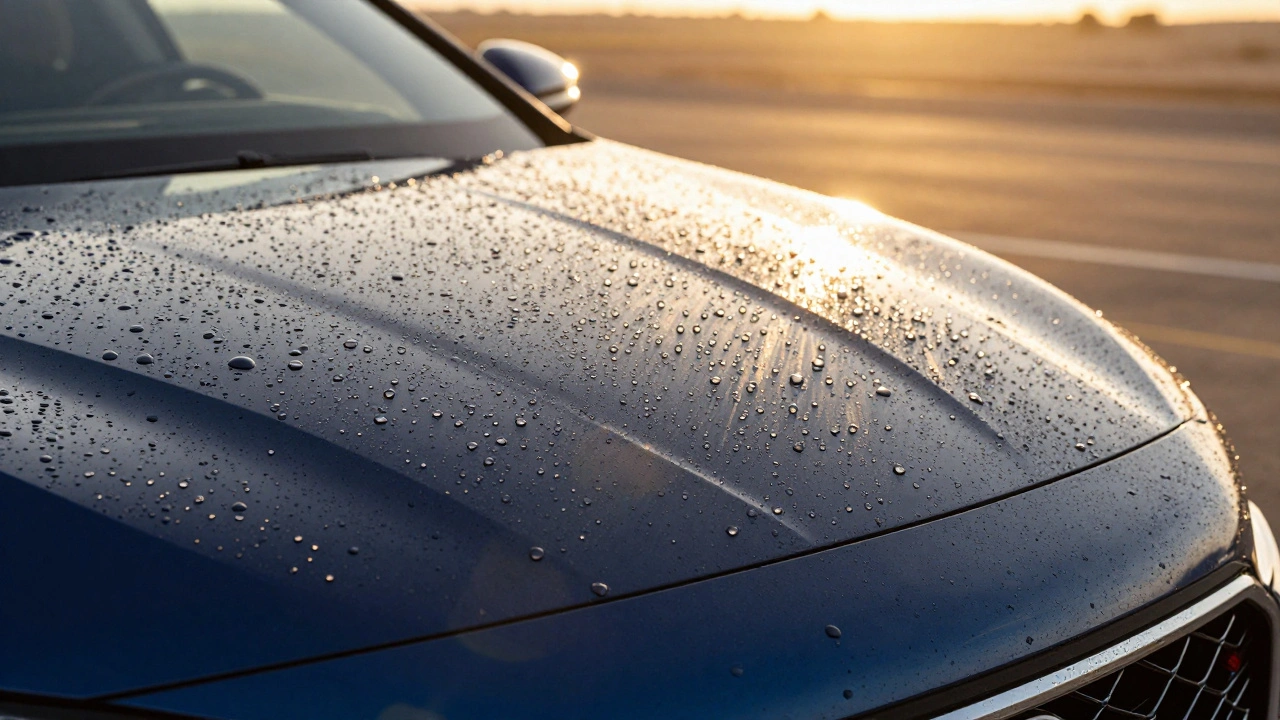
Your car takes a beating every time you park it. Whether it's the relentless drizzle we get here in Portland or the harsh summer sun baking the hood, your vehicle's paint is always under attack. As of 2026, you have two heavy hitters in the fight for clear coat preservation: ceramic and graphene. While they sound similar, they aren't just marketing buzzwords. One relies on silicon technology that has been around for years, while the other uses carbon structures straight out of advanced physics labs. If you are standing in a detail shop deciding which service to book, understanding the actual performance gap matters more than the shiny sales pitch.
The Bottom Line Up Front
- Ceramic coatings use silicon dioxide to create a hard, glass-like shield that resists scratches and chemical stains effectively.
- Graphene coatings are newer carbon-based barriers that offer better thermal management and self-cleaning capabilities.
- If budget is tight, ceramic remains the cost-effective choice for immediate gloss and protection.
- If longevity is priority, graphene lasts significantly longer, often doubling the lifespan of traditional options.
- Both require professional paint correction before application to ensure proper bonding.
Understanding Ceramic Coatings
You have likely heard friends rave about their "ceramic" cars that bead water like rain on a windshield. This technology isn't exactly new anymore. By 2026, it has become the baseline standard for aftermarket protection. When people discuss this type of coating, they are referring to a liquid polymer based on Silicon Dioxide. In its purest form, this material creates a permanent bond with the factory clear coat.
A protective layer applied to a vehicle's exterior that hardens to form a semi-permanent barrier against environmental contaminants and oxidation.Think of it as painting your car with liquid glass. Once it cures, it forms a rigid shell. The main selling point has always been chemical resistance. Acid rain, bird droppings, or tree sap sit on top of the silica layer rather than eating into the actual paint. Because the surface is incredibly smooth, dirt struggles to stick, making the wash process much easier.
However, there are limitations you need to know. Because the layer is hard, it can be brittle. Over time, usually around the three-year mark, this hardness can lead to micro-fractures if the paint flexes or if the car gets hit by small rocks. You also cannot ignore the visual aspect; while early versions looked flat, modern formulas add depth and richness to the color. They make black cars look wet and metallic paint pop. If you care about that showroom shine, this is your baseline reference point.
Breaking Down Graphene Technology
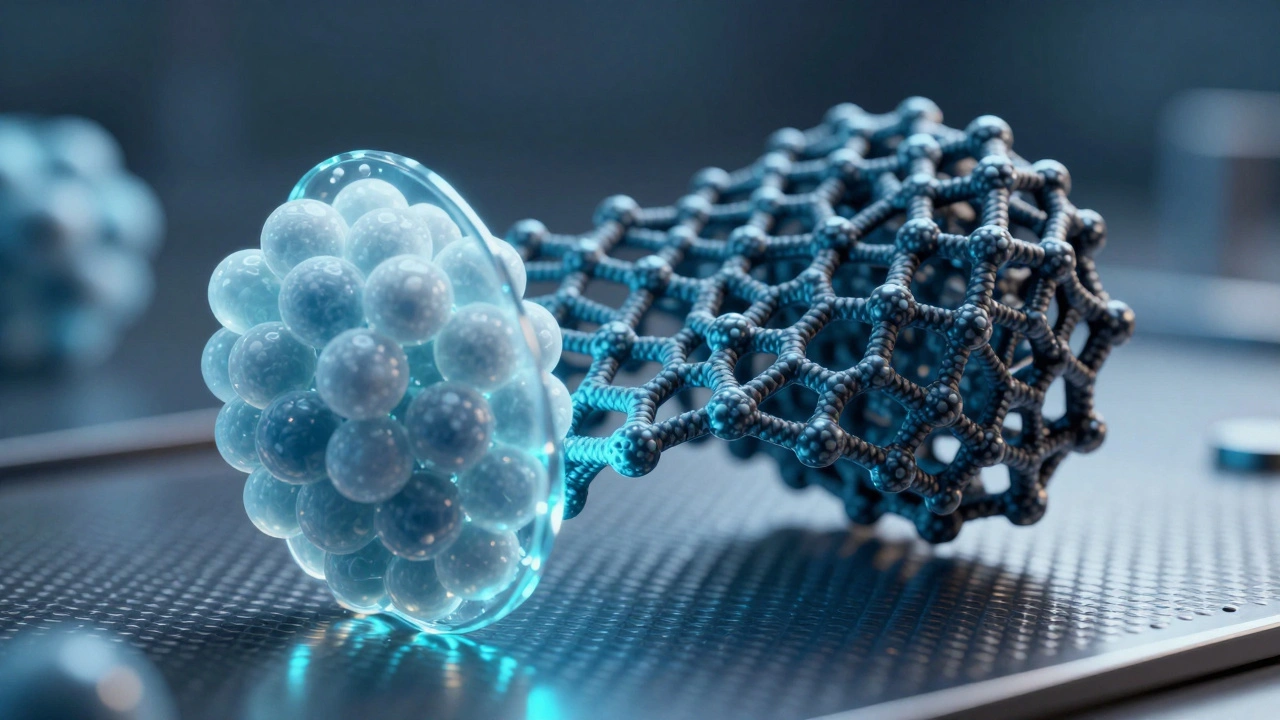
This is where the science gets interesting. If ceramic is liquid glass, Graphene Coating is basically super-strong molecular paper. It uses a single layer of carbon atoms arranged in a hexagonal lattice. This structure gives it properties that silicon simply cannot match physically.
An advanced automotive coating composed of single-layer carbon atoms that provides superior durability, thermal conductivity, and hydrophobic performance.The biggest advantage lies in flexibility. Unlike the brittle nature of silica, graphene stretches slightly with the metal underneath it. This means it is far less likely to crack when the car body expands from temperature changes. We see this matter most in regions with wild seasonal swings. Another hidden benefit is thermal regulation. With a thermal conductivity rating exceeding 5,000 watts per meter-kelvin, it disperses heat rapidly. On a hot day, the painted surface stays cooler, slowing down the oxidation process that turns paint chalky.
Graphene also changes how water behaves on the car. While ceramics bead water, graphene makes water roll off so aggressively that it leaves almost zero residue. Combined with its anti-static charge, dust and pollen struggle to land on the surface at all. For owners who hate washing their car weekly, this is a game-changer. However, you do pay a premium for this atomic-level engineering.
Direct Comparison: Which Protects Better?
When you put them side-by-side, the differences become clear regarding what each technology prioritizes. You need to decide whether you want a hard shield (ceramic) or a flexible armor (graphene).
| Feature | Ceramic Coating (SiO2) | Graphene Coating (C) |
|---|---|---|
| Lifespan | 2 to 5 Years | 5 to 10+ Years |
| Hydrophobicity | High Beading | Roll-off effect (Super Hydrophobic) |
| Durability | Hard, Scratch Resistant | Flexible, Impact Resistant |
| Thermal Resistance | Moderate | Extreme Heat Dispersion |
| Visual Finish | Glossy, Deep | Satin to High Gloss |
Notice the durability metric. Graphene wins on impact and longevity because of its tensile strength-roughly 34% higher than standard ceramic formulations. If you drive on gravel roads or live near construction sites, the flexibility prevents the film from shattering upon impact. Conversely, ceramic holds up better against chemical etching initially due to its density. Both stop rust and corrosion well enough, but graphene keeps that barrier intact longer.
How Climate Impacts Your Choice
Living here in Oregon, we face a different set of challenges compared to Arizona or Florida. Our problem isn't just the sun; it's moisture. Constant rain, high humidity, and salt during winter road treatments are enemies of clear coat. A thick ceramic layer is great, but if it cracks from cold snaps, moisture gets trapped between the coating and the paint. That trapped water causes bubbling and rust.
This is why many local professionals are switching to graphene solutions recently. The ability to handle expansion and contraction without cracking is vital in our unpredictable Pacific Northwest weather. Furthermore, the anti-static property helps repel the dust that builds up on roads after spring thawing. In places with extreme dry heat, ceramic works well for UV blocking, but here, the waterproofing capability of the graphene structure offers superior defense against water spots.
Price versus Value Calculation
Let's talk numbers, specifically for the US market in 2026. Prices fluctuate, but the gap remains consistent. Professional-grade ceramic applications typically range from $1,000 to $2,000 depending on the shop and paint correction involved. Graphene services sit higher, often starting around $1,500 and climbing past $3,000 for multi-layer installations.
Is the extra upfront cost worth it? Consider the math. If you spend $1,200 on a ceramic coating that peaks at four years, that is $300 per year of protection. If you invest $1,800 in graphene rated for eight years, that drops to $225 per year. Beyond the raw cost, you must factor in maintenance. Graphenized cars stay cleaner longer, meaning fewer wash visits and less risk of swirl marks from automated brush machines.
Additionally, consider the resale value. A five-year-old car with a fresh graphene coating still protecting the original paint fetches a higher price than one with an aging ceramic layer that is failing. Buyers in the used market check paint integrity closely, and visible hydrophobic failure (water sheeting instead of beading) scares them off. Maintaining that glossy look is an investment in the asset's residual value.
Application and Maintenance Realities
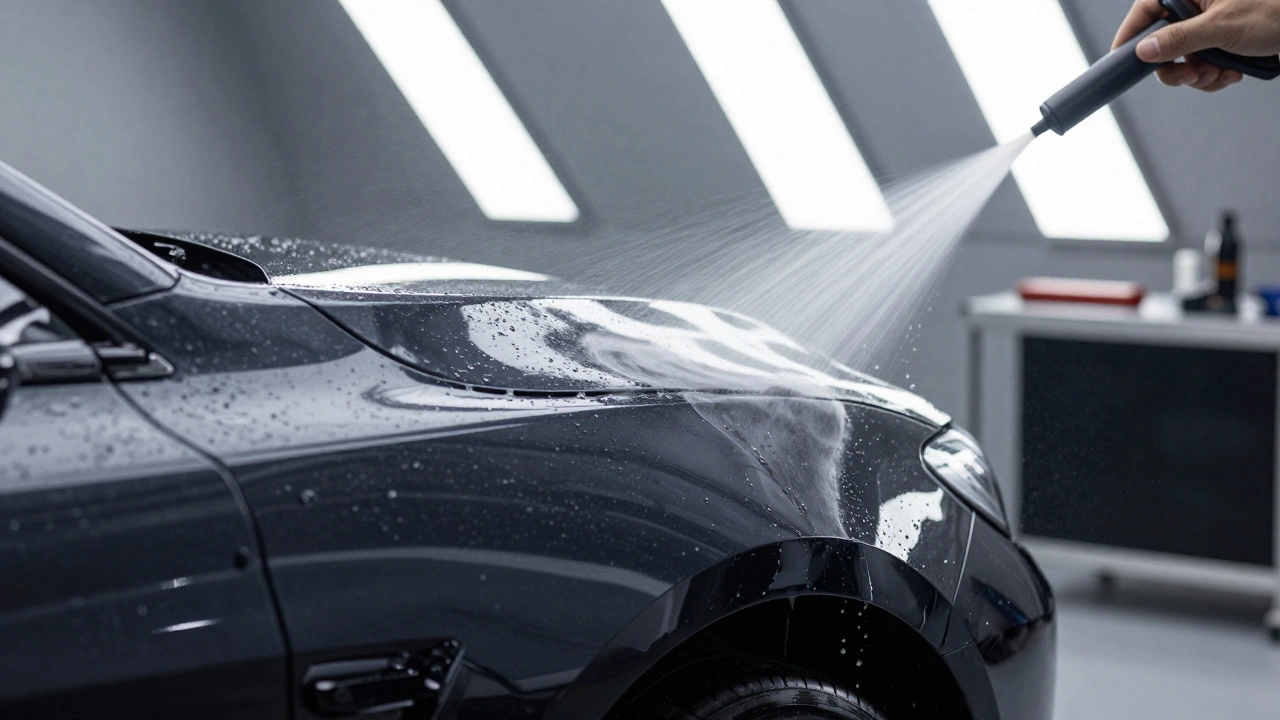
One misconception is that you can spray these bottles on like wax. Neither option works on dirty paint. Both require full machine polishing to remove old imperfections before the coating bonds. This step alone accounts for 70% of the labor cost. Without stripping the old clear coat imperfections, the coating will lock in scratches and swirls.
In terms of installation, ceramic is easier for DIYers. Many consumer-grade products allow you to wipe it on and buff it off within an hour. Graphene requires a more controlled environment and precise layer thickness control to avoid staining. Most car owners should leave graphene to pros because uneven application ruins the aesthetic result. However, once applied, maintaining either type involves using pH-neutral soap. Harsh alkaline detergents strip the coating regardless of the material type.
There is also the issue of removal. Ceramic coatings eventually fail and flake off. Graphene coatings degrade slower but may require a dedicated stripper to remove completely if you ever sell the car or switch to a PPF wrap. Neither method makes your car invincible against rock chips. For that, you need Paint Protection Film. These two coatings are for chemical protection and aesthetic enhancement, not bulletproofing.
Environmental Considerations
As we move toward 2026, sustainability plays a role in purchasing decisions. Graphene production has matured, resulting in lower volatile organic compounds (VOCs) compared to some older ceramic solvents. Because graphene lasts twice as long, you generate less waste from bottle disposal and packaging. Water conservation also improves with graphene due to its extreme hydrophobic nature; washing becomes a rinse job rather than a scrub.
Frequently Asked Questions
Can I mix ceramic and graphene coatings?
Yes, hybrid products exist. Some manufacturers blend silica nanoparticles into a graphene matrix to balance scratch resistance with flexibility. These are often marketed as nano-ceramic hybrids and offer a middle ground in price and performance.
Does graphene replace the need for wax?
Absolutely. The coating itself acts as the final sealant. Applying carnauba wax over a cured graphene or ceramic layer is unnecessary and can actually block the coating's hydrophobic properties.
Will these coatings prevent rock chips?
No. Liquid coatings are too thin to stop high-velocity impacts. Paint Protection Film (PPF) is required for chip protection. Coating goes on top of PPF to make it cleaner and shinier.
How do I maintain the coating warranty?
Most warranties require regular inspections, typically once a year, to check for contamination or peeling. Using approved maintenance sprays and avoiding abrasive washing tools is mandatory to keep coverage valid.
Is DIY application safe for graphene?
Generally, no. While consumer versions exist, professional-grade graphene requires specific curing temperatures and humidity controls. Mistakes during application can lead to hazing or orange-peel textures that are very difficult to fix later.