Imagine you’re driving on Sheikh Zayed Road during rush hour. A sudden brake check from the car ahead leaves you with a crumpled bumper and a sinking feeling. In Dubai, how you handle that moment depends entirely on one decision made months prior: choosing the right car insurance. It’s not just about ticking a box for registration; it’s about whether you’ll spend your afternoon arguing with an adjuster or driving away with a repaired car by evening.
Many drivers here treat insurance as a commodity-just find the cheapest quote. But in the UAE market, price is often inversely related to convenience. A policy that saves you AED 500 might cost you three weeks of waiting for parts or force you to use a garage where they “guess” at the repair specs. This guide breaks down exactly what you need to look at beyond the premium sticker.
The Core Decision: Third-Party vs. Comprehensive
Before looking at prices, you have to decide on the type of cover. The choice usually comes down to two main options, each serving a different risk profile.
Third-Party Liability (TPL) is the legal minimum. If you hit someone else’s BMW, this covers their damage. If you hit a wall, you pay for your own repairs out of pocket. It’s cheap, simple, and ideal if you drive an older, low-value car where a total loss wouldn’t break the bank.
Comprehensive Insurance covers both your car and others’ cars. It includes theft, fire, natural disasters (yes, even rare hail in Dubai), and accidents where you are at fault. For most expats and residents with newer vehicles or financed cars, this is the only real option. Banks almost always require comprehensive coverage for loans.
| Feature | Third-Party Liability | Comprehensive |
|---|---|---|
| Covers Your Damage | No | Yes |
| Covers Other's Damage | Yes | Yes |
| Theft & Fire | No | Yes |
| Average Cost (Sedan) | AED 600 - 1,200 | AED 2,500 - 4,500+ |
| Best For | Old cars (>7 years) | New cars, Financed cars |
The Garage Trap: Agency vs. Approved
This is where most people get burned. When you buy comprehensive insurance, you must choose between Agency Repair and Approved Garage Repair.
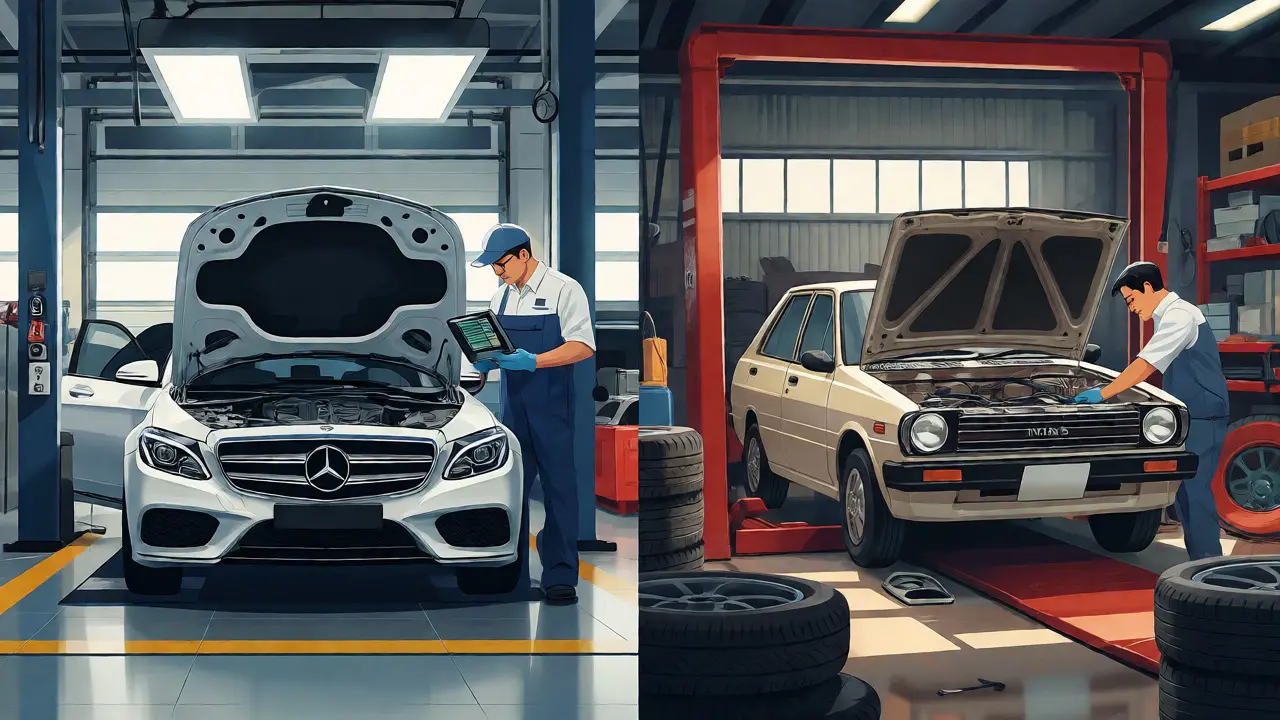
Agency repair means if you crash, you take your car to the official dealer (e.g., Toyota Arabia, Al-Futtaim). They use genuine parts and follow factory standards. It’s fast, high-quality, and preserves resale value. But it’s expensive. Insurers charge significantly more for this option because dealerships bill higher labor rates.
Approved garage repair lets you go to any workshop on the insurer’s list. These are independent shops vetted by the insurance company. They are cheaper, but quality varies wildly. You might get a great fix, or you might get mismatched paint and non-genuine parts. If you drive a luxury car like a Mercedes or Porsche, skipping agency repair can hurt your resale value later. For a five-year-old Nissan Sunny? An approved garage is perfectly fine and saves you money.
Understanding Deductibles and Excess
Your monthly or annual premium isn’t the only cost. Look closely at the Deductible (also called Excess). This is the amount you pay from your own pocket before the insurance kicks in.
Standard policies often have a deductible of AED 500 to AED 1,000 per claim. Some insurers offer "zero deductible" plans for a higher premium. Ask yourself: How likely am I to make small claims? If you’re a nervous new driver, paying extra for zero deductible makes sense. If you’ve been driving in Dubai for ten years without an accident, you’re better off taking the higher deductible and lowering your annual premium.
Watch out for hidden excesses. Some policies add an extra penalty if you are found 100% at fault, or if the driver is under 25 years old. Read the fine print on "driver age restrictions."
How Price is Calculated in Dubai
Why does one person pay AED 2,000 while another pays AED 3,500 for the same Honda Civic? It’s not random. Insurers use specific data points to calculate your risk.
- Car Value: Based on the current market value, not what you paid five years ago. Check the UAE Vehicle Valuation guides or apps like Dubizzle to see realistic prices.
- Driver History: Do you have a No Claims Discount (NCD)? Transferring an NCD from your home country can sometimes work, but many local insurers ignore foreign history unless you provide detailed proof from your previous insurer.
- Location: Living in a high-density area like Marina or Downtown might slightly increase premiums due to higher traffic density and parking risks compared to quieter areas like JVC or Mirdif.
- Age and Gender: Statistically, younger male drivers face higher premiums. Women often get better rates, though this gap is narrowing.
The Process: Buying and Renewing
Buying insurance in Dubai is digital-first. You don’t need to visit an office. Use comparison platforms like PolicyBazaar.ae or Souqalmal, or go direct to major providers like AXA, Sukoon, or Oman Insurance.
- Gather Documents: You need your Emirates ID, Driving License, and Mulkiya (Vehicle Registration Card).
- Get Quotes: Input your details. Be honest about your mileage and who will be driving. Lying to save money can void your policy.
- Check the Garage List: Before clicking buy, download the PDF of approved garages. Ensure there is one near your home or workplace. If the nearest one is in Sharjah and you live in Dubai Silicon Oasis, think twice.
- Pay and Register: Once paid, you get an e-policy instantly. You can then renew your Mulkiya via RTA or TAMM.
Common Pitfalls to Avoid
Don’t assume all comprehensive policies are equal. Here are traps that catch people out:
- Windshield Cover: Many basic comprehensive plans exclude glass replacement. Adding "glass cover" costs little but saves huge hassle if a rock chips your windshield.
- Towing Limits: Check how many kilometers of free towing are included. Standard is often 50km within Dubai. If you plan road trips to Abu Dhabi or Fujairah, ensure you have nationwide towing.
- Replacement Vehicle: Will they give you a rental car while yours is in the shop? Usually, this is an add-on. If you rely on your car daily, this add-on is worth every fils.
- Under-insurance: Don’t declare a lower car value to reduce premiums. If your car is totaled, you’ll receive the declared value, not the actual market value. That’s a bad trade-off.
Frequently Asked Questions
Can I transfer my no-claims bonus from my home country?
It depends on the insurer. Major international insurers operating in the UAE may accept proof of no-claims history from abroad, but local smaller insurers often do not. Always ask for a letter from your previous insurer stating you had no claims for the last 1-3 years.
What happens if I drive without valid insurance?
Driving without insurance in Dubai results in a fine of AED 500, black points on your license, and potential vehicle impoundment. More importantly, if you cause an accident, you are personally liable for all damages, which can run into tens of thousands of dirhams.
Is it cheaper to insure a used car than a new one?
Generally, yes, because the insured value is lower. However, if the car is very old (over 10 years), some insurers refuse comprehensive cover or charge higher rates due to part availability issues. Third-party liability becomes the standard choice for these vehicles.
Do I need separate insurance for my car if I have home insurance?
Yes. Home insurance covers your property inside the house. Car insurance is a mandatory separate product regulated by the Insurance Authority of the UAE. Bundling discounts exist, but they are separate contracts.
How long does it take to process a claim?
For minor accidents with clear liability, cash settlement can happen within 3-7 days. For complex repairs requiring parts from abroad, it can take 2-4 weeks. Using an agency garage usually speeds up the approval process compared to independent workshops.