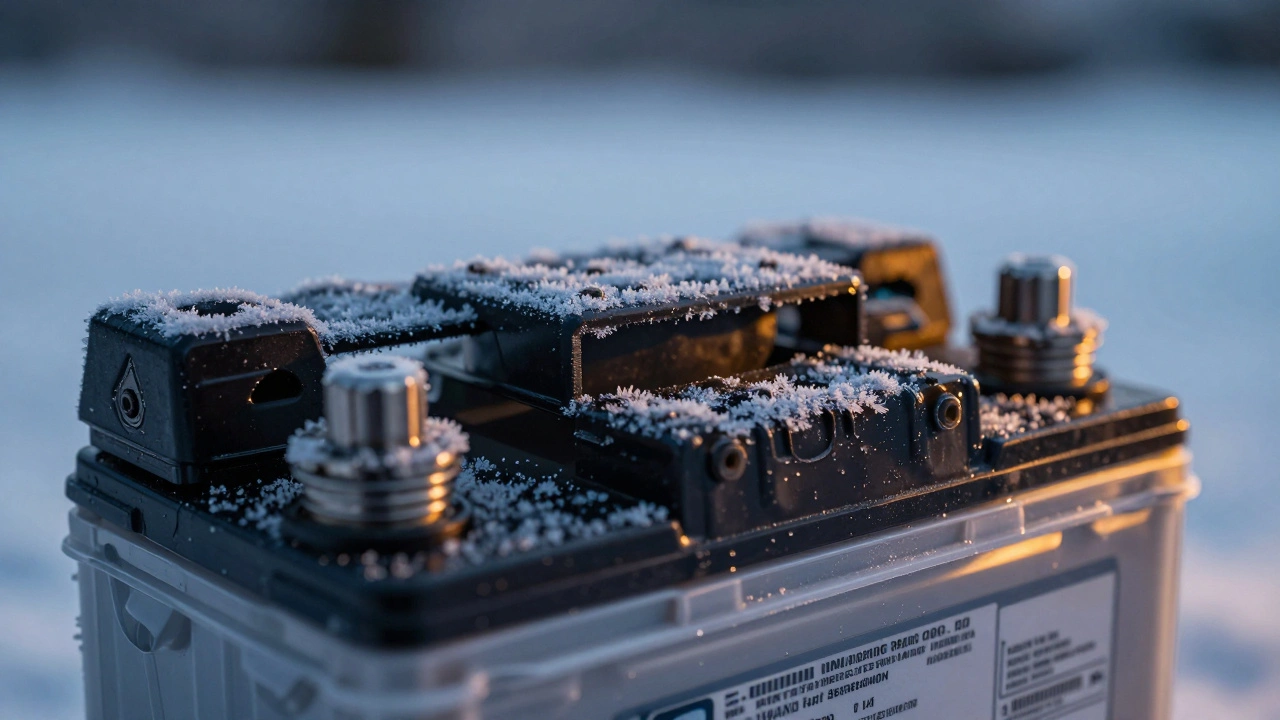
You turn the key, and instead of a smooth rumble, you hear that dreaded click-click-click. The lights dim. The engine refuses to turn over. It’s not just bad luck; it’s physics. When temperatures drop, your car battery loses power fast. That’s why Cold Cranking Amps matters more than any other number on the label if you live anywhere with winter.
Cold Cranking Amps (CCA) is a standardized rating that measures how much current a battery can deliver at zero degrees Fahrenheit for 30 seconds while maintaining minimum voltage. It tells you exactly whether your car will start when it’s freezing outside. Without understanding this metric, you’re guessing which battery will survive the night.
The Science Behind the CCA Rating
To understand CCA, you need to know what happens inside a lead-acid battery during extreme cold. Chemical reactions slow down significantly as temperature drops. A battery that holds 100% charge in summer might only deliver 50% or less in deep freeze conditions. The starter motor demands high current to crank the engine against thickened oil and compression resistance.
The industry standard for testing CCA comes from organizations like SAE International and BCI (Battery Council International). Here are the strict rules:
- Temperature: The battery must be tested at 0°F (-17.8°C).
- Duration: It must sustain current for exactly 30 seconds.
- Voltage Threshold: For a 12-volt battery, voltage cannot drop below 7.2 volts. For a 6-volt battery, it stays above 3.6 volts.
If a battery delivers 600 amps under these specific conditions, its CCA rating is 600. This isn’t theoretical maximum power-it’s guaranteed performance under stress. Manufacturers test every batch to ensure consistency. When you see "800 CCA" on an Optima or Yuasa battery, that number represents verified capability, not marketing fluff.
CCA Versus Other Battery Ratings
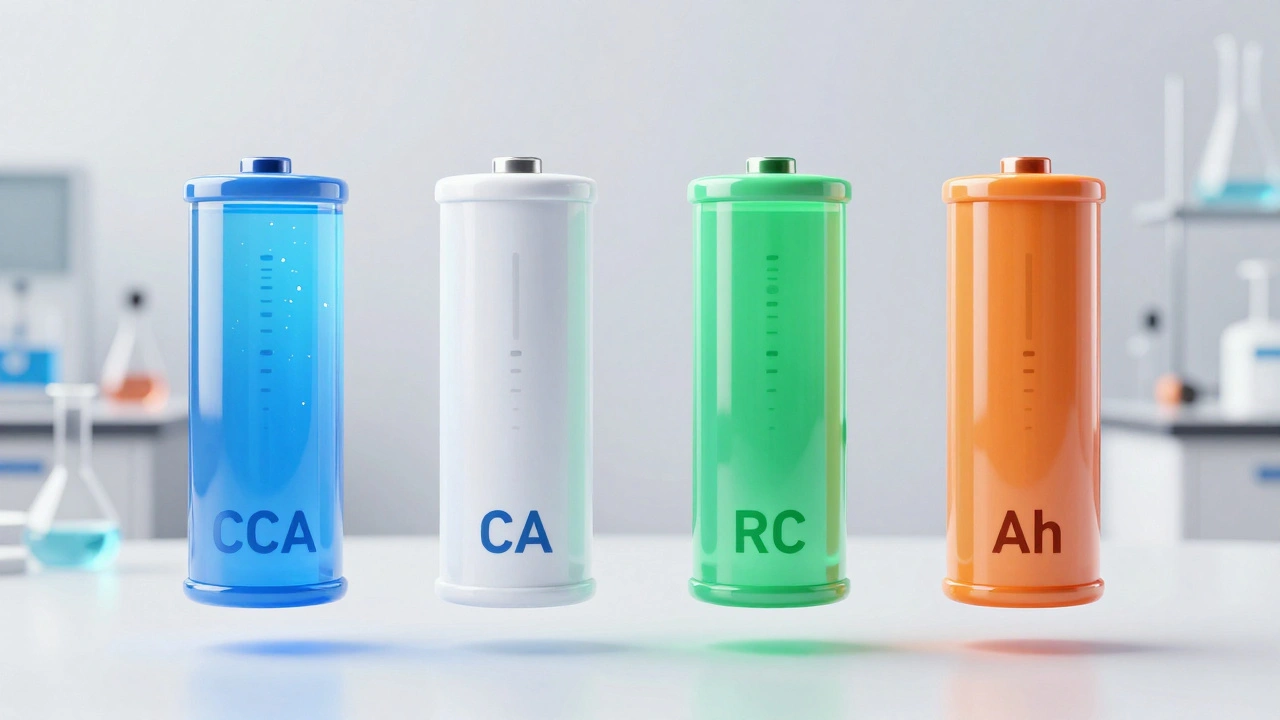
Battery labels show several numbers that look similar but mean very different things. Confusing them leads to buying the wrong battery. Let’s break down the three main competitors to CCA.
| Rating Type | Test Temperature | What It Measures | Best Use Case |
|---|---|---|---|
| Cold Cranking Amps (CCA) | 0°F (-17.8°C) | Starting power in extreme cold | Northern climates, winter reliability |
| Cranking Amps (CA) | 32°F (0°C) | Starting power in moderate cold | Mild winters, general reference |
| Reserve Capacity (RC) | Room Temp | Minutes running without alternator | Long trips, electrical failure backup |
| Ampere Hours (Ah) | 80°F (26.7°C) | Total energy storage capacity | Marine/RV applications, low-drain devices |
Cranking Amps (CA) tests at 32°F, which is much warmer than CCA’s 0°F. Because chemical reactions work better at higher temperatures, CA numbers are always higher than CCA numbers for the same battery. To convert CA to CCA, divide by 1.25. A battery rated at 500 CA equals roughly 400 CCA. If you live in Arizona, CA might matter more. If you live in Minnesota, ignore CA and focus solely on CCA.
Reserve Capacity (RC) answers a different question: How long can your car run if the alternator dies? RC counts minutes a battery can deliver 25 amps before dropping below 10.5 volts. An RC of 100 means you have about 100 minutes to drive to a repair shop after charging system failure. High-end batteries often combine high CCA with high RC, giving you both starting power and endurance.
Ampere Hours (Ah) measures total stored energy over 20 hours at 80°F. It’s common in marine and RV batteries where steady, low-current drain matters more than sudden bursts of power. For daily driver cars, Ah is secondary to CCA.
Why Geography Dictates Your CCA Needs
Your zip code determines your battery requirements. Cold weather doesn’t just make engines harder to turn-it reduces battery efficiency dramatically. At 0°F, a typical lead-acid battery loses nearly half its cranking power compared to 80°F.
Consider these regional guidelines:
- Southeast/Southwest (Florida, Texas, California): Temperatures rarely drop below freezing. A CCA rating of 300-400 usually suffices for most sedans. Focus more on Reserve Capacity for heat-related degradation protection.
- Mid-Atlantic/Northeast (New York, Pennsylvania, Ohio): Winters bring regular sub-freezing nights. Aim for 500-600 CCA. Older vehicles with larger engines may need 700+.
- Upper Midwest/North (Minnesota, Wisconsin, Alaska): Extreme cold is normal. You need 600-800+ CCA. Don’t skimp here. A weak battery means being stranded in dangerous conditions.
Vehicle size also plays a role. A small hybrid car like a Toyota Prius needs less CCA because its electric assist motor helps start the gasoline engine. A large diesel truck requires massive current to compress air-fuel mixtures. Always check your owner’s manual for the manufacturer’s recommended minimum CCA.
Real-World Impact: What Happens When CCA Is Too Low?
When CCA falls short, symptoms appear gradually. First, headlights seem dimmer at startup. Then, the starter motor turns slower-you hear a labored groan instead of a crisp spin. Finally, the battery fails completely. In extreme cases, repeated low-CCA starts damage the starter solenoid and drain remaining battery life faster.
Higher CCA provides tangible benefits beyond just starting. More amperage means faster engine turnover. Faster turnover improves fuel ignition timing and reduces wear on starter components. During cold snaps, a battery with 800 CCA starts reliably while a 400 CCA unit struggles or fails entirely. The difference isn’t marginal-it’s the line between driving home and calling a tow truck.
Manufacturers like Interstate Batteries and Yuasa emphasize that CCA reflects worst-case scenario performance. If your battery meets CCA standards, it handles everyday starting easily. Think of CCA as insurance against the harshest conditions your region faces.
How to Choose the Right Battery Using CCA
Selecting a battery involves matching specifications to your vehicle and climate. Follow this step-by-step process:
- Check Your Owner’s Manual: Find the recommended CCA value. This is the minimum safe threshold for your engine.
- Assess Your Climate: If you live in a cold zone, add 10-20% buffer above the manual’s recommendation. For example, if the manual says 500 CCA, buy 550-600 CCA.
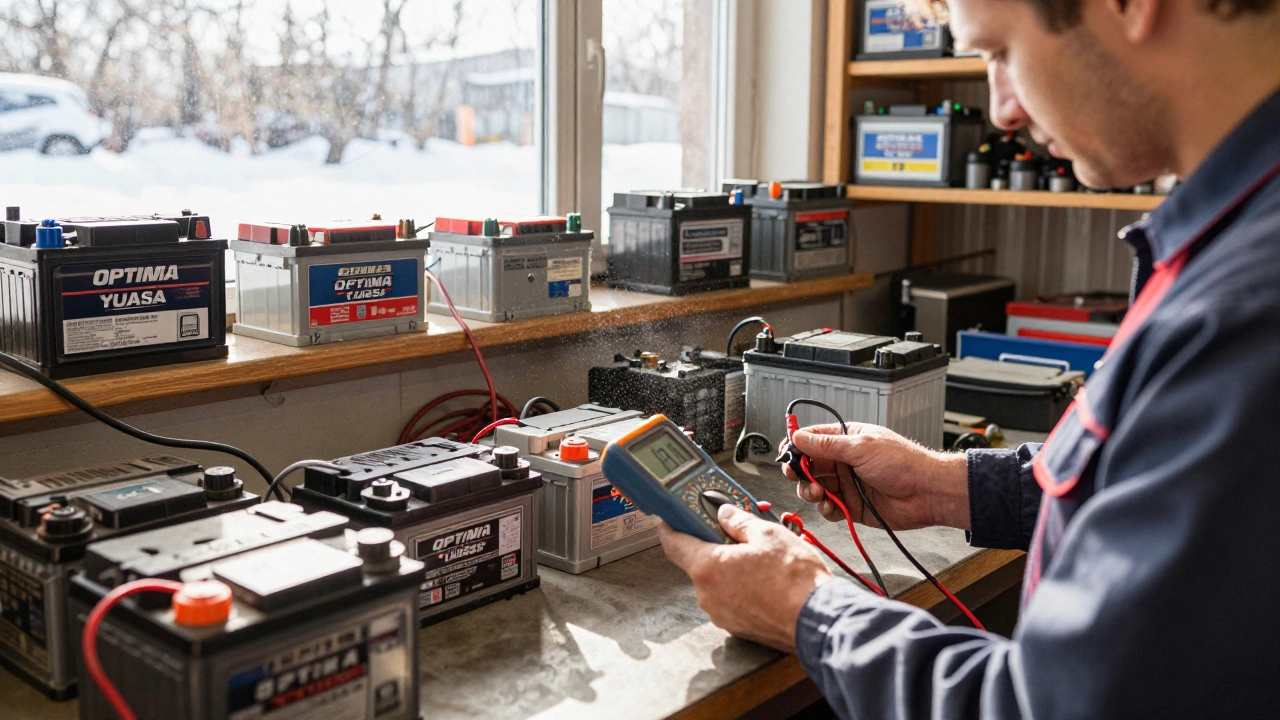
- Compare Brands: Look at reputable manufacturers like Optima, Interstate, Yuasa, and DieHard. Premium brands often offer higher CCA in the same physical size due to advanced plate designs.
- Verify Physical Fit: Ensure terminal placement (left/right positive) matches your car. Group size codes (like H6 or 24F) determine dimensions.
- Consider Age: Even new batteries lose capacity over time. Buy from retailers with fresh stock rotation. Avoid batteries manufactured more than six months ago unless stored properly.
Don’t chase the highest CCA blindly. Over-specifying wastes money and adds unnecessary weight. Match CCA to actual needs. A sports car with a lightweight engine doesn’t need 900 CCA. A heavy SUV does.
Maintaining CCA Performance Over Time
Cold Cranking Amps degrade as batteries age. Sulfation builds up on plates, reducing available surface area for chemical reactions. Corrosion on terminals increases resistance, stealing amperage before it reaches the starter. Proper maintenance preserves CCA longer.
Clean terminals regularly with a wire brush and baking soda solution. Check electrolyte levels in flooded batteries-low fluid exposes plates and accelerates sulfation. Keep the battery secure to prevent vibration damage. Store vehicles in garages during winter to reduce thermal stress. Modern AGM (Absorbent Glass Mat) batteries resist sulfation better than traditional flooded types and maintain higher CCA throughout their lifespan.
Test your battery annually before winter. Many auto shops offer free load tests that simulate real-world CCA demand. If your battery shows less than 70% of original CCA, replace it proactively. Waiting until it fails risks leaving you stranded.
Is higher CCA always better?
Not necessarily. Higher CCA costs more and adds weight. Only choose higher CCA if your climate or vehicle requires it. Exceeding manufacturer recommendations by small amounts is safe, but massive oversizing offers no benefit.
Can I use a battery with lower CCA than recommended?
You shouldn’t. Lower CCA increases risk of starting failures in cold weather. While it might work in summer, winter conditions expose the deficiency. Stick to or exceed the manufacturer’s minimum CCA specification.
What’s the difference between CCA and CA?
CCA tests at 0°F, CA tests at 32°F. CA numbers are always higher because warmer temperatures help battery chemistry. Divide CA by 1.25 to estimate equivalent CCA. Use CCA for cold-climate decisions.
How do I know my battery’s actual CCA?
The printed label shows original rated CCA. To measure current CCA, visit an auto parts store for a load test. They apply simulated cranking current and compare output to original specs. Batteries under 70% original CCA should be replaced.
Do hybrid cars need special CCA considerations?
Hybrids often use smaller 12V batteries because electric motors assist starting. However, these batteries cycle frequently and degrade faster. Choose AGM batteries with robust CCA ratings designed for high-cycle applications.