
Key Takeaways for Fleet Managers
- Stop Overpaying: You only pay for the services your specific vehicle types actually require.
- Cut Downtime: Custom schedules prioritize the parts that fail most often in your specific use case.
- Boost Safety: Specialized checklists ensure compliance for high-risk vehicles (like emergency services).
- Scalability: Plans grow or shrink as your fleet size changes without needing a new contract.
The Problem with One-Size-Fits-All Maintenance
Most standard maintenance plans are based on averages. They suggest an oil change every 5,000 miles or a brake inspection every six months. But "averages" are dangerous in the real world. A truck idling for ten hours a day in city traffic wears out its engine and brakes far faster than a highway cruiser doing long-haul deliveries. If you follow a generic schedule, you're either over-servicing your vehicles (wasting money) or under-servicing them (risking a breakdown).
When you move to a tailored approach, the focus shifts from the calendar to the actual operation. For example, a construction fleet operating in muddy, harsh environments needs more frequent air filter replacements and chassis lubrication than a corporate fleet of sedans. By tailoring the package, you align your spending with the actual physical degradation of your assets.
How Tailored Solutions Work Across Different Industries
Different sectors have radically different "critical failure points." A custom service package identifies these points and builds the maintenance schedule around them. Consider how these requirements diverge:
- Emergency Services: For fire and rescue or law enforcement fleets, availability is the only metric that matters. A custom plan focuses on "zero-failure" readiness and rapid-response repairs.
- Public Transit and School Buses: These fleets prioritize safety compliance and high-capacity wear items. Their tailored plans often include rigorous daily inspections and scheduled overhauls of braking systems to meet strict government regulations.
- Last-Mile Delivery: For companies like Amazon or local couriers, the focus is on tires and fuel efficiency. Their packages are built around high-frequency, low-duration stops to keep the vans on the road.
- Utility and Construction: These vehicles deal with heavy loads and off-road terrain. Custom solutions emphasize hydraulic system health, suspension durability, and heavy-duty tire management.
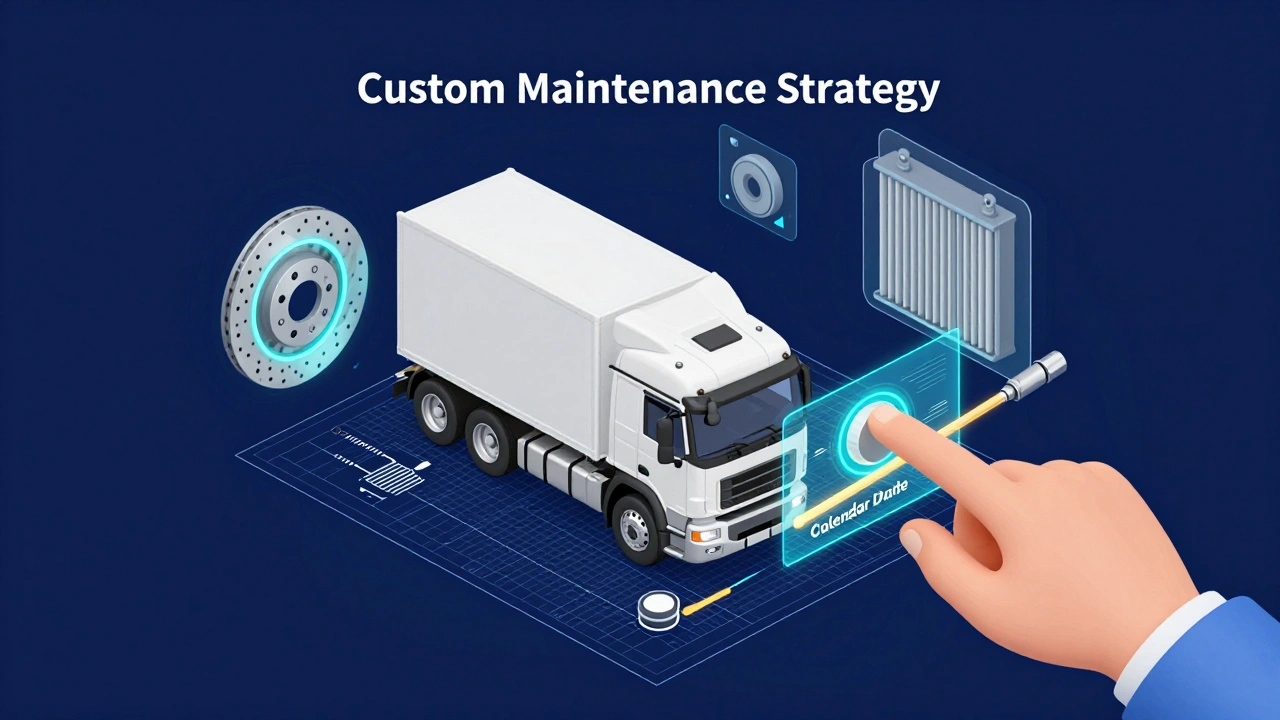
Comparing Standard vs. Custom Fleet Packages
To see the difference in value, it helps to look at the attributes of each approach. A standard plan is a product you buy; a custom plan is a strategy you build.
| Feature | Standard Package | Tailored Solution |
|---|---|---|
| Scheduling | Fixed intervals (e.g., every 6 months) | Usage-based (hours, miles, or duty cycle) |
| Cost Structure | Flat monthly fee per vehicle | Scalable based on required features |
| Service Focus | General health checks | Critical component prioritization |
| Flexibility | Low; rigid contract terms | High; adjusted as fleet evolves |
| Downtime | Predictable but potentially frequent | Optimized to minimize operational gaps |
Building Your Custom Plan: The Critical Steps
If you're looking to move away from a generic plan, you can't just ask for "something custom." You need a data-driven approach. Here is the process most high-performing fleet managers use:
- Audit Your Usage: Track not just miles, but idling hours and load weights. A truck that carries 10 tons for 100 miles is under more stress than one that carries 1 ton for 500 miles.
- Identify High-Wear Components: Look at your repair history. Are you replacing alternators every year? Are your tires wearing out prematurely on the inside? This tells you where the custom plan needs to lean in.
- Define Your "Critical Window": When can your vehicles *not* be offline? If you're a school bus operator, you can't have a fleet-wide service in September. Your custom plan should schedule major work during summer troughs.
- Select a Partner with a Wide Network: Using a provider like Element Fleet or Bosch gives you access to thousands of repair facilities, meaning the "custom" part of your plan extends to where the work is actually performed.
- Review and Pivot Quarterly: A custom plan is a living document. If you add five electric vehicles to your fleet, your maintenance needs shift from oil changes to battery health and tire scrubbing.

Managing Costs and ROI
The biggest fear with "custom" is that it will be more expensive. In reality, it's about moving money from the "Emergency Repair" bucket to the "Preventative Maintenance" bucket. Emergency repairs are always more expensive because they involve towing, urgent shipping for parts, and lost revenue from a vehicle being offline during peak hours.
By using a tailored approach, companies often see a reduction in overall fleet operating expenses. For instance, instead of paying for a comprehensive 50-point inspection on every single van every quarter, you might move to a 10-point "high-criticality" check every month and a full inspection once a year. This reduces labor costs while keeping the vehicles safe.
Common Pitfalls to Avoid
Even with a custom plan, things can go wrong if you're not careful. One common mistake is "set it and forget it." A custom plan created in 2024 won't work in 2026 if your route density has increased or if you've shifted to a different brand of vehicle. Always ensure your contract allows for adjustments without massive penalties.
Another trap is ignoring the driver's input. Your drivers are the first to know when a vehicle "feels" off. A truly tailored solution includes a feedback loop where driver reports can trigger an immediate, out-of-cycle inspection. If a driver reports a strange vibration in the steering, waiting for the "scheduled custom check" in three weeks is a recipe for a highway breakdown.
How do custom service packages differ from standard maintenance contracts?
Standard contracts offer a fixed set of services at set intervals for all vehicles. Custom packages are built from the ground up based on your specific fleet's size, vehicle types, and how they are used. For example, a custom plan might prioritize brake and suspension work for a heavy-duty construction fleet while focusing on oil and tire efficiency for a delivery fleet.
Will a tailored solution actually lower my operating costs?
Yes, usually by eliminating "wasteful" maintenance. Instead of paying for services you don't need, you allocate your budget toward the parts that actually fail in your specific operation. This reduces the frequency of expensive emergency repairs and extends the overall service life of the vehicle.
Are these packages suitable for small fleets?
Absolutely. Many providers now offer scalable solutions. For a small business with 3-5 vehicles, a tailored plan might simply mean focusing on the most critical safety items and adjusting the schedule to match the owner's specific route, rather than a complex corporate strategy.
How often should I update my custom fleet maintenance plan?
A quarterly review is ideal. You should look at your repair logs and downtime data to see if the current intervals are working. If you're still seeing a lot of unplanned breakdowns, your custom intervals are likely too long; if your vehicles are in perfect shape but your costs are high, you can probably extend the intervals.
What information do I need to provide to a service provider to get a custom quote?
You should provide your full fleet list (make, model, and year), average daily mileage, idling time, the types of loads carried, and a history of your most frequent repairs. The more specific your data, the more accurate and cost-effective your tailored package will be.