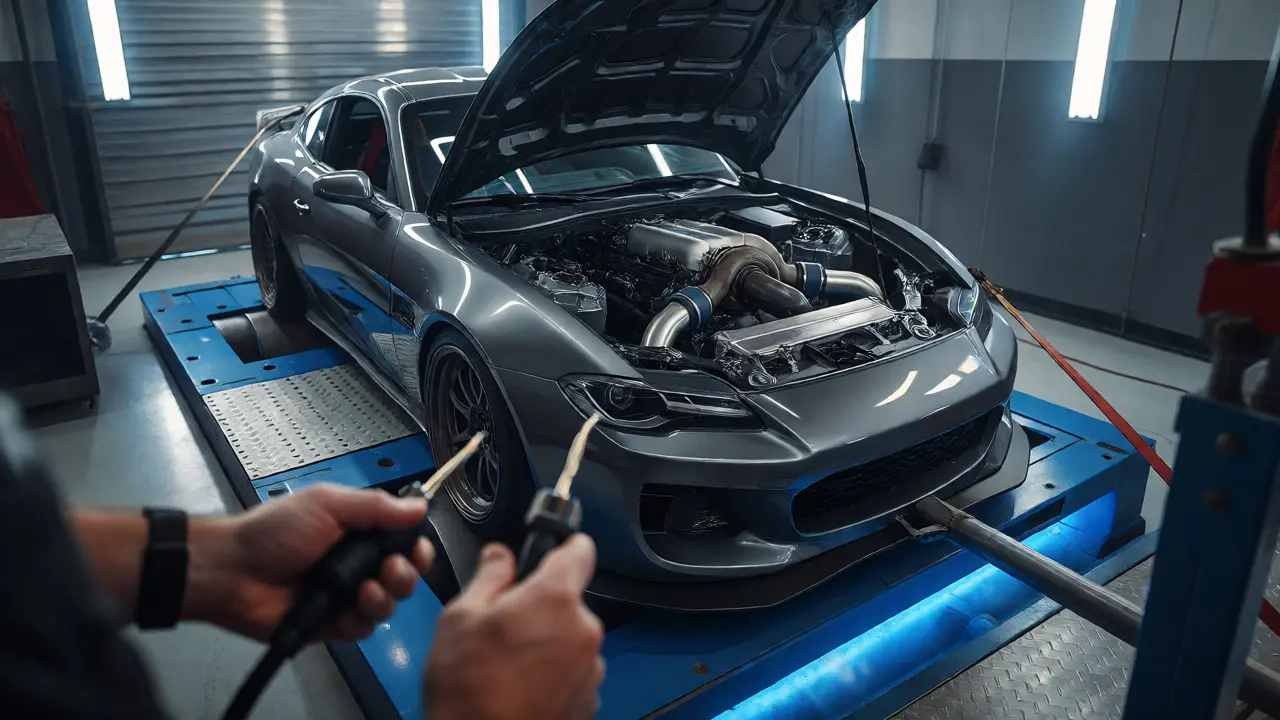
You’ve bolted on a turbo kit or swapped in new camshafts, and now your engine feels… off. Maybe it’s bogging down at mid-range, maybe it’s running hot, or maybe you’re just chasing that extra ten horsepower you know is hiding in there. This is where dyno tuning comes in. It’s not just about plugging in a laptop and guessing; it’s about reading the data your car gives you. Specifically, you need to learn how to read AFR (Air-Fuel Ratio) and ignition timing maps. If you can’t interpret these two graphs, you’re flying blind.
Why the Dyno Is Your Best Friend (and Worst Enemy)
A dynamometer, or dyno, measures what your wheels actually produce, not just what the crankshaft makes. There’s a difference-usually about 15% lost to friction in the drivetrain. But the real value of a dyno run isn’t the final horsepower number. It’s the ability to hold steady conditions while you tweak the ECU (Engine Control Unit). On the street, wind, hills, and traffic change every second. On the dyno, you control the load. This lets you isolate variables. You can see exactly how changing one cell in your fuel map affects torque at 4,500 RPM without worrying if a gust of wind hit your intake.
However, the dyno doesn’t fix bad hardware. If your injectors are too small or your intercooler is undersized, no amount of software tweaking will save you. The dyno reveals the truth. It shows you where the engine is struggling, where it’s knocking, and where it’s starving for fuel. Treat it as a diagnostic tool first, and a power maker second.
Decoding Air-Fuel Ratio (AFR) Maps
The Air-Fuel Ratio is the relationship between the mass of air entering the engine and the mass of fuel injected into it. For gasoline engines, the stoichiometric ratio-the perfect chemical balance-is 14.7:1. That means 14.7 parts air to 1 part fuel. But here’s the catch: you rarely want to stay at 14.7 when making power.
When you look at an AFR table in tuning software like HP Tuners or Cobb Accessport, you’ll see values ranging from 11.0 to 16.0. Here is how to read them:
- Rich Mixtures (11.0-13.5): More fuel than air. This cools combustion temperatures and protects pistons under high boost or heavy load. Most tuners aim for 11.5:1 to 12.5:1 at peak power to prevent detonation.
- Stoichiometric (14.7:1): Ideal for emissions and cruising. Oxygen sensors work best here. If you run rich during light throttle cruise, you’ll foul plugs and waste gas.
- Lean Mixtures (15.0+): Less fuel than air. This improves efficiency but increases heat. Run too lean under load, and you risk melting a piston crown or blowing a valve.
On a dyno graph, the AFR line should generally trend richer as RPM and load increase. If your AFR spikes to 16.0 at full throttle, you have a fuel delivery issue-clogged injectors, a weak pump, or a misconfigured map. Conversely, if it stays stuck at 11.0 even at idle, you’re wasting fuel and likely fouling spark plugs. Always cross-reference AFR with exhaust gas temperature (EGT). High EGT plus lean AFR is a recipe for disaster.

Ignition Timing: The Spark of Life
If AFR is the food, ignition timing is the cooking time. It dictates when the spark plug fires relative to the piston reaching Top Dead Center (TDC). Advancing timing (firing earlier) allows more time for the flame front to burn, potentially creating more pressure against the piston. Retarding timing (firing later) reduces peak pressure and cylinder temperature.
Timing maps are usually organized by RPM (horizontal axis) and Load/MAP (vertical axis). Each cell contains a degree value, often positive (advance) or negative (retard) relative to a base table. Here’s the golden rule: advance timing to make power, retard it to protect the engine.
| Condition | Timing Advance (Degrees BTDC) | Purpose |
|---|---|---|
| Idle / Low Load | 10-15° | Smooth operation, low emissions |
| Cruise / Part Throttle | 20-30° | Efficiency, stability |
| Full Boost / Peak Power | 18-25° | Maximize torque, avoid knock |
| Knock Detected | -2° to -5° per pull | Safety measure to stop pre-detonation |
Notice that peak power timing isn’t always the highest number. Too much advance causes pre-ignition (knock), which sounds like marbles rattling in a tin can. Modern ECUs have knock sensors that automatically pull timing when they detect this vibration. If you see your timing pulling back aggressively during a dyno pull, your fuel octane might be too low, or your AFR is too lean. Don’t fight the knock sensor; listen to it.
Reading the Combined Graphs
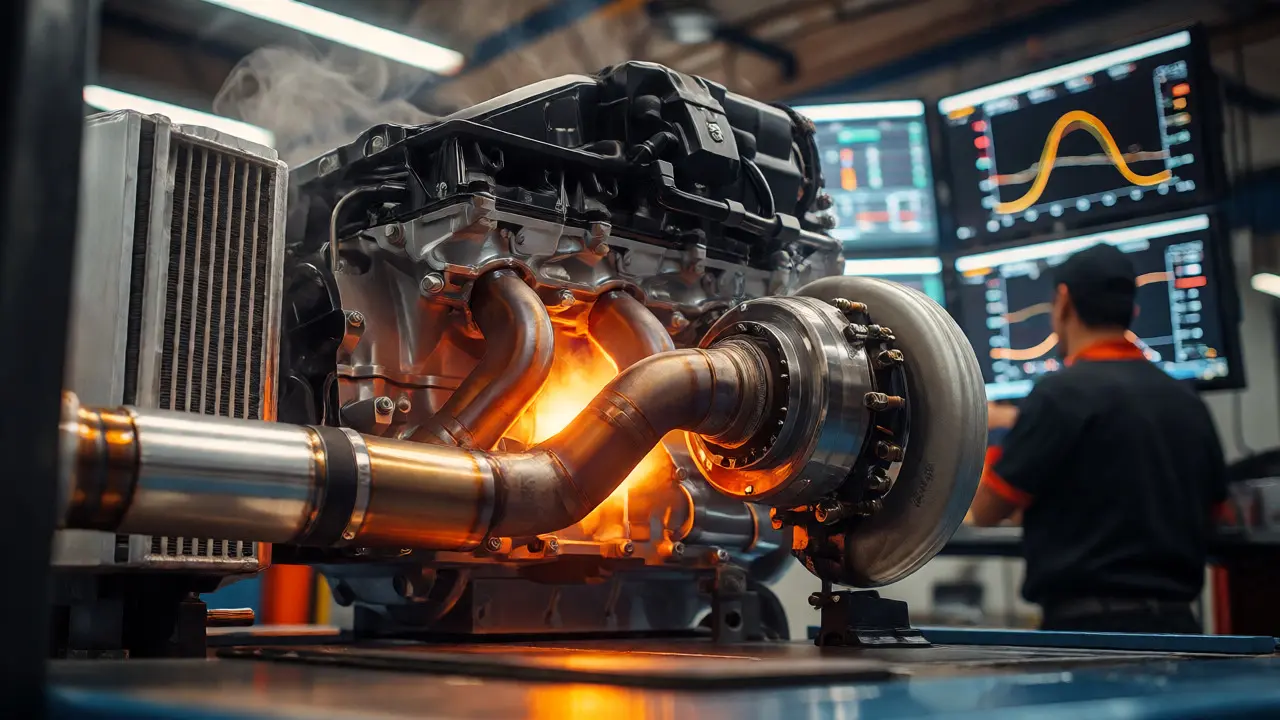
Isolated data is useless. You must view AFR and Timing together against Torque and Horsepower. Imagine a scenario: You advance timing by 2 degrees across the board. Torque increases at 5,000 RPM, but your AFR drops from 12.0 to 11.2. Is this good? Maybe. The extra torque suggests better combustion efficiency, but the richer mix cools the cylinders. Now look at EGT. If EGT rises despite the richer mix, you might be pushing the limits of your turbocharger’s efficiency. If EGT stays stable, you’ve found a sweet spot.
Another common trap is "timing creep." As you adjust cells, remember that adjacent cells influence each other due to interpolation. Changing the value at 4,000 RPM might slightly affect 3,800 RPM depending on your software’s smoothing algorithm. Always verify changes with multiple pulls. One anomalous run could be caused by a loose wheel strap or a momentary dip in ambient temperature. Consistency is key.
Practical Steps for Safe Tuning
Ready to tune? Follow this workflow to keep your engine intact:
- Baseline Pull: Record stock or current settings. Note AFR, Timing, and Knock Retard.
- Small Adjustments: Change only one variable at a time. Adjust fuel first, then timing. Never change both significantly in one step.
- Monitor Knock: Watch the knock retard log. If it exceeds 5 degrees consistently, back off timing immediately.
- Check Fuel Pressure: Ensure your fuel system keeps up. A drop in rail pressure during high-load runs means your AFR will lean out unexpectedly.
- Cool Down: Let the engine return to safe temps between pulls. Heat soak skews sensor readings.
Remember, the goal isn’t just peak numbers. It’s driveability. A car that makes 400 hp but stumbles off the line is frustrating. Tune for smooth transitions between load ranges. Check closed-loop vs. open-loop behavior. In closed loop (light throttle), the O2 sensor corrects fuel trims. In open loop (full throttle), the ECU ignores the O2 sensor and trusts your map. Make sure your open-loop targets are accurate, because the O2 sensor won’t help you there.
Common Pitfalls to Avoid
One major mistake is ignoring vacuum leaks. A cracked hose can cause false lean readings, leading you to add unnecessary fuel. Another is trusting aftermarket wideband sensors blindly. Calibrate them before starting. Also, beware of "chasing tail lights"-tuning to match another car’s dyno sheet. Every engine has tolerances. Your compression ratio, injector flow rate, and turbo efficiency differ from the next guy’s. Build your map based on your specific hardware.
Finally, don’t forget the safety margins. Manufacturers build in headroom for altitude changes, hot days, and bad gas. When you tune, you eat into that margin. If you live in Portland, Oregon, where we deal with varying humidity and cooler temps, your tuning strategy differs from someone in Phoenix, Arizona. Cooler, denser air supports more timing and power. Hotter air requires more caution. Adjust your expectations accordingly.
What is a safe AFR for daily driving?
For daily driving at light loads, aim for 14.7:1 (stoichiometric) to ensure good fuel economy and emissions compliance. Under moderate acceleration, 13.5:1 to 14.0:1 is acceptable. At full throttle, richer mixtures like 12.5:1 to 13.0:1 provide safety and power.
How do I know if my timing is too advanced?
The primary sign is audible knocking or pinging, especially under load. However, modern ECUs may suppress the sound by pulling timing. Check your knock retard logs. If the ECU is constantly retarding timing (e.g., 3-5 degrees) during normal driving, your base timing is likely too aggressive for your fuel quality or engine condition.
Can I tune my car myself without a dyno?
Yes, using road logging tools like HP Tuners or COBB. You can monitor AFR and knock via OBDII ports. However, replicating consistent load conditions on the road is difficult. A dyno provides controlled, repeatable environments, making it far superior for precise calibration and verifying peak power gains.
Does higher octane fuel allow more timing?
Generally, yes. Higher octane fuels resist pre-ignition (knock) better, allowing you to advance ignition timing safely. This can result in increased thermal efficiency and power output, provided the rest of the engine components (pistons, rods) can handle the increased pressure.
What happens if I run too lean under boost?
Running too lean (high AFR) under boost drastically increases combustion chamber temperatures. This can lead to severe engine damage, including melted pistons, burnt valves, and warped heads. It also increases the likelihood of catastrophic detonation, which can break rings or crack connecting rods.