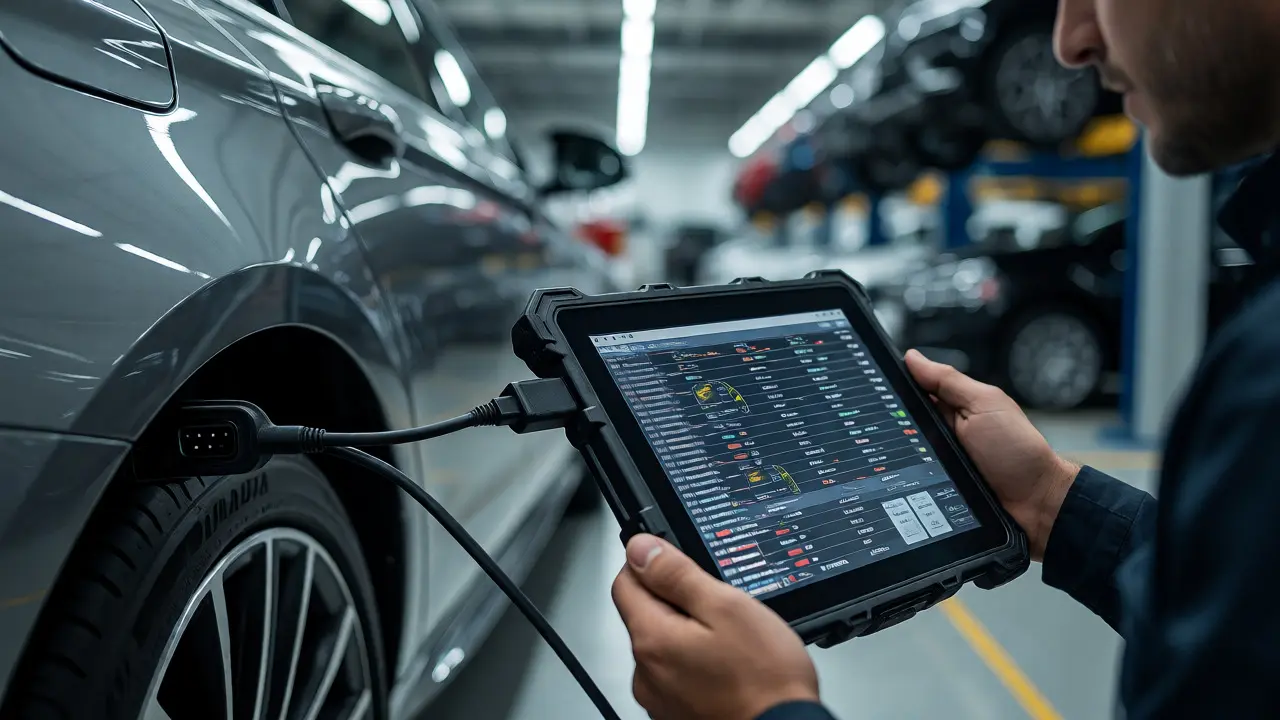
You’ve probably been there. Your check engine light pops on, you run to the auto parts store for a free code read, and it tells you something vague like "P0300 Random Misfire." You change the spark plugs, clear the code, and two days later, the light is back. Frustrating? Absolutely. But here’s the kicker: your car’s computer didn’t just throw a generic error; it was trying to tell you a specific story that a basic $50 scanner simply can’t hear.
This is where dealer-level diagnostics comes into play. Unlike the universal scanners found in most DIY kits, these are advanced, brand-specific software systems designed to communicate directly with every module in a modern vehicle. They don’t just read codes; they talk to the transmission, the anti-lock brakes, the infotainment system, and even the seatbelt pretensioners. If you’re serious about fixing cars correctly the first time, understanding why these tools matter is non-negotiable.
The Hidden Language of Modern Cars
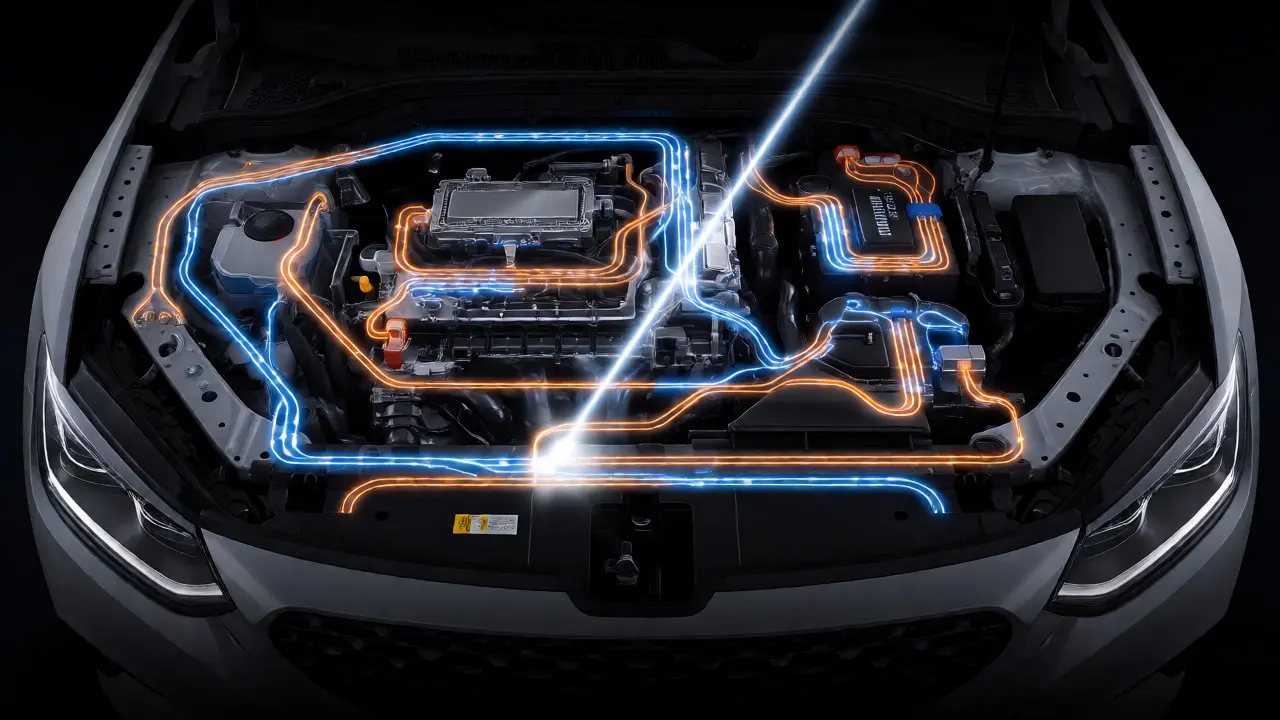
Think of a modern vehicle not as a single machine, but as a networked office building. In this analogy, the Engine Control Module (ECM) is the CEO, but there are dozens of other departments-Transmission Control Module (TCM), Body Control Module (BCM), Airbag Control Module-all talking to each other via data highways called CAN buses. A standard OBD2 scanner is like walking up to the receptionist and asking, "Is everything okay?" The receptionist might say, "Well, the lights are flickering," but they won’t tell you that the fuse box in the basement is overheating because of a bad ground wire connected to the HVAC system.
Brand-specific diagnostic tools, such as Ford IDS or BMW ISTA, have the security clearance to walk into every department. They can pull live data from sensors that generic tools ignore, perform bi-directional controls (telling a component to move, not just reading its status), and access proprietary fault codes that never make it to the standard OBD2 list. For example, a BMW might log a communication error between the iDrive system and the navigation unit that causes a phantom electrical drain. A generic scanner sees nothing. An ISTA technician sees the exact packet loss percentage and fixes it in minutes.
Why Generic Scanners Fall Short
Let’s be real: universal scanners are great for quick checks. If you want to know if your catalytic converter is failing or if you’re running rich, a good aftermarket tool works fine. But when things get weird, they hit a wall. Here’s why:
- Limited Protocol Access: Many newer vehicles use high-speed CAN-FD or Ethernet-based architectures (like DoIP) that older scanners can’t even connect to, let alone decode.
- No Bi-Directional Testing: You can see that a fuel pump isn’t getting power, but you can’t command the ECM to turn the pump on to test the relay. That distinction saves hours of guessing.
- Missing Sub-Codes: Manufacturers often bury critical details in sub-codes. A P0171 (System Too Lean) might have a sub-code indicating a specific leak at the intake manifold gasket versus a faulty MAF sensor. Only dealer tools show this nuance.
- Inability to Code: Replacing a battery in a Mercedes or registering new tires on a Tesla requires writing data back to the vehicle’s modules. Generic tools rarely support this feature across all brands.
I remember working on a 2018 Audi Q7 that had an intermittent starting issue. Three independent shops replaced the starter motor, the ignition switch, and even the battery. None of them could fix it. When we hooked it up to the VAG-COM VCDS (a semi-pro version of the dealer tool), it showed a communication timeout with the gateway module during cold starts. It wasn’t a mechanical failure; it was a software handshake error. The dealer tool allowed us to reflash the gateway firmware, solving the problem instantly. No amount of wrenching would have fixed a coding bug.
The Major Players: Who Makes What?
If you’re looking to invest in serious diagnostic capability, you need to know which ecosystem you’re entering. Each major manufacturer has developed its own platform, often locked behind subscription paywalls or requiring expensive hardware interfaces.
| Manufacturer | Primary Tool Name | Key Strengths | Common Pitfalls |
|---|---|---|---|
| Toyota/Lexus | Techstream | Deep coverage of hybrid systems; precise voltage readings for inverters. | Interface boxes can be finicky; requires frequent updates for new models. |
| GM/Ford/Stellantis | GDS2 / FDRS / wiTECH | Integrated wiring diagrams; strong bi-directional control for US cars. | Subscription costs are rising; interface cables are often brand-locked. |
| VW/Audi/Porsche | ODIS / VCDS | Unmatched detail on European electronics; extensive coding options. | VCDS lacks some factory functions; ODIS requires a complex setup. |
| BMW/MINI | ISTA / Rheingold | Guided troubleshooting trees; excellent for coding and programming. | Rheingold is hard to install; ISTA+ is heavy on PC resources. |
| Honda/Acura | HDS / i-HDS | Simple interface; reliable for VCM reflashing. | Limited third-party alternatives; strictly online for newer models. |
Notice a pattern? There is no one-size-fits-all solution. If you own a fleet of mixed brands, you might end up paying for three different subscriptions. This fragmentation is intentional-it keeps the repair market tied to authorized dealerships-but it also creates opportunities for independent specialists who master one or two platforms deeply.
Bi-Directional Control: The Game Changer
The biggest difference between a reader and a diagnostician is bi-directional control. This feature allows the tool to send commands to the vehicle, not just receive data. Imagine testing an EVAP purge valve. A basic scanner shows you the valve's resistance. A dealer tool commands the valve to open and close while monitoring the pressure drop in the fuel tank. If the pressure doesn’t drop, the valve is stuck, regardless of what the resistance says.
This capability transforms troubleshooting from a process of elimination to a process of verification. Instead of replacing parts until the noise stops, you prove the part is dead before you buy it. For shop owners, this means higher profit margins because you’re selling certainty, not guesses. For DIYers, it means avoiding the heartbreak of returning a $400 alternator that turned out to be fine.
Coding and Programming: Beyond Repairs
Modern cars are defined by their software. When you replace a headlight module on a Ford, you don’t just bolt it on. You have to use FDRS to configure the new module, telling it which trim level the car is, whether it has adaptive headlights, and how many LED pixels it contains. Without this step, the new light might work, but the automatic high beams won’t function, or the dashboard will throw errors.
Similarly, after a collision repair, advanced driver-assistance systems (ADAS) like lane keep assist and automatic emergency braking need recalibration. While some calibrations require physical targets and alignment racks, others are purely software-based resets that only dealer-level tools can perform. Skipping this step can leave your safety systems disabled, creating a liability risk you don’t want to take.
Is It Worth the Investment?
Here’s the million-dollar question: should you buy a dealer-level tool? It depends on your volume and your tolerance for ambiguity.
For the Professional Shop: Yes, absolutely. The cost of a subscription ($500-$2,000/year per brand) is negligible compared to the labor hours saved by accurate diagnosis. Plus, customers trust shops that speak the language of their specific car brand. Specializing in European imports, for instance, gives you a competitive edge over generalists who struggle with VW coding.
For the Serious Enthusiast: Maybe. If you own one specific brand and do heavy maintenance, buying a used OEM interface or a high-end multi-brand tool like Autel MaxiSys Ultra or Launch X431 PAD VII might be worth it. These tools mimic dealer functions for a fraction of the price, though they may lack the latest firmware updates or guided troubleshooting trees.
For the Average Driver: Probably not. Stick to a decent Bluetooth OBD2 adapter and an app like Torque Pro or Car Scanner. Use it for maintenance reminders and basic fault codes. When the check engine light persists despite your best efforts, hand the keys to someone with the right tools. It’s cheaper than buying parts you don’t need.
Practical Tips for Using Advanced Tools
If you decide to dive into the world of brand-specific diagnostics, keep these rules in mind to avoid bricking your ECU or wasting money:
- Always Update First: Before diagnosing anything, ensure your software is current. Manufacturers release patches constantly. Trying to diagnose a 2024 model with 2022 software will lead to false positives.
- Battery Support is Critical: Never program or flash a module on a weak battery. Voltage drops during flashing can corrupt the software, turning a $200 repair into a $2,000 replacement. Use a stable power supply.
- Read Freeze Frame Data: Don’t just look at the active code. Check the freeze frame-the snapshot of conditions when the fault occurred. Was the engine cold? Was the car accelerating? This context is vital for accurate diagnosis.
- Document Everything: Take screenshots of the data streams. Share them with forums or colleagues. Sometimes, seeing another tech’s successful fix for the same weird code saves you days of research.
Can I use a dealer tool on multiple brands?
Generally, no. Most official dealer tools are locked to a specific manufacturer. However, some aftermarket multi-brand platforms (like Autel or Snap-on Zeus) offer packages that cover several manufacturers, though they may not have the full depth of the original equipment software.
Do I need internet access to use dealer-level diagnostics?
For most modern platforms, yes. Updates, authentication, and cloud-based troubleshooting guides require an active connection. Some offline versions exist for older models, but they quickly become obsolete as new vehicles enter the market.
What is the difference between scanning and coding?
Scanning involves reading data and fault codes from the vehicle's memory. Coding involves writing configuration data to the vehicle's modules, such as setting tire sizes, disabling start-stop features, or registering a new key fob. Not all scanners can code.
Are cheap Chinese clone tools reliable?
It’s a gamble. High-quality clones (like certain J2534 pass-thru devices) work well for basic tasks. However, many cheap clones suffer from unstable drivers, incomplete protocol support, and lack of updates. For critical repairs, reliability is worth the extra cost.
How much does a dealer subscription cost?
Costs vary widely. A single-brand subscription might range from $500 to $2,000 annually. Multi-brand professional suites can cost $5,000 to $10,000 upfront plus annual fees. Prices depend on the region and the specific tier of support included.