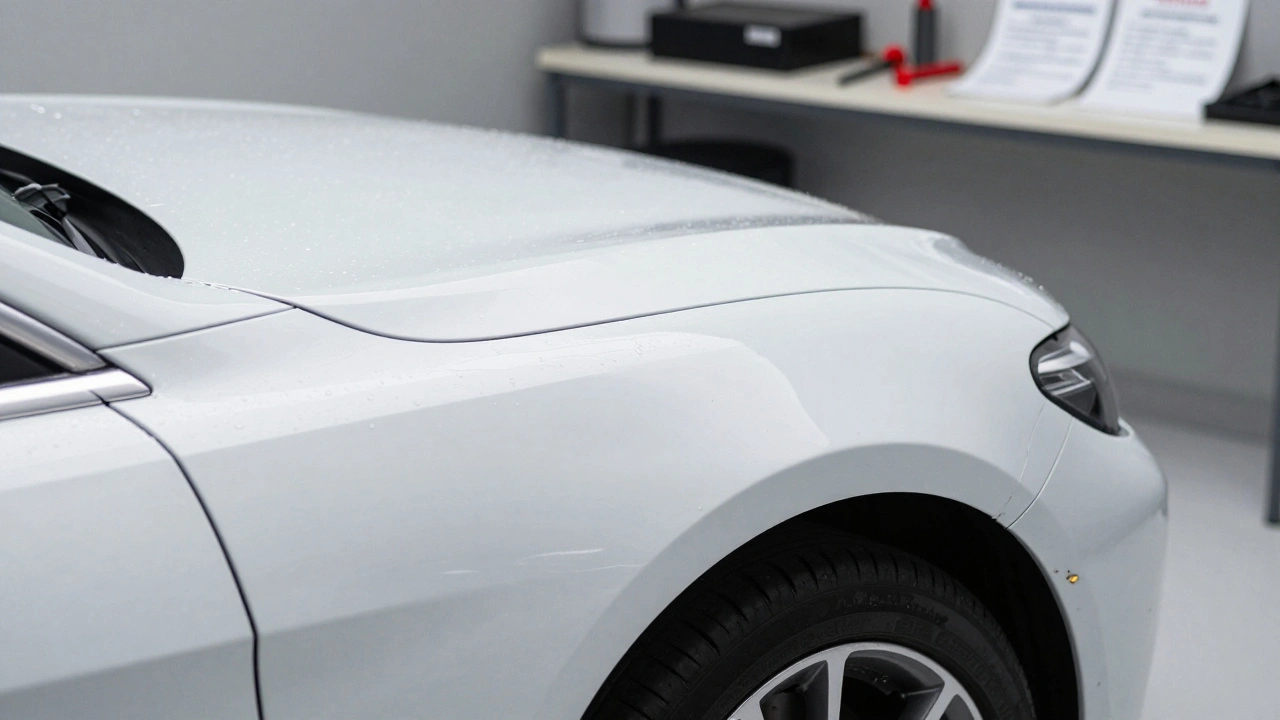
When you pay for a ceramic coating or paint protection film on your car, you’re not just buying a shiny finish-you’re buying protection. But too many people don’t realize that the warranty that comes with it isn’t a magic shield. It’s a contract. And like any contract, it has limits, fine print, and conditions that can leave you stranded if you don’t know them.
Let’s cut through the marketing fluff. A detailing warranty doesn’t mean your car is immune to scratches, dings, or stains. It doesn’t cover accidents, poor washing habits, or damage from rocks on the highway. What it does cover? Specific failures in the products themselves-and only if you follow the rules.
What’s Actually Covered in a Detailing Warranty?
Most warranties fall into three buckets: exterior coatings, paint protection film (PPF), and interior protection. Each has its own rules, but they all share one thing: they only protect against product failure, not user error.
Ceramic coating warranties typically cover things like:
- Loss of gloss or hydrophobicity due to material breakdown
- UV damage that causes paint chalking or oxidation
- Environmental damage from acid rain, bird droppings, tree sap, or brake dust
- Failure of the coating to bond properly due to manufacturing defects
Companies like NitPickin Detailing offer up to $3,500 in repairs if the coating fails. That means if your paint starts to fade unevenly or loses its water-beading effect within the warranty period, they’ll reapply it-at no extra cost to you.
Paint Protection Film (PPF) warranties are usually longer, often lasting 5 to 12 years. These cover:
- Yellowing or discoloration
- Peeling, bubbling, or delamination
- Loss of self-healing properties
- Stain resistance failure under normal conditions
Brands like XPEL Ultimate Plus, used by shops like Speed and Tech Motoring, guarantee these issues won’t happen under normal use. If they do, the manufacturer backs the replacement.
Interior protection warranties guard against spills, stains, and minor tears on leather, vinyl, and carpet. NitPickin’s 3-year interior warranty covers things like coffee spills, makeup stains, or even accidental rips from keys or pet claws. They’ll clean or reapply the protectant, sometimes even replacing damaged panels if the damage is severe enough.
What’s Always Excluded?
Here’s the hard truth: if you scratch your car, it’s not covered. Period.
Every detailing warranty in the industry excludes the same things:
- Scratches, scuffs, chips, or rock damage
- Swirl marks from improper washing
- Water spots from drying with a towel or using hard water
- Damage from accidents, vandalism, or road debris cuts
- Chemical burns from fuel, brake fluid, or strong cleaners
- Improper installation by non-certified detailers
GetUndrdog’s research confirms this: no warranty on earth will cover a key scratch or a dent from a shopping cart. If your car gets hit by a rock on the highway and the PPF tears, you’re out of luck. That’s what insurance is for.
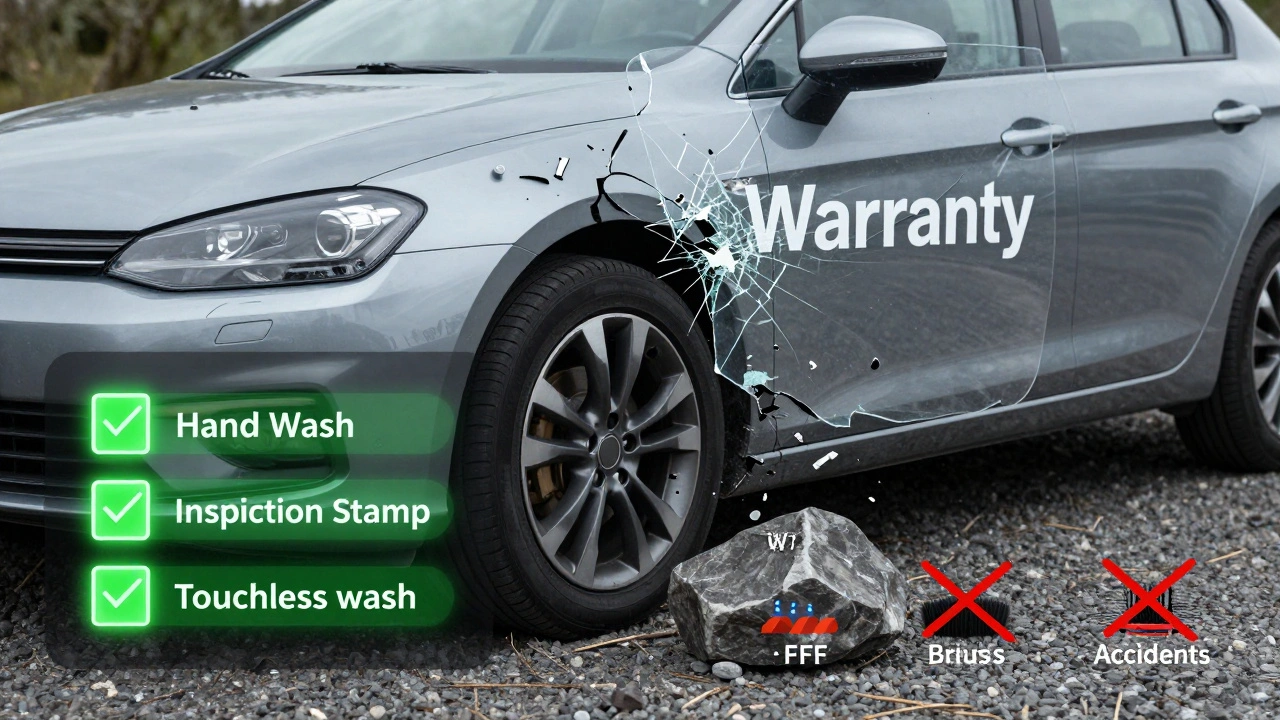
Even something as simple as using a drive-through car wash can void your warranty. Touchless systems are okay, but brushes? They’re a no-go. The friction can break down the coating’s surface, and manufacturers will point to that as “improper maintenance.”
Installation Matters More Than the Warranty Itself
Here’s the biggest mistake people make: thinking the warranty is the product. It’s not. The installer is.
At Beadz Auto Detailing, they stress that a PPF or ceramic coating can only perform as intended if it’s applied by a certified technician. A single air bubble, a dust particle under the film, or a misaligned edge can cause premature failure. That’s why most warranties require installation by an authorized professional.
There are two types of warranties you need to understand:
- Manufacturer Warranty: Covers defects in the product itself-like XPEL film yellowing after 3 years.
- Installer Warranty: Covers mistakes made during application-like streaks, hazing, or bubbles caused by poor technique.
If your coating looks patchy or your PPF is peeling at the edges, the installer’s warranty is what you’ll need to claim. But if the film turns yellow or loses its self-healing ability, the manufacturer backs you.
And here’s the catch: if your detailer goes out of business? The installer warranty vanishes. You’re left with the manufacturer warranty-but only if you can prove installation was done properly and registered correctly.
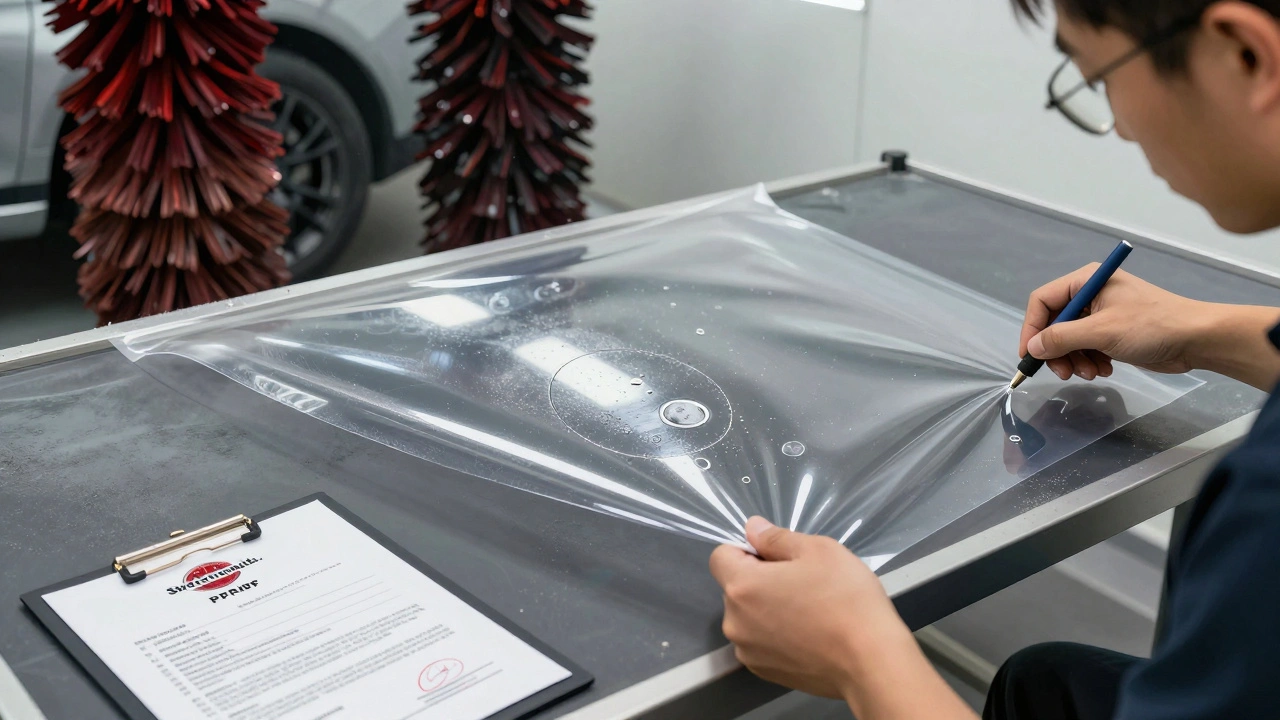
How to Keep Your Warranty Valid
Warranties aren’t automatic. They’re conditional. And the rules are strict.
You must:
- Register your warranty within 30 days of installation. Most companies won’t honor claims if you skip this.
- Follow the maintenance schedule. Most require a bi-weekly hand wash or a touchless drive-through every 30 days.
- Attend annual or bi-yearly inspections. Missing one often voids the entire warranty.
- Use only approved cleaning products. Harsh soaps, alcohol-based cleaners, or generic detailing sprays can break down the coating.
- Never use automatic car washes with brushes. Even if they say “touchless,” the pressure can damage the surface.
Some shops, like NitPickin, even include rental car reimbursement-up to $250 or 3 days-if your car needs to be reworked. That’s a nice perk, but only if you’ve kept up with maintenance.
One shop in Portland started offering mileage-based warranties instead of time-based ones. Since the average driver puts on 14,500 miles a year, a 3-year coating could be sold as “30,000-mile protection.” It’s more accurate-and fairer-for high-mileage drivers.
Warranty Claims: What to Expect
When you file a claim, you’re not getting your car fixed for free. You’re getting the defective product replaced.
Most warranties are “one-and-done.” If you get your coating reapplied because it failed, the warranty ends. There’s no second chance. That’s why companies like GetUndrdog warn: a “lifetime warranty” isn’t forever-it’s just until the first problem.
Claims usually require:
- Proof of registration
- Service history logs
- Photos of the damage
- Verification from the original installer
If the installer is gone, you might still get help from the manufacturer-but only if you have the original receipt, installer certification number, and proof of maintenance. No paperwork? No claim.
Wheel and Tire Protection: A Hidden Gem
Most people forget about their wheels and tires, but they’re just as vulnerable. NitPickin’s Wheel and Tire Warranty covers:
- Damage from nails, glass, or road debris
- Curb rash on alloy wheels
- Pothole damage
- TPMS sensor damage caused by road hazards
With up to $5,000 in coverage over the warranty term, this can save you hundreds-or even thousands-on tire replacements. It’s one of the most underused protections in detailing.
But again: it only works if you’re using a certified installer and keeping the tires properly inflated. A flat tire from underinflation? Not covered.
Insurance vs. Warranty: Don’t Confuse Them
Some detailers offer garagekeepers liability insurance. That’s different. That covers damage your car suffers while in their shop-like if they accidentally scratch your door while cleaning. It’s not the same as a product warranty.
Warranties protect the coating or film. Insurance protects against human error by the shop. You need both.
Ask your detailer: “Do you carry garagekeepers insurance?” If they hesitate, walk away. A professional shop always does.
Final Reality Check
Detailing warranties are valuable-but only if you treat them like a contract, not a promise. They’re designed to cover product defects, not your mistakes. If you wash your car with a sponge, skip inspections, or drive on gravel roads, you’re not going to get help.
Here’s what to do:
- Choose a certified installer. Ask for their training certificates.
- Register your warranty immediately. Don’t wait.
- Keep a log of every wash and inspection.
- Never use automatic car washes.
- Understand what’s excluded-scratches, chips, and accidents are not covered.
- Ask about mileage-based options if you drive a lot.
At the end of the day, a detailing warranty isn’t about making your car perfect. It’s about protecting your investment against things you can’t control-like bad manufacturing or environmental damage. But it won’t save you from your own habits.
If you want real protection, combine a solid warranty with smart care. That’s the only way to make sure your car stays protected-not just on paper, but for years to come.
Does a detailing warranty cover scratches or chips?
No. No detailing warranty covers scratches, chips, scuffs, or rock damage. These are considered physical damage or user-related wear, not product failure. Paint protection film (PPF) and ceramic coatings are designed to resist environmental damage, not impacts. If you scratch your car, the warranty won’t fix it.
Can I use a drive-through car wash with a detailing warranty?
Only if it’s touchless. Drive-through car washes with brushes or rotating cloths can damage ceramic coatings and PPF by creating swirls or lifting edges. Most warranties require hand washing or touchless systems. Using a brush wash will likely void your warranty. Always check your warranty terms before using any automated system.
What happens if my detailer goes out of business?
If your installer closes, the installer warranty (covering workmanship) is gone. But the manufacturer warranty (covering product defects like yellowing or peeling) may still be valid-if you registered it properly and have proof of installation. Keep your receipt, installer certification number, and maintenance logs. Contact the manufacturer directly with that documentation to see if they’ll honor the claim.
Do all ceramic coatings have the same warranty length?
No. Ceramic coating warranties range from 1 year to 10 years, depending on the product and installer. Higher-end coatings like those from Gtechniq or Ceramic Pro often come with 5- to 10-year warranties, but only if you complete annual inspections. Cheaper coatings may offer only 1-2 years. Always ask what’s included in the warranty-not just how long it lasts.
Is a "lifetime warranty" really forever?
No. A "lifetime warranty" usually means the warranty lasts as long as you own the car-but only until the first issue occurs. Once you file a claim and get the coating reapplied, the warranty typically ends. You won’t get another round of coverage if a second problem happens. It’s not a lifetime of free repairs-it’s one-time protection.
Why do I need annual inspections for my warranty?
Annual inspections verify that you’ve maintained the coating properly and that it’s still performing as intended. Detailers check for early signs of failure, like loss of hydrophobicity or surface contamination. Skipping these inspections breaks the warranty contract. Manufacturers require them to ensure the product isn’t failing due to neglect-not because of a defect.
Can I transfer a detailing warranty to a new owner?
Some warranties are transferable, but not all. High-end PPF and ceramic coating brands like XPEL and Ceramic Pro allow one-time transfer if you provide proof of purchase and maintenance records. Check the warranty card or contact the manufacturer directly. Most basic warranties are non-transferable and tied to the original owner.
What’s the difference between a manufacturer warranty and an installer warranty?
The manufacturer warranty covers defects in the product itself-like PPF turning yellow or ceramic coating losing its shine due to material failure. The installer warranty covers mistakes made during application-like bubbles, streaks, or improper alignment. If your coating looks patchy, it’s likely an installer issue. If the film yellows after 5 years, it’s a manufacturer issue. You need both types of coverage to be fully protected.