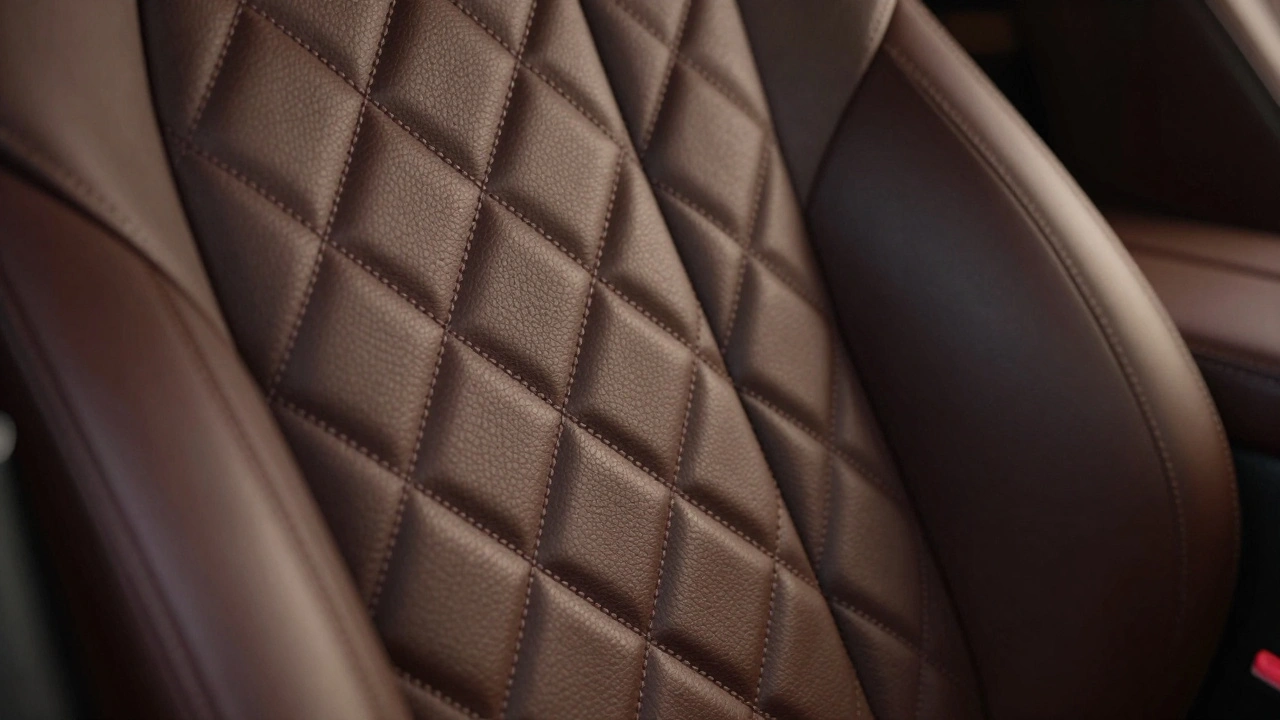
Walk into a high-end dealership or browse photos of custom builds, and you’ll notice one thing immediately: the seats. They aren’t just smooth leather; they’re textured, patterned, and meticulously crafted. Whether it’s the classic diamond quilting found in Bentleys or the intricate hexagonal perforations on modern sports cars, these details do more than look good. They signal status, improve comfort, and define the character of the vehicle. But what exactly goes into creating these luxury stitch patterns, and how do you decide which style fits your car?
We’re going to break down the three main types of premium automotive stitching-diamond, perforated, and custom CNC designs. You’ll learn about the materials, the technology behind them, the costs involved, and the practical realities of living with a quilted interior. If you’re thinking about upgrading your car’s cabin, this guide will help you make an informed choice.
What is diamond stitching in car interiors?
Diamond stitching, also known as diamond quilting, involves sewing two sets of parallel lines at a 45-degree angle to create rhombus shapes. It usually includes foam padding underneath to give a plush, 3D effect.
The Appeal of Diamond Stitching
Diamond stitching is the most recognizable luxury pattern in the automotive world. It traces its roots back to early 20th-century coachbuilding, where artisans used cross-hatched padded patterns in carriage interiors. Today, it’s a staple in brands like Bentley, Mercedes-Benz, and Audi. When you see those neat, symmetrical diamonds on a seat, you’re looking at a combination of precise geometry and soft padding.
The process isn’t just about surface-level thread work. To get that raised, luxurious feel, upholsterers sandwich a layer of foam between the leather and the substrate. This foam typically ranges from 3 mm to 10 mm thick. For seats, a thinner 3-6 mm sew foam is common, while door panels might use thicker 6-10 mm foam for a more dramatic look. The thread itself is usually high-tensile polyester or nylon, strong enough to hold the tension without snapping over time.
Why do people love it? It adds tactile depth. On long drives, that extra padding can distribute pressure more evenly, making the seat feel softer. Visually, it breaks up large expanses of plain leather, adding complexity and elegance. Brands often use contrast stitching-like red thread on black leather-to emphasize performance heritage, especially in models like BMW M or Audi RS series.
Perforated Leather: Function Meets Form
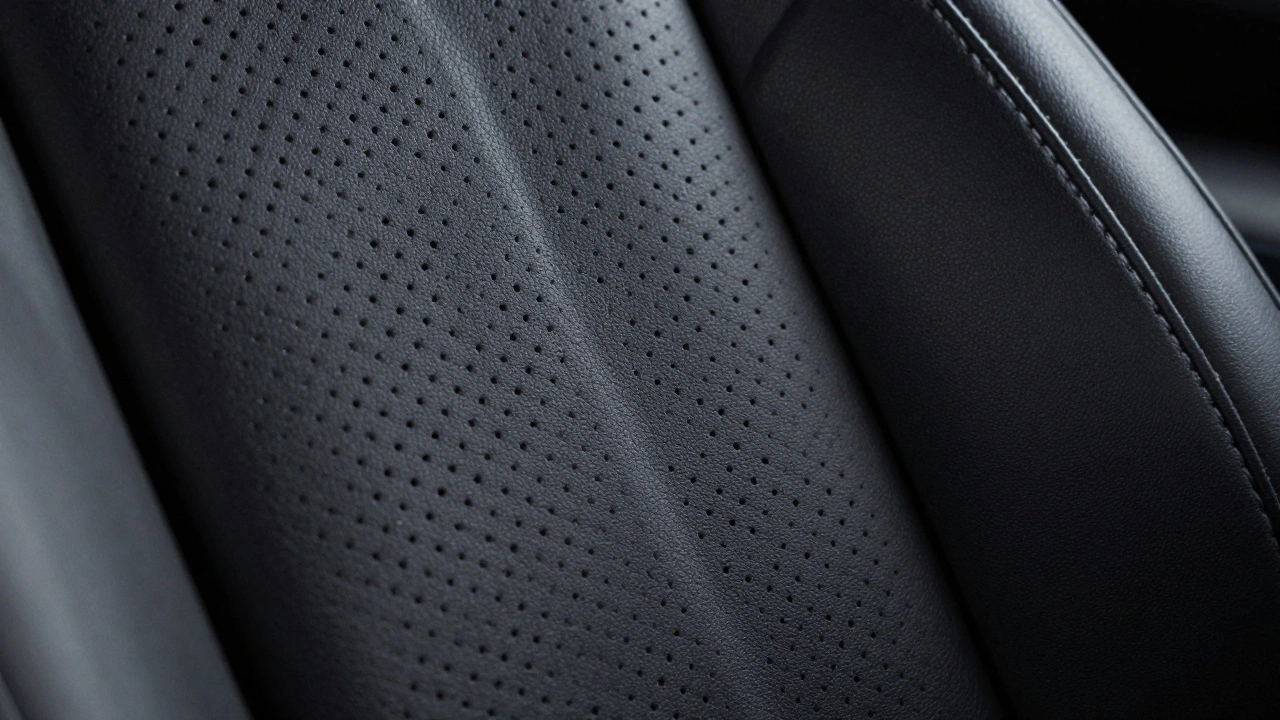
If diamond stitching is about aesthetics, perforation is largely about function. Perforated leather features tiny holes punched into the material, allowing air to pass through. This is essential for ventilated and cooled seats, which are now standard in many luxury vehicles. Without perforation, the heat generated by your body would be trapped against the leather, leading to discomfort, especially in hot climates.
There are different types of perforation. "Micro-perf" uses very small holes, around 0.8-1.5 mm in diameter, spaced closely together (3-6 mm center-to-center). This creates a subtle texture that doesn’t detract from the leather’s appearance. Standard perf has slightly larger holes, 1.2-2.0 mm, which allow for greater airflow. Some aftermarket options, like Katzkin’s "Barracuda" duo-tone perforation, even use contrasting colors visible through the holes, turning a functional feature into a design statement.
The density of the perforation matters. Too sparse, and the ventilation is ineffective; too dense, and the leather loses strength. Technical data suggests that tear strength in perforated areas can drop by 10-30% compared to solid leather. That’s why manufacturers often place perforations in low-stress zones, like the center of the seat cushion, rather than on the bolsters where you press hardest during cornering.
Custom CNC Stitching and Perforation
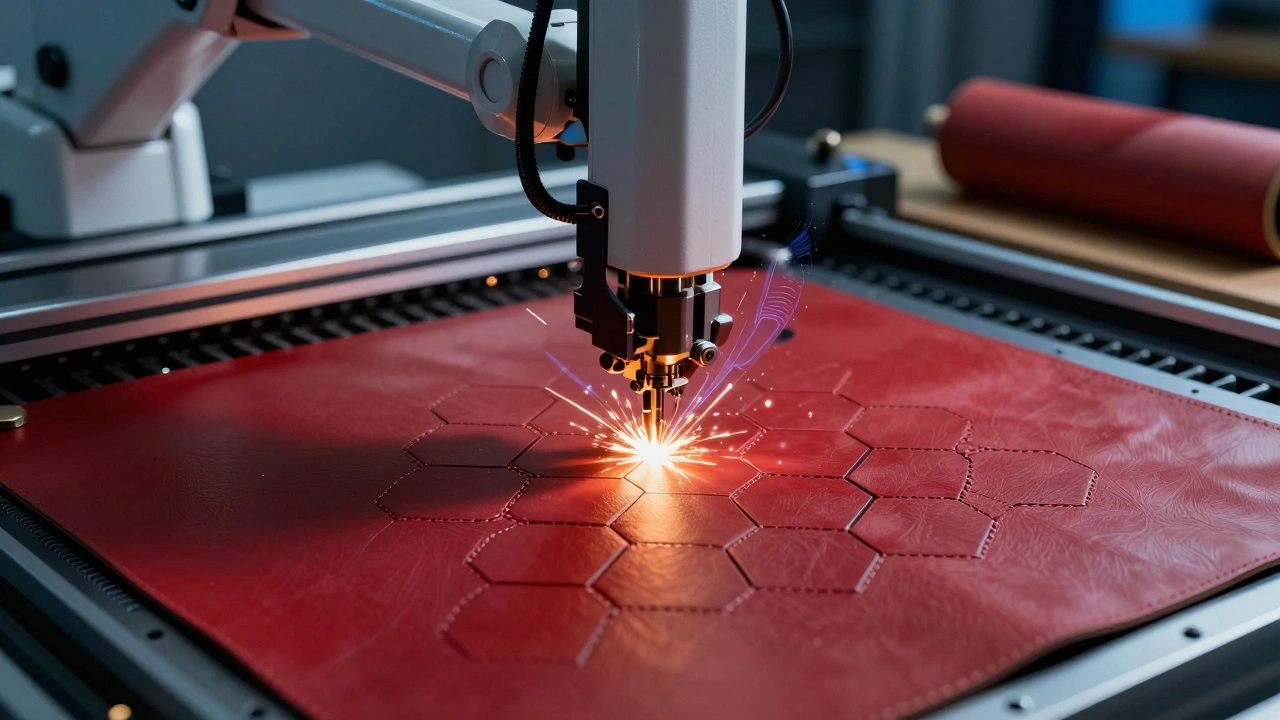
While diamond and grid patterns are common, the real frontier of luxury upholstery is custom CNC (Computer Numerical Control) stitching and perforation. CNC machines allow for unprecedented precision and creativity. Instead of being limited to straight lines and simple grids, designers can program complex patterns-hexagons, waves, logos, or even parametric designs that change shape across the panel.
How does it work? Industrial sewing machines with X-Y gantries, like those made by Dürkopp Adler or Juki, can sew predefined patterns at speeds exceeding 2,000 stitches per minute. The pattern is defined in CAD software, ensuring perfect symmetry and alignment. For perforation, CNC punching or laser cutting allows each hole to be placed individually. This is ideal for small-batch production or bespoke projects where uniqueness is key.
Companies like M Trim Ltd in the UK specialize in this kind of work, offering fully custom designs for seats, steering wheels, and door panels. In North America, Katzkin-authorized installers provide similar services, though often within a set menu of patterns. The advantage of CNC is repeatability. If you want every diamond to be exactly 30 mm wide, a machine can achieve that consistency far better than manual stitching, which relies on chalk lines and templates prone to human error.
OEM vs. Aftermarket: What’s the Difference?
You can get luxury stitching directly from the manufacturer (OEM) or through aftermarket customization. Each approach has its pros and cons.
OEM options, such as Bentley’s Mulliner Driving Specification or Mercedes-Benz’s designo Nappa leather, are engineered to integrate seamlessly with the rest of the vehicle. They account for side airbags, seat heating elements, and occupant sensors. The quality control is strict, and the materials meet rigorous durability standards. However, they come at a premium price. Adding diamond stitching to an S-Class or Continental GT can cost thousands of dollars, often bundled into larger interior packages.
Aftermarket solutions offer more flexibility and potentially lower costs. Companies like Coverking sell custom-fit leatherette seat covers with diamond stitching for a fraction of the OEM price. These are great for protecting original seats or upgrading older cars. For full reupholstery, shops using Katzkin kits or bespoke trimmers like Carlex Design can transform any interior. Prices vary widely: a Katzkin conversion might run $1,500-$2,500, while a fully custom CNC-stitched interior can exceed $10,000. The trade-off is risk. Poorly executed aftermarket work can compromise safety, particularly if airbag deployment seams are altered.
| Feature | OEM (Factory) | Aftermarket |
|---|---|---|
| Cost | High ($2,500-$20,000+) | Variable ($250-$10,000+) |
| Safety Integration | Engineered for airbags/sensors | Must be carefully replicated |
| Customization | Limited to factory options | Fully bespoke designs possible |
| Warranty | Covered by vehicle warranty | Separate installer warranty |
Durability and Maintenance Realities
Before committing to a stitched or perforated interior, consider the maintenance. Beauty often comes with a cleaning bill. Deep diamond quilting creates crevices where dust, crumbs, and liquids can hide. Vacuuming requires narrow attachments, and spills need immediate attention to prevent staining. Perforated seats have their own issues: dirt and dye transfers (like blue jeans on white leather) can accumulate in the holes, making them look dirty faster than solid leather.
Durability is another factor. Every stitch line is a potential stress point. High-quality automotive leather is tested to withstand tens of thousands of abrasion cycles, but perforation weakens the sheet slightly. Reputable shops use high-grade materials and reinforce high-wear areas. If you choose aftermarket work, ensure the provider follows best practices, such as leaving airbag seams unquilted and using OEM-spec tear seams. Ignoring these details can lead to safety hazards and costly repairs.
Making the Right Choice for Your Car
So, which pattern should you choose? It depends on your goals. If you want a timeless, elegant look that boosts resale value, stick with traditional diamond stitching in neutral tones. It’s versatile and appeals to a broad audience. If you live in a hot climate and prioritize comfort, perforated leather with ventilation is non-negotiable. Look for micro-perf patterns that balance airflow with aesthetics.
For those seeking a unique statement, custom CNC patterns are exciting. Hexagons, chevrons, or even personalized logos can make your interior one-of-a-kind. Just remember that trends fade. A heavily quilted dashboard or neon contrast stitching might look cool today but could date quickly. Many experts recommend reserving heavy quilting for focal areas like seat centers and keeping other surfaces simpler.
Ultimately, luxury stitching is about personal expression. Whether you’re driving a restored classic or a brand-new EV, these patterns add a layer of craftsmanship that transforms the cabin from a utilitarian space into a sanctuary. Take your time, consult with reputable specialists, and choose a design that reflects your style while standing the test of time.
Is diamond stitching harder to clean than regular leather?
Yes, diamond stitching creates deep crevices that trap dust and spills. You’ll need specialized vacuum tools and soft brushes to clean effectively. Avoid saturating the foam with liquid cleaners to prevent odors.
Can I add diamond stitching to my existing car seats?
Yes, through aftermarket reupholstery. Shops can remove your current covers, apply new foam-backed leather, and stitch the pattern manually or via CNC. Ensure the shop maintains airbag compatibility for safety.
Does perforated leather affect seat heating?
Minimal impact. Modern systems are designed to work with perforation. However, excessive foam thickness under the leather can slightly insulate the heating element, slowing warm-up time marginally.
How much does custom CNC stitching cost?
Prices vary widely. Simple slip-on covers start around $250-$500 per row. Full bespoke reupholstery with CNC patterns can range from $2,000 to over $10,000 depending on labor, materials, and complexity.
Are there safety risks with aftermarket stitching?
Yes, if not done correctly. Stitching over side airbag deployment seams can prevent proper inflation during a crash. Always hire reputable professionals who follow FMVSS guidelines and preserve OEM tear seams.