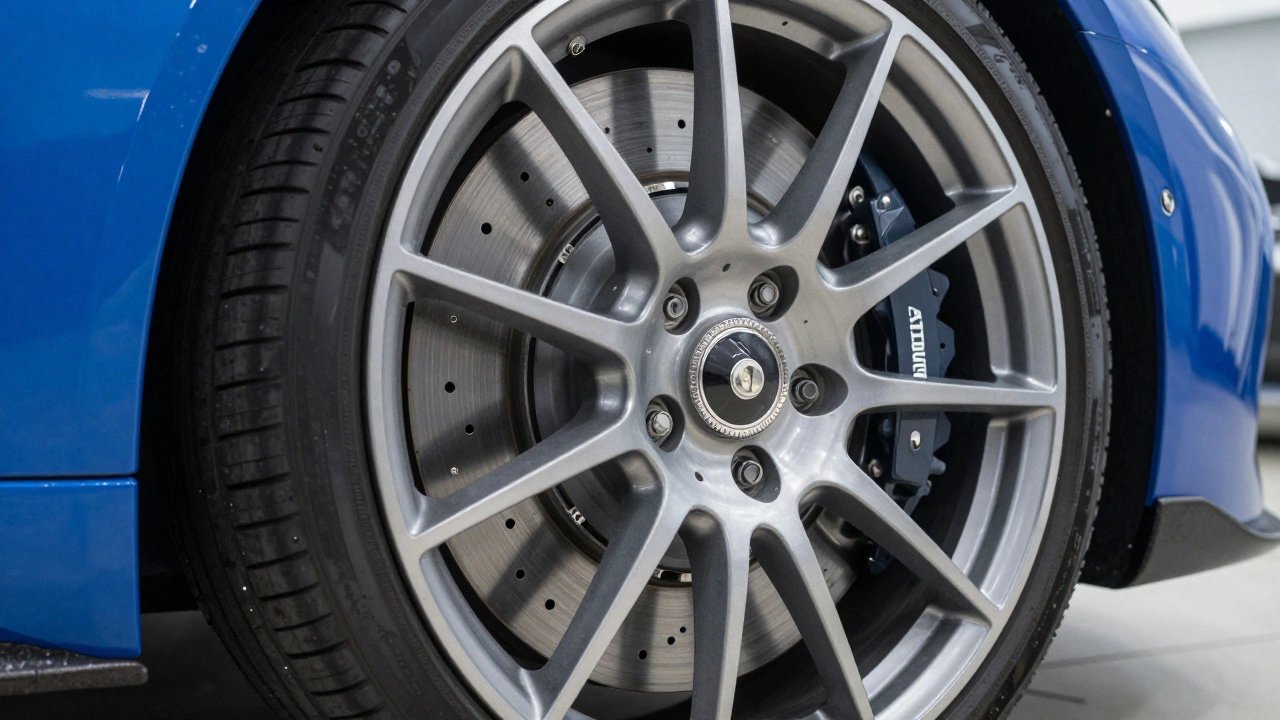
Stop for a second and picture your favorite high-performance car. Chances are, you’re imagining big wheels with aggressive designs, peeking out from behind them are brake rotors covered in holes or grooves. They look fast. They look mean. But here is the hard truth that most marketing brochures skip over: those drilled and slotted rotors might actually be hurting your braking performance if you aren’t using them exactly right.
I’ve spent years working on cars here in Portland, where our rainy weather tests brakes harder than almost anywhere else. I’ve seen enthusiasts spend hundreds of dollars on performance brake discs is an upgrade component designed to improve heat dissipation and gas evacuation during heavy braking. only to come back complaining about cracked rotors, noisy brakes, and pads wearing out twice as fast. So, are they worth it? The answer isn’t a simple yes or no. It depends entirely on what you do with your car.
The Science Behind the Holes and Grooves
To understand why these rotors exist, we have to look at what happens when you slam on the brakes. Friction creates heat. A lot of it. When brakes get too hot, the pad material can start to break down, releasing gases. This creates a thin layer of cushion between the pad and the rotor, leading to something called brake fade, which is a temporary loss of braking power due to overheating. Your pedal goes soft, and the car doesn’t stop as quickly.
Drilled rotors is a type of brake disc featuring through-holes machined into the friction surface to vent gases and water. These holes were originally designed to let those gases escape so the pad could maintain contact with the metal. They also help clear water off the disc in wet conditions-something any driver in the Pacific Northwest will appreciate. However, modern brake pad materials don’t outgas nearly as much as the old formulations did decades ago. That means one of the primary reasons for drilling holes is largely obsolete for street cars.
Slotted rotors is a brake disc design with shallow grooves cut into the surface to scrape debris and glazing off brake pads. Slots work differently. They act like tiny wipers, constantly scraping the brake pad clean. This prevents glazing-a shiny, smooth layer on the pad that reduces friction-and keeps the bite consistent. Unlike drilled rotors, slots don’t compromise the structural integrity of the disc because they don’t go all the way through.
The Structural Weakness of Drilled Rotors
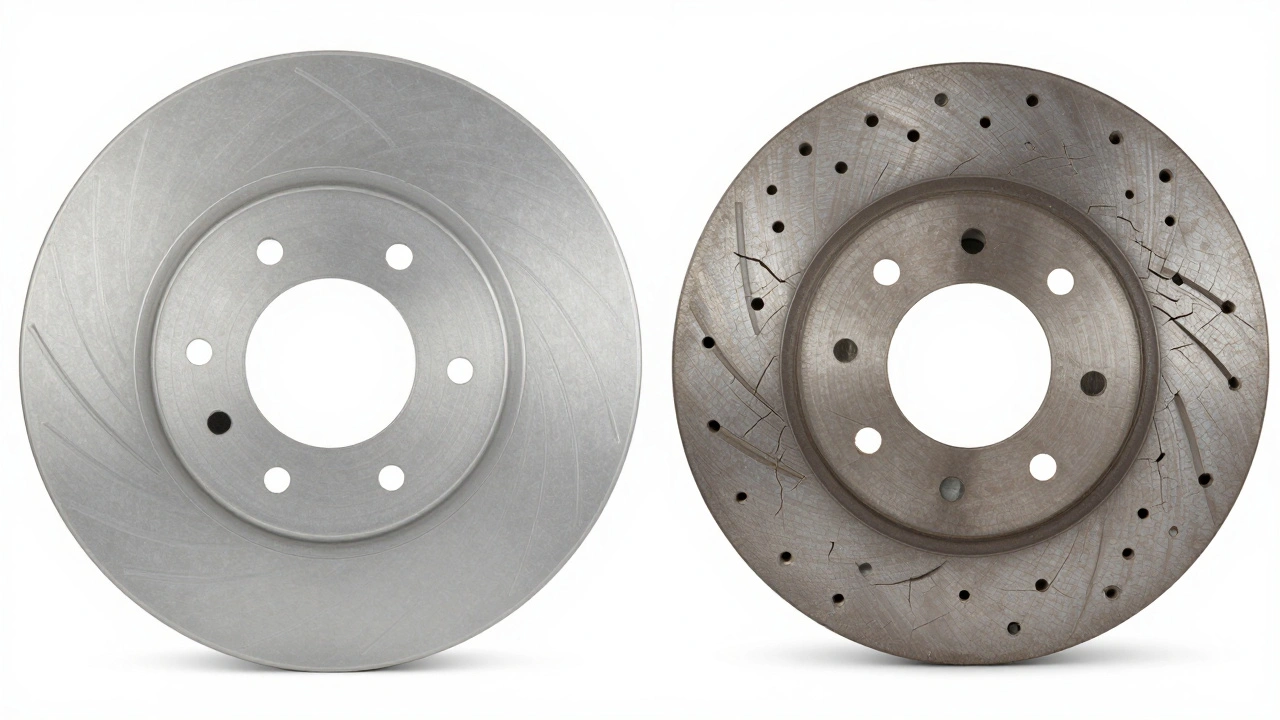
Here is where things get tricky. Every hole you drill into a piece of metal creates a stress riser. Think of it like a crack starting point. When a rotor heats up, it expands. When it cools down, it contracts. This constant cycling puts immense pressure on the metal. With drilled rotors, that pressure concentrates around the edges of the holes.
If you are just driving to the grocery store, this probably won’t matter. But if you are towing a heavy trailer, driving in mountainous terrain, or hitting the track, those holes can become fatal flaws. I’ve pulled drilled rotors off cars that looked fine on the outside but had hairline cracks radiating from the holes on the inside. Once a rotor cracks, it’s trash. You cannot resurface it. You have to replace it. And since drilled rotors are more expensive upfront, this adds up quickly.
This is why you rarely see drilled rotors in professional racing series like Formula 1 or NASCAR. Engineers there prioritize durability and consistent stopping power above all else. They use plain vented rotors or slotted ones because they need the brakes to survive repeated, extreme heat cycles without falling apart.
Pad Wear and Noise: The Hidden Costs
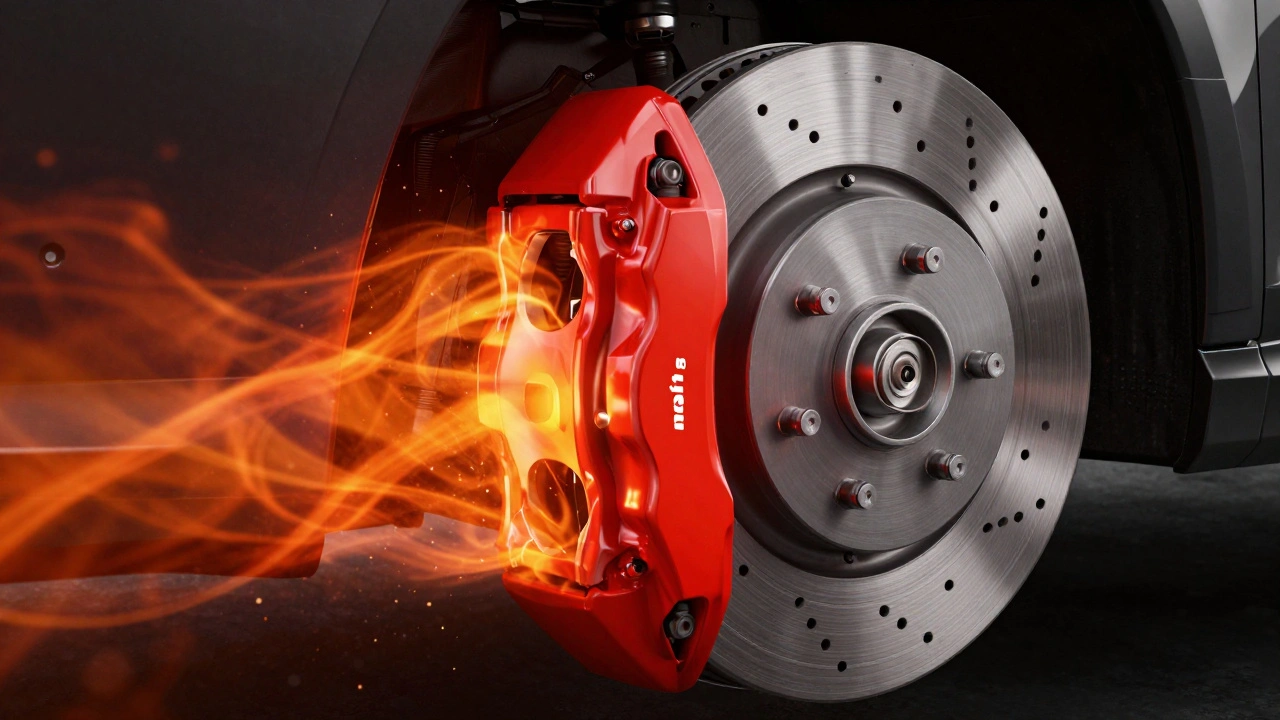
Let’s talk about the sound. Have you ever heard a car that sounds like it’s dragging a spoon along the brakes? That’s often a slotted or drilled rotor. The grooves and holes create turbulence and allow dust to accumulate in ways that smooth rotors don’t. For many drivers, that high-pitched squeal or grinding noise is annoying enough to send them back to the shop.
More importantly, consider the wear rate. Because slots physically scrape against the pads, they accelerate wear. In my experience, switching from standard vented rotors to slotted ones can cut pad life by 30% to 50%. If you buy premium ceramic pads to reduce dust, you’re paying a premium for components that disappear faster. It’s a trade-off: better initial bite and cleaner pads versus higher long-term maintenance costs.
| Rotor Type | Best Use Case | Durability | Noise Level | Pad Wear |
|---|---|---|---|---|
| Plain Vented | Daily Driving, Track Days | High | Low | Normal |
| Drilled | Wet Weather, Aesthetics | Low (Crack Risk) | Medium | Normal |
| Slotted | Towing, Aggressive Street | High | Medium-High | High |
| Hybrid (Drilled & Slotted) | Show Cars, Light Sport | Low (Crack Risk) | High | Very High |
When Are They Actually Worth It?
So, should you never buy them? Not necessarily. There are specific scenarios where drilled and slotted rotors make sense.
If you live in an area with heavy rain, like Portland, drilled rotors can provide a psychological and practical boost in confidence. The holes channel water away from the contact patch faster than a smooth surface. While modern tires and ABS systems handle wet braking well, having a rotor that sheds water instantly can shave milliseconds off your stopping distance in a panic stop. Just accept that you’ll likely replace them sooner due to cracking or corrosion around the holes.
For tow trucks or SUVs hauling heavy loads up steep grades, slotted rotors are a solid choice. They keep the pads clean and prevent glazing under sustained load, which helps maintain consistent braking power. Since they don’t have holes, they won’t crack from the thermal stress of towing. You just need to budget for more frequent pad changes.
Finally, there’s the aesthetic factor. Let’s be honest: drilled and slotted rotors look incredible. If you build a show car or want your daily driver to turn heads at stoplights, the visual appeal is undeniable. As long as you understand the trade-offs-higher cost, potential noise, and reduced lifespan-you can enjoy the look without expecting magical performance gains.
The Verdict: Stick to Basics for Most Drivers
For 90% of drivers, a high-quality plain vented rotor paired with good brake pads is the best investment you can make. They offer maximum surface area for friction, superior durability, and lower operating costs. If you want better performance, spend your money on upgrading your brake pads and fluid instead. High-temperature synthetic fluid and semi-metallic or ceramic pads will do more for your stopping power than any amount of drilling or slotting.
Reserve drilled rotors for wet-weather specialists who prioritize looks, and slotted rotors for heavy-duty haulers who need consistent bite. Avoid hybrid drilled-and-slotted rotors unless you have a specific niche need, as they combine the worst traits of both: the crack risk of drilling and the rapid pad wear of slotting.
Do drilled rotors actually stop faster?
No, drilled rotors do not significantly reduce stopping distances for average drivers. Their main benefit is improved wet-weather performance and aesthetics. In dry conditions, a plain vented rotor with quality pads will stop just as effectively.
Why do race cars rarely use drilled rotors?
Race teams avoid drilled rotors because the holes create weak points that can lead to cracking under extreme heat and stress. Durability and consistent performance are prioritized over the marginal cooling benefits of drilling.
Are slotted rotors better for towing?
Yes, slotted rotors are often recommended for towing because they help keep brake pads clean and prevent glazing during sustained braking. Unlike drilled rotors, they do not compromise structural integrity.
Can I resurface drilled or slotted rotors?
It is difficult and often not recommended. Machining can distort the pattern of holes or slots, leading to uneven braking surfaces. Most shops prefer to replace these rotors rather than resurface them.
What causes the noise in slotted rotors?
The noise comes from air turbulence passing through the slots and the physical scraping of the grooves against the brake pads. This is normal operation, not necessarily a sign of failure.