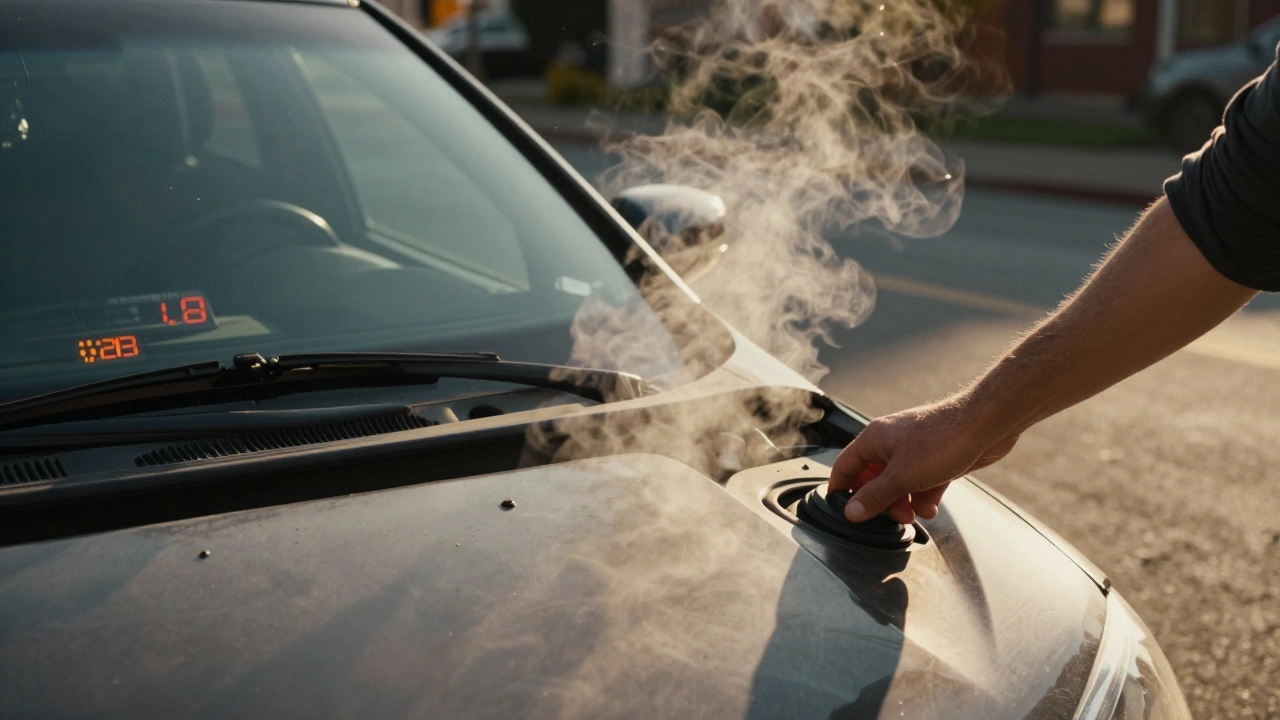
Most people think their car battery dies because it’s old. But here’s the truth: how you drive plays a bigger role than you think. If your battery keeps dying before the 3-year mark, it’s not just bad luck. It’s likely your daily habits. You don’t need to replace it every two years. With a few simple changes, you can stretch it to 5, 6, even 7 years - even in Portland’s wet winters.
Short Trips Are Killing Your Battery
How many times have you driven to the grocery store, picked up coffee, or dropped off a kid at school - all in under 10 minutes? Sounds normal, right? But here’s what’s happening: every time you start your car, the battery dumps 200-400 amps to crank the engine. That’s a huge hit. Now, if you only drive 5 miles afterward, your alternator barely has time to recharge it. It’s like taking out $100 from your bank account and only depositing $20 back. Over time, your battery never fully recovers.
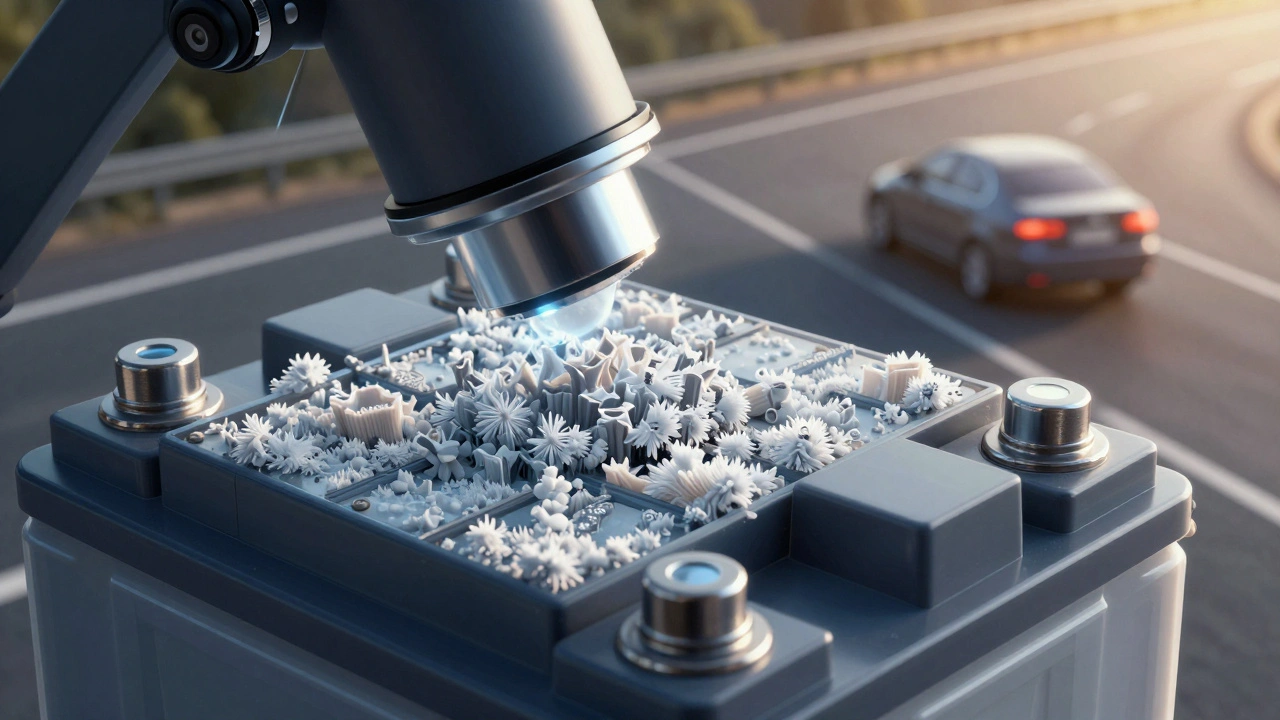
This is called chronic undercharging. The lead plates inside the battery start to build up sulfate crystals - a process called sulfation. Those crystals harden. They stop the battery from holding a full charge. Eventually, it won’t start at all. You’ll think it’s dead. But if you took one 30-minute highway drive each week, you’d reset the damage. Highway driving at 55+ mph means the alternator spins faster, producing 2-3 times more charge than city driving. That’s your battery’s reset button.
Idling Won’t Charge Your Battery - It’s Wasting It
How many times have you sat in your car for 15 minutes warming it up in the morning? Or left it running while you grab lunch? You’re not saving fuel - you’re killing your battery.
At idle, your alternator barely spins. It’s making just enough juice to power the radio, heated seats, and climate control. But it’s not making enough to recharge what you used to start the car. Modern cars have dozens of electronics. A single heated seat can pull 10 amps. The fan on high? Another 15. Add in headlights, defrosters, and phone chargers - and you’re draining 30-50 amps. At idle, your alternator might be putting out 10-15 amps. That’s a net loss. Each 10-minute idle session slowly drains your battery. Do it daily? You’re on a countdown.
Real-world example: A fleet driver in Portland idles 45 minutes a day for climate control. His battery died at 2.1 years. After switching to a block heater and cutting idle time to under 5 minutes, his battery lasted 6 years. No magic - just less idle.
Your Accessories Are Stealing Power
You love your sound system. Your heated steering wheel. Your rear defroster. All great. But using them while the engine is off? That’s battery suicide.
A typical car battery holds about 48 amp-hours. That means if you leave your interior lights on for 8 hours, you’ve drained 30% of its capacity. Headlights? 15 amps each. That’s 30 amps in 2 hours. A fully charged battery can’t handle that. Even if you start the car after 10 minutes, the alternator can’t make up for that loss - especially if the next drive is short.
And it’s not just lights. Plugging in a phone charger while parked? Fine. But running a portable fridge, Bluetooth speaker, or phone charger for hours? That’s a slow drain. Modern batteries are designed for short bursts - not long-term power. Treat them like a phone: if you’re not charging, don’t use.
Aggressive Driving Makes Your Battery Work Harder
Hard acceleration. Slamming the brakes. Speeding through stoplights. It’s not just bad for gas mileage - it’s bad for your battery.
When you floor it, your alternator has to spin harder to keep up with the electrical load. Your car’s computer increases voltage output to power fuel injectors, sensors, and spark plugs under high demand. That means more strain on the battery. It’s not just the engine - the entire electrical system is working overtime. Studies show aggressive driving increases electrical load by up to 25% compared to smooth driving. That’s like running your battery at 125% capacity every time you drive.
And braking hard? That’s not just wear on pads. Modern cars use regenerative braking systems that send energy back to the battery. But if you’re slamming on the brakes, you’re not giving the system time to recover. Smooth stops let the system recharge. Smooth starts let the battery recover. It’s not about being slow - it’s about being smart.
Temperature Is Your Battery’s Worst Enemy
Portland winters are cold. But heat is even worse.
Cold weather? It thickens the battery’s electrolyte fluid. That makes it harder for the chemical reaction to happen. Your battery loses 30-40% of its power at 0°F. That’s why your car cranks slower in January.
But heat? That’s the silent killer. When temperatures hit 90°F or higher, the battery’s internal chemical reactions speed up. That causes faster corrosion of the internal plates. It also makes the electrolyte evaporate. Once that fluid is gone, the battery can’t hold a charge. Heat doesn’t just shorten life - it destroys it. A battery that lasts 5 years in Oregon might only last 2.5 years in Phoenix.
Simple fix? Park in the shade. Use a sunshade. If you can, keep your car in a garage. Even a carport helps. If you live somewhere hot, consider a battery with a higher heat tolerance - AGM batteries handle heat better than standard lead-acid ones.
Maintenance Is the Hidden Factor
Most people check their oil. They change their tires. But how many check their battery terminals?
Corrosion on the terminals - that white, green, or blue crust - blocks the flow of electricity. Even if your battery is 100% charged, corrosion can make it feel dead. Clean it once a year with a wire brush and baking soda paste. It takes 5 minutes. You’ll see the difference the next time you start the car.
And don’t ignore engine problems. A misfiring spark plug? A clogged air filter? A dirty mass airflow sensor? All of these make your engine harder to start. That means the starter has to crank longer. Longer cranking = more battery drain. If your car takes more than 2 seconds to start, something’s wrong. Fix the engine, not just the battery.
How to Extend Your Battery Life - The Real Rules
- Take one long drive per week - at least 20 miles at highway speed. This fully recharges the battery and clears sulfation.
- Turn off the engine if you’re stopped for more than 60 seconds. Idling doesn’t charge - it drains.
- Don’t use accessories when the engine is off. No lights, no speakers, no chargers.
- Drive smoothly. Gentle acceleration and braking reduce electrical strain.
- Keep terminals clean. Check them every 6 months. Remove corrosion with baking soda and water.
- Protect from heat. Park in shade. Use a sunshade. Avoid direct sun on the hood.
- Test your battery twice a year. Most auto shops do it for free. If voltage drops below 12.4V when off, it’s weakening.
What Happens If You Ignore This?
Let’s say you drive 3 miles to work every day. You idle 10 minutes warming up. You use your heated seats and radio. You never take a long drive. Your car sits outside in summer heat. What happens?
Your battery starts struggling after 18 months. It cranks slow. Lights dim. The radio cuts out. You think it’s time to replace it. You buy a new one. Six months later, it dies again. You’re stuck in a cycle. You spend $200 every 18 months. You’re frustrated. You think your car is junk.
But it’s not the car. It’s the habits.
Change those, and you might never replace your battery again.
How often should I drive my car to keep the battery healthy?
Drive it at least once a week for 20-30 minutes at highway speeds (55+ mph). Short trips don’t cut it. You need consistent, longer drives to fully recharge the battery and prevent sulfation. If you can’t drive, use a trickle charger - it’s cheaper than replacing batteries every year.
Can idling damage my battery even if I’m not using accessories?
Yes. Even without accessories, your car’s computer, fuel pump, and sensors are still drawing power. At idle, the alternator produces just enough to cover those needs - not enough to recharge the battery. Over time, this creates a slow drain. You won’t notice it until the battery fails. Cutting idle time is one of the easiest ways to extend battery life.
Should I buy a more expensive battery to last longer?
Not necessarily. A $150 AGM battery won’t last longer if you keep driving short trips and idling. Battery quality matters, but driving habits matter more. A $80 standard battery, if properly maintained, can last 6 years. A $200 AGM battery, if abused, can die in 2. Focus on habits first - then upgrade if needed.
Does cold weather kill batteries faster than heat?
Cold weather makes starting harder, but heat kills batteries faster. Cold reduces power temporarily - a battery at 0°F might only have 60% of its normal capacity. But heat permanently damages the internal plates through corrosion and electrolyte loss. A battery in Arizona might last 2 years. The same battery in Oregon could last 6. Heat is the silent, irreversible killer.
Can a bad alternator cause battery problems?
Absolutely. If your alternator isn’t charging properly, your battery will drain no matter how you drive. Signs include dimming lights, slow cranking, or a battery warning light. But don’t assume it’s the alternator. Most battery failures are from habits, not parts. Test the battery first - then the alternator. Replace the battery only if it’s truly dead.