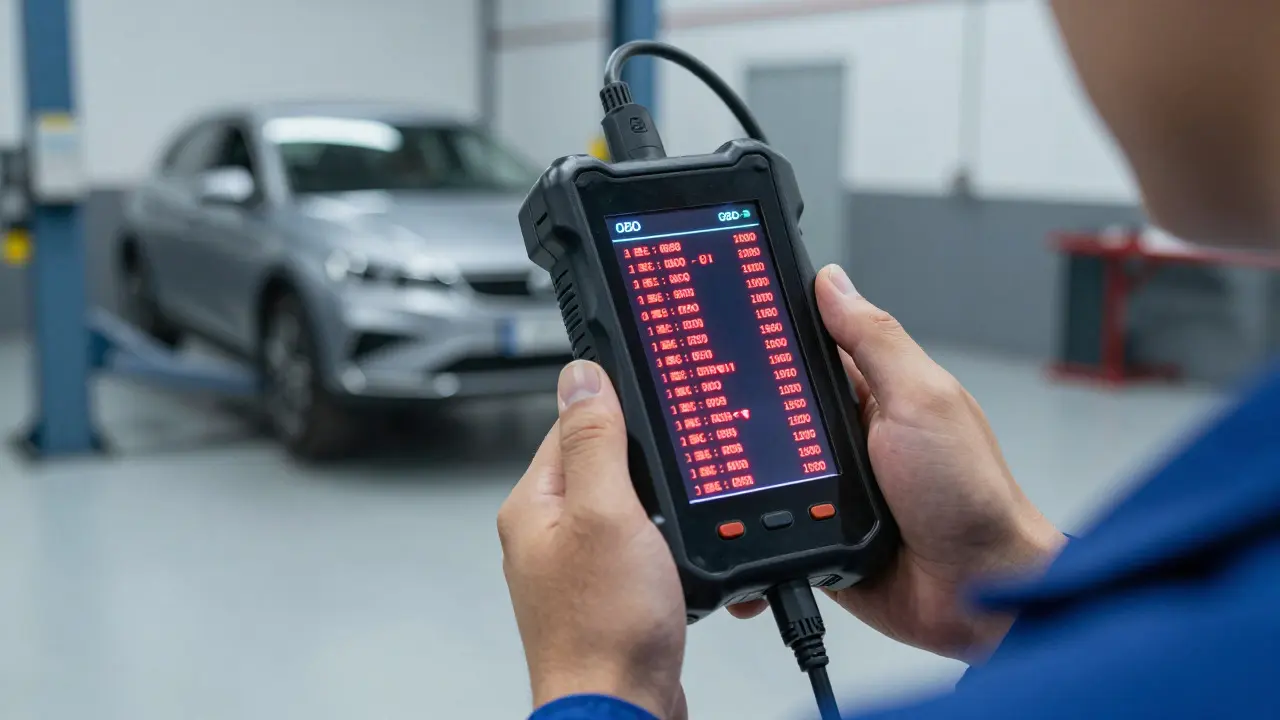
You plug in your OBD-II scanner, and suddenly you’re staring at a wall of red text. P0300, P0420, P0171, B1234... The list is endless, and your wallet feels lighter just looking at it. Here’s the truth most mechanics won’t tell you upfront: not all Diagnostic Trouble Codes are created equal. Some mean your car is about to leave you stranded on the highway; others mean your fuel economy dropped by 2% and nobody will notice except you.
The Myth of "All Errors Are Equal"
When that Check Engine Light pops on, panic sets in. You might think every code represents an immediate emergency. But modern vehicles generate hundreds of potential codes across dozens of systems. Treating them all with the same urgency leads to wasted money and unnecessary downtime. Think of it like triage in an emergency room. A broken finger hurts, but a blocked airway kills. Your car works the same way. You need a system to sort these digital symptoms into buckets: Critical, Major, Minor, and Informational.
This approach saves you cash. Why replace a $500 catalytic converter for a minor efficiency code when you can wait? Conversely, why risk blowing a $3,000 engine because you ignored a misfire code? It comes down to understanding what each code actually threatens: safety, drivability, or emissions compliance.
Understanding the Code Structure
Before we prioritize, you need to speak the language. Every DTC starts with a letter followed by four numbers. That first letter tells you which module flagged the issue. Knowing this helps you gauge severity instantly.
| Prefix | System | Typical Severity | Action Required |
|---|---|---|---|
| P | Powertrain (Engine/Transmission) | High to Critical | Immediate inspection if flashing; soon if steady. |
| C | Chassis (ABS, Suspension, Steering) | Medium to High | Safety-critical components require prompt attention. |
| B | Body (Airbags, Climate, Comfort) | Low to Medium | Fix if safety-related (airbags); otherwise cosmetic. |
| U | Network (Communication Modules) | Variable | Often causes cascading errors; diagnose root cause first. |
Notice how Powertrain codes (P) usually demand the most respect. If you see a C-code for your power seat motor, you can drive home comfortably. If you see a P-code for transmission pressure, you might be pushing your luck.
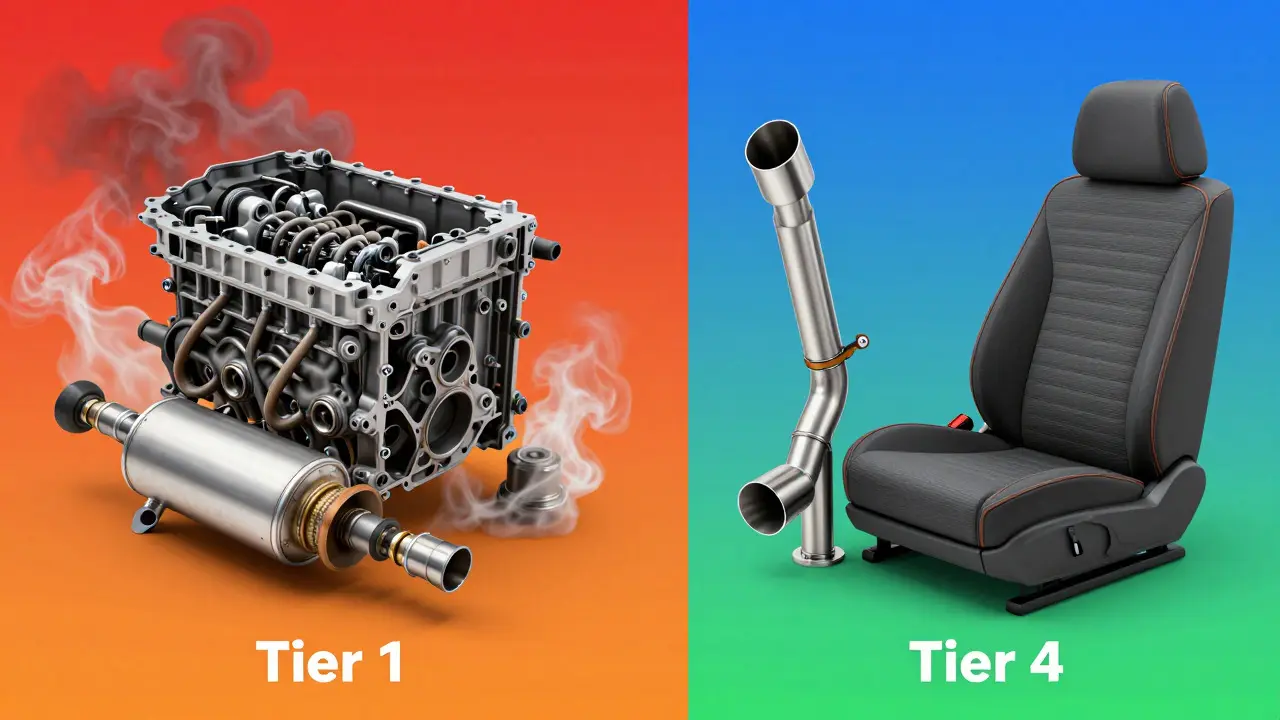
Tier 1: Critical Safety and Drivability Risks
These are the codes you fix today, or tomorrow morning. Ignoring them risks physical harm to you, damage to other passengers, or catastrophic mechanical failure. This tier includes anything affecting brakes, steering, airbags, or engine integrity.
Consider Airbag System Codes (such as B1000 series). If your SRS light is on, your airbags may not deploy in a crash. That’s not a comfort issue; it’s a life-safety issue. Similarly, ABS codes related to wheel speed sensors mean your anti-lock braking system is disabled. Your brakes still work, but you lose stability control during hard stops on wet roads.
On the mechanical side, severe misfire codes (like P0301-P0306 indicating specific cylinder failures) fall here. Unburned fuel dumps into your exhaust, overheating the catalytic converter. In extreme cases, it can wash oil off cylinder walls, leading to engine seizure. If your engine shakes violently while idling, stop driving. Tow it. Don’t try to "drive it home."

Tier 2: Performance and Long-Term Damage Prevention
These codes won’t kill you immediately, but they will cost you money if left unchecked. They affect how the car drives, how much gas it burns, or how long parts last. You can likely drive on these for a few weeks, but don’t make it a habit.
Oxygen Sensor Codes (like P0135 or P0141) are classic Tier 2 issues. The sensor itself costs maybe $50-$100. But running rich or lean due to bad data forces your engine computer to guess fuel mixture. Over time, this degrades spark plugs and fouls injectors. More importantly, it ruins your fuel economy. If you drive 15,000 miles a year, a 10% drop in MPG costs you real dollars.
Transmission slip codes (P0700 series) also land here. The car might still move, but shifting becomes jerky or delayed. Continuing to drive with slipping gears generates excessive heat inside the transmission fluid. Heat breaks down fluid chemistry rapidly. What started as a solenoid issue ($150 repair) can spiral into a full rebuild ($2,500+) if you ignore the warning signs until the transmission fails completely.
Tier 3: Emissions and Regulatory Compliance
This is where many DIYers get confused. Just because a code triggers the Check Engine Light doesn’t mean the car is unsafe. Many codes exist solely to satisfy environmental regulations. If you live in a state without annual emissions testing, some of these can wait.
Take the infamous P0420 Catalyst Efficiency Below Threshold. It means the catalytic converter isn’t cleaning exhaust gases as efficiently as the computer expects. Does this affect performance? Barely. Is the car safe? Yes. Can you pass smog? No. If you’re selling the car or live in California, New York, or Oregon, fix it now. If you’re in Texas or Florida with no testing, you can often drive with this code indefinitely, though replacing the converter eventually is wise for resale value.
Evaporative Emission System codes (P0440-P0457) are another example. These often point to a loose gas cap or a small leak in the charcoal canister vent line. They smell like raw gasoline sometimes, but they rarely impact engine health. Tightening the gas cap clears half of these. If it persists, it’s a low-priority repair unless the smell bothers you.
Tier 4: Cosmetic and Convenience Features
Welcome to the "I’ll get to it eventually" pile. These codes involve non-essential body electronics. Your car drives perfectly fine. Your safety systems are intact. Your engine runs smooth. But something annoying is happening.
Common examples include sunroof motor faults, climate control blend door actuators sticking, or radio display glitches. A B-code for a faulty heated seat element doesn’t prevent the car from operating. Unless you live in Alaska and rely on that heated seat for survival, this goes to the bottom of the list. Use your diagnostic tool to clear these codes occasionally to keep your scan reports clean, so you don’t miss new, serious issues hiding behind old ones.
The Flashing Light Rule
There is one universal exception to prioritization logic: the flashing Check Engine Light. Regardless of what the code says, if the light flashes while you’re driving, pull over safely and turn off the engine. A flashing light indicates a severe misfire condition currently dumping unburned fuel into the exhaust. Continuing to drive in this state can destroy your catalytic converter in minutes, not miles. Towing is cheaper than a new exhaust system.
How to Handle Network Communication Codes (U-Codes)
Modern cars are networks of computers talking to each other via CAN bus lines. When one module loses communication, it throws U-codes (e.g., U0100 Lost Communication with ECM). These are tricky because they are often secondary symptoms. If your battery is weak, multiple modules might report communication errors. Do not start replacing expensive modules based on U-codes alone. Always check your battery voltage and ground connections first. Often, a simple battery replacement clears five different U-codes simultaneously.
Practical Workflow for Prioritizing Repairs
So, you have your list. How do you tackle it? Follow this sequence:
- Scan and Record: Write down every code. Note which are pending vs. stored. Pending codes haven’t confirmed yet; stored codes are active.
- Filter for Safety: Look for Airbag, ABS, or Severe Misfire codes. Schedule these repairs immediately.
- Assess Drivability: Does the car shift poorly? Idle rough? Lose power? Address transmission and major engine management codes next.
- Check Local Laws: Do you need emissions testing within 30 days? If yes, address P0420 and EVAP codes.
- Clear and Monitor: Clear minor/cosmetic codes. Drive for a week. See which ones return. Focus your budget on the persistent, high-tier issues.
This method prevents you from spending $2,000 on repairs when only $200 was urgent. It keeps your car safe without draining your savings account prematurely.
Can I drive with a Check Engine Light on?
Yes, if the light is steady and the car drives normally. However, you should get it checked within a few weeks. If the light is flashing, stop driving immediately to prevent engine damage.
Do I need to fix every fault code?
No. Focus on safety-critical codes (brakes, airbags), drivability issues (transmission, engine misfires), and regulatory requirements (emissions). Cosmetic or convenience feature codes can often be ignored without consequence.
What does a P0420 code really mean?
It means the catalytic converter is working less efficiently than expected. It is primarily an emissions-related issue. While it doesn't usually affect performance significantly, it will cause you to fail an emissions test.
Why do I have multiple codes at once?
One root problem can trigger several codes. For example, a vacuum leak might cause lean fuel mixture codes, misfire codes, and oxygen sensor codes simultaneously. Fix the root cause, and the secondary codes often disappear.
Are U-codes more serious than P-codes?
Not necessarily. U-codes indicate communication loss between modules. They are often caused by electrical issues like bad grounds or failing batteries rather than mechanical failures. Diagnose the electrical system before replacing expensive modules.