
Driving in Dubai is a different beast than driving in London or New York. The sun doesn't just shine; it attacks your car's components. Between the scorching summer temperatures that can exceed 45°C and the fine desert sand that finds every crevice, your vehicle faces unique stressors. If you ignore these factors, you're not just risking a breakdown-you're accelerating wear on parts that should last years.
This guide isn't a generic list of "check your oil" reminders. It’s a survival manual tailored specifically for the UAE environment. We’ll break down what actually matters here, how often to do it, and why standard global advice often fails in the Gulf region. Whether you drive a compact hatchback or a luxury SUV, keeping your ride reliable in this climate requires a proactive approach.
Why Standard Checklists Fail in the Gulf
Most car manuals assume a temperate climate. They suggest checking coolant levels annually or changing air filters every 15,000 miles. In Dubai, those intervals are too long. The extreme heat causes fluids to degrade faster, and the dust loads clog filters twice as quickly. For instance, an engine air filter in a dusty area like Al Ain or even the outskirts of Dubai can become saturated with particulate matter much sooner than one in a cleaner urban center. Ignoring this leads to reduced fuel efficiency and increased strain on the engine.
The humidity also plays a sneaky role. While we associate humidity with rain, high moisture content in the air accelerates corrosion on metal components, especially if road salt from coastal areas mixes with the dust. Your undercarriage needs attention more frequently here than in drier inland regions. Understanding these local variables is the first step toward maintaining your car effectively.
Cooling System: The Heartbeat of Your Vehicle
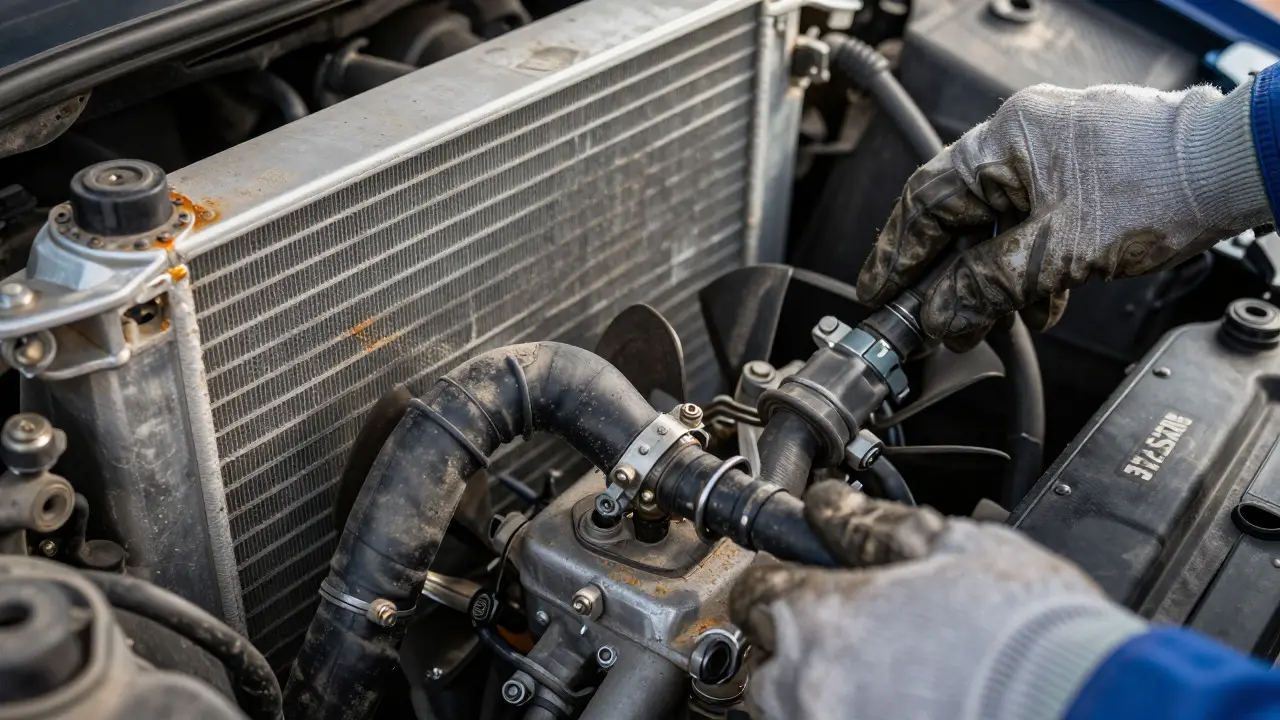
Your cooling system works overtime in Dubai. When the ambient temperature hits 45°C, your radiator has to dissipate massive amounts of heat to keep the engine at its optimal operating range. A weak cooling system leads to overheating, which can warp cylinder heads or blow head gaskets-expensive repairs that are preventable with basic care.
- Radiant Coolant: Don't just check the level; check the condition. Old coolant turns brown or murky. Flush and replace it every two years or 40,000 km, whichever comes first. Use a high-quality ethylene glycol-based coolant rated for high temperatures.
- Radiator Hoses: Inspect them for cracks, bulges, or stiffness. Heat dries out rubber, making hoses brittle. Replace any hose that feels hard to the touch or shows visible cracking.
- Fan Operation: Ensure the electric cooling fan kicks in when the AC is running or when the engine is hot. If it doesn't spin, you're relying solely on airflow, which isn't enough in traffic jams during peak hours.
A quick tip: Park in the shade whenever possible. Direct sunlight heats the engine bay before you even start the car, forcing the cooling system to work harder immediately upon ignition.
Air Conditioning: More Than Just Comfort
In Dubai, the AC isn't a luxury; it's a safety feature. Driving without it in summer can lead to driver fatigue and heatstroke. However, most owners only notice their AC is failing when it stops blowing cold air. By then, the compressor may already be damaged by low refrigerant levels or a blocked condenser.
The condenser sits right in front of the radiator. In dusty conditions, it gets clogged with sand and debris, reducing its ability to reject heat. This forces the compressor to work harder, leading to premature failure. You should have the condenser cleaned professionally every six months. A simple blast of compressed air (done carefully to avoid bending fins) can restore efficiency.
| Component | Check Frequency | Action Required |
|---|---|---|
| Cabin Air Filter | Every 6-12 months | Replace if dirty or smelly. Dust traps odors and allergens. |
| Refrigerant Level | Annually | Check for leaks. Low levels cause compressor damage. |
| Condenser | Every 6 months | Clean with water/air. Remove sand buildup. |
| Compressor | As needed | Listen for grinding noises. Replace if faulty. |
If your AC blows warm air intermittently, don't wait. It’s usually a sign of a partial refrigerant leak or a failing expansion valve. Catching it early saves you from replacing the entire compressor assembly.
Tires and Suspension: Handling the Heat and Roads
Hot asphalt softens tire rubber, increasing the risk of blowouts, especially at highway speeds. Moreover, Dubai roads are generally smooth, but potholes appear suddenly after heavy rains or due to construction work. Your suspension components absorb these impacts, and constant heat exposure weakens bushings and mounts.
- Tire Pressure: Check monthly, not just seasonally. High temperatures increase tire pressure naturally. Over-inflation reduces traction, while under-inflation causes uneven wear and heat buildup. Stick to the manufacturer's recommended PSI found on the driver's door jamb.
- Tread Depth: Wear happens faster in heat. Use the coin test regularly. If the tread is below 3mm, replace them. Thin treads overheat easily and lose grip on wet roads during sudden monsoon-like showers.
- Suspension Bushings: Listen for clunks when going over bumps. Worn polyurethane or rubber bushings crack in heat. Replacing them improves handling and protects your wheel alignment.
Don't forget to rotate your tires every 8,000-10,000 km. Front-wheel-drive vehicles wear front tires faster, and rear-wheel-drive cars wear rears. Uneven wear shortens tire life and affects steering precision.
Battery and Electrical Systems: Battling the Heat
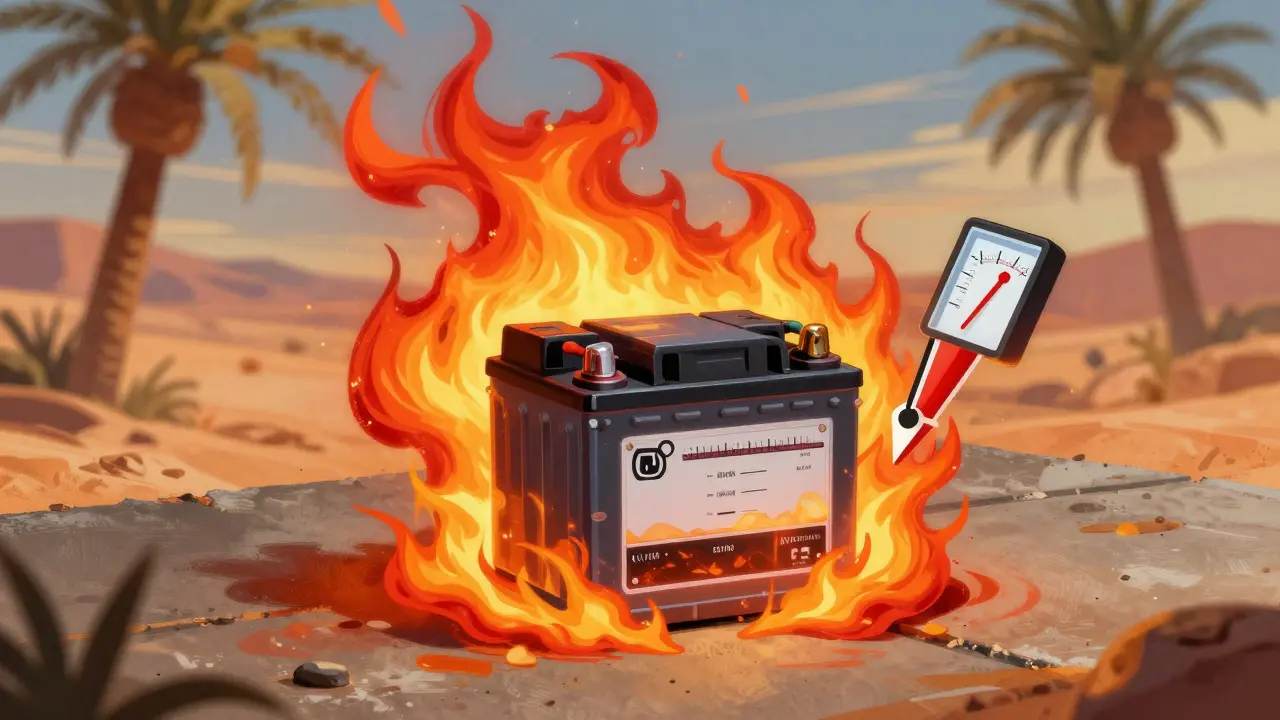
Your battery is the most vulnerable component in extreme heat. Contrary to popular belief, heat kills batteries faster than cold. High temperatures accelerate chemical reactions inside the battery, causing water loss in the electrolyte solution. This leads to sulfation-a buildup of lead sulfate crystals on the plates-which permanently reduces capacity.
Signs of a weakening battery include slow cranking, dim headlights, or warning lights on the dashboard. Test your battery voltage annually. It should read around 12.6 volts when the engine is off. If it's below 12.4 volts, consider a load test. Many auto shops in Dubai offer free battery testing, so take advantage of it.
Also, inspect your alternator belt. Heat dries out rubber belts, causing them to crack and slip. A slipping belt means your alternator isn't charging the battery properly, leading to electrical glitches. Replace the belt if you see fraying or glazing (a shiny surface).
Fluids and Filters: The Lifeline of Your Engine
Oil breaks down faster in high heat. The viscosity thins out, reducing its protective film between moving parts. In Dubai, change your engine oil every 5,000-7,500 km instead of the standard 10,000-15,000 km interval. Use a synthetic oil rated 5W-40 or 5W-50, depending on your manufacturer's recommendation. These grades maintain viscosity better in extreme temperatures.
Air filters are critical. A clogged engine air filter restricts airflow, forcing the engine to work harder and consume more fuel. Check the filter visually every 10,000 km. If it looks gray or packed with dust, replace it. It’s a cheap part that makes a significant difference in performance.
Transmission fluid also degrades in heat. Automatic transmissions generate significant heat during stop-and-go traffic. Change the transmission fluid every 40,000-60,000 km, or follow your specific model's schedule. Neglecting this leads to slipping gears and expensive transmission replacements.
Exterior Protection: Shielding Against Sand and Sun
Your paint and body panels suffer from UV rays and abrasive sand. Regular washing removes loose dirt, but you need more than that. Apply a ceramic coating or high-quality wax every six months. This creates a barrier against UV damage and makes it easier to wash off sand without scratching the clear coat.
Windshield wipers also degrade in heat. The rubber becomes hard and streaky. Replace them annually. Clear visibility is crucial, especially during the rare but intense rainstorms that hit Dubai. Streaked wipers blind you just as much as rain does.
Finally, check your undercarriage for rust. After rainy days, rinse the underside of your car to remove salt and mud. This simple habit prevents corrosion on brake lines and exhaust components.
How often should I change my oil in Dubai?
Due to extreme heat, change your oil every 5,000 to 7,500 kilometers. This is shorter than the standard 10,000+ km interval recommended for moderate climates. Use high-quality synthetic oil rated 5W-40 or 5W-50 to ensure proper lubrication in high temperatures.
Why does my car battery die faster in summer?
Heat accelerates chemical reactions inside the battery, causing electrolyte water loss and sulfation. This reduces the battery's capacity and lifespan. Test your battery voltage annually and replace it if it reads below 12.4 volts when the engine is off.
Is it necessary to clean the AC condenser in Dubai?
Yes. Sand and dust clog the condenser fins, reducing its ability to reject heat. This forces the compressor to work harder, leading to premature failure. Have the condenser cleaned professionally every six months to maintain efficient cooling.
What type of oil is best for Dubai's climate?
Use full synthetic oil with a viscosity rating of 5W-40 or 5W-50. These grades maintain their thickness in high temperatures, providing better protection for engine components. Always check your owner's manual for the specific recommendation for your vehicle model.
How do I protect my car paint from the sun?
Apply a ceramic coating or high-quality wax every six months. This creates a protective barrier against UV rays and makes it easier to wash off abrasive sand without scratching the paint. Park in the shade whenever possible to reduce direct heat exposure.