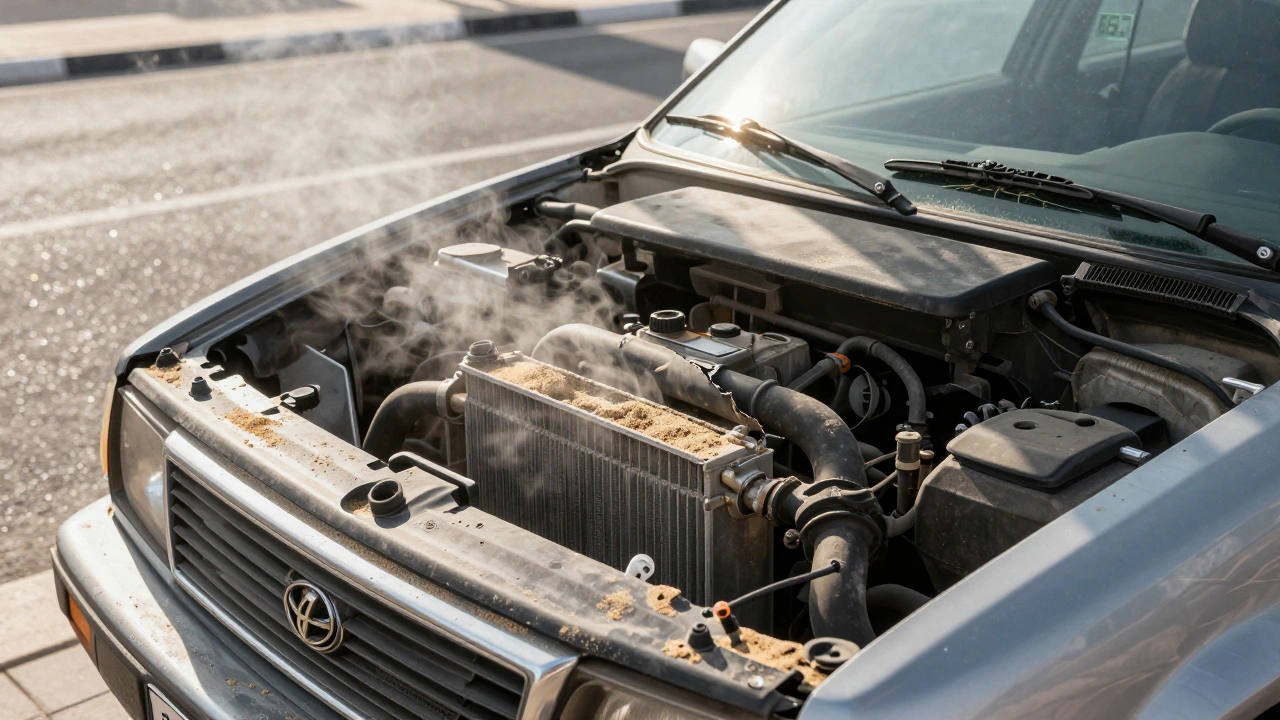
When the sun hangs over Dubai like a furnace and the asphalt glows underfoot, your car doesn’t just sit there-it fights for survival. The temperature outside can hit 50°C, and inside the cabin? It’s worse. If you think regular oil changes and tire rotations are enough for summer, you’re setting yourself up for a breakdown. In Dubai, car maintenance isn’t optional during the hot months. It’s the difference between a smooth commute and a stranded vehicle on Sheikh Zayed Road.
Why Heat Is Your Car’s Worst Enemy
Most people assume heat just makes the cabin uncomfortable. But in Dubai, extreme temperatures don’t just make driving unpleasant-they actively break down your car’s systems. Engine coolant evaporates faster. Oil thins out and loses its protective properties. Rubber hoses crack under repeated thermal stress. Tires overheat and can blow out without warning. Even the battery, which you barely think about, starts losing charge just from sitting in the sun.
It’s not just about the numbers. It’s about what happens when you sit in traffic for 20 minutes with the AC on full blast. The radiator is working overtime. The AC compressor is running nonstop. Sand from the desert gets kicked up and clogs the radiator fins. One small leak, one dirty air filter, one underinflated tire-and your car can quit in the middle of the highway.
Cooling System: Your First Line of Defense
Your cooling system is the heartbeat of your car in Dubai summers. If it fails, your engine dies. Period.
- Check coolant levels every two weeks when the engine is cold. Look at the expansion tank-not the radiator cap. If it’s below the minimum mark, top it off with a 50/50 mix of distilled water and the coolant type your manual specifies. Never use plain water. It boils too fast.
- Replace coolant every 2 to 5 years, depending on your manufacturer’s recommendation. Heat breaks down the anti-corrosion chemicals inside. Old coolant doesn’t just stop working-it starts eating your radiator and water pump from the inside.
- Inspect hoses for cracks, swelling, or stiffness. If they feel brittle or look like they’ve been baked, replace them. Heat cycles turn rubber into dust over time.
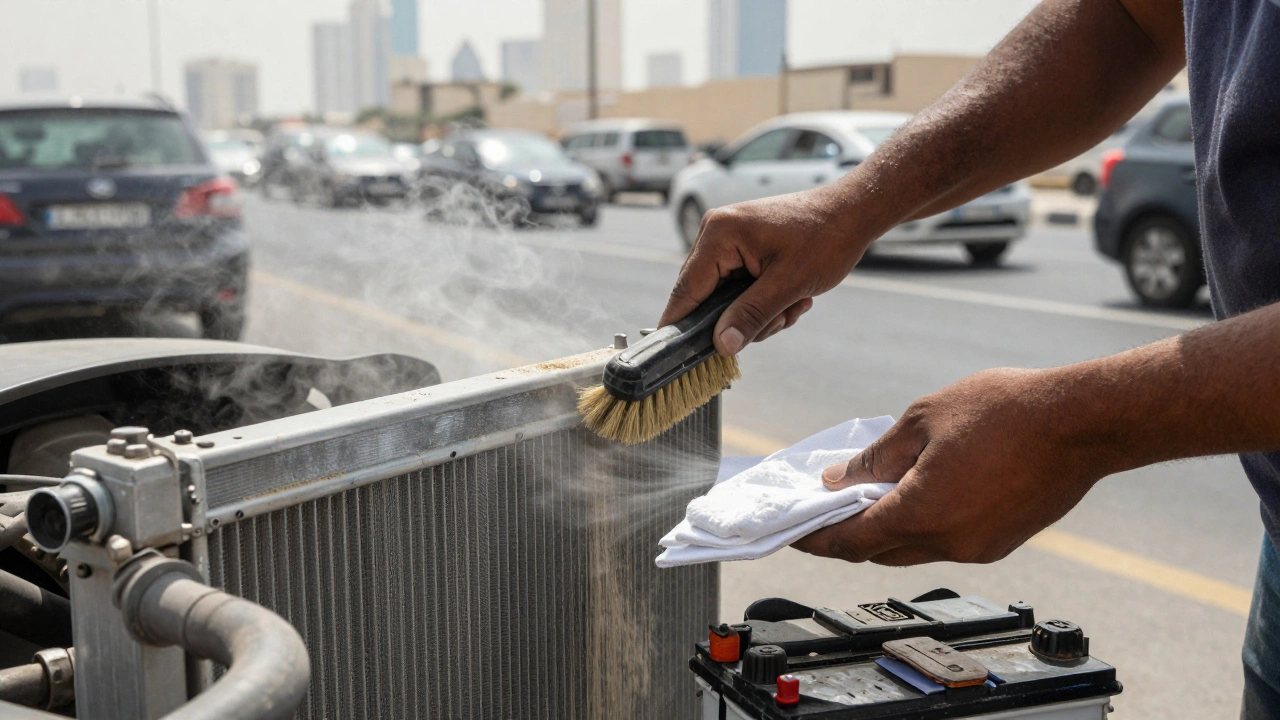
- Clean the radiator fins gently with a soft brush and water from the front. Sand and dust pack into those fins like cement. Blocked airflow means your engine overheats even when the car is moving.
- Test the radiator cap. A weak cap lowers the boiling point of coolant. If it’s more than three years old, swap it out. They’re cheap. A new one costs less than a coffee.
And don’t ignore the temperature gauge. If it climbs past the halfway mark, pull over. Let the engine cool. Don’t open the radiator cap. Steam can burn you. Driving even a few kilometers while overheating can warp your cylinder head or crack the block. That repair costs more than a new car payment.
AC System: Don’t Wait Until It Stops Working
In Dubai, the air conditioner isn’t a luxury-it’s a necessity for survival. But it’s also one of the first things to fail under summer stress.
- Replace the cabin air filter every 6 months. In dusty conditions, it clogs faster than in any other climate. A blocked filter doesn’t just reduce airflow-it makes the compressor work harder, which drains power and shortens its life.
- Have the condenser cleaned at least once before summer hits. It’s the part behind the grille that looks like a radiator. Dust and sand clog it, and when it can’t release heat, your AC blows warm air.
- Listen for strange noises. Hissing, rattling, or a sudden drop in cooling power? That’s not normal. It could mean low refrigerant, a failing compressor, or a leak. Get it checked before the peak heat.
- Use sunshades religiously. Even if you park in the garage, UV rays still bake the dashboard. A simple windshield shade can drop interior temps by 15°C. That’s the difference between a bearable ride and a sauna.
Battery: The Silent Killer
Your battery doesn’t die in winter in Dubai. It dies in summer.
Heat accelerates the chemical reactions inside the battery. That sounds good-until you realize it also speeds up the loss of electrolyte fluid. Once that fluid is gone, the battery can’t hold a charge. It’ll start fine in the morning, but by noon, it’s dead.
- Check the terminals for corrosion. Clean them with baking soda and water if you see white powder.
- If you don’t drive daily, disconnect the negative terminal. Or better yet, use a trickle charger. Even a $20 smart charger can keep your battery alive through weeks of parking.
- Replace batteries older than 3 years. Even if they still start the car, they’re running on borrowed time. A dead battery in the middle of a 40°C heatwave leaves you stranded with no shade and no help nearby.
Tires: Heat + Pressure = Disaster
Tires are made of rubber. Rubber turns brittle in Dubai heat. And when you drive on hot asphalt with underinflated tires? You’re playing Russian roulette.
- Check pressure every week. Use a digital gauge. Don’t trust the ones at gas stations-they’re often broken or calibrated wrong.
- Follow the number on your door jamb, not the tire sidewall. That number is for load capacity, not optimal pressure for your car.
- Underinflated tires flex too much. That creates heat. Heat builds pressure. Pressure leads to blowouts.
- Look for cracks on the sidewalls. If you see them, replace the tire. No exceptions.
- If your car sits for more than a few days, move it a few feet forward and backward. This prevents flat spots from forming on the tires.
Exterior and Interior: Protect What You Can’t Replace
Paint fades. Dashboards crack. Leather splits. These aren’t just cosmetic problems-they’re signs of deeper damage.
- Wash your car every two weeks. Dust isn’t just dirt-it’s abrasive. It scratches paint and clogs gaps in trim.
- Apply a ceramic coating. It’s not just for show. It reflects UV rays and creates a barrier against heat and sand. Lasts 2-5 years.
- Use UV protectants on plastic trim, dashboard, and door panels. Silicone-based sprays help, but look for ones labeled "UV-resistant."
- Install XPEL-certified window tint. It blocks 99% of UV rays and cuts cabin heat by up to 15°C. Legal in Dubai if it meets the 50% visible light transmission rule for front windows.
- Replace worn windshield wipers. Sun exposure makes the rubber hard and brittle. A bad wiper won’t clear glare at night-and that’s when accidents happen.
Electric and Hybrid Vehicles: Don’t Assume They’re Safe
If you drive a Tesla, Hyundai Ioniq, or Toyota Prius, you’re not immune. In fact, you’re more vulnerable.
These cars rely on complex thermal systems to cool batteries, motors, and inverters. If that system fails, the car goes into "limp mode" or shuts down completely.
- Check the battery coolant loop during service. It’s often overlooked.
- Ensure the heat pump is functioning. It’s not just for heating-it helps regulate battery temperature in summer too.
- Keep your car in shade as much as possible. Direct sun raises battery temps, which reduces range and lifespan.
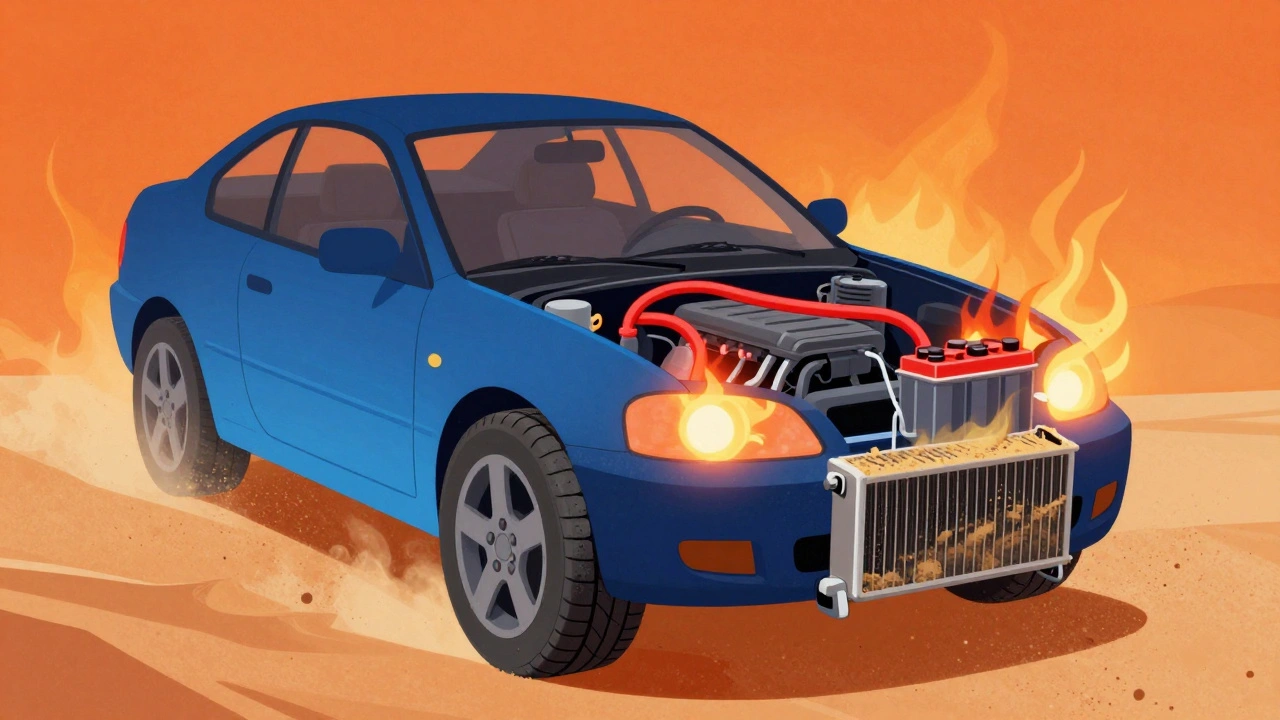
What Not to Do
Here are the mistakes that cost drivers thousands:
- Ignoring the temperature gauge. "It’s just a little high-let’s keep going." That’s how engines die.
- Delaying AC service until it stops working. By then, you’ve damaged the compressor.
- Using generic coolant. Mixing types can cause chemical reactions that clog the system.
- Leaving electronics in the car. Phones, laptops, GPS devices, and even hair straighteners can overheat and explode.
- Not cleaning the radiator. You wouldn’t run a furnace with a blocked vent. Don’t do it to your car.
After Summer: Don’t Just Breathe a Sigh of Relief
Summer doesn’t end with a cool breeze. It ends with hidden damage.
Change your oil immediately after summer. Heat thins it out, and old oil leaves sludge. Flush the coolant. Inspect the water pump. Test the radiator fan. Clean the AC condenser again. Check for leaks under the car-some only show up after heat cycles.
Think of it like a post-season checkup. You wouldn’t skip the doctor after a marathon. Don’t skip it for your car.
Final Thought: Prevention Costs Less Than Repair
A $40 coolant flush. A $25 battery check. A $60 ceramic coating. These aren’t luxuries. They’re insurance.
One overheating incident can cost you $3,000 to $8,000 in engine repairs. A blown tire on the highway? That’s a tow, a new tire, and maybe a rental car. A dead battery? You’re stuck in the sun with no AC, no shade, and no help for hours.
Heat in Dubai doesn’t come and go. It’s there every day, every hour, every minute. Your car doesn’t get a vacation. Neither should your maintenance routine.
What’s the best coolant for Dubai summers?
Use the coolant type specified in your owner’s manual. Most manufacturers in the UAE recommend a long-life, ethylene glycol-based coolant with enhanced heat-transfer additives. Always mix it 50/50 with distilled water. Never use plain tap water-it contains minerals that cause scaling and corrosion. Pre-mixed coolants designed for hot climates are available at auto shops in Dubai and are a safe bet if you’re unsure.
How often should I clean my radiator in Dubai?
Clean the radiator every 2 to 3 months during summer. Dust and sand build up quickly on the fins, especially if you drive on desert roads or near construction zones. Use a soft brush and low-pressure water from the front. Never use a pressure washer-it can bend the delicate fins. If you’re not comfortable doing it yourself, most detailing shops offer radiator cleaning as part of a summer prep package.
Can I use regular car wax in Dubai’s heat?
Regular wax lasts only a few weeks in Dubai’s UV exposure. It fades quickly and offers little protection. Instead, use a ceramic coating. It bonds to the paint, lasts years, and reflects heat and UV rays. If you want a cheaper option, use a synthetic sealant with UV blockers. Avoid paste waxes-they melt in heat and leave streaks.
Why does my AC smell bad after summer?
Mold and bacteria grow in the damp AC evaporator core when it’s not used regularly or when the cabin filter is clogged. The smell is often musty or sour. To fix it, replace the cabin filter, run the AC on max fan with the temperature set to hot for 10 minutes to dry the system, and use an AC deodorizer designed for automotive systems. Avoid air fresheners that just mask the smell-they make it worse.
Should I turn off the AC when idling in traffic?
No. Turning off the AC puts more strain on the engine because it has to run hotter without the cooling effect of the AC condenser. Modern cars are designed to handle AC use in traffic. Instead, make sure your cooling system is in good shape. If your engine temp rises while the AC is on, that’s a sign you need to check the radiator or thermostat-not turn off the AC.