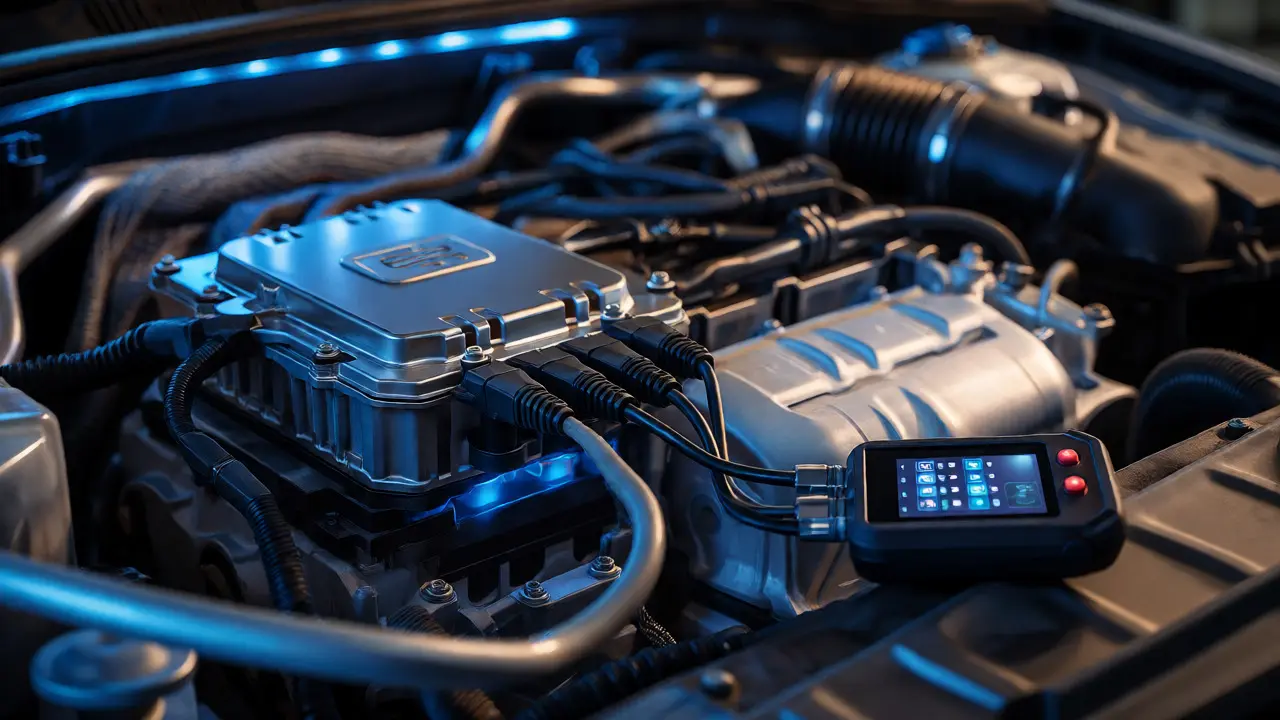
You buy a car, and the manufacturer gives you about 70-80% of what the engine is actually capable of. Why? Because they have to account for bad fuel in remote villages, extreme heat in deserts, and drivers who never change their oil. This safety margin leaves power on the table. ECU Tuning is the process of rewriting the software that controls your engine's air-fuel mixture, ignition timing, and boost pressure to unlock that hidden potential. It’s not magic; it’s math. But if you do it wrong, you can blow up your turbo or crack a piston. Let’s break down how it works, what you actually get, and when it’s worth the cash.
What Exactly Is an ECU?
Think of the Engine Control Unit (ECU) as the brain of your car. It’s a computer chip buried under the hood that makes thousands of decisions per second. It tells the injectors when to spray fuel, the spark plugs when to fire, and the throttle body how far to open. The factory settings are conservative. They prioritize emissions compliance, longevity across all climates, and smoothness over raw speed.
When you tune this unit, you aren't changing hardware. You're changing instructions. A stock ECU might say, "Inject 10 grams of fuel at 15 degrees before top dead center." A tuned ECU might say, "Inject 11.5 grams of high-octane fuel at 18 degrees before top dead center." That small shift creates more combustion energy, which translates directly to horsepower and torque.
The Three Main Types of Tuning
Not all tunes are created equal. Depending on your goals and budget, you’ll likely encounter one of these three approaches:
- Stage 1 Tune: This is a software-only modification. No parts need to be changed. It optimizes the existing hardware within safe limits. Expect a 10-20% increase in power on turbocharged engines. It’s reversible and usually keeps your warranty intact if done by a certified dealer or specialist.
- Stage 2 Tune: Requires hardware upgrades, typically a better exhaust system (downpipe/cat-back) and sometimes an upgraded intercooler. The tune adjusts for increased airflow. Power gains jump to 20-30%. This is where things get loud and aggressive.
- Custom Dyno Tune: Instead of using a generic file downloaded from the internet, a tuner hooks your specific car up to a dynamometer. They adjust the map in real-time based on your exact modifications, fuel quality, and ambient temperature. This is the gold standard for accuracy and safety, especially for modified cars.
Horsepower vs. Torque: What Are You Actually Buying?
People obsess over horsepower, but torque moves you off the line. Horsepower determines how fast you can go; torque determines how quickly you get there. A good tune reshapes the torque curve, making it flatter and wider.
| Engine Type | Stock HP | Tuned HP | Gain % | Best For |
|---|---|---|---|---|
| Small Turbo (e.g., VW GTI) | 228 hp | 260-280 hp | ~15% | Daily driving fun |
| Large Turbo (e.g., BMW M440i) | 382 hp | 450+ hp | ~18% | Sporty acceleration |
| Naturally Aspirated (e.g., Honda Civic) | 158 hp | 165-170 hp | ~5% | Throttle response only |
| Diesel Truck (e.g., Ford F-150) | 400 lb-ft | 480 lb-ft | ~20% | Towing capability |
Notice the naturally aspirated engines? If your car doesn’t have a turbocharger, don’t expect massive power jumps. You’re mostly paying for sharper throttle response and slightly better mid-range punch. Turbocharged and diesel engines see the biggest benefits because the ECU controls boost pressure, which is easy to raise safely.

The Hidden Costs: Fuel and Maintenance
A tune changes how your engine behaves, and that demands respect from your wallet. First, fuel grade matters. Most performance maps require premium gasoline (91-93 octane). If you put regular 87 octane in a tuned car, the ECU will pull timing to prevent knocking, negating the gains and potentially hurting efficiency. Budget an extra $20-$30 per fill-up if you drive frequently.
Second, maintenance intervals should tighten. Your engine is working harder. Oil breaks down faster under higher thermal loads. Switch to full synthetic oil if you haven’t already, and consider changing it every 5,000 miles instead of 7,500 or 10,000. Spark plugs also wear out quicker due to higher cylinder pressures. Check them annually rather than waiting for the factory schedule.
Risks: Can You Break Your Engine?
Yes, absolutely. But it’s rarely the tune itself that kills the engine-it’s the combination of a bad tune and poor maintenance. A poorly calibrated map can cause pre-detonation (knock), which melts pistons. Modern ECUs have knock sensors that retard timing when they hear trouble, acting as a safety net. However, if the tuner pushes boost too high without monitoring air-fuel ratios closely, those sensors can’t save you.
Warranty issues are another concern. Dealerships can often detect if an ECU has been flashed, even if you revert to stock settings later. Some manufacturers void the powertrain warranty if modifications are detected during a claim. Always check your contract or ask the dealer specifically about "aftermarket calibration" policies before proceeding.
How to Choose a Tuner
Don’t just download a file from eBay and flash it yourself unless you know what you’re doing. Look for these signs of a reputable shop:
- Dyno Access: Do they have a chassis dyno on-site? If they can’t measure your results, they’re guessing.
- Data Logging: Good tuners log data while you drive after the initial flash. They review air-fuel ratios, boost spikes, and timing corrections to refine the map.
- Transparency: Will they show you the before-and-after graphs? Avoid shops that treat the tune like a black box.
- Community Reputation: Check forums specific to your car model. Owners talk. If a certain tuner consistently blows turbos on Subaru WRXs, you’ll hear about it.
Is It Worth It?
If you drive a turbocharged car daily, a Stage 1 tune is arguably the best bang-for-buck upgrade available. It transforms a sluggish commuter into a responsive machine without the cost of new parts. For enthusiasts with modified cars, a custom dyno tune is non-negotiable to ensure safety and maximize performance.
However, if you drive a naturally aspirated economy car, skip it. The $500 cost buys you marginal gains that you’ll barely feel. Save that money for tires or brakes-those upgrades make a bigger difference in how a car feels on the road.
Does ECU tuning reduce gas mileage?
It depends on your driving style. If you keep the same foot pressure, a well-tuned car can actually improve fuel economy because the engine operates more efficiently. However, most people enjoy the extra power and accelerate harder, which consumes more fuel. On average, expect a 5-10% decrease in MPG if you drive aggressively post-tune.
Will ECU tuning void my warranty?
Potentially. While the Magnuson-Moss Warranty Act in the US prevents dealers from automatically voiding warranties due to aftermarket parts, they can deny claims related to the modified component. If your turbo fails and they see evidence of a tune, they may argue the tune caused the failure. Reverting to the stock file before service visits helps, but advanced diagnostic tools can still detect previous flashes.
Can I tune a manual transmission car?
Yes, and it’s often easier than tuning automatics. Manual transmissions don’t have complex torque converter lockup strategies or shift points to manage. The tune focuses purely on engine output. Just be aware that increased torque can overwhelm stock clutch packs, leading to slipping if you launch hard repeatedly.
How long does the tuning process take?
A simple Stage 1 flash takes about 1-2 hours at a shop. A custom dyno tune requires multiple runs and adjustments, typically taking half a day to a full day. Remote tuning involves sending logs via email, which can take several days to finalize as the tuner reviews data and sends updated files.
Do I need premium gas after tuning?
For most performance tunes, yes. Higher octane fuel resists premature detonation, allowing the ECU to advance ignition timing for more power. Running lower octane fuel forces the ECU to pull timing, reducing power and potentially increasing engine temperatures. Always follow the tuner’s recommendation for minimum octane rating.