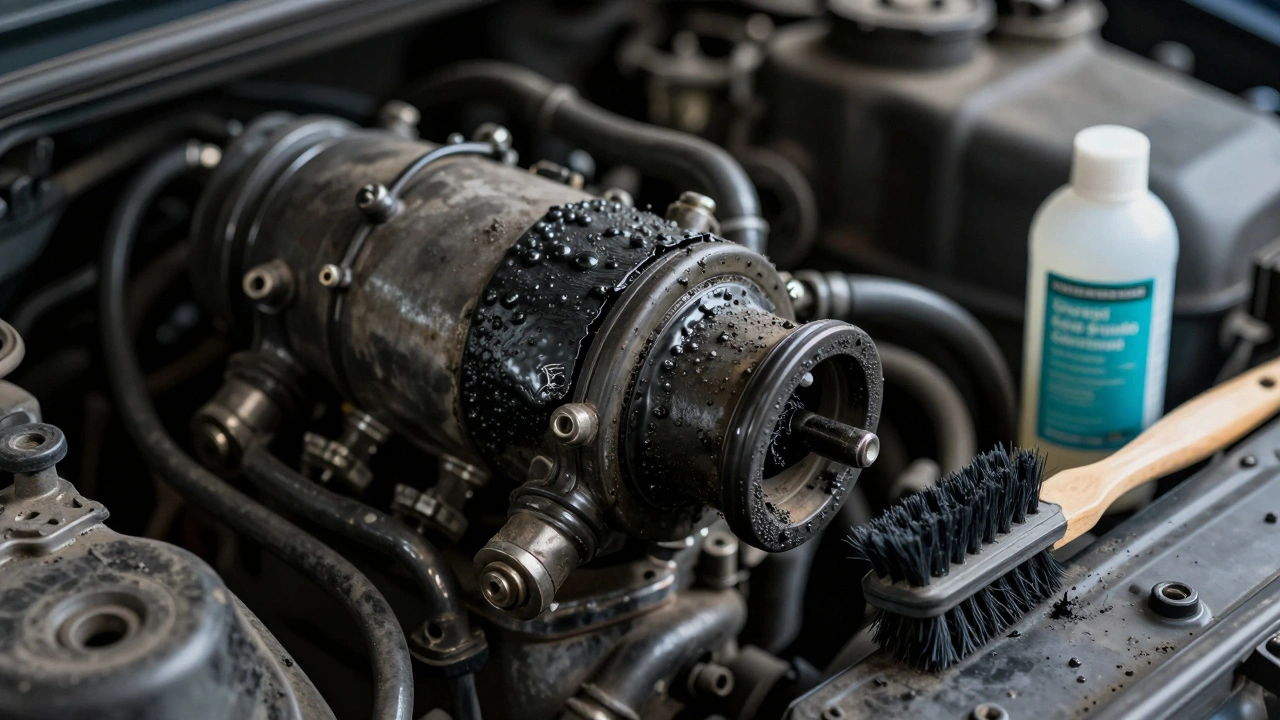
When your car shudders at a stoplight or the check engine light flashes for no obvious reason, it’s rarely just a glitch. More often, it’s a failing EGR valve - a small but critical part that’s quietly keeping your engine running clean and smooth. If you’ve noticed rough idling, poor acceleration, or failed emissions tests, the culprit is likely sitting right in your engine bay, clogged with carbon and stuck in the wrong position.
What the EGR Valve Actually Does
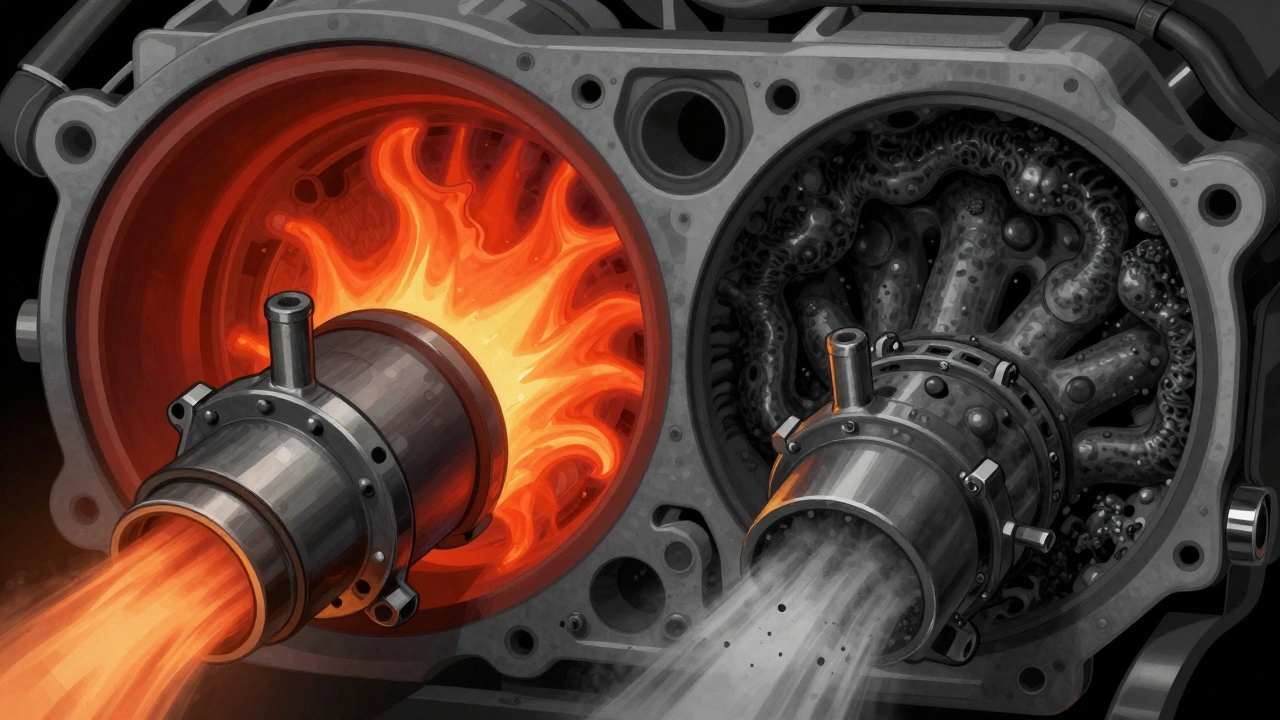
The Exhaust Gas Recirculation (EGR) valve is a simple device with one big job: take a portion of your engine’s hot exhaust gases and feed them back into the intake manifold. Sounds backwards, right? But it’s genius. By mixing exhaust gas with fresh air, the EGR valve lowers combustion temperatures. Why does that matter? Because high heat creates nitrogen oxides (NOx) - the main pollutants that make your car fail emissions tests. Lower combustion temps = fewer emissions. Simple.
But here’s the catch: exhaust gas isn’t clean. It’s full of soot, carbon, and sticky residue. And over time, that junk builds up inside the EGR valve and its passages. It’s like trying to breathe through a clogged straw - eventually, it stops working.
Why EGR Valves Fail (It’s Almost Always Carbon)
Most EGR valve failures aren’t random. They’re predictable. The #1 cause? Carbon buildup. Every time your engine runs, especially during short trips or stop-and-go driving, exhaust gases cool off just enough to leave behind carbon deposits. These deposits harden over months or years. Think of it like tar building up in a pipe.
When the valve gets clogged, it can stick open or closed - and both are bad.
- Stuck open: Too much exhaust gas floods the intake. The engine thinks it’s getting more air than it is. Result? Lean mixture, rough idle, stalling, and higher fuel use because the computer keeps adding fuel to compensate.
- Stuck closed: No exhaust recirculation. Combustion temperatures spike. You’ll hear knocking or pinging, especially at low RPM. Emissions soar. Your car fails smog checks. Spark plugs get coated in black soot.
Other causes? Less common, but still possible. A torn diaphragm, broken vacuum line, or faulty solenoid can also mess with valve operation. But if your car has over 60,000 miles and you haven’t cleaned the EGR system, carbon is almost certainly the issue.
Signs You Have an EGR Valve Problem
You don’t need a scanner to spot trouble. Here’s what to watch for:
- Rough idle: Your car shakes like it’s about to die when stopped. The RPMs bounce up and down.
- Engine stalling: Especially at stoplights or when coming to a slow stop. The engine just shuts off.
- Loss of power: Acceleration feels sluggish. The car hesitates or sputters when you press the gas.
- Increased fuel consumption: You’re filling up more often, even if your driving habits haven’t changed.
- Engine knocking or pinging: A metallic rattling sound under light load. This is the engine pre-igniting due to overheating.
- Check engine light: Codes like P0401 (Insufficient EGR Flow) or P0404 (EGR Circuit Range/Performance) are classic red flags.
- Fails emissions: NOx levels are too high. The test center tells you the EGR system isn’t working.
One telltale sign? Black, dry carbon on your spark plugs. That’s exhaust gas leaking into the combustion chamber - and it’s not normal.
How to Diagnose It
Start with an OBD2 scanner. Plug it in and check for codes. P0401, P0402, P0404, P1404, or P1406 all point to EGR issues. But codes alone won’t tell you if the valve is stuck or clogged.
Here’s how to test it yourself:
- Warm up the engine. Let it reach normal operating temperature.
- Locate the EGR valve. It’s usually mounted on the intake manifold or cylinder head. Look for a small metal or plastic valve with a vacuum line or electrical connector.
- With the engine idling, gently tap the valve with a wrench or screwdriver handle. If the idle smooths out, the valve is likely stuck - tapping temporarily frees it.
- Use a hand vacuum pump. Disconnect the vacuum line and apply 15-20 inches of vacuum. The valve should open. If it doesn’t move, it’s stuck or clogged. If it opens but the idle doesn’t change, the passages might be blocked.
- Check vacuum lines. Cracked, brittle, or disconnected hoses are common. Replace them if they’re old or brittle.
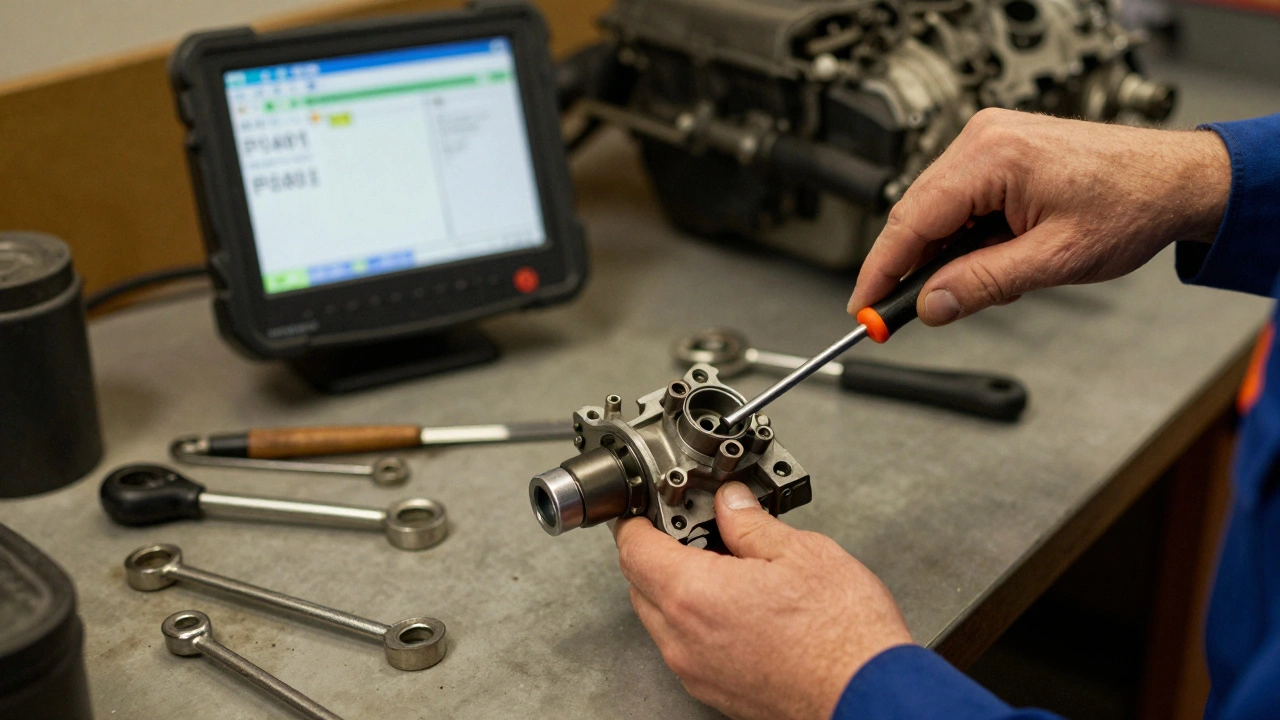
If you’re unsure, a mechanic can use a scan tool to command the EGR valve open and closed while monitoring real-time data. But the manual tests above work fine for most DIYers.
How to Fix It
There are two paths: clean or replace. Cleaning works in most cases. Replacement is needed if the valve is physically damaged.
Option 1: Clean the EGR Valve
This is the best first step. It’s cheap, effective, and takes under two hours.
- Disconnect the battery. Always.
- Remove the EGR valve. Usually held by two bolts. Unplug the electrical connector and disconnect the vacuum line.
- Soak the valve in carb cleaner or EGR-specific cleaner. Don’t scrub the solenoid or electrical parts.
- Use a wire brush or plastic scraper to remove carbon from the valve stem and ports. A toothbrush works for tight spots.
- Clean the intake passage too. Carbon builds up here as well. Use a shop vacuum to suck out loose debris.
- Reinstall the valve. Use a new gasket. Never reuse the old one.
- Clear codes with your scanner. Start the engine. Let it idle for 10 minutes.
Most cars run perfectly after cleaning. I’ve seen 12-year-old Camrys with 180,000 miles go from shaking at idle to silent smoothness after a 30-minute cleaning job.
Option 2: Replace the EGR Valve
If cleaning doesn’t fix it, or the valve is physically broken (cracked housing, melted diaphragm, stuck plunger), you need a new one. OEM parts cost $200-$500. Aftermarket options run $80-$200. Don’t go cheap on the cheapest brand - reliability matters here. Look for brands like Bosch, Denso, or AC Delco.
Installation is straightforward: remove the old, bolt in the new, reconnect everything. But always replace the gasket. A leak here causes the same symptoms as a bad valve.
How to Prevent Future Problems
Don’t wait until your car shakes like a washing machine. Prevention is easier than repair.
- Clean every 30,000-50,000 miles. Especially if you do mostly city driving or short trips. That’s when carbon builds fastest.
- Use top-tier fuel. Brands with Techron or Synergy additives help clean the system as you drive. Avoid discount fuels with unknown additives.
- Change oil on schedule. Dirty oil leads to more blow-by, which means more carbon in the exhaust.
- Don’t ignore the check engine light. A small EGR code today can become a full failure tomorrow.
- Consider an oil catch can. If you drive hard or have a turbocharged engine, a catch can reduces oil vapor entering the intake - one less source of carbon.
These aren’t fancy upgrades. They’re basic maintenance - like changing your air filter. But most people skip them until something breaks.
What Happens If You Ignore It
Ignoring a bad EGR valve doesn’t just mean rough driving. It can cause bigger damage:
- Overheated valves and pistons from excessive combustion temps.
- Damage to catalytic converter from unburned fuel and soot.
- Failed emissions test = no registration renewal.
- Increased fuel bills - sometimes 10-15% more than normal.
- Eventually, the engine may misfire or lose power so badly you can’t drive it.
It’s not a luxury fix. It’s a necessary one.
Can a dirty EGR valve cause a misfire?
Yes. A stuck-open EGR valve floods the engine with exhaust gas, diluting the air-fuel mixture. This can cause lean misfires, especially at idle or low load. You’ll see misfire codes (P0300-P0306) along with EGR codes. Cleaning the valve usually fixes both.
Can you drive with a bad EGR valve?
Technically, yes - but you shouldn’t. Driving with a stuck-open valve can cause poor fuel economy, rough running, and stalling. A stuck-closed valve risks engine knock, overheating, and catalytic converter damage. You might get home, but you risk costly repairs down the road.
Does cleaning the EGR valve improve fuel economy?
Absolutely. A clogged valve forces the engine to compensate by adding extra fuel. Once cleaned, the air-fuel ratio returns to normal. Many drivers report a 5-10% improvement in MPG after cleaning - especially on older cars with high mileage.
Is it better to clean or replace the EGR valve?
Clean it first. Over 80% of EGR failures are caused by carbon buildup, not mechanical failure. Cleaning costs $10-$30 in parts and takes a few hours. Replacement costs $200-$600. If cleaning doesn’t fix it, then replace. Don’t replace without cleaning first - you’re just throwing money away.
Can a bad EGR valve cause smoke from the exhaust?
Yes - but only in diesel engines. In gasoline engines, a failed EGR valve usually doesn’t create visible smoke. In diesels, a stuck-open valve can cause black smoke because excess exhaust gas disrupts combustion. In gasoline engines, you’ll notice rough running or smell fuel - not smoke.