
Imagine buying a used car that looks mint on the outside, but three weeks later, the dashboard lights up like a Christmas tree and the engine refuses to start. You've just encountered the nightmare of a failing electrical system. While a mechanic can easily tell you if the brakes work or the oil is clean, the "invisible" side of a car-the wiring and modules-is where the most expensive surprises hide. Performing a thorough electrical system evaluation is the only way to know if you're buying a reliable machine or a high-tech paperweight.
The Core of Electronic Condition Analysis
At its heart, Electronic Condition Analysis is a systematic process of auditing a vehicle's electrical health to find malfunctions in circuits and components
. It isn't just about checking if the headlights turn on. It's about verifying that the flow of energy is stable and that the components are communicating correctly. Most modern cars run on a 12-volt DC system, though hybrids introduce higher voltage complexities that require specialized safety gear.To understand this process, you have to understand three basics: voltage (the pressure), current (the flow), and resistance (the friction). If any of these are off, your car might suffer from "phantom draws" that kill your battery overnight or intermittent sensor failures that put your car into "limp mode." A professional evaluation ensures these three elements are balanced across the entire vehicle.
Step-by-Step Diagnostic Methodology
A professional technician doesn't just start poking wires. They follow a strict sequence to avoid damaging sensitive electronics. If you're overseeing a pre-purchase inspection, ensure these four steps are covered:
- System Scan: The technician connects a scan tool to the On-Board Diagnostics (OBD) port. This identifies stored fault codes (DTCs) that might not have triggered a dashboard warning light yet.
- Visual Inspection: This is the "boots on the ground" phase. They look for frayed wires, corroded ground straps, or signs of rodent damage-common in cars stored in garages.
- Component Testing: This isolates the big three: the battery, the alternator, and the starter. A battery might show 12 volts but fail immediately under the load of a starter motor.
- Repair and Validation: Once a fault is found, the component is replaced or the wire is spliced, followed by a re-test to confirm the fix.
Essential Tools for the Job
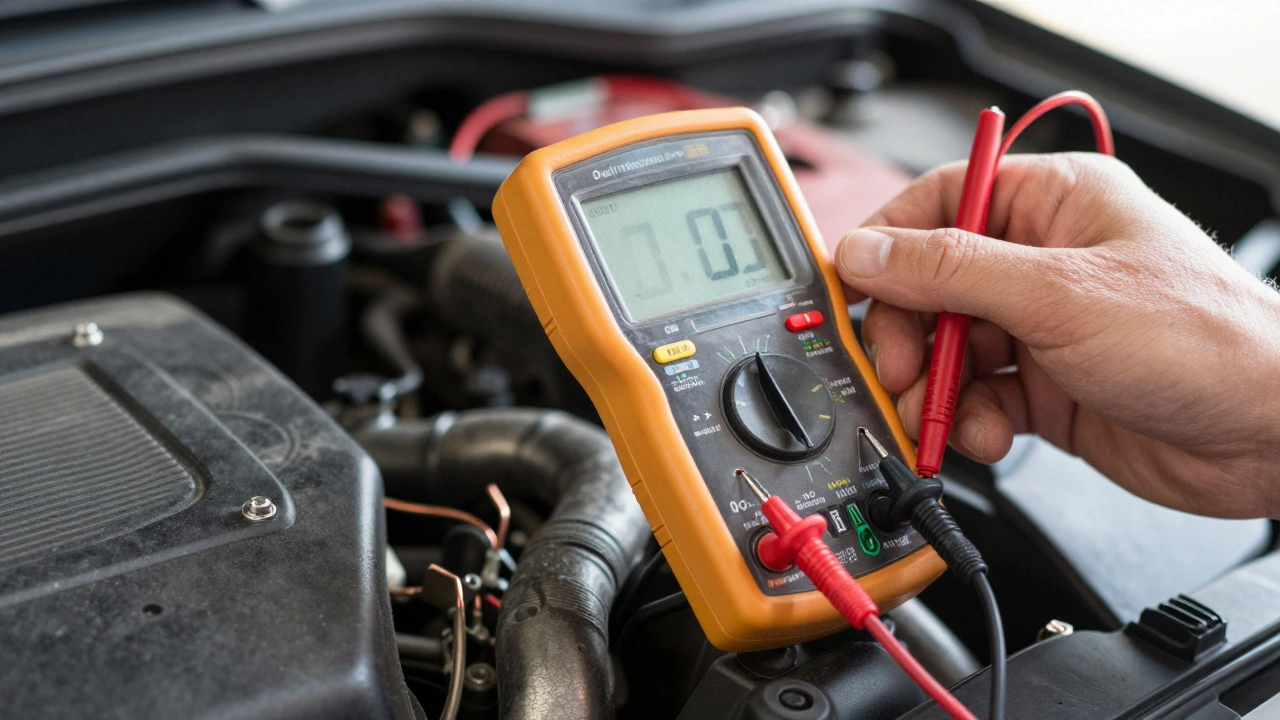
You can't diagnose a modern car with a simple test light. The precision required for today's computers demands specific gear. The most critical tool is the Digital Volt Ohm Meter (DVOM), which is a handheld device used to measure voltage, current, and resistance with high accuracy
. It's the gold standard for checking if a circuit is actually grounded or if there's a break in the line.For more complex issues, technicians use an Oscilloscope. While a multimeter gives you a "snapshot" of the voltage, an oscilloscope provides a "video." It shows the waveform of the electrical signal in real-time, allowing a tech to see a momentary glitch that happens in milliseconds-something a multimeter would completely miss.
| Tool | Primary Use | Pros | Cons |
|---|---|---|---|
| Multimeter (DVOM) | Voltage, Resistance, Current | Portable, inexpensive, versatile | Only provides static snapshots |
| Oscilloscope | Waveform Analysis | Catches intermittent glitches | Expensive, requires expert training |
| Scan Tool | PCM/Module Data | Fast, non-intrusive, reads codes | Relies on the car's own interpretation |
| Test Light | Continuity Checks | Very fast, simple | Can damage sensitive ECUs |
Voltage Drop Testing vs. Resistance Testing
There is a heated debate among DIYers and pros regarding how to test a circuit. Many people use resistance testing (measuring Ohms) with the power off. However, industry leaders prefer Voltage Drop Testing. Why? Because resistance testing only proves a wire is connected; it doesn't prove the wire can actually carry the necessary current (amperage) when the car is running.
Voltage drop testing is performed on a live circuit under load. If you measure the voltage at the battery and then at the end of the circuit, the difference (the "drop") tells you exactly how much energy is being lost due to corrosion or poor connections. If the drop is too high, your component won't get enough power, leading to dim lights or a sluggish starter, even if the battery is brand new.
Analyzing the Charging System and PCM
In older cars, the alternator just pumped out electricity. In modern vehicles, the Powertrain Control Module (PCM) is the vehicle's central computer that manages engine performance and charging rates
. The PCM monitors the battery's quality and the current load on the car to decide how much the alternator should work.Because the PCM controls the charging rate, a "low" alternator reading on a cheap tester might actually be normal behavior programmed by the manufacturer to save fuel. This is why a professional evaluation must combine a physical battery tester with a scan tool to see what the PCM is actually requesting. If you only trust a basic voltmeter, you might replace a perfectly good alternator.
Checking the Wiring Integrity
When a technician suspects a wiring fault, they don't just guess. They use a specific process to isolate the break. First, they locate the battery and disconnect the negative terminal to ensure safety and prevent shorts. Then, using a voltmeter, they test the positive lead at the device, the ground at the device, and the positive circuit itself.
If you find a voltage drop between the battery and the component, you've found your culprit. Common failure points include the ground straps-thick cables that connect the engine to the chassis. Over time, these rust. A rusted ground strap can cause "ghost" symptoms, like your radio turning off when you hit the brakes, which often tricks owners into thinking they have a dying alternator.
Can a scan tool find every electrical problem?
No. A scan tool only reports what the car's computers (like the PCM) perceive. If a wire is frayed but still making occasional contact, the computer might not trigger a code, but the car will still behave erratically. This is why physical testing with a multimeter or oscilloscope is necessary to confirm a hardware failure.
Why is voltage drop testing better than checking resistance?
Resistance testing is done with the power off, meaning it can't show how the circuit behaves under real-world stress. Voltage drop testing is done while the circuit is active, proving whether the wire can actually handle the amperage required to run the component.
What are the most common signs of a failing electrical system?
Look for dimming headlights when idling, a battery that drains overnight without cause, flickering dashboard lights, or electronic accessories (like power windows) that work intermittently. These are often signs of poor grounding or a failing alternator.
Do hybrid cars require different evaluation methods?
Yes. Hybrids use high-voltage battery packs for propulsion alongside a standard 12V system for electronics. Testing these requires specialized high-voltage leads and meters to prevent lethal shocks and ensure the DC-DC converter is functioning correctly.
How often should I have my car's electrical system evaluated?
While not a standard monthly task, a full evaluation is highly recommended every 2-3 years or whenever you experience an unexpected electronic glitch. It is absolutely essential during a pre-purchase inspection of any used vehicle.
Next Steps for Vehicle Owners
If you are buying a used car, don't settle for a "the lights work" check. Ask the inspector specifically if they performed a voltage drop test on the charging circuit. If you are an owner dealing with electrical gremlins, start by cleaning your battery terminals and checking the chassis ground straps; often, a bit of sandpaper and a wire brush can solve problems that look like expensive computer failures.