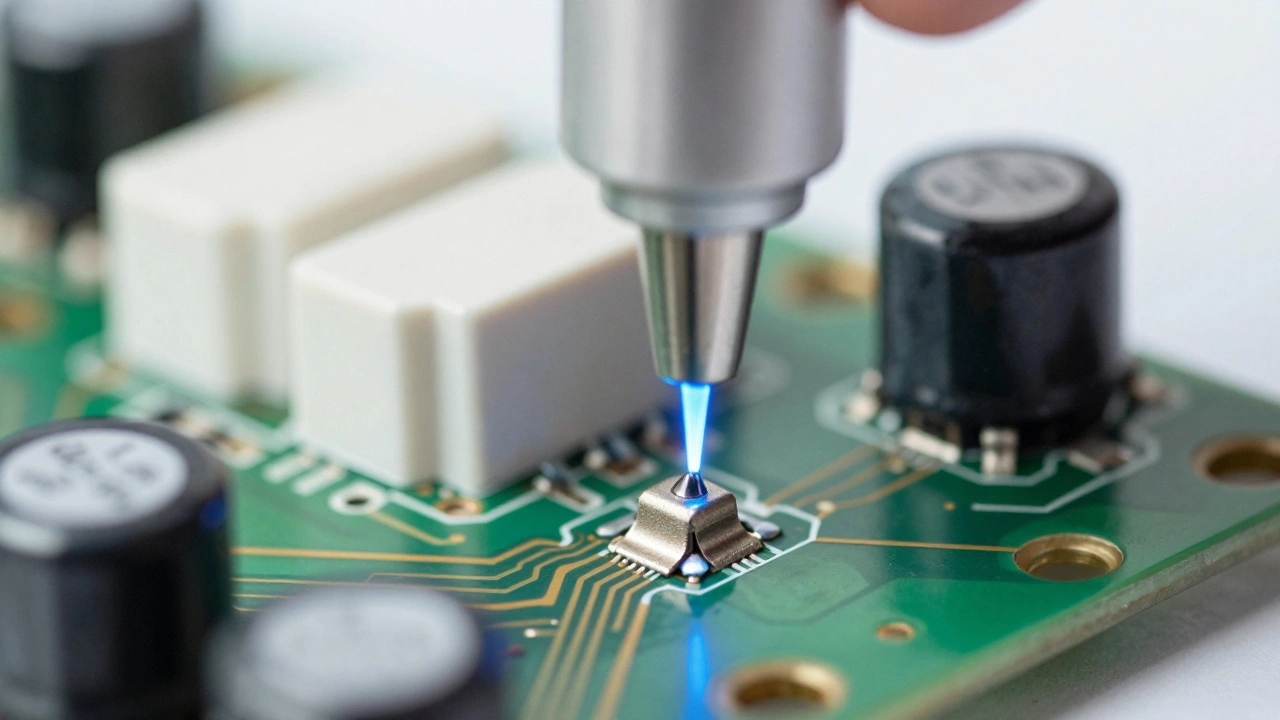
A tiny solder crack or a microscopic misalignment on a circuit board might seem like nothing, but in a car traveling at 70 mph, it can be the difference between a functioning brake system and a total failure. As vehicles transform into computers on wheels, the stakes for electronic component testing have shifted from simple quality checks to critical safety mandates. Whether it's a sensor for an autonomous parking system or the brain of an electric powertrain, the precision required today is staggering.
When we talk about automotive electronics, we aren't just talking about the radio. We are dealing with Electronic Control Units (ECUs), which are embedded systems that manage everything from engine timing to airbag deployment. Because these parts are safety-critical, they undergo a brutal gauntlet of tests before they ever touch a chassis. If you're wondering why modern cars are so complex to repair or why recalls happen, it often comes down to the invisible tolerances of these components.
The Manufacturing Shield: Catching Defects Early
Before a part even leaves the factory, it has to pass through several layers of automated scrutiny. Manual inspection is too slow and prone to human error for the volume of cars being built today. Instead, manufacturers rely on high-speed optical systems. For example, the Nikon NEXIV series uses automated video measurement to scan Printed Circuit Board Assemblies (PCBAs). These systems can detect features smaller than half a micron, ensuring that every single capacitor and resistor is exactly where it should be.
Beyond just looking at the board, factories use Automated Optical Inspection (AOI). This is basically a high-powered computer vision system that hunts for "tombstoning"-where a component partially lifts off the board during soldering-or missing solder paste. If a machine misses a tiny bridge of solder between two pins, it could cause a short circuit that fries an entire control module once the car is on the road.
For a deeper dive into the electrical integrity, companies use In-Circuit Testing (ICT). A great example is the Rohde & Schwarz CompactTSVP platform. This isn't just a multimeter; it's a PXI-based system that routes signals through a complex switch matrix to verify that the electrical paths are correct and that the components are functioning as intended before the board is encased in plastic and installed in a vehicle.
| Method | What it detects | Key Attribute | Best For |
|---|---|---|---|
| AOI | Missing parts, solder bridges | Visual speed | High-volume PCB check |
| ICT | Shorts, open circuits, wrong values | Electrical precision | ECU board validation |
| Video Measuring | Dimensional accuracy, tolerances | Sub-micron resolution | Complex geometry check |
Battle-Testing Against the Elements
A chip that works perfectly in a climate-controlled lab might fail miserably in a humid driveway in Florida or a freezing winter in Maine. This is why environmental stress testing is non-negotiable. Components are put through thermal cycling, where they are bounced between extreme heat and cold to see if the repeated expansion and contraction causes solder joints to crack.
Vibration testing is another huge hurdle. Cars shake. A lot. Engineers simulate years of road vibration to ensure that connectors don't wiggle loose and that heavy components don't snap off the board. Then there's humidity and ingress protection (IP) testing. If a module is mounted under the hood, it has to withstand salt spray, moisture, and dust without the internal circuitry corroding. A single drop of water in the wrong place can create a conductive path, leading to a "ghost" signal that might trigger a phantom braking event.
Electrical disturbances are also simulated. The LV 124 test series is the industry benchmark here. It puts components through 22 different scenarios, simulating power surges, drops, and noise in the electrical system. This ensures that when you start your car or turn on the AC, the sudden power draw doesn't crash your engine's computer.

The New Frontier: ADAS and Autonomous Systems
With the rise of Advanced Driver Assistance Systems (ADAS), the complexity has exploded. We are no longer just testing a circuit; we are testing a perception system. This involves Sensor Fusion, where the car must reconcile data from Lidar, Radar, and cameras simultaneously. If the radar says "stop" but the camera says "clear," the system needs a fail-safe logic that is tested to the nth degree.
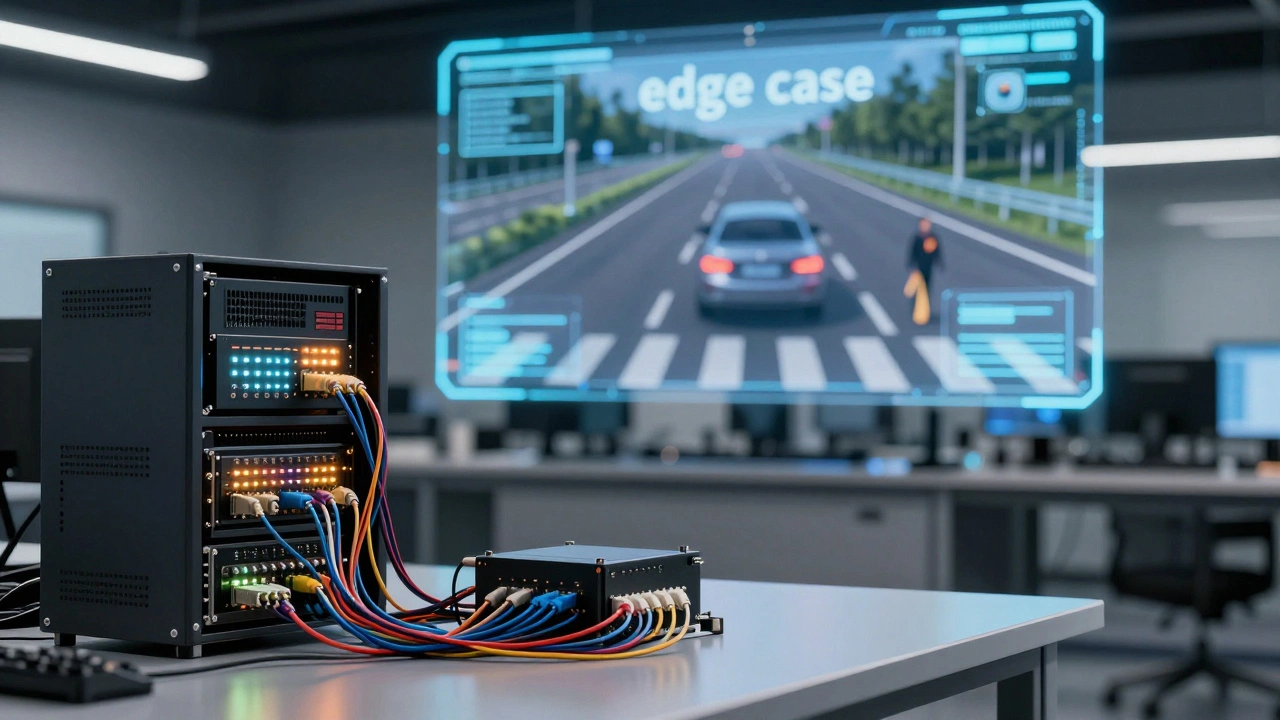
To test this without crashing real cars, engineers use Hardware-in-the-Loop (HiL) testing. This creates a real-time simulation where the ECU thinks it's driving on a highway, but it's actually plugged into a powerful computer that feeds it simulated sensor data. It allows developers to test "edge cases"-like a pedestrian stepping out from behind a parked car-thousands of times in a safe environment.
For electric vehicles (EVs), the focus shifts to high-voltage stability. Tools like the Keysight SL1800A emulate battery packs, simulating how a battery behaves under load. This is vital for ensuring the powertrain doesn't overheat or shut down during rapid acceleration.
The Shop Floor: Real-World Diagnostics
Once the car is on the road and eventually lands in a repair shop, the testing moves from the factory to the technician. The days of just "swapping parts and hoping for the best" are over. Modern diagnostic tools, such as the Snap-on ZEUS or TRITON series, provide guided component tests. These don't just give a generic error code; they provide a step-by-step map of where to put the probes and what the waveform should look like.
By comparing a live signal to a known-good sample waveform, a technician can tell if a sensor is actually dead or if the wiring harness has a break. This level of precision reduces the "guesswork" and prevents the costly mistake of replacing a perfectly good ECU when the real problem was just a corroded ground wire.
Playing by the Rules: International Standards
You can't just decide your own safety standards when building cars. There are global rules that keep us safe. The most critical is ISO 26262, which governs functional safety for electrical and electronic systems. It forces manufacturers to analyze every possible failure mode and build in redundancies. If one circuit fails, a secondary one must take over instantly.
Then there is electromagnetic compatibility (EMC). Standards like ISO 11452 ensure that your car's electronics aren't affected by external radio frequencies. Imagine if a nearby cell tower or a powerful radio station could accidentally trigger your windshield wipers or disable your power steering. EMC testing prevents that by ensuring components are properly shielded from interference across a wide frequency range.
What is the difference between AOI and ICT?
Automated Optical Inspection (AOI) is a visual check that uses cameras to find physical defects like missing components or bad solder. In-Circuit Testing (ICT) is an electrical check that uses probes to measure the actual electrical properties of the board to find shorts or wrong component values.
Why is ISO 26262 so important for car electronics?
ISO 26262 is the gold standard for functional safety. It ensures that if a component fails, the system responds in a way that doesn't put the driver or passengers in danger. It's essentially a blueprint for preventing catastrophic electronic failures.
What is "Hardware-in-the-Loop" testing?
HiL testing involves connecting a real electronic control unit (ECU) to a simulator that mimics the car's environment. This allows engineers to test how the software and hardware react to dangerous road scenarios without risking a real vehicle or driver.
How do technicians verify if an ECU is actually bad?
Instead of relying solely on OBD-II scanner codes, technicians use guided component tests and oscilloscopes to view live waveforms. By comparing these waveforms to manufacturer specifications, they can confirm if the ECU is processing signals correctly or if the fault lies in the wiring.
What happens during thermal cycling tests?
Components are repeatedly moved between extreme cold and extreme heat. This stresses the materials, forcing any weak solder joints or brittle plastics to fail in the lab rather than failing while the customer is driving in winter or summer.
What to Do Next
If you're a manufacturer, your first step is to map out your safety-critical components and ensure they align with ISO 26262 requirements. Investing in AOI and ICT early in the production line will save you millions in potential recall costs. For those in the service side, upgrading to guided diagnostic platforms is the best way to stop the "parts cannon" approach to repair.
If you're experiencing intermittent electronic glitches in your own vehicle, start by checking the battery and ground connections. Many "failed" electronic components are actually just victims of low voltage or poor grounding, which can be verified with a simple multimeter before you commit to an expensive module replacement.