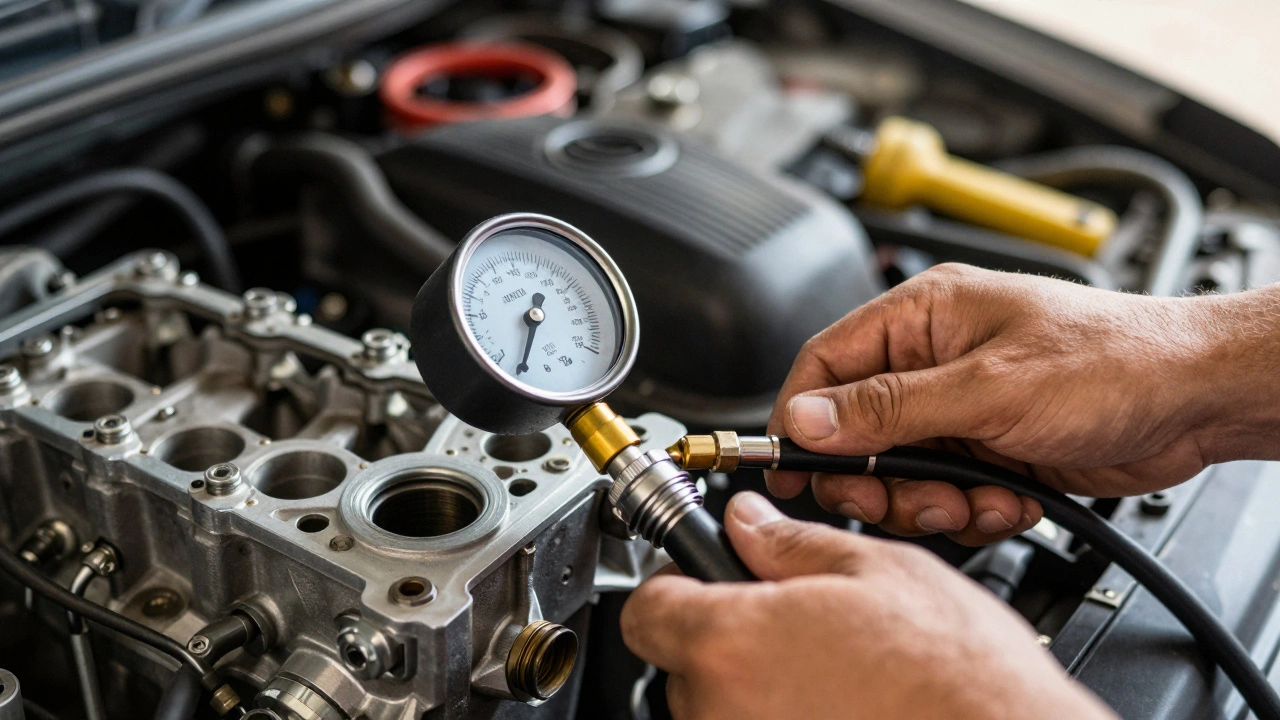
That rattling noise under the hood or that stubborn check engine light usually means one thing: your engine is struggling. Before you hand over thousands of dollars for a full rebuild, there is a simple, cheap test that tells you exactly what’s wrong inside. It’s called an engine compression test, which measures the pressure generated in each cylinder during the compression stroke to diagnose internal health. This test doesn’t require tearing down the engine. It gives you hard numbers about piston rings, valves, and head gaskets. If you know how to read those numbers, you can stop guessing and start fixing.
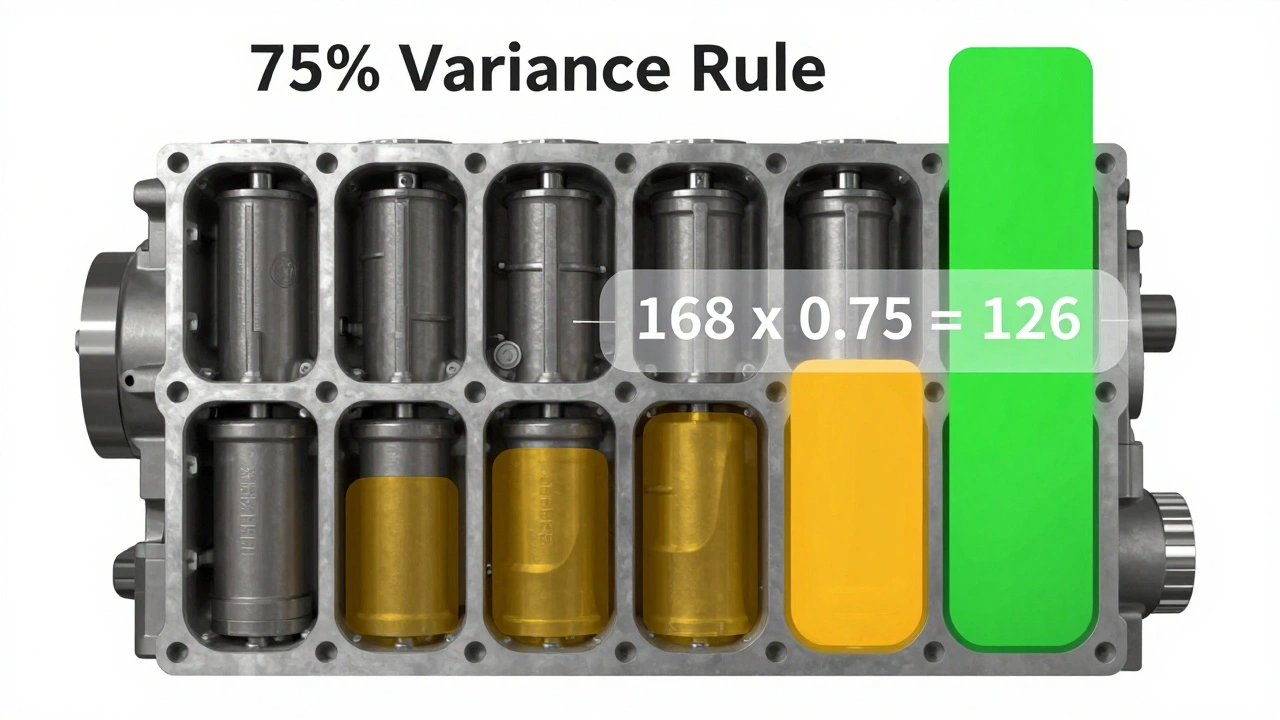
The Golden Rule: The 75% Variance Limit
When you look at the gauge after cranking the engine, don’t just stare at the absolute number. A reading of 160 psi might sound good, but it’s useless if another cylinder reads 100 psi. The most critical rule in interpreting these results is consistency across all cylinders. According to diagnostic standards from BlueDriver, no single cylinder should have a pressure reading lower than 75% of the highest reading recorded in the engine.
Let’s break that down with real numbers. Imagine you are testing a V6 engine. You crank it five times on each cylinder. Here are your results:
- Cylinder #1: 160 psi
- Cylinder #2: 128 psi
- Cylinder #3: 168 psi (The Highest)
- Cylinder #4: 154 psi
- Cylinder #5: 120 psi
- Cylinder #6: 159 psi
To find the minimum acceptable pressure, take the highest number (168 psi) and multiply it by 0.75. That gives you 126 psi. Any cylinder below 126 psi is failing. In this example, Cylinder #5 at 120 psi is clearly bad. Cylinder #2 at 128 psi is technically passing, but it’s dangerously close to the limit and likely worn. This relative comparison matters more than factory specs because every engine wears differently. Your goal isn’t perfection; it’s balance.
Why Factory Specs Often Lie
You might be tempted to look up the "factory specification" for your car’s compression online. While useful as a baseline, these numbers represent brand-new engines in ideal conditions. They rarely reflect reality for a vehicle with 100,000 miles on the odometer. Instead of relying solely on manual values, use a practical calculation if you can’t find specific data.
A reliable way to estimate expected pressure is multiplying the intake manifold pressure by the engine’s compression ratio. For instance, if your truck has a 9.9:1 compression ratio and the intake pressure is 17 psi, the theoretical cylinder pressure is roughly 170 psi (17 x 9.9). However, remember that actual readings will often be lower due to wear. The gap between your measured average and this calculated number tells you about general wear, but the variance between cylinders tells you about specific failures. Always prioritize the spread between high and low readings over hitting a perfect textbook number.
Getting Accurate Numbers: Temperature and Technique
A compression test is only as good as the preparation. Many DIYers get false results because they skip small details. First, ensure the engine is warm. Cold metal contracts slightly, and oil is thicker, both affecting pressure. Forum users on GTO UK reported seeing differences of up to 7 psi between a warm engine (142 psi) and a fully hot engine (149 psi). Run the car until the cooling fan kicks on, then shut it off and test immediately.
Second, disable the fuel and ignition systems. Remove all spark plugs to reduce resistance. Disconnect the coil packs or spark plug wires, and unplug the fuel injector wiring harnesses. You want the engine to crank freely without firing. If the engine fires while you’re testing, the pressure spikes will ruin your data.
Finally, crank long enough. Don’t just give it two turns. You need 3 to 5 full revolutions, or until the needle on the gauge stops ratcheting upward. AMSOIL technical guidance recommends cranking 5-10 times to ensure the reading stabilizes. If you stop too early, you’ll record artificially low numbers, leading to unnecessary panic.
Diagnosing the Problem: What the Numbers Mean
Once you have your stable readings, the pattern reveals the culprit. Low compression generally points to four main issues: worn piston rings, leaking valves, a blown head gasket, or timing errors. Here is how to distinguish them based on the initial dry test results.
| Reading Pattern | Likely Cause | Action Required |
|---|---|---|
| All cylinders low (<100 psi) | Incorrect Engine Timing | Check timing belt/chain alignment |
| One or more cylinders significantly low | Valves, Rings, or Head Gasket | Perform Wet Test (see below) |
| Adjacent cylinders low (e.g., #1 and #2) | Blown Head Gasket | Replace head gasket |
| No pressure at all | Catastrophic Failure (Broken Piston) | Engine teardown required |
| Abnormally high pressure | Carbon Buildup | Clean combustion chamber |
The Wet Test: Pinpointing Rings vs. Valves
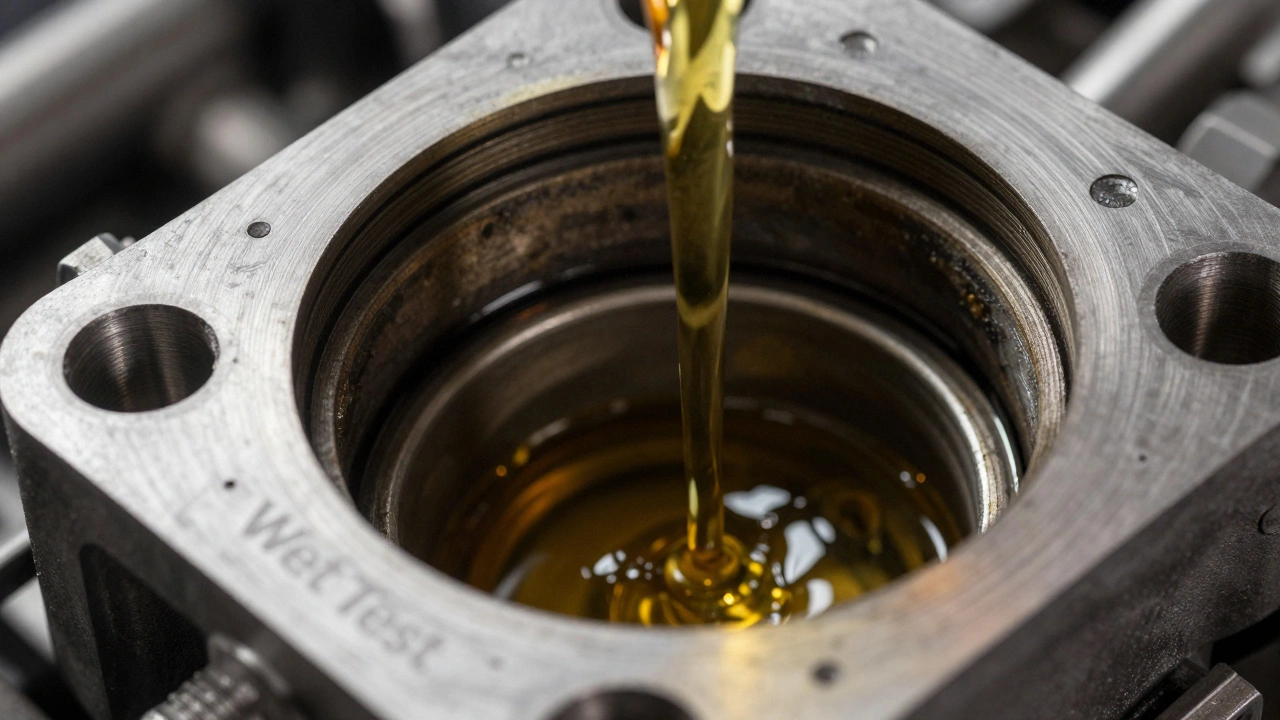
If a cylinder reads low, you need to know if the leak is coming from the top (valves) or the bottom (piston rings). This is where the "wet test" comes in. Take a tablespoon of motor oil and squirt it directly into the spark plug hole of the low-compression cylinder. Reinstall the compression gauge and crank the engine again for the same number of revolutions.
Watch the needle closely. The oil acts as a temporary sealant for the piston rings. If the pressure jumps up significantly-say, from 120 psi to 150 psi-the piston rings are worn and allowing compression to escape into the crankcase (blowby). If the pressure stays low despite the oil, the problem is not the rings. It is likely leaking intake or exhaust valves, or a carbon-clogged valve seat. This simple step saves you from replacing expensive components unnecessarily.
Interpreting Edge Cases and Older Engines
Not every story ends with a clear failure. Some older engines behave strangely. One user documented a 19-year-old engine where all cylinders were within 5% of each other (around 205-210 psi). Despite being old, the engine was healthy because the variance was minimal. Consistency is key.
Be wary of "creeping" compression. Sometimes, a cylinder starts low (100 psi) but climbs 5-10 psi with each crank until it matches the others after six or seven revolutions. This gradual increase can be misleading. It often indicates broken ring lands or severe wear that temporarily seals itself under pressure. Even if it eventually reaches normal numbers, the engine is compromised. Treat creeping compression as a warning sign of impending failure, not a clean bill of health.
When to Stop Testing
If all cylinders are within the 75% range and the engine runs smoothly, your compression is fine. The issue lies elsewhere-perhaps in sensors, fuel delivery, or electrical systems. If multiple adjacent cylinders are low, suspect the head gasket first. If all cylinders are equally low, check your timing before assuming total engine death. Regular testing every 30,000 to 50,000 miles on aging vehicles helps track degradation trends, turning guesswork into planned maintenance.
What is a good compression reading for a standard car?
A "good" reading depends on the engine design, but typically ranges between 140 and 180 psi for modern gasoline engines. More importantly, all cylinders should be within 10% of each other. If one cylinder is 160 psi and another is 140 psi, the engine is likely fine. If one is 160 psi and another is 100 psi, you have a problem.
Can I perform a compression test on a diesel engine?
Yes, but you need a specialized diesel compression gauge capable of handling much higher pressures (often 300-500 psi). The procedure is similar, but you must remove glow plugs or injectors instead of spark plugs. Never use a standard gasoline compression gauge on a diesel engine; it will break.
Why do my compression readings vary so much between tests?
Inconsistencies usually come from engine temperature or cranking speed. Ensure the engine is at operating temperature for every test. Also, make sure someone else cranks the engine via the ignition switch rather than using a starter motor button, which can cause uneven rotation speeds. Keep the throttle open during the test to allow maximum airflow.
What does it mean if one cylinder has zero compression?
Zero compression indicates catastrophic failure. This could mean a broken piston, a cracked cylinder block, or a completely detached timing component preventing the valves from opening/closing correctly. The engine will not run, and immediate professional repair is required.
How does carbon buildup affect compression readings?
Heavy carbon buildup in the combustion chamber reduces the volume available for air/fuel mixture, effectively increasing the compression ratio. This can lead to abnormally high pressure readings compared to other cylinders. While high compression sounds good, excessive carbon causes pre-ignition and knocking, damaging the engine over time.