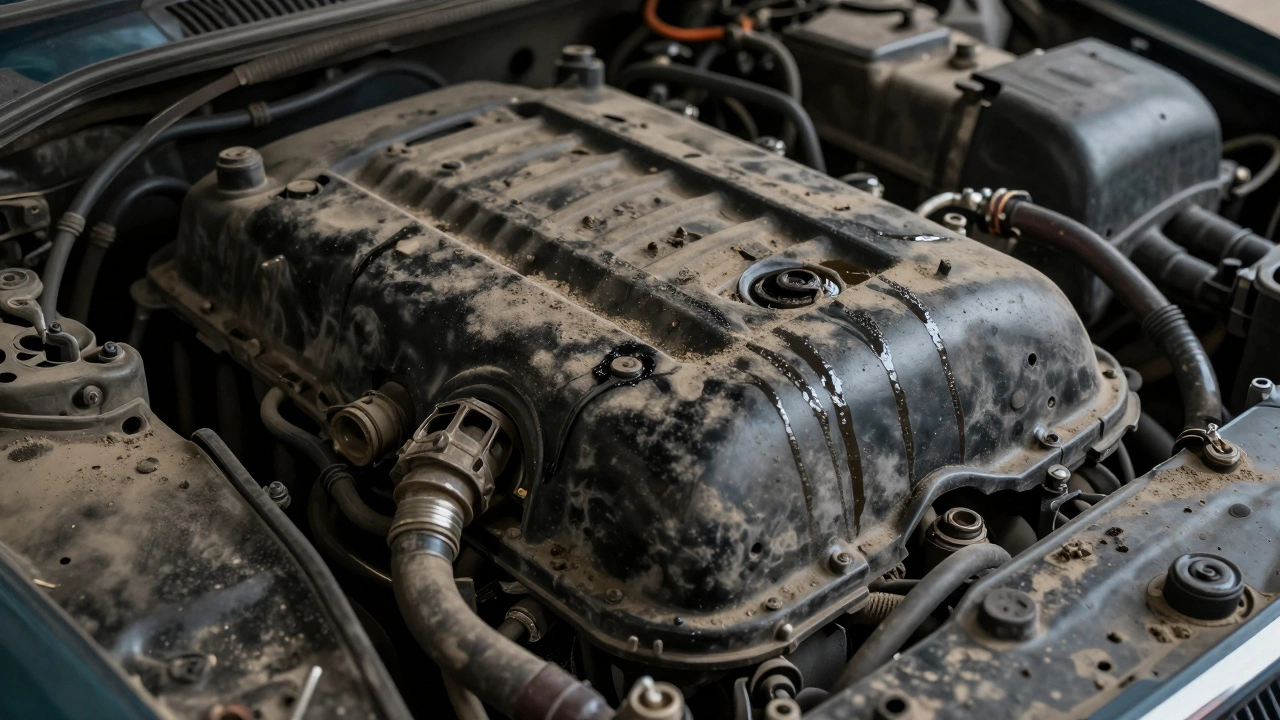
Most drivers think cleaning their car means washing the exterior, vacuuming the seats, and wiping down the dashboard. But what’s under the hood? If you haven’t looked at your engine cover in months-or years-you’re missing one of the most important parts of car care. A dirty engine cover isn’t just ugly. It’s a hidden threat to your car’s performance, safety, and value.
Why Engine Cover Cleaning Isn’t Just About Looks
People often skip engine cover cleaning because it doesn’t affect how the car drives on the surface. But dirt, grease, and grime build up over time like rust on a bike chain. That layer isn’t harmless. It traps heat. And heat is the enemy of engine parts.
When oil, dust, and road salt stick to the engine cover and surrounding components, they act like insulation. Your engine runs hotter than it should. That extra heat stresses belts, hoses, and seals. These parts aren’t designed to last under constant high temperatures. A belt that should last 100,000 miles might fail at 60,000 if it’s constantly overheating. That’s not bad luck. That’s neglect.
And it gets worse. Grime hides problems. A small oil leak? You won’t see it until it’s soaked into the cover and dripping onto the ground. A cracked hose? Buried under layers of grease. A corroded electrical connector? You won’t know until your car stalls on the highway. Cleaning the engine cover gives you a clear view. You spot leaks before they become repairs. You catch corrosion before it kills your alternator or starter.
How a Dirty Engine Bay Affects Fuel Efficiency
Think your car’s fuel economy is just about the air filter or spark plugs? Think again. The engine bay itself plays a role. When dirt and grease coat the intake manifold, sensors, and air ducts, airflow gets restricted. The engine has to work harder to pull in the air it needs for combustion. That means more fuel burned for less power.
Studies by automotive engineers show that a clean engine bay can improve fuel efficiency by 2% to 5%. That might sound small, but over a year, that’s 30 to 75 extra miles per tank for the average driver. Multiply that by 12,000 miles a year, and you’re saving $100-$250 in fuel costs. Not bad for a two-hour cleaning job.
Plus, when debris builds up around sensors-like the mass airflow sensor or throttle body-it sends false readings to the engine computer. The car thinks it needs more fuel than it does. That’s wasted money. Cleaning those surfaces restores accurate sensor function. It’s not magic. It’s physics.
Corrosion and Fire Risks You Can’t Ignore
Moisture + dirt + heat = corrosion. That’s a formula for failure. Electrical connections under the hood are especially vulnerable. Battery terminals, fuse boxes, and wiring harnesses can all corrode when covered in grime. You might not notice it until your car won’t start on a cold morning. By then, the damage is done-and replacing a corroded wiring harness costs $800 or more.
And here’s something most people never think about: fire risk. Leaves, paper, and lint get sucked into the engine bay. Add oil drips and high heat from the exhaust manifold, and you’ve got a tinderbox. There are documented cases of engine fires caused by debris buildup. Not because of a mechanical failure. Just because someone never cleaned under the hood.
A clean engine bay removes those fuels. No debris. No grease buildup. No ignition source. That’s not a luxury. It’s a safety upgrade.
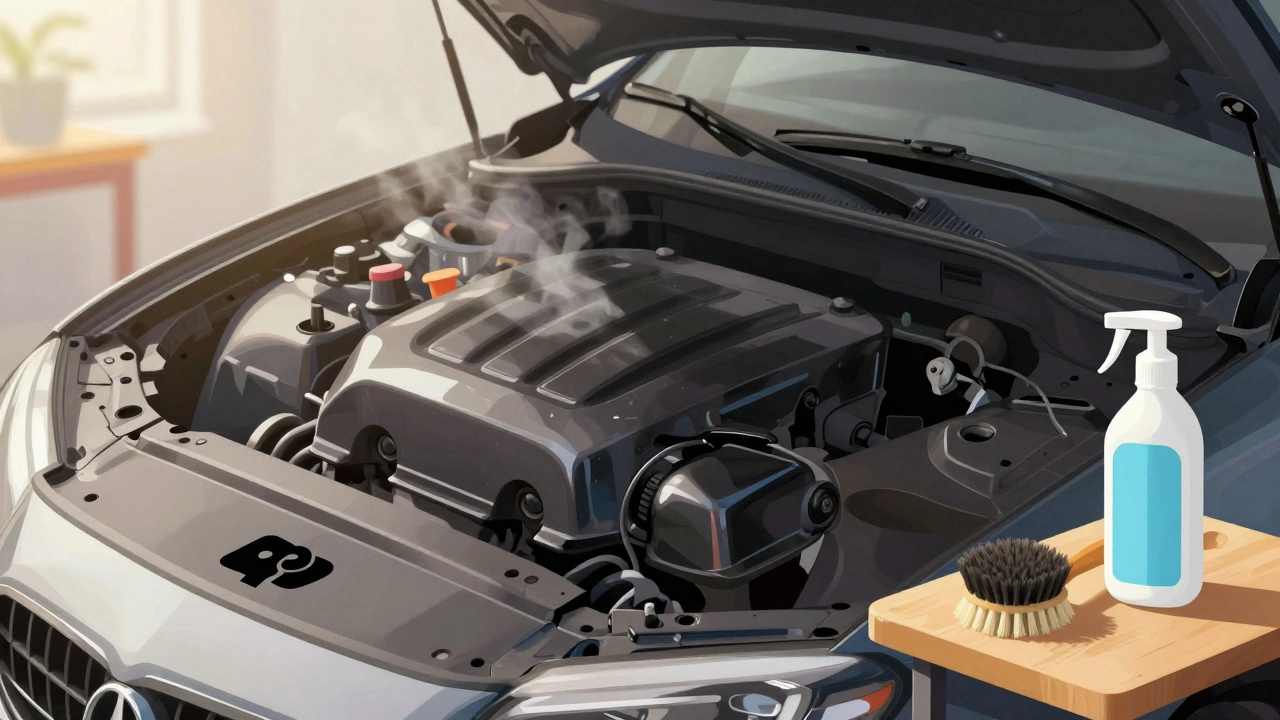
How to Clean Your Engine Cover (Step-by-Step)
You don’t need a garage or a degree in engineering. With the right tools and a little patience, you can clean your engine cover yourself. Here’s how:
- Let the engine cool. Never clean a hot engine. You risk warping parts or burning yourself. Wait at least an hour after driving.
- Protect the essentials. Cover the battery terminals, alternator, air intake, and any exposed electrical connectors with plastic bags or waterproof covers. Tape the edges to keep them sealed.
- Apply an engine-safe degreaser. Use a product labeled for engine cleaning-like Gunk Engine Brite or Chemical Guys GRIP. Spray it on the engine cover and surrounding surfaces. Avoid spraying directly on sensors or wiring.
- Let it sit. Give the degreaser 5-10 minutes to break down grease. Don’t scrub yet. Let it do the work.
- Scrub gently. Use a soft-bristle brush (a toothbrush works for tight spots) to loosen dirt. Don’t use metal brushes or high-pressure sprayers. They can damage plastic and wiring.
- Rinse with low pressure. Use a garden hose with a gentle spray. Don’t point it at electrical parts. Let the water wash away the grime. No pressure washer. Ever.
- Dry thoroughly. Use clean towels or microfiber cloths to dry everything. Moisture left behind causes rust and corrosion. You can also let it air-dry for 30 minutes with the hood open.
- Apply a protectant (optional). A silicone-based engine shine spray helps repel future dirt and gives it a factory-fresh look. Skip the glossy sprays-they attract dust.
How Often Should You Clean It?
There’s no one-size-fits-all answer. But here’s a simple rule: clean it every 3 to 6 months. If you live in a snowy area where roads are salted, clean it every 3 months. If you’re in a dry, dusty region, every 4 months. Mild climate? Every 6 months is fine.
Here’s a pro tip: do it during your oil change. Most people go in for oil changes every 5,000 to 7,500 miles. That’s about every 4 to 6 months. Make it part of the routine. Pop the hood. Look around. If it looks grimy, clean it. If it looks okay, just wipe off any new dust.
Skipping this step every other time? You’re asking for trouble. Grime builds faster than you think.
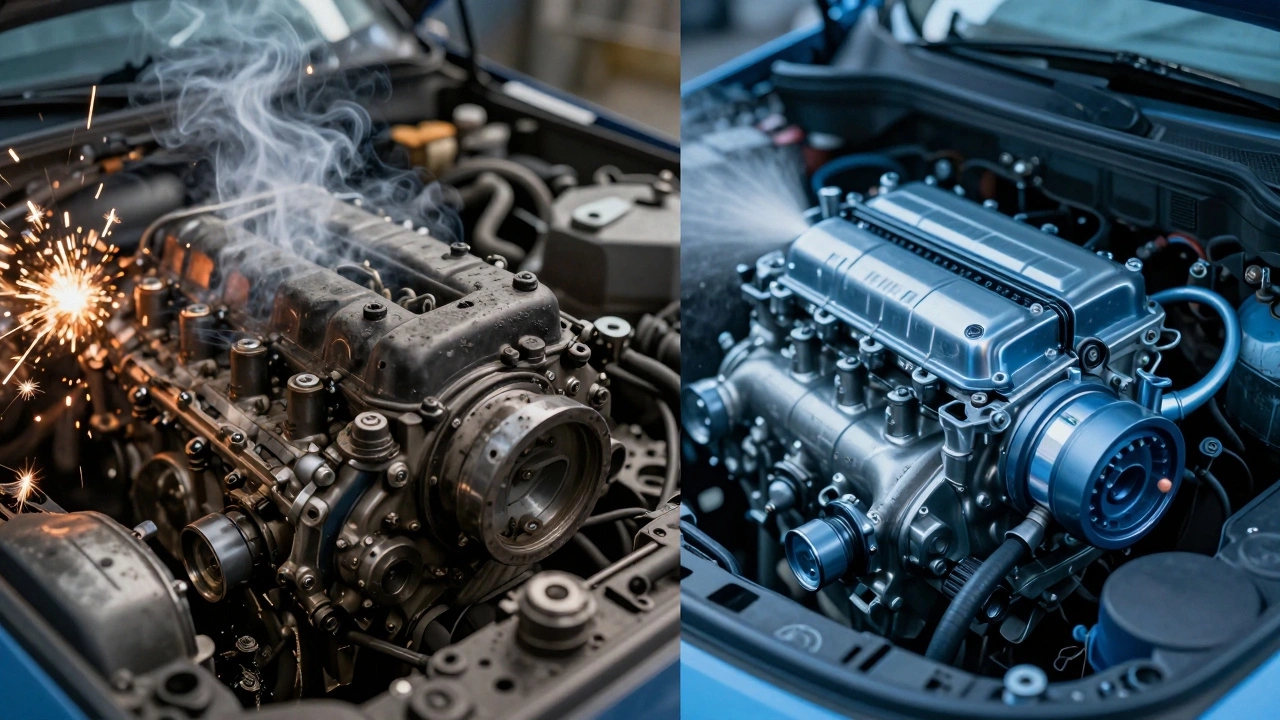
Professional Cleaning vs. DIY
Professional engine bay cleaning costs between $100 and $300. It sounds steep until you realize what’s included: steam cleaning, clay treatment, corrosion inhibitors, and protective coatings. They use industrial-grade tools you don’t have at home.
But here’s the truth: for most cars, DIY works just fine. You don’t need steam cleaning unless your engine is coated in tar-like grease from years of neglect. For regular maintenance, a degreaser, brush, and hose are all you need.
Only go professional if:
- Your engine is covered in thick, baked-on grease
- You’re selling the car and want maximum resale value
- You’re not comfortable working around electrical components
Otherwise, save your money. You’re not saving time-you’re saving money.
How Cleaning Boosts Resale Value
When you sell a car, buyers look at the odometer. They check the tires. They test the brakes. But they also open the hood.
A clean engine bay says: "This owner took care of the car." A greasy, grimy engine bay says: "I don’t know what’s wrong with it, but I’m sure it’s expensive."
Auto dealers and private sellers report that clean engine bays increase buyer confidence. Buyers are more likely to make an offer on the spot. They’re also less likely to haggle. In fact, studies from Kelley Blue Book show that vehicles with clean engine compartments sell for 5% to 10% more than identical models with dirty ones.
That’s $1,000 to $3,000 extra on a $20,000 car. And it takes two hours to earn that.
Signs You Need a Cleaning Now
Don’t wait for a checklist. Watch for these red flags:
- You can’t see the color of the engine cover anymore-it’s black or brown
- Oil streaks are running down the sides
- Your fuel economy has dropped suddenly
- Your car struggles to start in damp weather
- A mechanic mentioned "corrosion" or "debris buildup" during a routine check
If any of these sound familiar, don’t wait. Clean it now. The longer you wait, the harder-and more expensive-it becomes to fix.