
Driving in Dubai is a different beast than driving in Seattle or London. The sun doesn't just shine here; it hammers down on your hood, pushing ambient temperatures past 45°C (113°F) during the summer months. For your engine, this isn't just uncomfortable-it’s a stress test. If you pick the wrong engine oil viscosity, you risk thinning out your lubricant film, leading to increased friction, higher fuel consumption, and premature wear. This guide cuts through the marketing noise to tell you exactly which grade keeps your engine protected when the mercury rises.
Why Standard Oils Fail in Extreme Heat
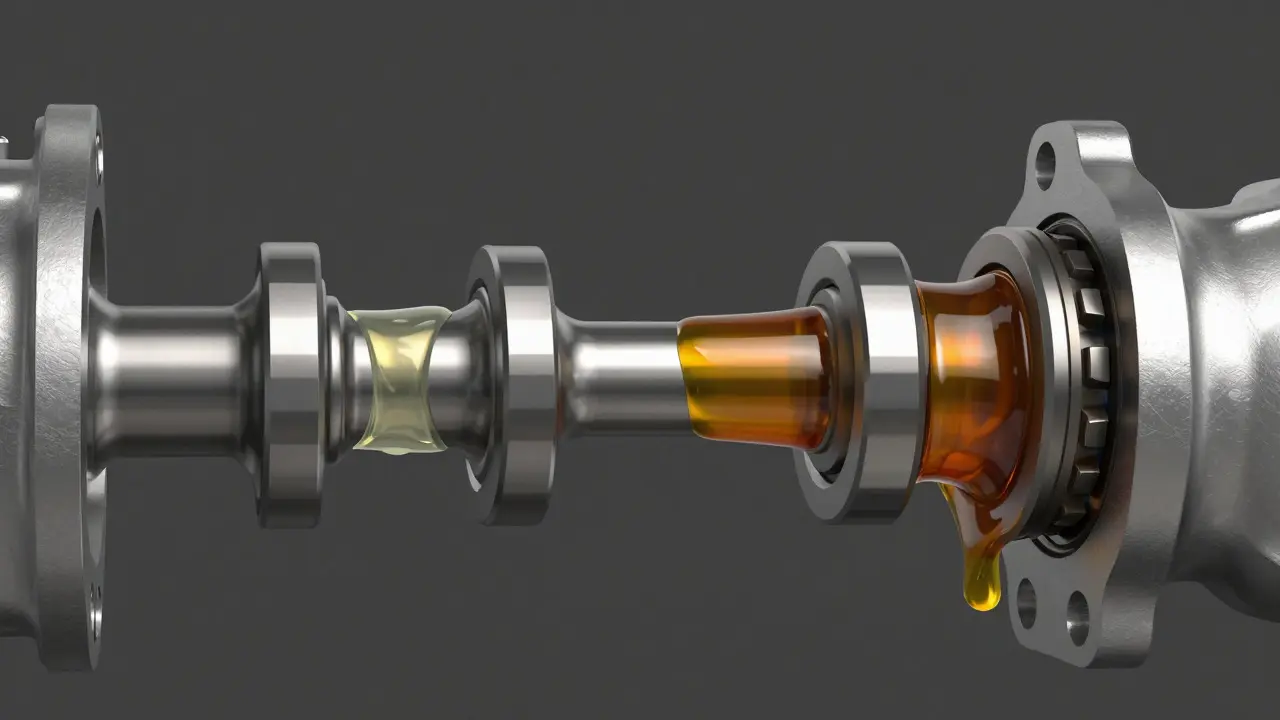
Most drivers stick with what they had back home, often defaulting to standard mineral oils or older synthetic blends. But High-temperature low-shear (HTLS) stability is the critical metric that separates an oil that survives Dubai summers from one that breaks down. When oil gets too hot, its molecules can shear apart, reducing its thickness. If the oil becomes too thin, it stops forming a robust barrier between moving metal parts like the crankshaft and bearings.
In a city like Dubai, where traffic jams are common and engines sit at idle for extended periods, the oil temperature can spike even if the air temperature is moderate. This is why relying solely on the "cold" number in a viscosity rating (like the '5' in 5W-30) is a mistake. You need an oil that maintains its body at operating temperatures, typically around 95°C to 110°C. Full synthetic oils generally outperform conventional ones here because their molecular structure is more uniform and resistant to thermal breakdown.
Understanding SAE Viscosity Ratings
The Society of Automotive Engineers (SAE) uses a two-part numbering system to classify oil thickness. The first number indicates how the oil flows in cold conditions, while the second number describes its thickness at operating temperature. In Dubai, the second number is far more important than the first.
- The First Number (e.g., 5W, 10W): This matters less in a desert climate. A '5W' flows easily at -30°C, which is irrelevant in Dubai. However, a lower first number often correlates with better overall fluidity and faster startup protection, which is still beneficial.
- The Second Number (e.g., 30, 40, 50): This is the heat resistance score. A '30' is thinner than a '40', which is thinner than a '50'. Thinner oils flow better through tight engine tolerances but offer less protection under extreme load. Thicker oils provide a stronger cushion but can increase drag and fuel consumption.
For most modern vehicles manufactured after 2010, manufacturers design engines with tighter clearances. This means they often require lighter oils (like 0W-20 or 5W-30) for optimal fuel economy. Using a thicker oil than specified can actually cause damage by creating excessive pressure in the oil pump and clogging the oil filter bypass valve.
Best Viscosity Grades for Dubai Conditions
So, what should you actually put in your tank? The answer depends heavily on your vehicle's age and manufacturer specification, but there are clear winners for the Gulf region.
| Vehicle Type / Era | Recommended Viscosity | Oil Type | Key Reason |
|---|---|---|---|
| Modern Cars (2015+) | 0W-20 or 5W-30 | Full Synthetic | Optimized for fuel efficiency and tight engine tolerances; handles heat via additive packages rather than base thickness. |
| Mid-Age Cars (2005-2014) | 5W-40 | Full Synthetic | Balanced protection; provides a slightly thicker film for engines with normal wear while maintaining good flow. |
| Older/High-Mileage Cars (Pre-2005) | 10W-40 or 15W-40 | Synthetic Blend or Conventional | Thicker oil helps seal gaps in worn piston rings and reduces oil consumption in high-heat environments. |
| Heavy-Duty Trucks/Vans | 15W-40 or 20W-50 | Conventional or Synthetic Blend | Requires heavy-duty protection for diesel engines under constant load and high thermal stress. |
Notice that 5W-40 appears as a sweet spot for many mid-range vehicles. It offers enough body to handle the intense heat without being so thick that it strains the oil pump. For newer cars, don't be afraid of 0W-20. Modern full synthetics are engineered with advanced detergents and anti-wear additives that keep the oil effective even at very low viscosities. The key is ensuring the oil meets the correct API (American Petroleum Institute) and ACEA (European Automobile Manufacturers Association) standards.
The Role of API and ACEA Standards
Viscosity alone doesn't tell the whole story. Two oils can both be 5W-30, but one might fail in Dubai while the other thrives. This comes down to the performance standards printed on the bottle.
- API SN or SP: Look for these ratings on gasoline engines. API SP is the latest standard, offering improved protection against low-speed pre-ignition (LSPI), which is relevant for turbocharged engines common in the UAE.
- ACEA C2/C3: If you drive a European car (BMW, Mercedes, Audi), check for ACEA certification. These standards ensure the oil is compatible with catalytic converters and long drain intervals.
- JASO MA2: Crucial if you ride a motorcycle. Motorcycle engines use oil for transmission lubrication as well, requiring specific friction modifiers that car oils lack.
Always prioritize the manufacturer's recommended standard over the viscosity number if they conflict. For example, if your owner's manual says "Use only API SP 5W-30," do not substitute a cheaper 10W-40 just because it sounds "heavier" for the heat. The chemistry matters more than the thickness in modern precision-engineered blocks.
Common Mistakes to Avoid
Many drivers make intuitive errors when dealing with heat. Here are the top three traps to avoid:
- Going Too Thick: Assuming a 20W-50 will protect a modern sedan better than a 5W-30. This often leads to poor fuel economy, sluggish oil circulation at startup, and potential sludge buildup due to incomplete combustion of excess oil.
- Ignoring Drain Intervals: In extreme heat, oil degrades faster. While a full synthetic might last 10,000 km in cooler climates, in Dubai, sticking to 7,500-8,000 km or every 6 months is safer. Check the oil level monthly; evaporation and consumption are higher in the heat.
- Mixing Brands/Types: While mixing oils isn't fatal, it dilutes the additive package. If you switch from a full synthetic to a conventional blend, you lose the thermal stability benefits. Always flush and refill with a consistent type for best results.
Practical Tips for Maintenance in the UAE
To get the most out of your oil choice, integrate these habits into your routine:
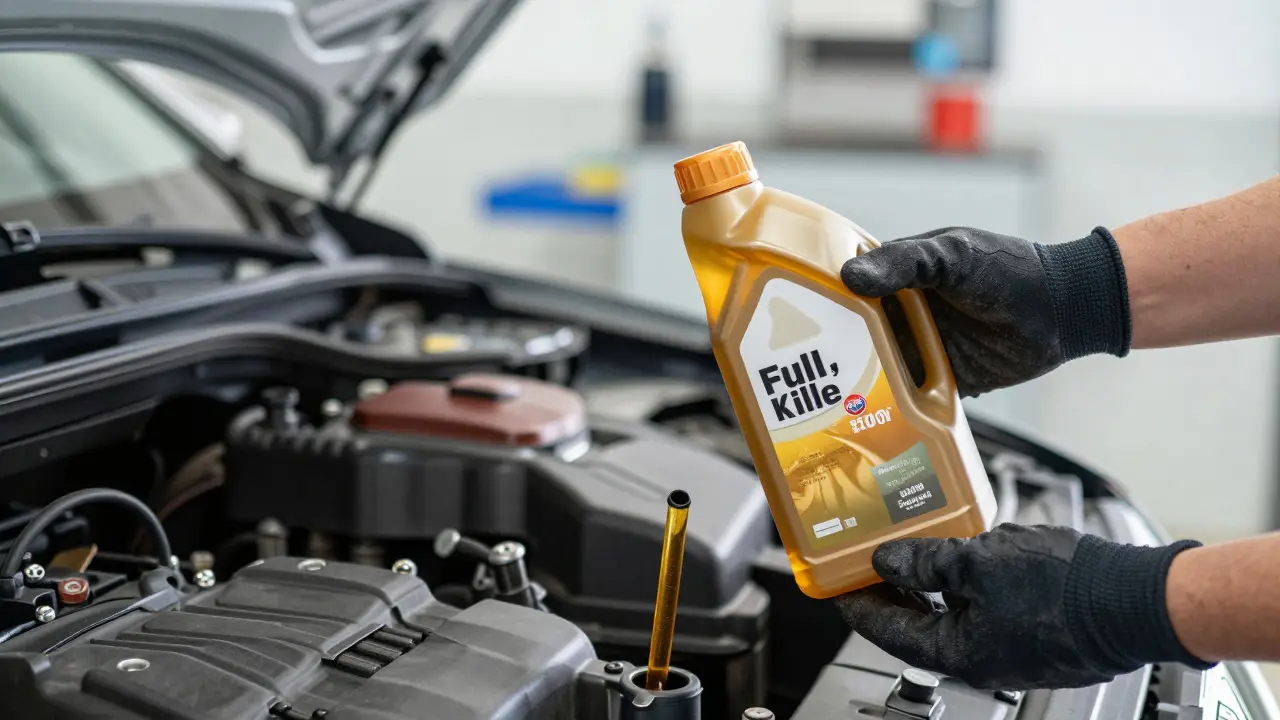
- Check Levels in the Morning: Before starting the engine, check the dipstick. Hot oil drains back into the sump unevenly, giving false readings. Cold checks are accurate.
- Look for Color Changes: Fresh oil is amber. Used oil turns dark brown or black. In Dubai, if your oil looks burnt or smells acrid before the scheduled change, shorten the interval. This indicates thermal breakdown.
- Use Genuine Filters: A cheap oil filter may collapse or leak under high thermal expansion. Pair your premium oil with a quality filter to ensure clean lubrication.
Frequently Asked Questions
Is 5W-30 safe for Dubai summers?
Yes, provided it is a full synthetic oil meeting API SP or ACEA C3 standards. Modern 5W-30 formulations have excellent HTLS stability and are designed to withstand sustained temperatures above 45°C ambient.
Should I switch to 10W-40 if my car is getting old?
Only if your manufacturer allows it or if you are experiencing oil consumption. If your car has over 150,000 km and burns a little oil, a 10W-40 full synthetic can help reduce consumption by providing a thicker film over worn seals.
What is the difference between full synthetic and semi-synthetic in heat?
Full synthetic oils have a more uniform molecular structure, making them more resistant to oxidation and shear at high temperatures. Semi-synthetics contain some mineral base oil, which degrades faster, potentially shortening the oil's effective life in Dubai's climate.
How often should I change my oil in Dubai?
For full synthetic oils, aim for every 8,000 to 10,000 km or 6 months, whichever comes first. For conventional or blend oils, reduce this to every 5,000 to 7,500 km or 3-4 months due to faster thermal degradation.
Does using a thicker oil improve fuel economy in the heat?
No, it usually does the opposite. Thicker oils create more internal drag, forcing the engine to work harder. In modern cars, lighter oils like 0W-20 or 5W-30 maximize fuel efficiency while still providing adequate protection thanks to advanced additive technology.