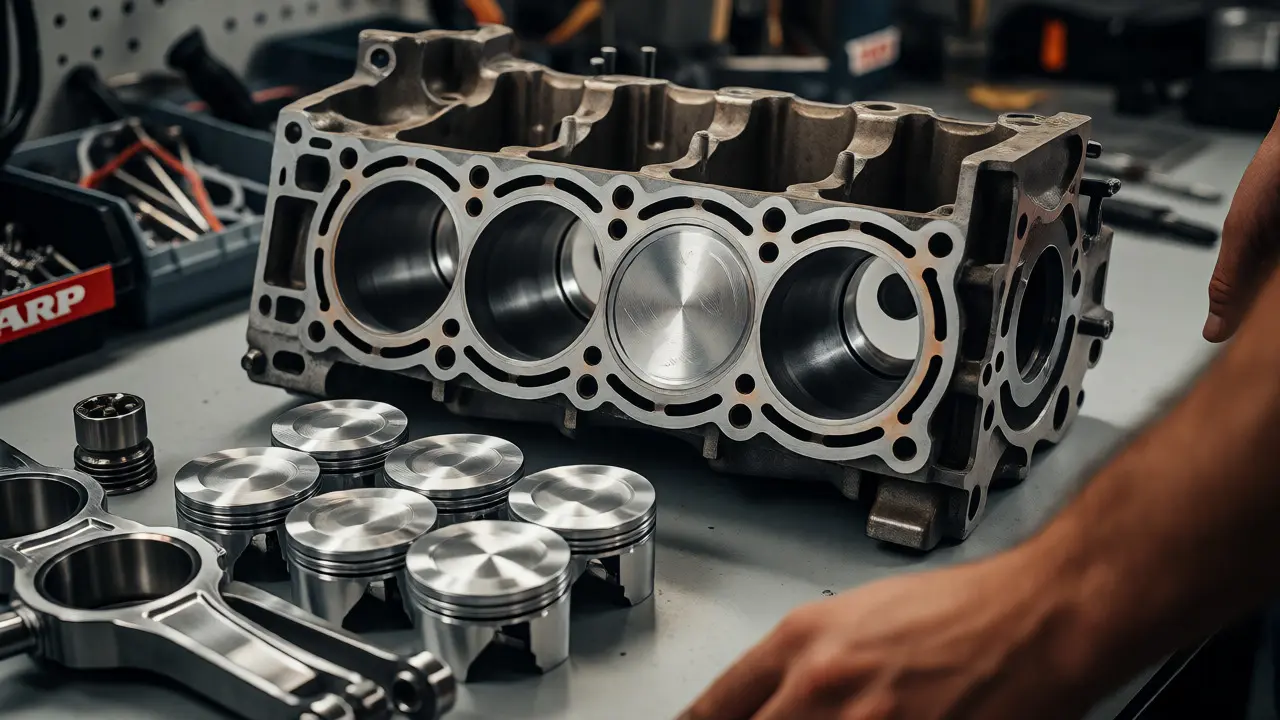
Throwing a turbo on a stock engine is like putting racing tires on a shopping cart. It might go faster for a split second before the wheels fall off. If you are serious about speed, reliability, and power that lasts beyond a single track day, you need an engine rebuild integrated with performance modifications designed to handle increased stress. This isn't just about fixing worn parts; it's about engineering a stronger foundation.
Most people think of a rebuild as a return to factory specs. But in the performance world, a rebuild is your blank canvas. You get to decide exactly how much air, fuel, and spark your engine consumes. The goal? To squeeze every ounce of potential from your block while ensuring it doesn't self-destruct under pressure. Here is how you turn a tired motor into a beast without breaking the bank or your patience.
Why Stock Engines Hit Their Limit
Factory engines are built for compromise. They need to run on cheap gas, meet emissions standards, and last 150,000 miles with minimal maintenance. That means conservative compression ratios, restrictive intake manifolds, and camshafts timed for idle smoothness rather than top-end power. When you start adding boost or high-RPM revs, these compromises become bottlenecks.
Consider the connecting rods. In many mass-produced cars, they are cast iron or powdered metal-cheap and sufficient for daily driving but prone to snapping when pushed hard. By rebuilding, you replace these weak links with forged steel components. You aren't just repairing; you are upgrading the structural integrity of the entire rotating assembly. This shift transforms the engine from a fragile consumer product into a robust performance machine.
The Core Components: What Actually Gets Changed
A complete overhaul goes far beyond swapping oil and filters. You are tearing the engine down to its bare block. Let’s look at the critical upgrades that define a performance rebuild versus a standard repair.
| Component | Stock Spec | Performance Upgrade | Benefit |
|---|---|---|---|
| Pistons | Hypereutectic Aluminum | Forged Aluminum (e.g., Wiseco) | Handles higher boost and RPM without cracking |
| Rings | Standard tension | Low-tension, thin-profile | Reduces friction, improves seal at high RPM |
| Camshaft | Idle-friendly profile | Aggressive lift/duration | Increases airflow and top-end horsepower |
| Bearings | Tri-metal | Bimetal or polymer-coated | Better heat dissipation and durability |
| Head Bolts | Torque-to-yield | ARP Studs/Bolts | Prevents head gasket failure under boost |
Notice the pattern? Every upgrade targets a specific weakness. Forged pistons resist detonation better than cast ones. Low-tension rings reduce parasitic loss, freeing up horsepower that would otherwise be wasted fighting internal friction. These aren't optional extras if you plan to make more than 20% over stock power.
Head Work: Where Airflow Becomes Power
You can have the strongest bottom end in the world, but if your cylinder heads choke the airflow, you’re wasting money. Head work is often where the biggest gains hide. It involves porting and polishing the intake and exhaust runners to remove rough casting marks that create turbulence.
Think of it like smoothing out a bumpy road. A rough surface slows down traffic; a smooth one lets it flow freely. Professional porting can add 10-15% to peak horsepower numbers on naturally aspirated engines. For forced induction setups, it helps the turbo spool faster by reducing backpressure.
Valve size matters too. Bigger valves allow more air and fuel into the combustion chamber. However, you can’t just slap them in. Larger valves require bigger ports, which might weaken the valve seat area. This is why a skilled machinist is non-negotiable. They ensure the valve seats are properly angled and sealed, preventing coolant leaks or hot spots that could melt a piston crown.
Choosing the Right Camshaft Profile
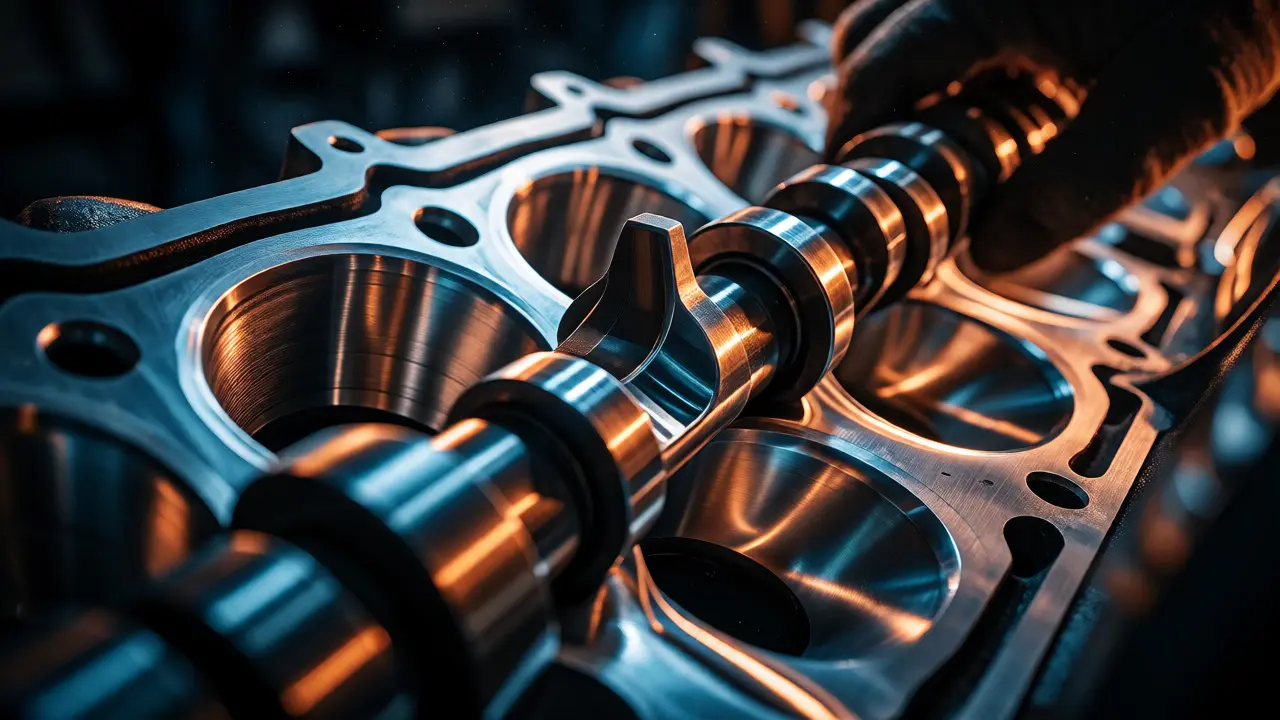
The camshaft is the brain of your engine’s breathing. It dictates when valves open and close. Changing it changes the engine’s personality entirely. Do you want aggressive lope at idle and massive top-end pull? Or do you need streetable manners with improved mid-range torque?
Here is a quick heuristic for choosing:
- Daily Driver + Track Weekend: Look for a mild grind cam with duration around 268/272 degrees. It keeps vacuum high enough for power brakes and transmission shifting.
- Street/Strip Hybrid: Go for 274/280 degrees. Expect a noticeable idle rumble and a slight dip in low-end torque, but big gains above 4,000 RPM.
- Pure Race: Durations exceeding 290 degrees. These cams sacrifice all low-end response for maximum airflow at high RPM. They require a stall converter and aggressive tuning.
Remember, a bigger cam isn’t always better. If you pair an aggressive cam with a stock intake manifold, you’ll starve the engine at lower RPMs, making it feel sluggish until it hits the "power band." Balance is key.
Bottom End Strength: Crank, Rods, and Bearings
If you are boosting your engine, the crankshaft takes the brunt of the force. Most stock cranks are fine for moderate boost (up to 15 psi), but beyond that, you risk fatigue cracks. Many enthusiasts opt for a forged steel crankshaft during the rebuild. It costs more upfront but saves you from catastrophic failure later.
Connecting rods connect the pistons to the crank. Stock rods often use small bolts that stretch under high load. Upgrading to H-beam rods with ARP bolts ensures they won’t snap when you hit the redline repeatedly. The difference between a bent rod and a thrown rod is usually whether you walk away or need a new engine block.
Bearings deserve attention too. High-performance builds often use thinner bearings to maintain oil clearance as the crank spins faster. Thinner bearings dissipate heat better because there is less material insulating the journal from the oil. Just ensure your machine shop measures everything precisely. Clearance errors here kill engines faster than any other mistake.
Tuning and Break-In: Don’t Skip This Step
You’ve spent thousands on parts. Don’t ruin it by skipping proper break-in. Modern synthetic oils can actually hinder break-in because they are too slippery. Use a dedicated break-in oil with high zinc content (ZDDP) for the first 500 miles. This allows the piston rings to bite into the cylinder walls and seal properly.
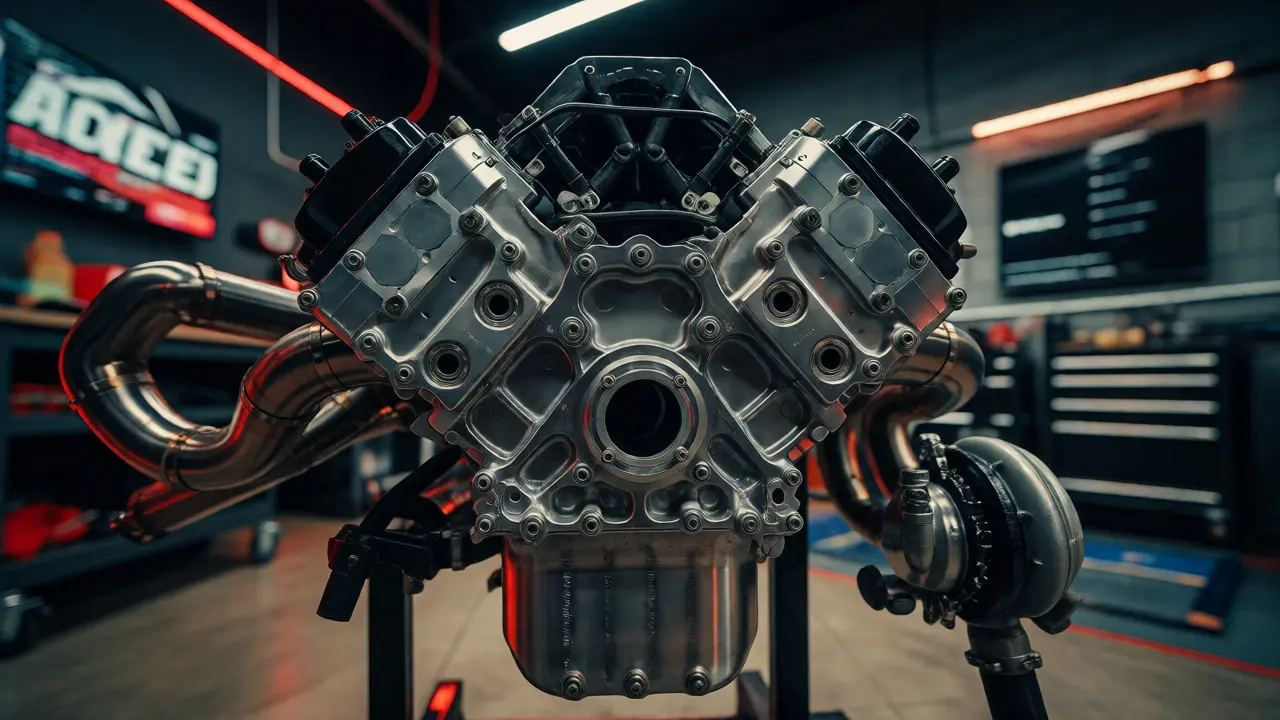
After mechanical assembly, the ECU tune is critical. Factory maps assume stock components. With larger injectors, different cams, and higher compression, the old map will cause lean conditions or poor timing. A custom dyno tune adjusts fuel trims and ignition timing to match your new hardware. This step alone can recover 5-10% of lost efficiency and prevent detonation.
Common Pitfalls to Avoid
Even experienced builders make mistakes. Here are the most frequent ones:
- Ignoring Deck Height: If you mill the deck too much, you reduce piston-to-head clearance. This causes interference at TDC, especially with domed pistons.
- Cheap Gaskets: Never reuse head gaskets. Always use MLS (Multi-Layer Steel) gaskets for boosted applications. Composite gaskets blow easily under pressure.
- Skipping Torque Plates: During machining, using torque plates simulates the stress of the head being bolted on. Without them, your bore measurements are inaccurate, leading to oval bores.
- Overlooking Oil Supply: More power needs more oil flow. Consider a high-volume oil pump if you are running tight clearances.
Building an engine is a chain. One weak link breaks the whole thing. Check every measurement twice. Cleanliness is godliness in an engine bay. One speck of metal debris can score a bearing and destroy a $3,000 build.
Is an engine rebuild worth it for a daily driver?
It depends on your goals. If you want reliability, a standard rebuild is cost-effective compared to buying a used engine. If you want performance, it adds significant value and fun, provided you budget for the supporting mods like exhaust and tuning. For pure commuting, it might be overkill unless the original engine was failing.
How much does a performance engine rebuild cost?
Costs vary widely by region and engine type. Expect to pay $3,000 to $6,000 for parts and labor for a typical 4-cylinder or V6. V8s or complex imports can range from $5,000 to $10,000+. This includes machining, parts, and assembly, but excludes tuning and ancillary components like headers.
Can I keep my stock turbo with a rebuilt engine?
Yes, but only if you limit boost levels. Stock turbos are sized for stock airflow. A rebuilt engine with better breathing can support more airflow, meaning the stock turbo becomes the bottleneck. You’ll get good results up to the turbo’s flow limit, but for max potential, a larger turbo or hybrid unit is recommended.
Do I need to balance the rotating assembly?
For street use, blue-printing (matching weights within tolerance) is usually sufficient. Dynamic balancing is critical for high-revving engines (above 7,000 RPM) or high-horsepower builds. Imbalance causes vibration, which wears bearings and stresses components unnecessarily.
What oil should I use after a rebuild?
Use a conventional oil with ZDDP additives for the first 500-1,000 miles to help ring seating. After break-in, switch to a high-quality full synthetic oil suited for your climate and driving style. Always follow your builder’s specific recommendation, as some modern coatings prefer specific viscosity grades.