
Imagine this: your check engine light flickers on a Monday morning, and by Tuesday afternoon, your car is slipping gears. You need the vehicle for work, but the mechanic says transmission repairs take "three to five days." That wait time can cost you more than just money-it can disrupt your schedule, stress your budget, and leave you stranded. In 2026, fast turnaround transmission service isn't just a luxury; it's a necessity for drivers who rely on their vehicles daily.
The good news? Modern diagnostic tools and specialized shop workflows have cut average repair times significantly. Instead of waiting a week, many drivers now get their cars back in 48 to 72 hours. But how do you ensure your shop actually delivers on that promise? And what factors truly influence whether your repair finishes in two days or drags on for a week?
Why Transmission Repairs Usually Take So Long
To understand speed, you first have to understand the bottleneck. Traditional transmission repair involves disassembling a complex system of gears, clutches, and hydraulic lines. Historically, shops would order parts after diagnosing the issue, leading to a multi-day wait just for inventory arrival. Add in the labor required to rebuild or replace the unit, and downtime easily stretched past a week.
In 2026, the landscape has shifted. Two main changes drive faster service:
- Pre-stocked common parts: High-volume shops keep standard filters, seals, and solenoids on hand, eliminating the initial ordering delay.
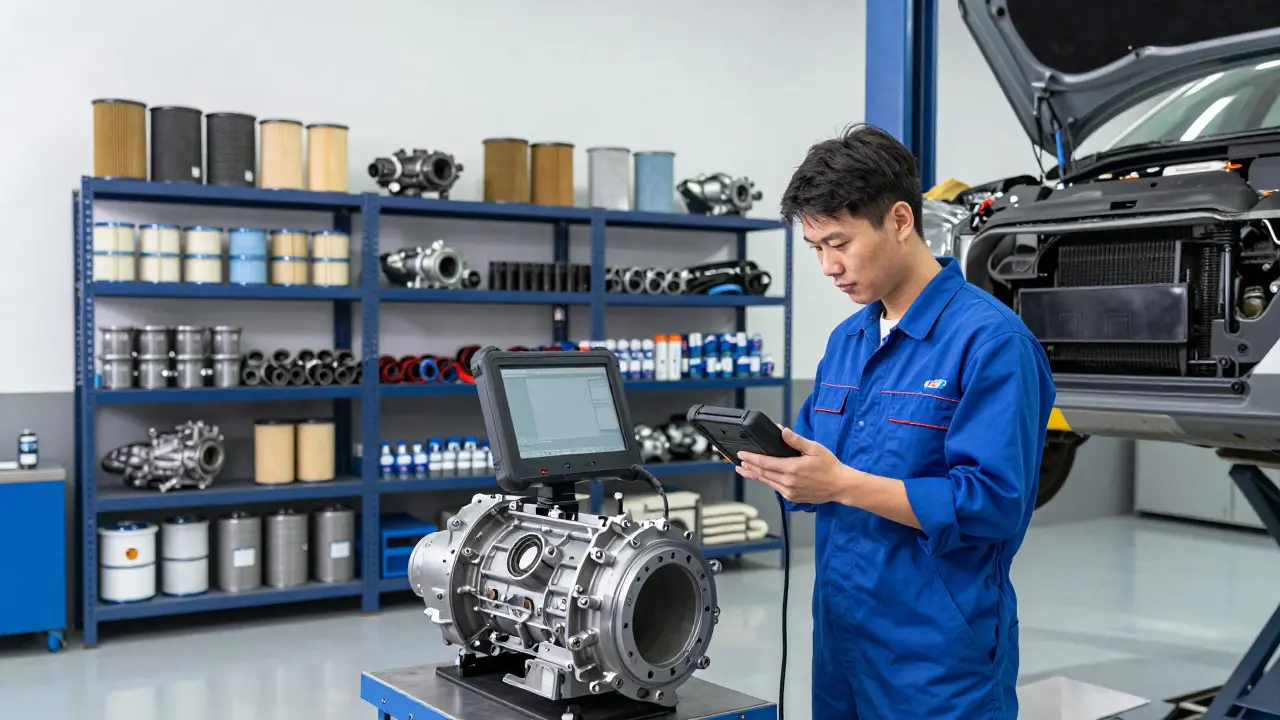
- Diagnostic accuracy: Advanced OBD-II scanners and pressure testing tools allow technicians to pinpoint failures (like a stuck valve body vs. worn clutch packs) in under an hour, preventing unnecessary teardowns.
If your shop still quotes a week-long timeline without explaining why, ask them about their parts inventory strategy. A transparent answer usually indicates a well-organized operation.
The Anatomy of a Fast Turnaround Workflow
A shop claiming "fast service" needs a specific workflow to back it up. Here’s what a streamlined 48-hour process looks like from drop-off to pick-up:
- Day 1 Morning - Diagnosis & Quote: The technician performs a computer scan and road test. If the issue is minor (e.g., low fluid or a failed sensor), the fix might happen same-day. For major issues, they provide a firm quote with a guaranteed completion date.
- Day 1 Afternoon - Parts Sourcing: If parts are needed, they come from local distribution centers rather than national warehouses. Shops with direct relationships with suppliers often receive same-day delivery.
- Day 2 - Repair Execution: The transmission is removed, inspected, and repaired or replaced. Using remanufactured units can save 10-15 hours compared to rebuilding a used core.
- Day 3 Morning - Testing & Fluid Flush: The unit is reinstalled, fluids are filled, and the system is tested for leaks and shifting performance.
This sequence requires coordination between the front desk, technicians, and parts department. It’s not magic-it’s logistics.
Factors That Influence Your Repair Time
Not all transmissions are created equal. Several variables can extend or shorten your downtime:
| Transmission Type | Common Issue | Avg. Repair Time (2026) | Speed Factor |
|---|---|---|---|
| Automatic (Torque Converter) | Valve Body Failure | 1-2 Days | High (parts readily available) |
| CVT (Continuously Variable) | Belt/Chain Wear | 2-3 Days | Medium (specialized tools needed) |
| Dual-Clutch (DCT) | Solenoid Fault | 1 Day | Very High (electronic fix only) |
| Manual | Clutch Pack Replacement | 3-4 Days | Low (labor-intensive rebuild) |
Notice how electronic faults tend to be faster than mechanical ones. If your car is a modern hybrid or electric vehicle with a single-speed reduction gear, the "transmission" issue might actually be an inverter problem, which can sometimes be diagnosed and fixed even quicker due to fewer moving parts.
How to Choose a Shop That Delivers Speed
You don’t want to gamble on a random garage. Use these criteria to vet potential providers before dropping off your keys:
- Ask about their "standard" timeline: Don’t accept vague answers. Ask specifically: "What is your average turnaround for a full automatic transmission replacement?"
- Check for ASE Certification: Technicians certified in Automatic Transmission and Transaxle (A3) and Manual Drive Train (A4) categories demonstrate verified expertise, reducing the risk of misdiagnosis delays.
- Inquire about loaner cars: If they offer a loaner, it signals confidence in their scheduling. If they don’t, ask if they partner with rental agencies.
- Read recent reviews: Look for comments mentioning "on-time pickup" or "kept me updated." Speed is useless if communication breaks down.
A shop that uses digital service bays with real-time updates via text or app is a strong indicator of operational efficiency. They know where your car is at every step, which prevents the "where is my car?" anxiety that adds to perceived downtime.
Cost vs. Speed: Is Faster Worth More?
Here’s the hard truth: faster service often costs more. Why? Because the shop prioritizes your job over others, potentially paying overtime or expediting parts shipping. However, the hidden cost of slow service is high. If you rent a car for five extra days at $60/day, that’s $300 in additional fees. Plus, there’s the productivity loss if you use your car for work.
Consider this rule of thumb: If the expedited fee is less than 15% of the total repair cost, it’s usually worth it for critical vehicles. For non-essential cars, a slightly longer wait might save you cash without significant lifestyle impact.

Preventive Maintenance: The Best Way to Avoid Downtime
The fastest transmission repair is the one you never need. Regular maintenance extends the life of your drivetrain and prevents catastrophic failures that require weeks of repair.
- Change fluid every 40,000-60,000 miles: Old fluid loses its lubricating properties, causing wear on internal components.
- Inspect for leaks monthly: Small leaks lead to low fluid levels, which cause overheating and failure.
- Address warning lights immediately: Ignoring a check engine light related to transmission sensors can turn a $200 sensor replacement into a $3,000 transmission swap.
Think of it like changing your oil. It’s a small, predictable cost that avoids a massive, unpredictable one.
Frequently Asked Questions
Is a remanufactured transmission as reliable as a new one?
Yes, provided it comes from a reputable supplier. Remanufactured units are rebuilt to factory specifications using new friction materials, gaskets, and seals. They typically carry a warranty of 3 years or 36,000 miles, similar to new units. The key is ensuring the shop installs it correctly and tests it thoroughly.
Can I drive my car while waiting for transmission repair?
It depends on the severity. If the transmission is slipping or making grinding noises, driving further can cause total failure. If it’s just a warning light, short trips to the shop are usually safe. Always consult your technician before driving a compromised vehicle.
What causes the most delays in transmission repairs?
The top three causes are: 1) Waiting for specific parts to ship, 2) Misdiagnosis requiring a second look, and 3) Shop backlog. Choosing a shop with pre-stocked parts and accurate diagnostic tools minimizes these risks.
Do electric vehicles have transmission downtime issues?
Most EVs have a single-speed reduction gear instead of a traditional multi-gear transmission. This means fewer parts to fail. When issues arise, they are often electrical (inverter or motor controller), which can be diagnosed and fixed faster than mechanical transmission problems.
How much should I expect to pay for fast transmission service?
Prices vary by region and vehicle type, but in 2026, a standard automatic transmission replacement ranges from $2,500 to $4,500 including parts and labor. Expedited service may add 10-20% to the labor cost. Always get a written estimate before authorizing work.