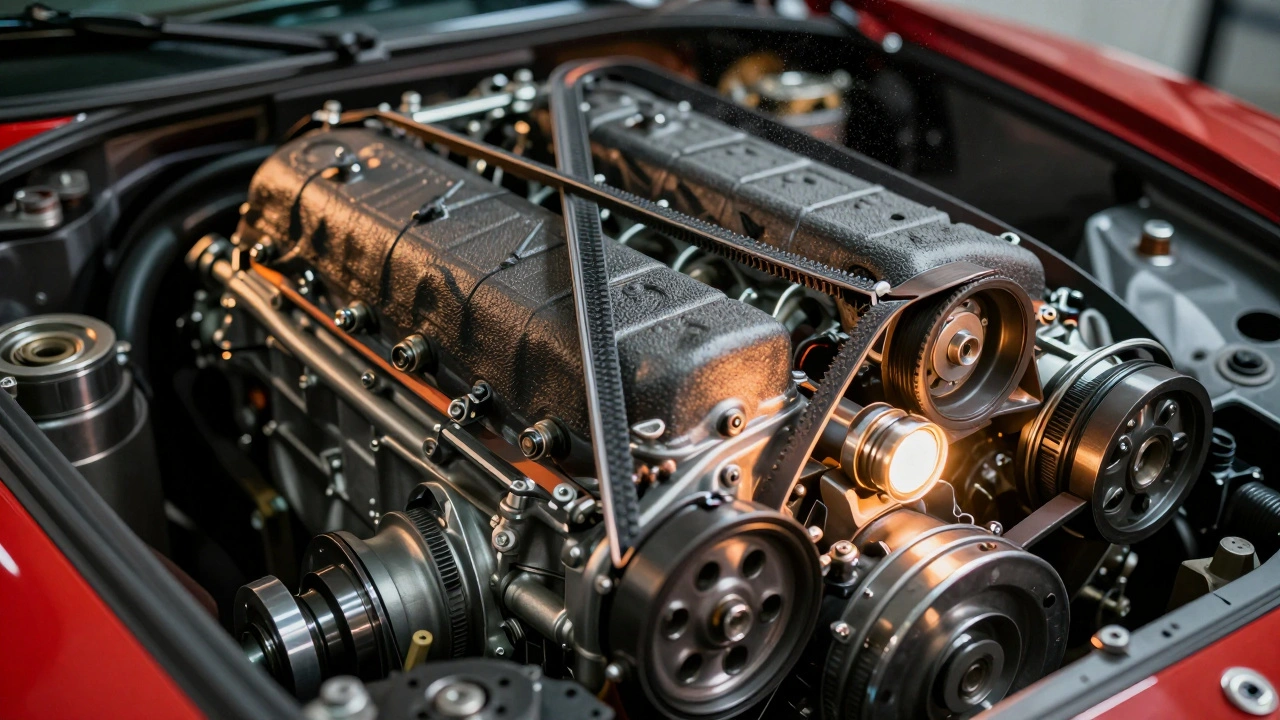
There is no louder sound in the world of exotic cars than a timing belt snapping inside a Ferrari engine. It is the sound of a dream ending and a wallet breaking open. For owners of high-performance Italian machinery, the Ferrari timing belt is a critical synchronization component that prevents catastrophic valve-to-piston collision in interference engines is not just a maintenance item; it is an existential threat to your investment. Unlike standard sedans where you might ignore this service for a decade, Ferrari demands strict adherence to model-specific protocols. In 2026, understanding whether your specific model requires a belt replacement, a chain inspection, or a complete engine removal is the difference between a routine $3,000 service and a $30,000 engine rebuild.
The Critical Divide: Belts vs. Chains
Before you schedule any service, you must identify what is driving your camshafts. This distinction dictates your entire maintenance strategy. The Ferrari lineup has evolved significantly over the decades, splitting into two distinct camps: those with rubber timing belts and those with metal timing chains. Confusing these two systems leads to unnecessary spending or dangerous neglect.
Most modern Ferraris, particularly those equipped with the F136 engine, utilize timing chains. These include models like the 458 Italia, 488 GTB, F8 Tributo, and the newer SF90 series. Chains are robust, require minimal tension adjustment, and generally last the life of the engine unless there is severe wear on the guides or tensioners. You do not replace these on a fixed schedule based on time alone.
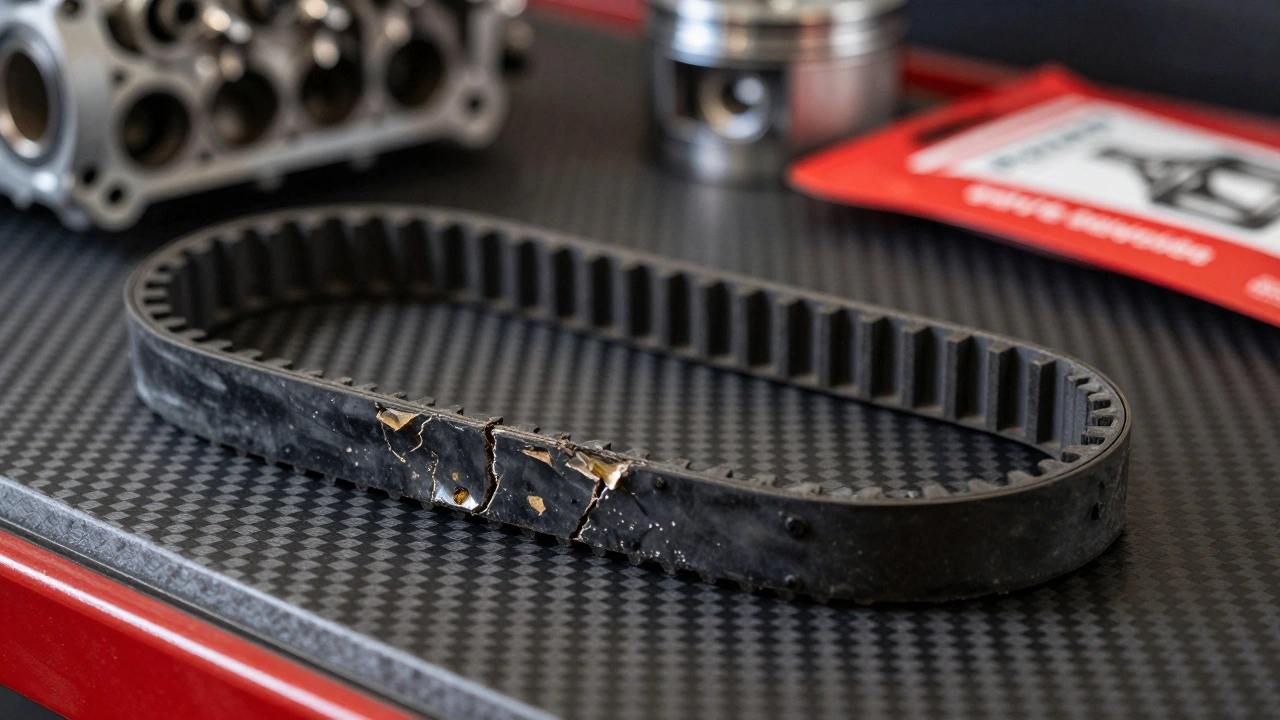
In contrast, older V8 models rely on rubber belts. This includes the Ferrari 360 Modena, F355, F348, 456, 550 Maranello, and 575 Maranello. These belts degrade due to heat, oil exposure, and the immense stress of high-RPM operation. For these vehicles, time is the enemy. Even if you barely drive the car, the belt hardens and cracks. Ignoring this interval risks the belt slipping or breaking, which causes the pistons to strike the open valves-a scenario known as an interference event. The result is usually a destroyed cylinder head and bent connecting rods.
| Model Series | Engine Type | System | Service Priority |
|---|---|---|---|
| Testarossa / 512 TR | Flat-12 | Belt (Engine-Out) | Critical / High Cost |
| F355 / F348 | V8 | Belt (Engine-Out) | Critical / High Cost |
| 360 Modena / Challenge | V8 | Belt (Engine-In) | Mandatory Every 3 Years |
| 550 / 575 Maranello | V12 | Belt | Mandatory Every 3-5 Years |
| 458 / 488 / F8 | V8 (F136) | Chain | Inspection Only |
The 3-Year Mandate: Why Ferrari Is Strict
If you own a Ferrari with a timing belt, you have likely heard the manufacturer’s current recommendation: replace the belt every three years. This rule applies specifically to V8 models like the 360 series. Many owners find this aggressive, especially compared to family cars that go 10 years or 125,000 miles between belt changes. However, the mechanical environment inside a Ferrari is fundamentally different from a commuter vehicle.
Ferrari V8 engines use a flat-plane crankshaft design. This configuration allows the engine to rev incredibly high-the 360 Modena hits its redline at 8,500 RPM-but it creates significant out-of-balance forces and vibrations. These vibrations hammer the timing belt system constantly. Furthermore, Ferrari owners tend to drive their cars hard. Regularly hitting the redline subjects the rubber belt to extreme thermal cycling and centrifugal force. Over time, this degrades the belt’s structural integrity faster than standard automotive applications.
The three-year mandate is also about certification. Ferrari wants to ensure that when a car leaves a dealership or certified specialist shop, the timing components-including tensioners and variators-are fresh. While some independent engineers argue that a high-quality Gates belt could last up to nine years under gentle use, the risk of a sudden failure outweighs the cost of preventive replacement. If the belt fails while you are on track or even on the highway, the repair bill will dwarf the cost of a scheduled service.
Accessibility Matters: Engine-In vs. Engine-Out
One of the most significant factors in your service cost is how much disassembly is required to reach the timing belt. This varies drastically by model generation and directly impacts your labor bill.
For pre-1995 models like the Testarossa and early F355s, the timing belts are buried deep within the engine block. To access them, mechanics must remove the entire engine from the chassis. This is a massive undertaking. Removing and reinstalling a flat-12 engine in a Testarossa takes a minimum of 10 hours of skilled labor. When you factor in parts, fluids, and the specialized equipment needed, this service often exceeds $10,000 at specialty shops. It is a daunting task that many owners delay until absolutely necessary, which increases the risk of failure.
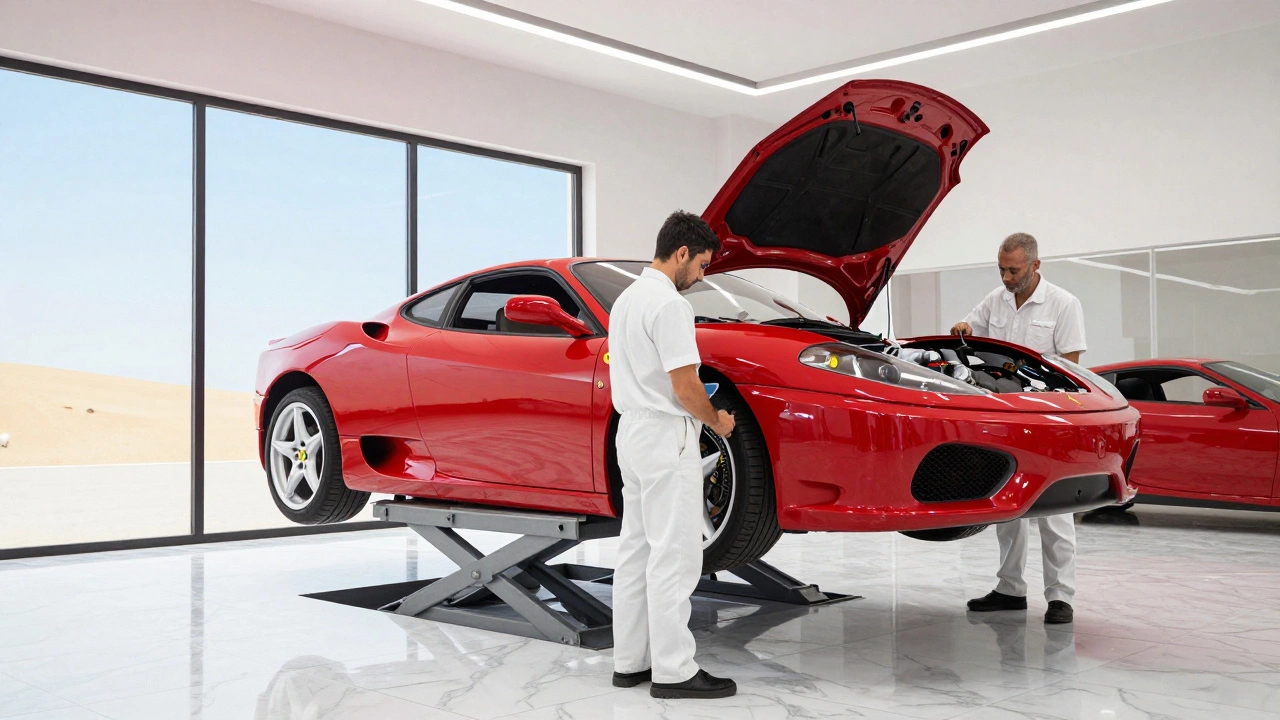
The Ferrari 360 Modena marked a turning point. Engineers redesigned the engine bay to allow timing belt replacement without removing the engine. This "engine-in" procedure is far less invasive and significantly cheaper. Labor costs drop substantially because the mechanic does not need to disconnect the transmission, exhaust, or suspension components to lift the engine out. For 360 owners, this accessibility makes adhering to the three-year schedule much more practical and financially manageable.
Later models, such as the F430 and beyond, eliminated the issue entirely by switching to timing chains. These chains are housed inside the engine block and protected by oil pressure. They do not require periodic replacement, though they may need tensioner inspections during major services. This shift reflects Ferrari’s move toward reducing maintenance downtime for daily-driven supercars.
Tension, Alignment, and Hidden Risks
Replacing the belt is only half the battle. Proper installation is critical to preventing premature failure. The timing belt tension must be precise. If the belt is too loose, it can whip around the pulleys, causing slippage and erratic valve timing. This slippage can lead to poor performance, rough idling, and eventually, the belt jumping teeth and snapping. If the belt is too tight, it places excessive strain on the cog bearings and the tensioner itself. This friction generates heat and noise, often audible as a whining sound, and dramatically shortens the lifespan of both the belt and the bearings.
During service, technicians should inspect all related components. This includes the water pump, which is often driven by the timing belt, and the cam seals. If a cam seal leaks oil onto the belt, the rubber swells and loses strength. A visual inspection of the belt for cracks, glazing, or missing teeth is essential before reassembly. Additionally, check the manufacturing date of the new belt. Manufacturers like Dayco stamp sequential numbers on belts indicating the year, week, and day of production. Using old stock belts that have been sitting in a warehouse for five years defeats the purpose of the service.
Clutch Service: The Often Overlooked Component
While the timing belt gets all the attention, the Ferrari clutch assembly requires its own specific care. Ferrari clutches, particularly in manual transmission models like the 360 Challenge Stradale or earlier F355s, are designed for high torque but can be sensitive to driving style. There is no fixed mileage interval for clutch replacement; it depends entirely on wear. However, associated fluid changes are mandatory.
For models with gearbox oil requirements, such as the 360 series, the factory recommends changing the transmission fluid every two years or 18,000 miles. This fluid lubricates the synchronizers and cooling systems for the clutch pack. Neglecting this change can lead to harsh shifting, overheating, and accelerated wear on the clutch plates. In dual-clutch automated manual transmissions (like the F1-style paddle shifters found in the 360 and F430), the mechatronic unit and hydraulic fluids also require regular servicing to ensure smooth engagement.
If you notice slipping, difficulty engaging gears, or a burning smell, the clutch needs immediate inspection. For manual drivers, aggressive launches and frequent heel-toe downshifts accelerate wear. Track days exacerbate this further. Unlike the timing belt, which fails catastrophically, clutch failure is gradual. Pay attention to bite points and shudder sensations. Replacing a worn clutch is expensive due to labor, but ignoring it can damage the flywheel and transmission input shaft, multiplying the repair costs.
Financial Realities and Long-Term Ownership
Owning a Ferrari requires budgeting for these major services. The financial implications of timing belt service vary widely based on the model. A 360 owner might pay between $3,000 and $5,000 for a belt service, including labor and parts. In contrast, a Testarossa or F355 owner facing an engine-out service should expect bills ranging from $6,000 to over $10,000. These costs do not include potential ancillary repairs discovered during disassembly, such as leaking gaskets or worn bearings.
The cost of prevention is negligible compared to the cost of failure. A snapped timing belt typically results in engine damage costing $20,000 to $30,000 to repair or replace. This includes machining, new heads, pistons, and thousands of dollars in labor. Viewing the three-year belt replacement as an insurance policy rather than an expense helps frame the decision correctly. Keep detailed records of all services. When selling the car, a documented history of timely timing belt replacements adds significant value and buyer confidence.
Practical Checklist for Owners
- Identify Your System: Check your owner’s manual to confirm if your Ferrari uses a timing belt or chain. Do not assume based on the model name alone, as engine codes vary.
- Track Time, Not Just Miles: For belt-equipped models, mark your calendar for a three-year service window. Low mileage does not exempt you from this requirement.
- Inspect Ancillary Components: During belt service, replace the water pump and inspect cam seals to prevent future leaks.
- Verify Belt Freshness: Ask your technician to show you the manufacturing date code on the new belt before installation.
- Schedule Fluid Changes: Change gearbox and clutch hydraulic fluids according to the two-year or 18,000-mile intervals to protect transmission components.
- Monitor Driving Behavior: Avoid prolonged redlining and aggressive launches to extend the life of both the timing belt and clutch assemblies.
How often should I replace my Ferrari timing belt?
For Ferrari models with timing belts, such as the 360 Modena, F355, and 575 Maranello, Ferrari officially mandates replacement every three years. This interval is strict due to the high-stress operating environment of V8 engines. Older models like the Testarossa may follow similar timelines but require engine removal, making the service more costly. Models with timing chains, like the 458 and 488, do not require periodic belt replacement.
Can I replace the timing belt on a Ferrari 360 without removing the engine?
Yes, the Ferrari 360 Modena was designed to allow timing belt replacement with the engine remaining in the chassis. This is a significant advantage over earlier models like the F355 or Testarossa, which require complete engine removal. This "engine-in" procedure reduces labor time and cost substantially.
What happens if a Ferrari timing belt breaks?
If a timing belt breaks in a Ferrari, the engine continues to rotate briefly, but the camshafts stop. This causes the pistons to collide with the open valves, resulting in catastrophic internal damage. Repairs typically involve replacing the cylinder heads, valves, pistons, and connecting rods, costing between $20,000 and $30,000.
How much does a Ferrari timing belt service cost?
Costs vary by model. For a Ferrari 360, expect to pay between $3,000 and $5,000 for parts and labor. For models requiring engine removal, such as the F355 or Testarossa, costs range from $6,000 to over $10,000 due to extensive labor. Always budget for additional inspections of water pumps and seals during this service.
Do Ferrari timing chains need to be replaced?
Timing chains in modern Ferraris, such as the F136 engine series, are designed to last the life of the engine. They do not have a fixed replacement interval like belts. However, chain tensioners and guides can wear over time and should be inspected during major services. Listen for rattling noises on startup, which may indicate chain stretch or tensioner failure.
When should I change the gearbox oil in my Ferrari?
Ferrari recommends changing gearbox oil every two years or 18,000 miles for models like the 360. This fluid lubricates the transmission and clutch components. Regular changes prevent overheating, ensure smooth shifting, and extend the life of the clutch pack and synchronizers.