Fuel is the single biggest variable cost for most commercial fleets. If you are managing a dozen trucks or a hundred vans, every mile driven without data is money leaking out of your budget. In 2026, with energy prices still volatile and electric vehicles (EVs) entering more garage bays, the old method of checking fuel receipts at the end of the month is no longer enough. You need real-time visibility. You need to know exactly who is driving hard, which routes are inefficient, and where your maintenance issues are quietly burning cash.
This guide breaks down how modern fleet fuel management works. We will look at the technology that tracks consumption, the human factors that drive waste, and the specific controls you can implement starting today to tighten your bottom line.
Why Manual Tracking Fails in Modern Fleets
Think back to how you tracked fuel five years ago. Drivers filled up, kept the receipt, and handed it over at the depot. Sounds simple, right? It wasn't. By the time the paperwork hit the accounting desk, the data was stale. You couldn't tell if high consumption was due to traffic, bad weather, or a driver idling their engine for an hour while waiting for a delivery slot. More importantly, manual systems rarely catch fraud. "Fuel card theft"-where cards are used for personal vehicles or non-fleet expenses-is a common leak that paper trails miss entirely.
The core problem with manual methods is the lack of context. A gallon of diesel costs the same whether the truck is fully loaded or empty, but the efficiency per mile varies wildly. Without linking fuel usage to mileage, speed, and load weight, you are just looking at numbers without understanding the story behind them. This is why the industry has shifted toward automated, sensor-based tracking.
The Technology Stack: Telematics and Smart Cards
Modern fuel tracking relies on two main pillars: vehicle telematics and smart fuel cards. These two systems talk to each other to give you a complete picture.
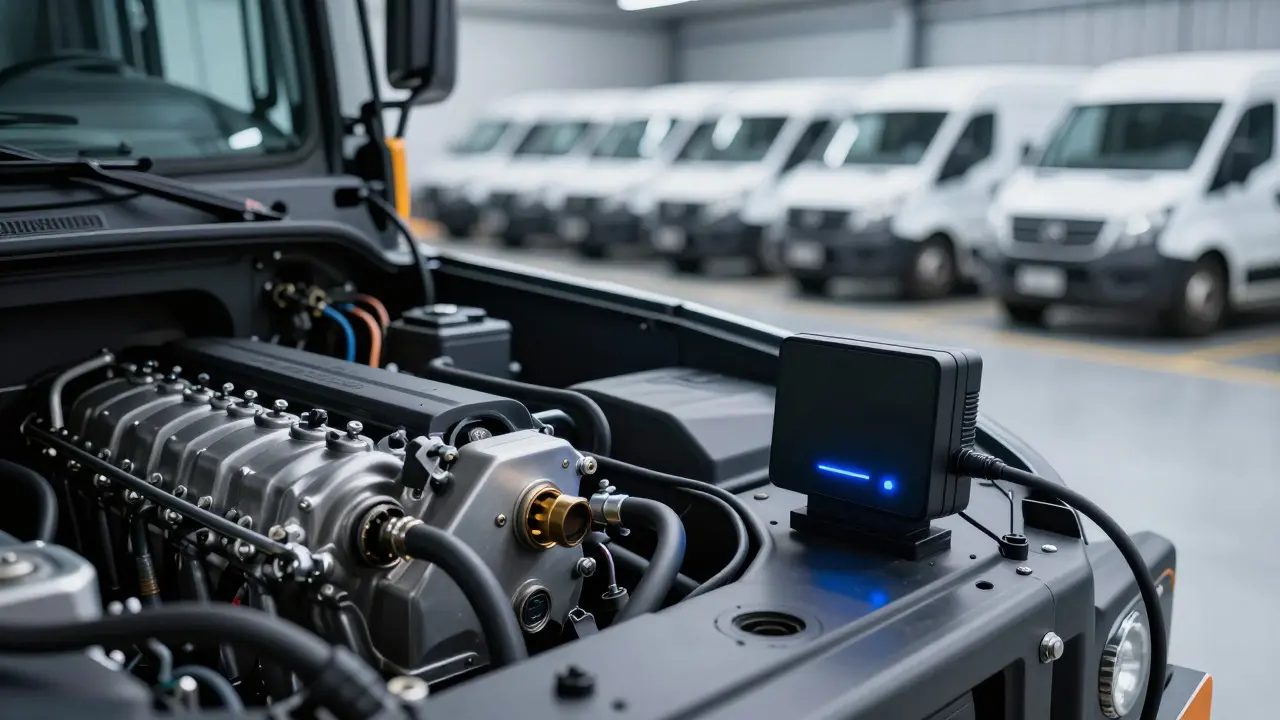
Telematics Units are hardware devices installed in the vehicle's OBD-II port or hardwired into the ECU that transmit real-time data including location, speed, engine RPM, and fuel level. Most units now use cellular networks (4G/LTE) to send this data to a cloud platform. This allows you to see fuel drop-off in real-time. If a tank goes from full to half in ten minutes without the car moving, you know there is a leak or a theft happening right now.
On the payment side, Smart Fuel Cards are prepaid or credit-based cards linked to a central account that allow for spend limits, PIN verification, and automatic logging of gallons purchased. Unlike generic credit cards, these cards can be programmed to only accept fuel types appropriate for the vehicle (e.g., diesel for trucks, gasoline for vans) and can block purchases above a certain volume to prevent overfilling errors.
When you combine these, you get a powerful dataset. The telematics unit tells you how much fuel the engine *should* have used based on distance and speed. The fuel card tells you how much fuel was actually *purchased*. The difference between these two numbers is your accuracy metric. If they don't match, you have a problem to investigate.
Identifying the Leaks: Driver Behavior and Maintenance
Data is useless if you don't know what to look for. In my experience managing logistics operations in the Pacific Northwest, the biggest fuel leaks almost always come from three sources: aggressive driving, excessive idling, and poor maintenance.
- Aggressive Driving: Hard acceleration and hard braking are the enemies of fuel economy. A study by the US Department of Energy suggests that moderate speeding (going 75 mph instead of 65 mph) can increase fuel consumption by up to 30%. Telematics platforms flag these events automatically. You can set thresholds, like accelerating harder than 15% of gravity, to trigger alerts.
- Excessive Idling: Commercial engines burn roughly 0.8 to 1.0 gallon of diesel per hour while idling. If drivers idle while waiting for customers or during lunch breaks, the cost adds up fast. Modern sensors can detect when the engine is running but the vehicle is stationary for more than five minutes.
- Maintenance Neglect: A clogged air filter, under-inflated tires, or a dirty fuel injector can reduce fuel efficiency by 5-10%. Under-inflated tires are particularly sneaky because they cause rolling resistance, forcing the engine to work harder. Regular tire pressure monitoring systems (TPMS) are essential here.

Implementing Controls: From Data to Action
Collecting data is only half the battle. You need controls to change behavior. Here is a practical framework for implementing these controls in your fleet.
1. Set Baselines and Benchmarks
You cannot improve what you do not measure. Start by calculating your baseline fuel economy (miles per gallon or liters per 100km) for each vehicle type. Then, segment your data by route type. City driving will always consume more fuel than highway driving. Compare each driver against the average for their specific vehicle model and route profile, not just the fleet average. This fairness keeps drivers engaged rather than defensive.
2. Gamify Efficiency
People respond better to incentives than penalties. Create a monthly "Green Driver" leaderboard. Reward the top 10% most efficient drivers with small bonuses, gift cards, or recognition in team meetings. When I implemented this in a local delivery fleet, fuel consumption dropped by 8% in the first quarter simply because drivers started watching their own scores. It turned fuel saving from a corporate mandate into a personal challenge.
3. Enforce Idling Policies
Set a clear policy: no idling for more than three minutes unless necessary for safety or defrosting. Use telematics alerts to notify drivers in real-time via their smartphone app if they exceed this limit. For long-haul drivers, consider installing auxiliary power units (APUs) that run on battery or propane to keep the cab comfortable without burning diesel.
4. Automate Maintenance Scheduling
Link your fuel data to your maintenance schedule. If a specific truck’s fuel consumption spikes by 10% over two weeks, trigger an automatic inspection ticket. Often, this catches issues like a failing turbocharger or vacuum leak before they become major repairs. Proactive maintenance saves far more money than reactive fixes.
Comparison: Traditional vs. Digital Fuel Management
To visualize the impact, let's compare the traditional approach with a digital, data-driven strategy.
| Feature | Traditional (Manual) | Digital (Telematics + Smart Cards) |
|---|---|---|
| Data Latency | End-of-month reporting | Real-time (seconds to minutes) |
| Accuracy | Low (subject to human error/fraud) | High (sensor-verified) |
| Driver Insight | None (drivers don't see their data) | High (dashboards, apps, feedback) |
| Fraud Detection | Difficult (requires audit) | Easy (automatic anomaly flags) |
| Cost Savings Potential | 0-5% | 10-20% |
The Future: Electrification and Hybrid Strategies
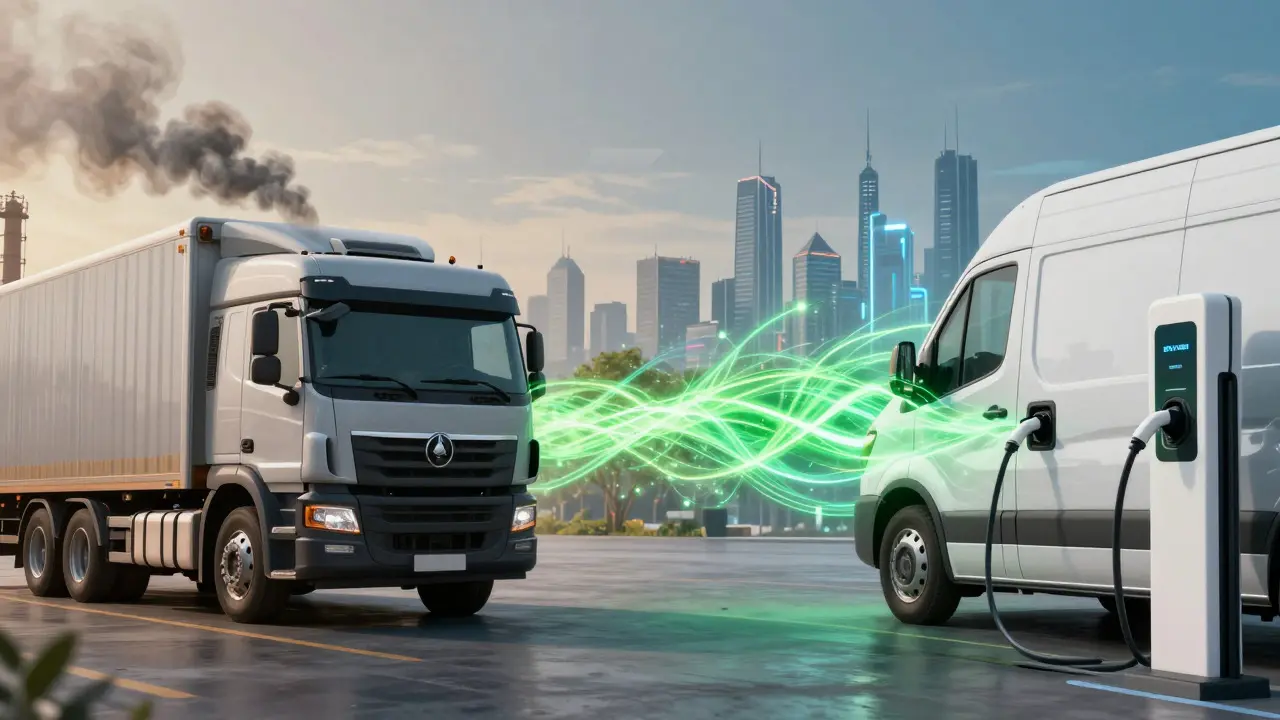
As we move deeper into 2026, many fleets are adding electric vehicles to their mix. This changes the fuel management equation. Instead of tracking gallons of diesel, you track kilowatt-hours (kWh). The principles remain the same, though. Regenerative braking, climate control usage, and charging habits all affect efficiency.
For hybrid fleets, you need software that can normalize data across different powertrains. Comparing the efficiency of a diesel truck directly to an EV van isn't apples-to-apples. You need to standardize metrics, such as "cost per mile" or "energy per ton-mile," to make fair comparisons. Look for fleet management platforms that support multi-energy models natively. They should handle both fuel and electricity billing seamlessly.
Also, keep an eye on carbon reporting. Many cities and states are tightening emissions regulations. Your fuel tracking system should generate reports that help you calculate your carbon footprint. This data is increasingly required for compliance and can also be used for marketing purposes if you are trying to attract eco-conscious clients.
Common Pitfalls to Avoid
Even with the best technology, you can fail if you ignore the human element. Here are the most common mistakes I see:
- Ignoring Driver Feedback: If the system says a driver is inefficient, listen to them. Maybe the route was blocked, or the customer delayed the unloading. Context matters.
- Over-Reliance on One Metric: Don't just look at MPG. Look at cost per mile, idling time, and acceleration events. A holistic view prevents gaming the system.
- Poor Onboarding: If drivers don't understand how the system works, they will resent it. Train them thoroughly. Show them how the data helps them, not just how it watches them.
- Neglecting Tire Pressure: It sounds basic, but under-inflated tires are the cheapest way to lose fuel. Check them weekly.
Getting Started: A 30-Day Plan
If you are ready to upgrade your fuel management, here is a simple 30-day action plan:
- Week 1: Audit Current State. Gather all fuel receipts and mileage logs from the last three months. Calculate your current average MPG and cost per mile. Identify the top 5 worst-performing vehicles.
- Week 2: Install Hardware. Install telematics units in those top 5 vehicles. Ensure they are properly calibrated. Connect your fuel cards to a centralized management portal.
- Week 3: Baseline and Educate. Let the data flow for a week. Establish baselines. Hold a meeting with drivers to explain the new system. Emphasize that it is about improvement, not punishment.
- Week 4: Implement Controls. Turn on idling alerts. Set up the first efficiency leaderboard. Review the first set of data with your team. Identify one quick win (like fixing a tire issue) and celebrate it.
By the end of the month, you will have a clearer picture of where your money is going. And more importantly, you will have the tools to stop the leaks. Fuel management isn't just about cutting costs; it's about building a more efficient, sustainable operation. Start small, stay consistent, and let the data guide your decisions.
What is the average fuel savings from using telematics?
Most fleets see a reduction in fuel consumption between 10% and 20% after implementing telematics and driver coaching programs. The exact number depends on the initial state of the fleet and how strictly the controls are enforced.
Do I need to replace all my vehicles to save on fuel?
No. While newer vehicles are more efficient, behavioral changes and maintenance improvements can yield significant savings on older vehicles. Focus on optimizing the assets you already have before considering capital expenditures for new equipment.
How does idling affect fuel costs?
Idling burns approximately 0.8 to 1.0 gallon of diesel per hour for a heavy-duty truck. If a driver idles for one hour a day, five days a week, that's roughly 20 gallons a week, or about $70-$90 per week per truck, depending on local fuel prices.
Can smart fuel cards prevent fraud?
Yes. Smart fuel cards can be programmed with PIN requirements, spend limits, and product restrictions (e.g., diesel only). They also log every transaction with GPS coordinates, making it easy to verify that the purchase happened at a legitimate location.
What is the role of tire pressure in fuel efficiency?
Under-inflated tires increase rolling resistance, forcing the engine to work harder. Studies show that maintaining proper tire pressure can improve fuel economy by up to 3-5%. It is one of the simplest and most effective ways to reduce consumption.