
Imagine you run a delivery company with twenty vans. One driver takes a route that adds forty minutes to every stop because he’s avoiding a road he thinks is closed-but it opened two days ago. Another van sits idle for three hours while the engine runs, burning fuel and money. You don’t know this until the end of the month when the bills arrive, or worse, when a customer complains about late deliveries. This lack of visibility is exactly why a Fleet Management System is a software solution that integrates hardware sensors and data analytics to monitor vehicle location, status, and performance in real time. It turns guesswork into data.
You might think GPS is enough. Just slap a tracker on the dashboard, right? Wrong. A basic GPS tells you where the truck is. A proper Fleet Management System (FMS) tells you why the truck is there, how much fuel it burned getting there, whether the driver slammed the brakes at the last intersection, and if the maintenance schedule was ignored. In 2026, the gap between companies that use advanced FMS and those that don’t is widening. Those who ignore it are bleeding cash through inefficiencies they can’t even see.
What Actually Happens Inside the Box?
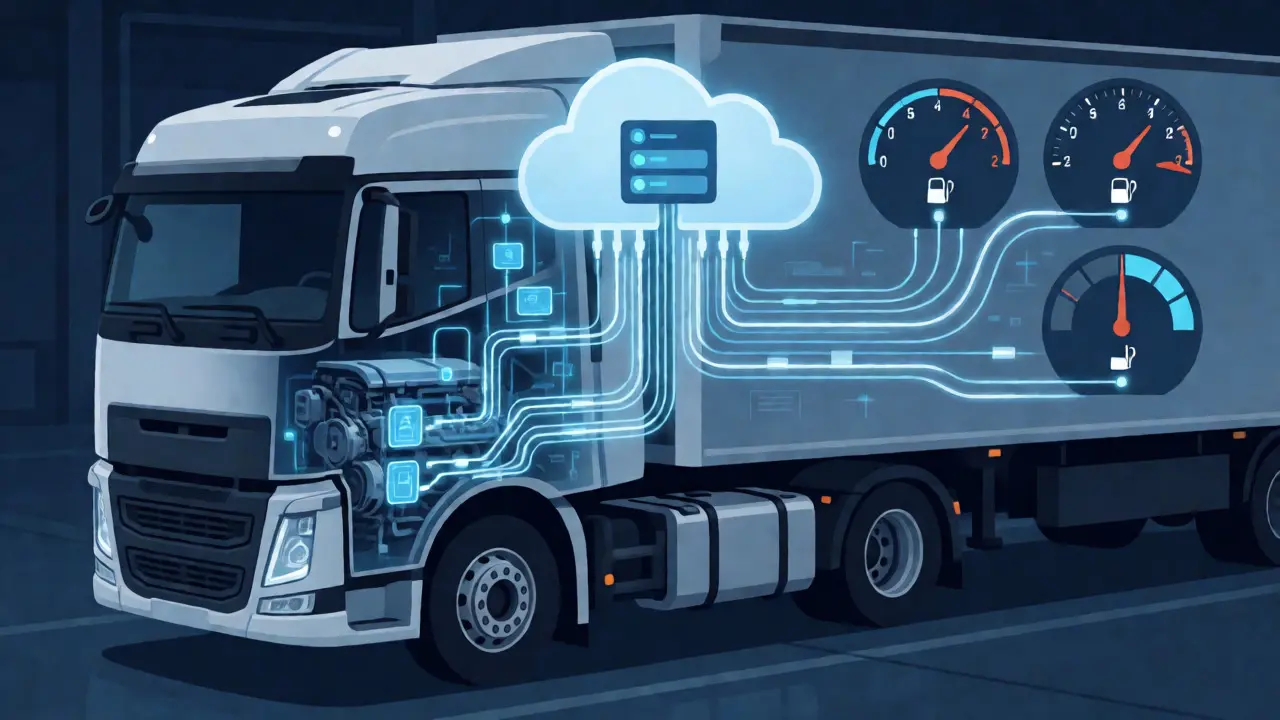
Let’s strip away the marketing jargon. At its core, an FMS relies on Telematics the science of sending, receiving, and storing information via telecommunication devices. Here is the flow: OBD-II ports or hardwired sensors pull raw data from the vehicle’s computer. This includes speed, RPM, engine temperature, fuel levels, and error codes. This data is sent via cellular networks (4G LTE or 5G) to a cloud server. The server processes this massive stream of numbers and displays it on your dashboard as simple graphs, alerts, and maps.
The magic isn’t in the collection; it’s in the correlation. When your system flags a "harsh braking" event, it doesn’t just log the time. It cross-references the location with traffic data, the driver’s identity, and the vehicle’s maintenance history. Maybe the driver braked hard because a pedestrian stepped out. Or maybe the brake pads are worn out. The system gives you the clues; you make the decision.
Vehicle Tracking: More Than Just a Dot on a Map
Real-time tracking is the headline feature, but its value depends entirely on how you use it. If you’re just watching dots move, you’re wasting money. Effective tracking answers specific operational questions:
- Geofencing: Set virtual boundaries around job sites or depots. Get an alert when a truck enters or leaves. This prevents unauthorized use during off-hours.
- Idle Time Monitoring: Identify vehicles idling longer than ten minutes. If a driver waits twenty minutes for a load, that’s fine. If they idle for twenty minutes while chatting, that’s wasted fuel.
- Route Optimization: Some systems integrate live traffic data to suggest better routes mid-trip, not just before departure.
Consider a construction firm using heavy machinery. They don’t need minute-by-minute updates. They need to know if equipment is being used on-site or stolen. For them, tracking frequency matters more than precision. Conversely, a courier service needs high-frequency updates to promise accurate arrival times to customers. Your tracking strategy must match your business model.
The Power of Reporting: Turning Data into Decisions
Data without context is noise. This is where Fleet Reporting automated summaries and analytical breakdowns of vehicle usage, driver behavior, and cost metrics becomes critical. Most modern systems allow you to build custom dashboards. But what should you actually look at?
Don’t get bogged down in vanity metrics like total miles driven unless you’re billing by the mile. Focus on actionable insights:
- Cost Per Mile (CPM): Combine fuel, maintenance, insurance, and depreciation costs divided by miles driven. Which vehicles have the highest CPM? Why? Is it age? Driver abuse? Neglected maintenance?
- Driver Scorecards: Rank drivers based on speeding, harsh acceleration, and idling. Use this for coaching, not just punishment. Show a driver their score improving over three months, and watch their behavior change.
- Maintenance Predictions: Instead of changing oil every 5,000 miles blindly, use actual engine hours and driving conditions. If a truck does short, stop-and-go trips, its oil degrades faster than one doing highway miles. The report should flag this difference.
| Metric | Why It Matters | Actionable Insight |
|---|---|---|
| Fuel Consumption | Fuel is often the #1 operating cost. | Detect leaks, theft, or inefficient driving habits. |
| Engine Fault Codes | Catches issues before they cause breakdowns. | Schedule repairs proactively to avoid towing fees. |
| Harsh Events | Indicates risky driving or poor road conditions. | Targeted driver training reduces accident risk. |
| Utilization Rate | Shows if vehicles are sitting unused. | Right-size your fleet; sell underused assets. |
Choosing the Right Hardware and Software
You have two main choices for hardware: plug-and-play OBD-II trackers or hardwired units. Plug-and-play is cheap and easy to install. You just plug it into the port under the steering wheel. Great for light trucks and cars. But here’s the catch: a driver can unplug it in five seconds. Hardwired units are hidden behind the dashboard. They connect directly to the battery and ignition wires. They can detect tampering and provide deeper diagnostics, like tire pressure monitoring (TPMS) integration. For commercial fleets, hardwired is almost always worth the extra installation cost.
On the software side, look for API integrations. Your FMS should talk to your accounting software, your dispatch board, and your HR platform. If your system is an island, you’ll spend hours manually copying data into Excel. Automation is the only way to scale.
Pitfalls to Avoid When Implementing
Many companies buy a system and then fail to use it effectively. Here are common traps:
- Data Overload: Don’t try to track everything. Start with three key KPIs. Add more once your team understands the first three.
- Lack of Driver Buy-in: Drivers hate feeling spied on. Be transparent. Explain that the system helps prove they weren’t at fault in accidents and can reward safe driving. Involve them in the rollout.
- Ignoring Alerts: If you set up geofence alerts but never check your phone, you’re paying for silence. Assign someone to review daily exception reports.
Another mistake is assuming the system fixes bad processes. If your dispatch scheduling is chaotic, GPS won’t fix it. Fix the process first, then use the tool to enforce it.
The Future: AI and Predictive Analytics
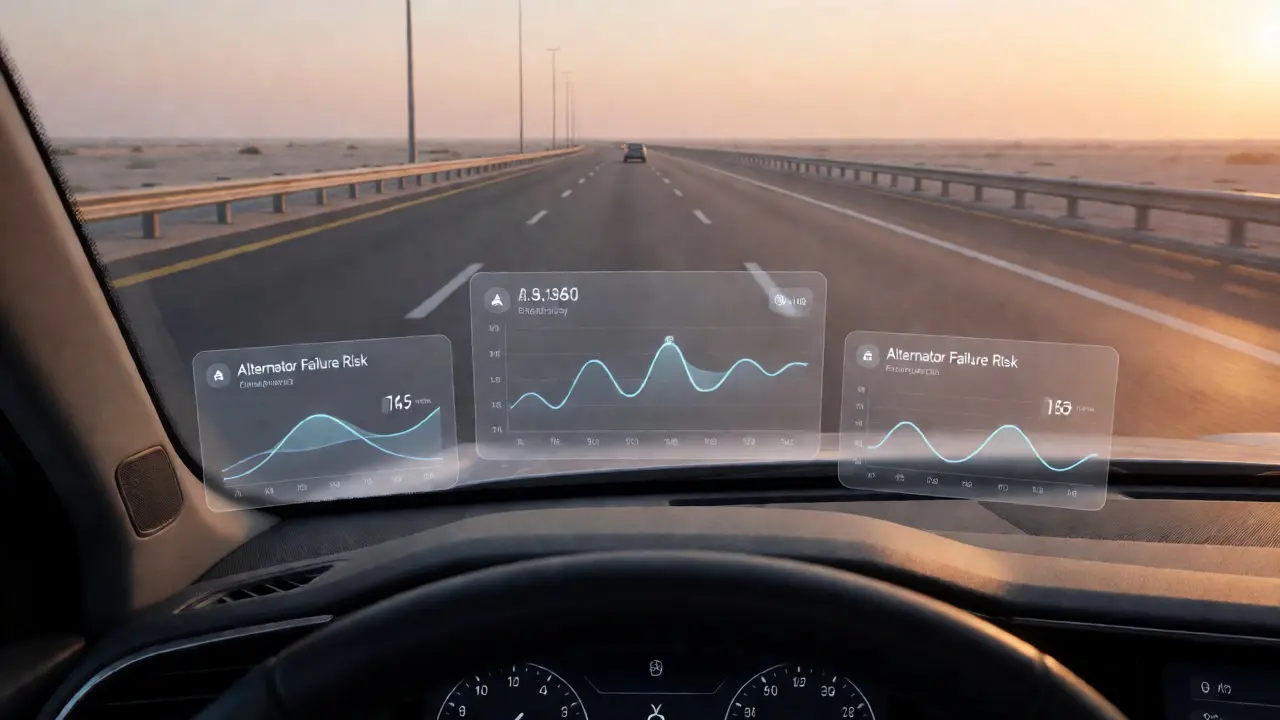
By 2026, artificial intelligence is no longer a buzzword in fleet tech-it’s standard. Advanced systems now use machine learning to predict failures. Instead of telling you "check engine light is on," the AI analyzes vibration patterns and voltage fluctuations to say, "The alternator has a 90% chance of failing within 500 miles." This shifts maintenance from reactive to predictive.
Also, electric vehicle (EV) integration is maturing. If you’re transitioning to electric vans, your FMS must handle charging station availability, battery health degradation, and range anxiety calculations based on weather and payload. Traditional fuel-centric logic doesn’t apply to EVs.
Next Steps for Your Fleet
Ready to upgrade? Don’t just pick the cheapest option. Audit your current pain points. Are you losing money on fuel? Focus on fuel-tracking capabilities. Are accidents rising? Prioritize driver behavior scoring. Request demos from vendors and ask to see a live dashboard, not just a PowerPoint. Ask them: "Show me how this report saved another client $10,000 last quarter." If they can’t answer, keep looking.
Do I need a Fleet Management System if I only have 5 vehicles?
Yes, especially if your vehicles are dispersed across different locations. Even with five vans, manual tracking via phone calls is inefficient and error-prone. An FMS provides automated proof of service, reduces administrative time, and catches minor maintenance issues before they become expensive breakdowns. The ROI comes from time savings and fuel efficiency, which scales down well to small fleets.
How much data does a typical vehicle tracker consume per month?
Most modern telematics devices use very little data, typically between 5MB and 20MB per month per vehicle, depending on reporting frequency. High-frequency tracking (every second) uses more than low-frequency (every minute). Many providers include SIM cards with unlimited or capped low-data plans specifically designed for IoT devices, so monthly connectivity costs are usually minimal compared to the overall subscription fee.
Can a Fleet Management System help reduce insurance premiums?
Absolutely. Many insurance companies offer discounts for fleets equipped with telematics, particularly if you share driver safety scores. By proving that your drivers maintain safe speeds and avoid harsh braking, you present a lower risk profile. Additionally, in the event of an accident, GPS data and video footage (if integrated) provide indisputable evidence of liability, potentially saving thousands in legal disputes.
Is hardwiring difficult for older vehicles?
It can be. Older vehicles may lack standard OBD-II ports or have complex wiring harnesses. Professional installation is recommended for hardwired units to ensure they don’t drain the battery or interfere with other electronics. However, most modern telematics providers have extensive compatibility lists and support teams who can guide you on whether a specific unit will work with your older fleet models.
What is the difference between GPS and GNSS?
GPS (Global Positioning System) is the US-based satellite network. GNSS (Global Navigation Satellite System) is the broader term that includes GPS, GLONASS (Russia), Galileo (Europe), and BeiDou (China). Modern fleet trackers use GNSS receivers to access multiple satellite constellations simultaneously. This improves accuracy and reliability, especially in urban canyons or dense forests where relying solely on GPS satellites might result in signal loss.