Your engine is essentially a giant air pump that needs a very precise amount of fuel to keep running. When that balance is off, you get the classic signs of trouble: sputtering, rough idling, or a car that simply refuses to start. While many people assume a bad start means a dead battery, the real culprit is often a fuel system that isn't delivering enough pressure to the cylinders. Finding the exact failure point-whether it's a tired pump, a clogged filter, or a failing injector-requires a systematic approach to fuel system diagnostics.
Depending on when your car was built, you're dealing with one of three very different technologies. A 2005 sedan uses completely different logic and hardware than a 2025 turbocharged SUV. If you try to use a mechanical gauge on a modern direct-injection system, you're not just wasting time-you're risking a dangerous high-pressure leak. Understanding which system you're working on is the first and most important step.
The Conventional Setup: Low Pressure and Mechanical Gauges
If you're working on an older vehicle with port or throttle body injection, you're dealing with a relatively simple world. These systems are managed by the Powertrain Control Module (PCM), which typically maintains a fuel pressure between 35 and 65 psi. The goal here is simple: push enough fuel to the injectors so they can mist it into the intake manifold.
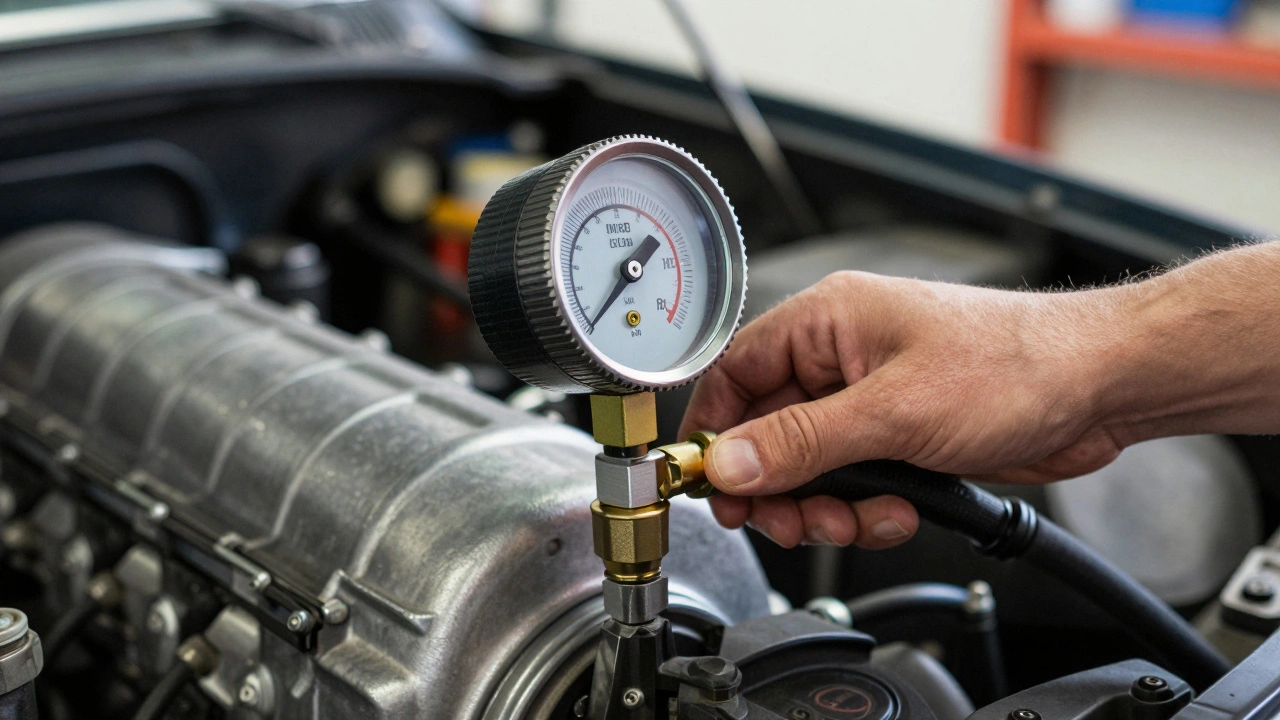
In these cars, you'll often find a Schrader valve-which looks exactly like a tire valve-located on the fuel rail. This is your golden ticket for diagnostics. You can attach a mechanical pressure gauge directly to this valve to see if the pump is hitting its target numbers at idle and under load.
If the pressure is low, you don't immediately jump to replacing the pump. You first check the Fuel Pressure Regulator. In two-line systems, this is often an external vacuum-modulated part; in single-line systems, it's tucked inside the fuel pump module. If the regulator is leaking or stuck, the pump might be working perfectly, but the pressure is just bleeding off before it reaches the engine.
Pulse-Modulated Systems: The Middle Ground
As cars evolved, manufacturers moved away from mechanical regulators and toward pulse-modulated systems. These are single-line setups that use a sensor in the fuel rail to tell the PCM exactly what's happening. Instead of a valve bleeding off excess pressure, the PCM simply tells the fuel pump to speed up or slow down.
To do this, the system uses a fuel control module that modifies the duty cycle of the current sent to the pump. If you're diagnosing one of these, a mechanical gauge is less useful than a Scan Tool. You want to look for Diagnostic Trouble Codes (DTCs) and monitor the pulse-width parameters in real-time. If the PCM is requesting more pressure but the rail sensor isn't showing an increase, you've likely found a failing pump or a wiring issue in the control module.
Direct Fuel Injection: The High-Pressure Beast
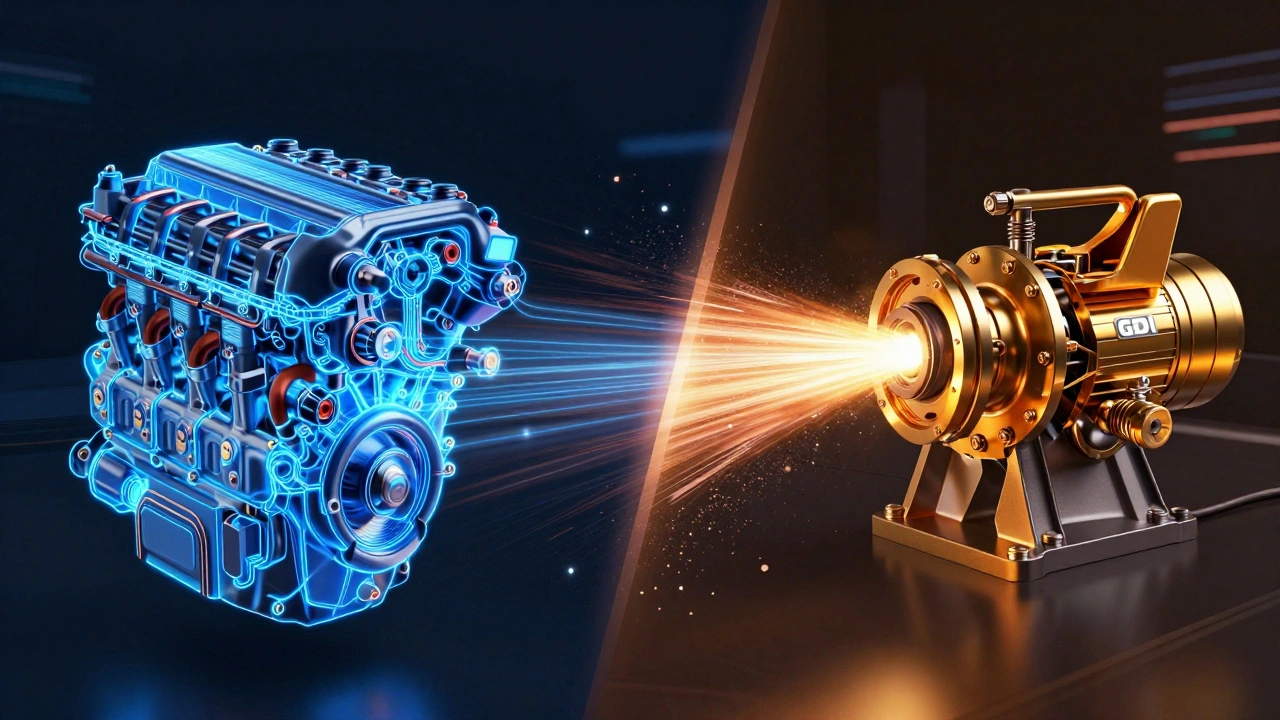
Direct Gasoline Fuel Injection (GDI) is a completely different animal. Instead of spraying fuel into the intake air, GDI sprays it directly into the combustion chamber. To overcome the massive pressure inside a compressing cylinder, these systems use a two-stage process: a low-pressure lift pump sends fuel to a high-pressure mechanical pump mounted on the engine.
We're no longer talking about 60 psi here. A High-Pressure Fuel Pump can ramp up to 2,300 or even 3,000 psi. Because of these extreme levels, you will almost never find a Schrader valve on a GDI system. Attempting to use a standard mechanical gauge on these lines is dangerous and practically impossible.
Diagnostics for GDI rely heavily on the PCM and specialized sensors. These systems use piezoresistive pressure sensors that convert pressure into a voltage signal (usually based on a 5-volt reference). To see what's happening, you must use a scan tool to monitor both the low-side and high-side pressure data. If the high-side pressure is erratic, the problem could be the pump itself or the pulse-modulated by-pass solenoid that regulates the flow.
| Feature | Conventional (Port) | Pulse-Modulated | Direct Injection (GDI) |
|---|---|---|---|
| Typical Pressure | 35-65 psi | Variable (Moderate) | 2,000-3,000 psi |
| Primary Tool | Mechanical Gauge | Scan Tool / Multimeter | Advanced Scan Tool |
| Regulator Type | Mechanical/Vacuum | Pump Speed Control | By-pass Solenoid |
| Testing Point | Schrader Valve | Electronic Sensor | Digital Data Stream |
How to Perform a Fuel Pressure and Volume Test
If you're working on a conventional system, follow this sequence to avoid guessing. First, start the car and let it idle. Connect your fuel pressure gauge to the rail. Compare the reading to the manufacturer's spec. If the pressure is spot on, but the engine still feels starved for fuel, you need a volume test. Pressure is how hard the fuel is pushed; volume is how much actually gets through.
To run a volume test, disconnect the fuel line and collect the output into a graduated container for exactly five seconds while the pump is running. You'll need to check your manual to see how many milliliters per second are required. If you're only getting a trickle, your pump is worn out or your filter is clogged, even if it can still create enough pressure to move a gauge needle.
For GDI systems, your "volume test" is essentially done through the scan tool. You'll look at the fuel trim data. If the Engine Control Module (ECM) is constantly adding fuel (positive fuel trim) but the high-pressure sensor shows a drop during acceleration, you have a delivery problem.
Testing the Injectors: Voltage and Pulse
Injectors are essentially electronically controlled valves. In old systems, they operate on 12 volts. You can use Noid Lights-simple LEDs that plug into the injector harness-to see if the PCM is actually sending a signal to fire the injector. If the light flashes, the electrical side is working, and the problem is likely a mechanical clog in the injector nozzle.
GDI injectors are much more violent. To force fuel into a cylinder under 2,000 psi of pressure, 12 volts isn't enough. These systems use a capacitor and a voltage inverter to kick the voltage up to anywhere from 40 to 120 volts. Because this is dangerous, you shouldn't use a standard probe. Instead, use an induction clamp to pick up the electromagnetic signal from the wire without actually touching the conductor.
Pro Strategy: Scan Tool First, Wrench Second
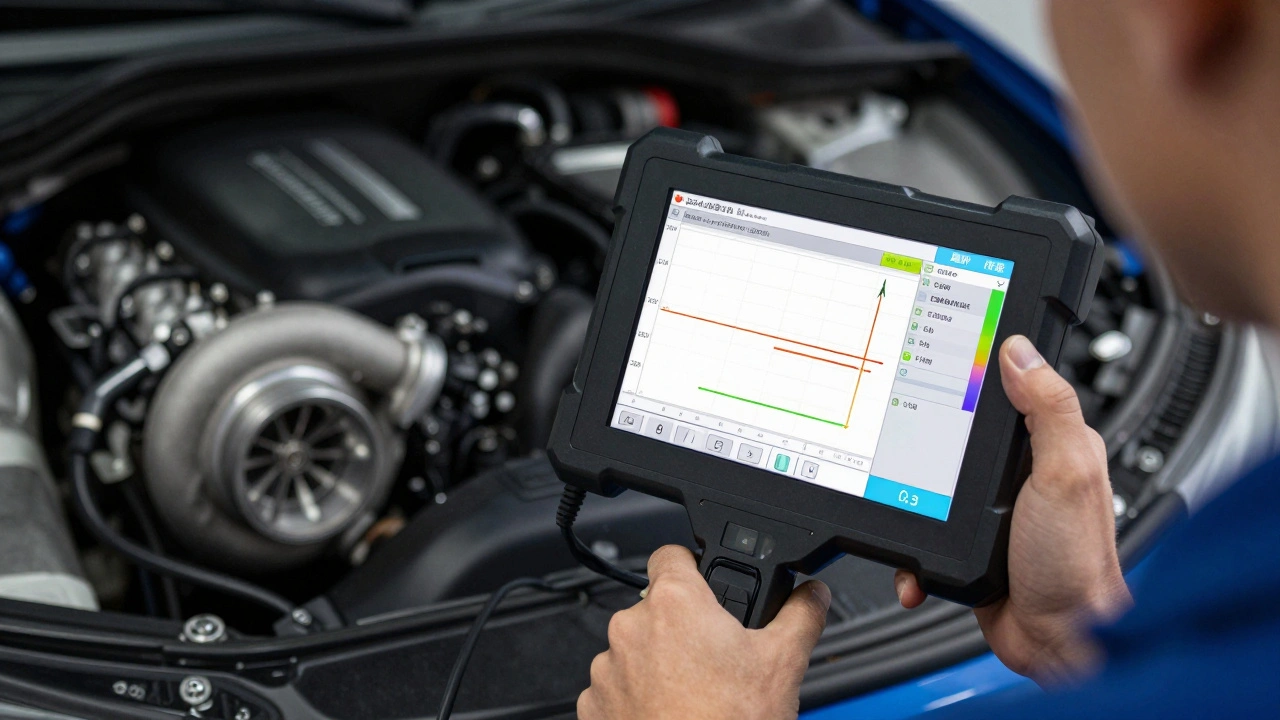
The biggest mistake technicians make is starting with mechanical teardowns. Always start with the scan tool. A quick look at the data can tell you exactly what system you're dealing with. If you see a pulse-width parameter, it's modulated. If you see high-pressure rail data, it's GDI.
Many modern scan tools offer bi-directional controls. This allows you to manually trigger the fuel pump relay from the tool itself. If the pump kicks on via the scan tool but not when you turn the key, you've just saved yourself an hour of poking around the relay box-the problem is in the ignition trigger circuit, not the pump.
Can I use a mechanical gauge on a Direct Injection car?
Generally, no. GDI systems operate at pressures up to 3,000 psi, which would blow the seals on a standard fuel pressure gauge or cause a dangerous leak. These systems use internal sensors that report data to the PCM; you should use a scan tool to monitor these values instead.
What is the difference between a pressure test and a volume test?
A pressure test measures the force of the fuel being pushed through the system, which tells you if the pump and regulator are working. A volume test measures the actual amount of fuel delivered over a set time. A pump can sometimes maintain pressure but fail to deliver the volume needed for the engine to run under load.
What are Noid lights used for?
Noid lights are diagnostic LEDs used on conventional fuel systems to verify that the PCM is sending an electrical pulse to the fuel injectors. They help you determine if a "dead" injector is caused by a mechanical failure of the injector itself or an electrical failure in the wiring or computer.
Why do GDI injectors need such high voltage?
GDI injectors must open against the extreme pressure of the combustion cycle inside the cylinder. To overcome this resistance and open the valve quickly enough to spray fuel, the system uses a voltage inverter to boost the signal from 12V to between 40V and 120V.
How do I know if my fuel pump is failing?
Common signs include hard starting, stalling under load, or a noticeable drop in power during acceleration. Diagnostically, this shows up as low pressure on a gauge (conventional) or a "low rail pressure" error on a scan tool (GDI), often accompanied by long fuel trim values as the ECM tries to compensate for the lack of fuel.
Next Steps for Troubleshooting
If you've confirmed that your fuel pressure is low, your next move depends on the system. For conventional cars, check the fuel filter first-it's the cheapest part to replace and a common cause of pressure drops. If the filter is clean, check the regulator for leaks. For GDI systems, check the low-pressure pump first; if the high-pressure pump isn't getting enough fuel from the tank, it can't build the 2,000+ psi required for the engine to run.