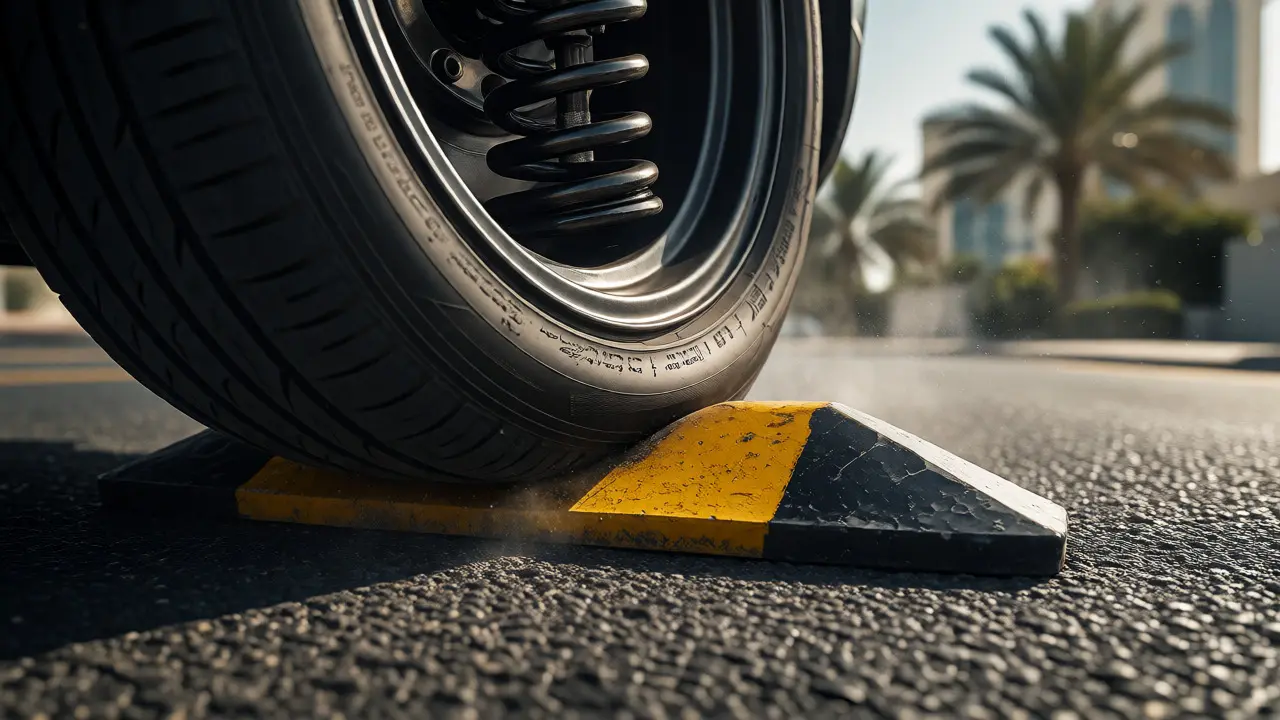
You know the feeling. You're cruising down Sheikh Zayed Road, the AC is blasting, and then-thud. Your stomach drops. You just hit one of those infamous Dubai speed bumps at a little too much speed. It’s not just an annoying jolt; it’s a mechanical assault on your car. If you drive regularly in the Emirates, your suspension system is taking a beating that would make a European or American driver wince.
But how bad is it really? Are these bumps just a minor inconvenience, or are they secretly draining your wallet through premature repairs? Let's break down exactly what happens under your chassis when you tackle those yellow-and-black hazards, and what you can do to keep your car from rattling apart.
The Anatomy of a Dubai Speed Bump
First, let’s talk about what you’re actually hitting. Not all speed bumps are created equal. In many Western countries, you might encounter gentle "speed cushions" or low-profile humps designed for slow traffic calming. Dubai, however, often employs more aggressive designs, particularly in residential areas like Jumeirah or Business Bay.
Rubber speed bumps are common because they are easy to install and remove. They offer some give, which is nice, but they can shift over time due to heat and heavy traffic. Then there are the concrete ones. These are rigid, unforgiving, and often have sharper angles than their rubber counterparts. The angle matters more than the height. A bump that rises sharply creates a high-impact load transfer directly into your suspension components, rather than allowing the tire to roll over smoothly.
Why does this matter? Because your suspension isn't designed for sudden, vertical shocks at 40 km/h. It’s designed to absorb irregularities in the road surface while keeping your tires planted. When you hit a sharp bump fast, you bypass the spring’s ability to compress gradually, forcing the shock absorber to handle the entire energy spike instantly.
What Happens to Your Shock Absorbers?
Your shock absorbers, also known as dampers, are the first line of defense. Their job is to control the movement of the springs. Think of them as the brakes for your suspension. When you hit a bump, the spring compresses, and the shock absorber dissipates that energy as heat within its hydraulic fluid.
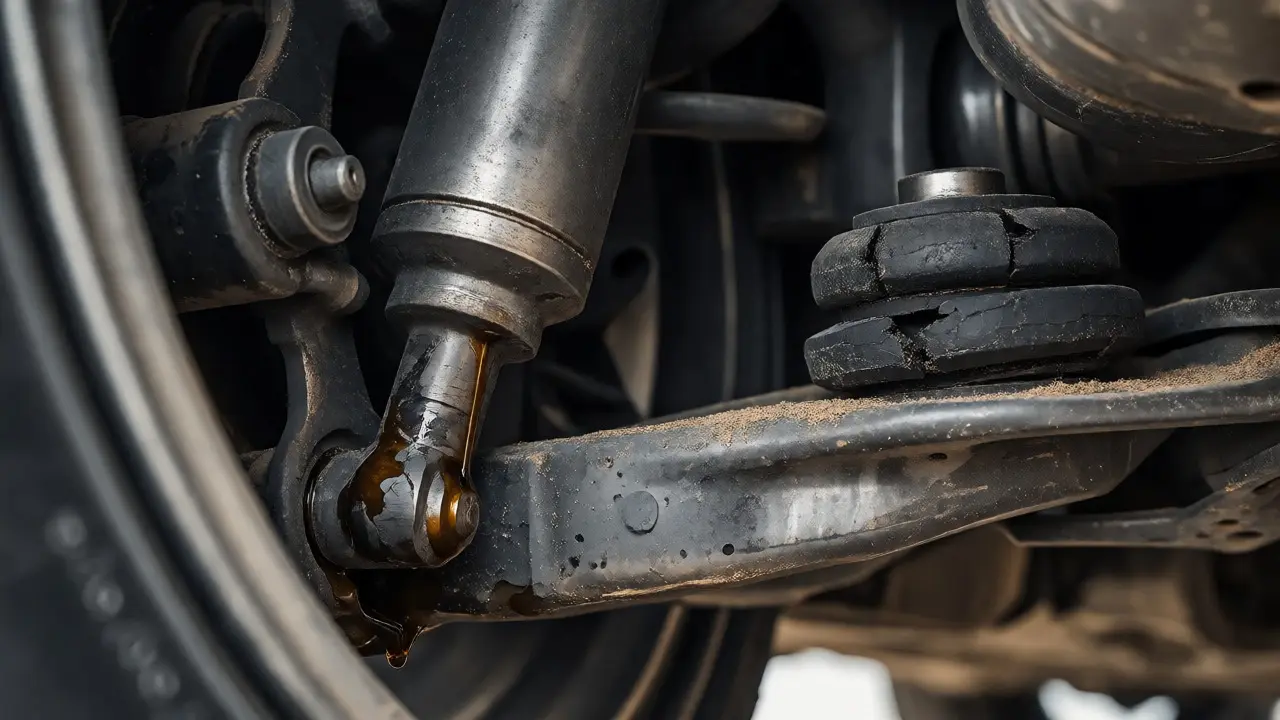
In Dubai’s climate, this process is already stressed by extreme ambient temperatures. Heat thins out hydraulic fluid. If your shocks are old or lower quality, the thinning fluid means less resistance to piston movement. Now add the impact of a sharp speed bump. The piston slams against the internal stoppers. Over time, this causes seal failure. Once a seal leaks, the shock loses its damping capability. You’ll notice your car bouncing excessively after a bump-a phenomenon called "porpoising." That bounce isn’t just uncomfortable; it means your tires aren’t staying in contact with the road, reducing braking efficiency and handling stability.
Drivers who frequently take these bumps at speed often report needing to replace shocks every 30,000 to 40,000 kilometers, whereas manufacturers typically recommend 60,000 to 80,000 kilometers for normal use. That’s a significant difference in maintenance costs.
Springs, Bushings, and Structural Fatigue
It’s not just the shocks. The coil springs themselves are under constant tension. While steel is durable, repeated high-impact loads can cause metal fatigue. This is especially true if the spring has any pre-existing micro-cracks or corrosion from salt air (yes, coastal driving in Dubai adds humidity and salt exposure).
More vulnerable are the control arm bushings. These are rubber or polyurethane mounts that connect the suspension arms to the car’s frame. They isolate vibration and noise. Every time you hit a bump, these bushings twist and compress. Rubber hardens over time, especially in the desert heat. Hardened rubber cracks. Cracked bushings lead to clunking noises when you turn or brake. Worse, they allow excess play in the suspension geometry, causing uneven tire wear.
If you hear a knocking sound from the front wheels when going over small imperfections, don’t ignore it. It’s likely a worn bushing or ball joint struggling to cope with the residual stress from previous impacts.
Tire Damage: The Silent Killer
We often forget the tires, but they take the initial brunt. Hitting a pothole-like edge on a speed bump can pinch the tire sidewall between the rim and the asphalt. This causes sidewall bulges or internal cord separation. You might not see it immediately, but that weak spot can blow out later at highway speeds.
Also, consider alignment. A severe impact can knock your wheel alignment out of spec. Even a slight misalignment increases rolling resistance and wears out the inner or outer edges of your tires prematurely. In Dubai, where long highway drives are common, maintaining proper alignment is crucial for fuel efficiency and tire life.
Vehicle-Specific Vulnerabilities
Not all cars suffer equally. Low-clearance sports cars, like a Porsche 911 or a Mercedes AMG GT, are at higher risk. Scraping the undercarriage on a steep bump can damage exhaust systems, oil pans, or aerodynamic kits. For SUVs and sedans, the risk is primarily to suspension components.
| Vehicle Type | Primary Risk Area | Common Symptom | Preventative Tip |
|---|---|---|---|
| Sports Cars / Low Profile | Undercarriage & Front Lip | Scraping sounds, cracked body kit | Lift system usage; approach at 5 km/h |
| Standard Sedans | Shock Absorbers & Bushings | Bouncing, clunking noises | Slow down significantly before bump |
| SUVs / Crossovers | Tire Sidewalls & Alignment | Uneven tire wear, steering pull | Check tire pressure monthly |
| Older Vehicles (10+ years) | All Components | General looseness, excessive noise | Full suspension inspection annually |

How to Minimize Damage
You can’t avoid speed bumps entirely-they’re part of the urban landscape here. But you can change how you interact with them.
- Brake before, accelerate after: This is the golden rule. Brake *before* you hit the bump so your weight shifts forward, loading the front suspension. This keeps the rear end light and prevents the back tires from slamming into the hump. Accelerating slightly as you leave the bump helps lift the rear.
- Go straight: Never hit a speed bump at an angle. Diagonal impacts create lateral forces that stress control arms and tie rods unnecessarily. Approach perpendicular to the bump.
- Maintain proper tire pressure: Under-inflated tires are more prone to sidewall damage. Over-inflated tires transmit more shock to the suspension. Check your door jamb sticker for the correct PSI and stick to it.
- Upgrade if necessary: If you drive a performance car, consider installing a front lift system. Brands like Eibach or H&R offer solutions that raise ground clearance temporarily. For standard cars, upgrading to high-performance shocks (like Bilstein or KYB) can improve durability against frequent impacts.
When to Get Your Suspension Checked
Dubai’s roads are generally well-maintained, but the speed bumps are relentless. How do you know when it’s time to visit a mechanic? Look for these signs:
- Excessive bouncing: Push down hard on each corner of your car and release. It should rebound once and settle. If it bounces two or more times, your shocks are worn.
- Steering wander: Does your car feel loose or require constant correction on straight roads? This could indicate worn bushings or alignment issues.
- Knocking or clunking: Noises from the wheel wells during turns or over bumps suggest loose components.
- Fluid leaks: Look behind your wheels. If you see oily residue on the shock absorber body, it’s leaking and needs replacement.
Regular inspections save money. Catching a worn bushing early is cheap. Replacing a whole strut assembly because you ignored a leaky shock is expensive.
Are rubber speed bumps safer for my car than concrete ones?
Generally, yes. Rubber offers more flexibility and absorbs some impact energy, reducing the peak force transmitted to your suspension. Concrete is rigid and transfers nearly all the impact energy directly to your tires and suspension components. However, poorly installed rubber bumps can shift, creating unexpected obstacles, so caution is still needed.
Can hitting speed bumps fast void my car warranty?
Usually not directly, unless the damage is catastrophic and clearly caused by negligence (e.g., scraping the undercarriage severely). Normal wear and tear on suspension components is rarely covered under basic warranties anyway. However, if you damage other parts like the oil pan or exhaust due to neglecting clearance, those repairs will be out-of-pocket.
How often should I check my suspension in Dubai?
Given the aggressive speed bumps and heat, inspect your suspension visually every 6 months or 10,000 kilometers. Have a professional alignment and suspension check annually, or sooner if you notice changes in ride comfort or handling.
Do SUVs handle speed bumps better than sedans?
SUVs have longer travel suspension and higher ground clearance, which helps them clear bumps without scraping. However, their heavier weight puts more stress on shocks and bushings. So while they avoid undercarriage damage, their suspension components may wear faster due to the increased mass being bounced around.
Is it worth replacing stock shocks with heavy-duty ones?
If you drive frequently over rough terrain or aggressive speed bumps, yes. Heavy-duty shocks are built with thicker pistons and better seals to withstand heat and impact. They provide a firmer ride but last longer in harsh conditions. For city-only driving, stock replacements are usually sufficient if maintained properly.