You're cruising down the road, and suddenly your car lunges forward or slams into gear with a violent thud. It's a jarring feeling that makes you wonder if your car is about to fall apart. When your Automatic Transmission is a system designed to change gears automatically without driver input, it should feel like a seamless glide. When that smoothness vanishes, you're dealing with jerky shifts.
This isn't just an annoyance; it's your car telling you that the hydraulic precision or electronic coordination inside the gearbox is failing. Whether it's a slight shudder or a bone-shaking jolt, identifying the root cause quickly can be the difference between a cheap fluid top-off and a multi-thousand dollar rebuild. Here is how to figure out what's going wrong and how to get your ride smooth again.
The Usual Suspect: Transmission Fluid Issues
In most cases, the culprit is the lifeblood of your gearbox. Transmission Fluid is a specialized lubricant and hydraulic medium that cools internal parts and enables gear engagement. It does three jobs at once: lubricating moving parts, dissipating heat, and creating the hydraulic pressure needed to move gears.
When your fluid is low, the transmission can't maintain the pressure required for a smooth transition. This leads to delayed engagement, where the car hesitates and then "slams" into the next gear. On the other hand, contaminated fluid is just as bad. Over time, fluid breaks down and can develop varnish or sludge. These deposits clog the narrow passages in the valve body, which acts like a traffic cop directing fluid to the clutches and brakes. If the "cop" is blocked, the shift happens erratically.
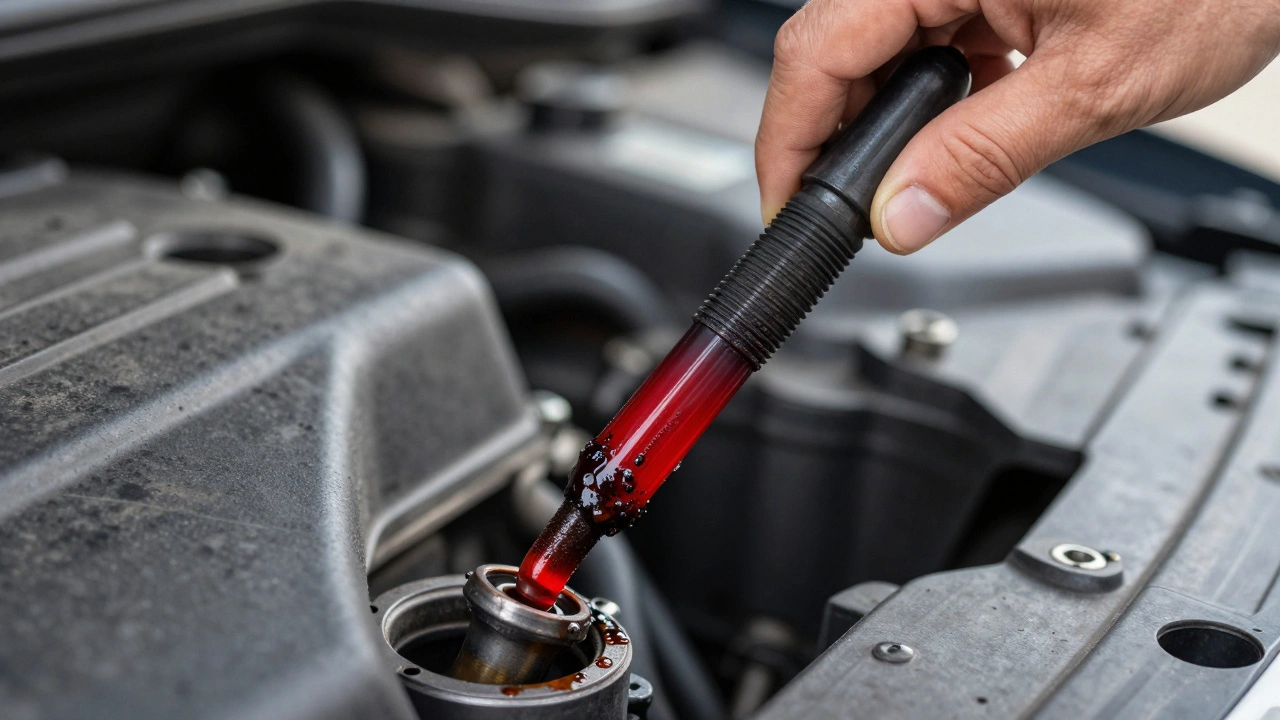
How do you check it? If your car has a dipstick, pull it out while the engine is warm. The fluid should be a clear, bright red. If it looks dark brown or smells like burnt toast, you've got a problem. Simply adding new fluid to a leaking system is a band-aid; you need to find the leak to stop the cycle of low pressure.
Electronic Brain Failures: The TCM and Sensors
Modern cars aren't just mechanical; they're computers on wheels. The Transmission Control Module (or TCM) is the onboard computer that manages gear shift timing based on vehicle speed and load. If the TCM glitches or its firmware becomes corrupted, the timing of your shifts will be off, resulting in those jerky movements.
But the TCM is only as good as the data it receives. It relies on a network of sensors to make decisions. For example, the Speed Sensor tells the computer how fast the output shaft is spinning. If this sensor provides erratic readings, the TCM might tell the transmission to shift too early or too late, causing a hard jolt.
Other sensors, like the throttle position sensor, also play a role. If the computer thinks you're flooring it when you're actually easing off, it will apply more hydraulic pressure than necessary, leading to a shift that feels like a punch in the back.
Mechanical Glitches: Solenoids and Torque Converters
If the "brain" (TCM) is working but the "muscles" aren't, you likely have a solenoid issue. Transmission Solenoids are electro-hydraulic valves that open and close to direct fluid flow for gear changes. When the TCM sends an electrical signal, the solenoid opens to let fluid reach the clutches.
If a solenoid gets stuck or burns out, the fluid flow is disrupted. This often manifests as a delayed shift or a sudden, rough transition. The good news is that solenoid failure usually triggers a check engine light, which allows a mechanic to pinpoint the exact faulty valve without tearing the whole transmission apart.
Then there is the Torque Converter, which is a fluid coupling that transfers rotating power from the engine to the transmission. If the torque converter fails, you might feel a "shudder" or vibration, especially at low speeds. This is often mistaken for an engine misfire, but since it's tied to the transmission's power transfer, it results in a jerky feeling during acceleration.
| Component | Typical Symptom | Severity | Fix Type |
|---|---|---|---|
| Fluid Level/Quality | Delayed engagement, burnt smell | Low to Medium | Flush/Fill |
| TCM/Software | Erratic shift patterns, glitchy behavior | Medium | Reprogramming |
| Solenoids | Specific gear skips, Check Engine Light | Medium | Component Replacement |
| Clutch Packs | Slipping, grinding, harsh shifts | High | Rebuild/Replacement |
| Torque Converter | Low-speed shuddering, sluggishness | High | Professional Replacement |

Internal Wear and Tear
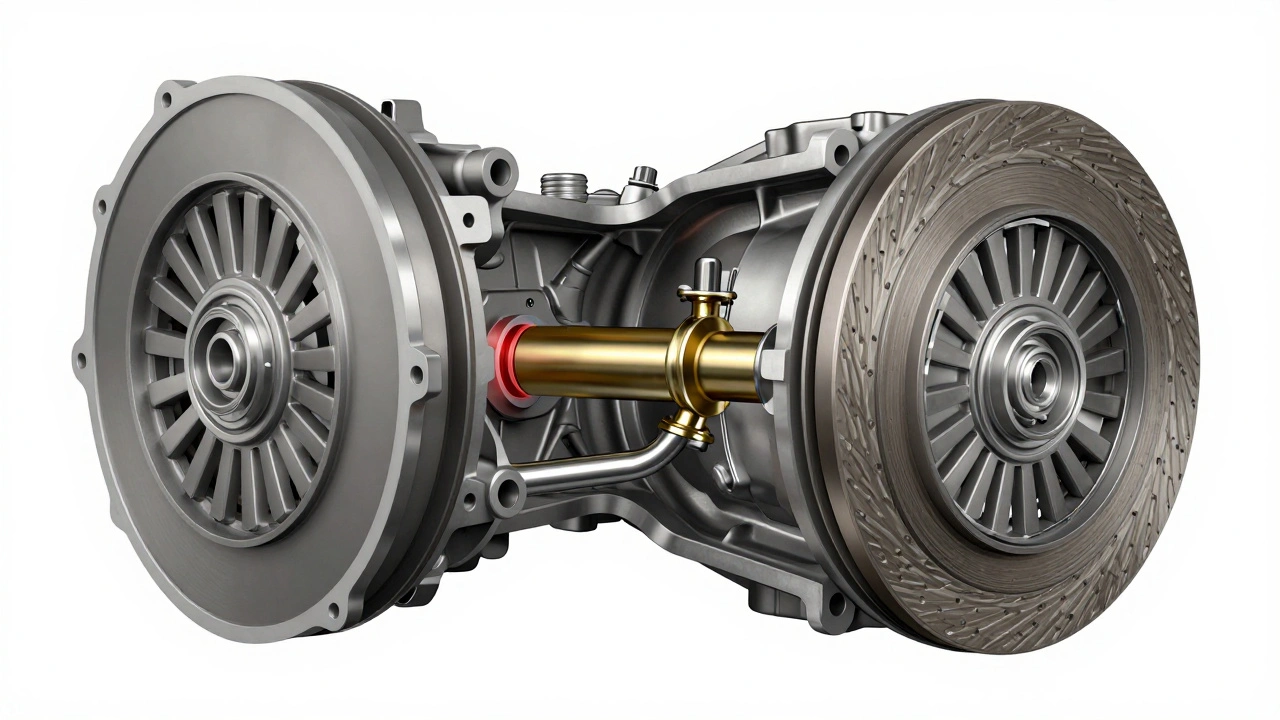
For high-mileage vehicles, the problem is often simply that the parts are worn out. Inside the transmission, Clutch Packs are sets of friction discs that engage to lock gears in place. These discs wear down over time, much like brake pads. When they get too thin or glazed, they don't grab smoothly, leading to slippage followed by a sudden, jerky engagement.
Beyond the clutches, the valve body components can wear. The valve body is a complex maze of channels; as the metal wears down, fluid can leak internally, reducing the pressure needed for a smooth shift. When this happens, the transition between gears becomes unpredictable. Unlike a sensor or a fluid leak, internal wear usually requires a full transmission rebuild to fix properly.
Outside the Gearbox: Mounts and Axles
Surprisingly, some "transmission jerks" aren't actually caused by the transmission. Your engine and transmission are held in place by rubber Transmission Mounts. These mounts absorb the vibrations and torque of the powertrain. If the rubber cracks or tears, the whole engine can physically shift in the engine bay when you change gears. You feel this as a thud or a jerk, even though the gears themselves shifted perfectly.
Similarly, worn CV joints or a damaged driveshaft can cause uneven power delivery. If the joint is binding, the car will feel like it's "stuttering" or jerking as you accelerate, which mimics the feeling of a rough shift.
How to Troubleshoot and Fix the Jerking
Don't jump to the most expensive solution first. Start with these steps in order:
- Check the Fluid: Check the level and color. If it's low, top it off. If it's burnt, perform a full fluid and filter change. Remember that some modern transmissions are "adaptive," meaning the computer adjusts to the fluid's friction. After a change, you might actually feel worse shifts for a few miles while the computer "re-learns" the new fluid.
- The "Battery Reset": If you suspect a TCM glitch, try a soft reset. Turn off the car, disconnect the negative battery terminal for about 15 minutes, and reconnect it. This can clear minor electronic hiccups and force the TCM to recalibrate.
- Scan for Codes: Use an OBD-II scanner to check for trouble codes. If you see codes related to "Shift Solenoid A" or "Input Speed Sensor," you've found your problem. This allows for a targeted repair rather than a guessing game.
- Inspect Mounts: With the hood open, have a friend put the car in drive and gently tap the gas while holding the brake (be careful!). If the engine tilts excessively, your mounts are shot.
Prevention for Long-Term Smoothness
The best way to avoid a total transmission failure is proactive care. Avoid "jackrabbit starts" (flooring it from a stop), as this puts immense stress on the clutches and solenoids. If you frequently tow heavy loads or drive in stop-and-go city traffic, consider changing your fluid more often than the manufacturer's "lifetime" recommendation. Most "lifetime" fluids aren't actually lifetime; they just last until the warranty expires.
Keep your software updated. Many manufacturers release Technical Service Bulletins (TSBs) that include software patches for the TCM to smooth out shift points. A simple trip to the dealer for a flash update can sometimes fix a problem that feels like a mechanical failure.
Can a fluid change actually make my shifting worse?
Yes, temporarily. Many modern automatics use adaptive learning. The computer adjusts the shift timing to compensate for the thickening or thinning of old fluid. When you put in fresh, thin fluid, the computer is still using the "old" settings. It usually takes 50 to 100 miles of driving for the TCM to adapt to the new fluid characteristics.
Is a jerky shift always a sign of a failing transmission?
Not necessarily. It could be as simple as low fluid, a bad sensor, or even a broken engine mount. If the car is shifting correctly but you feel a "thud," it's more likely a mount issue. If the car hesitates and then jerks, it's more likely a fluid or solenoid problem.
How do I know if my torque converter is the problem?
Torque converter issues often feel like a "shudder" (similar to driving over rumble strips) specifically when the lock-up clutch engages, usually between 30 and 60 mph. If you feel a vibration that disappears when you change speed or shift manually, the torque converter is a prime suspect.
What happens if I ignore jerky shifts?
Ignoring the problem usually leads to a "cascade failure." For example, contaminated fluid that causes a jerky shift will eventually wear down the clutch packs. Once the mechanical clutches are gone, you can't fix it with a fluid change; you'll need a full transmission rebuild or replacement, which is significantly more expensive.
Can a TCM be repaired, or must it be replaced?
Many TCM issues are software-based and can be fixed with a firmware update (reflashing). However, if there is internal hardware failure-like a burnt circuit board due to a short-the module usually needs to be replaced and then programmed to your specific vehicle VIN.
Next Steps for Different Scenarios
- If you're on a budget: Start with a fluid check and a battery reset. These cost nothing and solve a surprising number of minor electronic glitches.
- If your Check Engine light is on: Go straight to an auto parts store or mechanic for a code scan. Don't guess-let the computer tell you which solenoid or sensor is failing.
- If you have a high-mileage car (150k+ miles): Be prepared for the possibility of internal wear. If a fluid change doesn't help, have a professional perform a pressure test to see if the internal clutches are still viable.