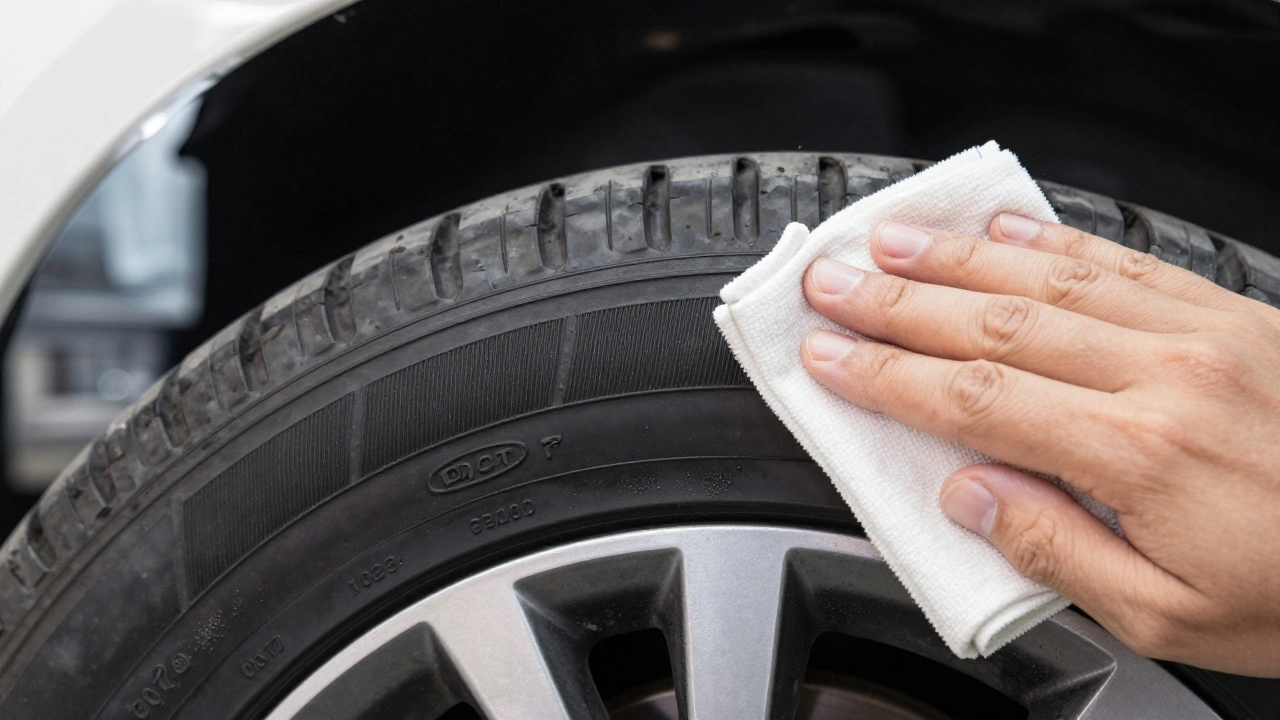
You just bought a brand-new set of tires, but did you really get "new" rubber? It happens more often than you’d think. That shiny black sidewall might hide a manufacturing date from three years ago. Rubber doesn’t care if it’s been sitting in a dark warehouse or rolling on the highway; it ages anyway. Knowing how to read that tiny string of numbers on your tire sidewall is the single most effective way to ensure you aren’t paying full price for aging stock.
This guide cuts through the confusion. We will show you exactly where to find the DOT number, how to decode the week and year of production, and what industry experts say about the safe lifespan of your tires. Whether you are buying new tires, inspecting used ones, or just curious about the rubber on your car right now, this information keeps you safe and saves you money.
Quick Takeaways
- Locate the Code: Look for the letters D-O-T followed by alphanumeric characters on the tire sidewall, usually inside an oval.
- Decode Modern Tires (Post-2000): The last four digits tell the story. The first two are the week of manufacture, the last two are the year.
- Decode Vintage Tires (Pre-2000): Older tires use a three-digit code where the last digit is the year (e.g., 9 for 1999).
- Safety Thresholds: Inspect tires at 5 years old. Replace them by 10 years old, regardless of tread depth.
- Avoid Old Stock: Always ask retailers for the manufacturing date before purchasing to avoid buying aged inventory.
What Is a Tire Date Code?
The tire date code is part of a larger identification system mandated by the U.S. Department of Transportation (DOT). Since 1971, every tire sold in the United States must carry a standardized Tire Identification Number (TIN). This isn't just bureaucracy; it’s a safety requirement designed to track manufacturing details, including plant location, size, and brand.
However, the part that matters most to you as a driver is the final segment of this code: the date. Before 2000, the system was messy and ambiguous. After January 1, 2000, the industry adopted a clear, four-digit format that eliminates guesswork. Understanding this distinction is crucial because it determines how you calculate the age of the rubber on your vehicle.
Where to Find the DOT Number on Your Tire
Finding the code can sometimes feel like searching for a needle in a haystack, especially if your wheels are dirty. Here is how to locate it quickly:
- Clean the Sidewall: Wipe down the outer side of the tire with a damp cloth. Dirt and brake dust often obscure the stamped letters.
- Look for "D-O-T": Scan the sidewall for these capital letters. They are usually raised or molded into the rubber.
- Check Both Sides: The DOT number appears on both sides of the tire. However, manufacturers often stamp the complete sequence-including the full date-on only one side. If you see a partial code on the outside, flip the wheel over and check the inside sidewall.
- Find the Oval: The date code is typically enclosed in a small oval shape at the end of the DOT string. This visual cue helps distinguish the date from other manufacturing codes.
If you cannot find the code after checking both sides, do not assume the tire is defective. Some older models or specific brands may have fainter stamps. In rare cases, if the code is completely illegible, treat the tire as potentially unsafe and consult a professional technician.
How to Decode Modern Tire Date Codes (2000-Present)
For any tire manufactured after January 1, 2000, the decoding process is straightforward. You are looking for a four-digit number at the end of the DOT sequence. Let’s break down the structure using real-world examples.
| Date Code | Week of Manufacture | Year of Manufacture | Estimated Production Month |
|---|---|---|---|
| 1023 | 10th Week | 2023 | March 2023 |
| 4714 | 47th Week | 2014 | November 2014 |
| 0126 | 1st Week | 2026 | Early January 2026 |
| 5225 | 52nd Week | 2025 | December 2025 |
In the example 1023, the "10" represents the 10th week of the year, and "23" represents the year 2023. This means the tire was produced in early March 2023. The week numbering follows the ISO 8601 standard, which generally aligns with calendar weeks starting in early January. There are 52 or 53 weeks in a year depending on the calendar alignment.
Why does this matter? Because "new" tires on a shelf can be months old. If you buy a tire coded 0126 in May 2026, it is relatively fresh. But if you buy a tire coded 5225 in May 2026, it has already been sitting for nearly six months. While six months isn't critical, understanding the timeline helps you negotiate better deals or request fresher stock.

Decoding Pre-2000 Tire Date Codes
If you own a classic car or are dealing with vintage inventory, you will encounter a different system. Tires made before 2000 use a three-digit code. This system is less precise and requires some detective work.
In a three-digit code, the first two digits represent the week of manufacture, and the final single digit represents the year. For example, a code of 439 indicates the 43rd week of 1999. However, ambiguity arises with decades. A code of 306 could mean the 30th week of 1976, 1986, or 1996.
To resolve this, look at the tire’s physical characteristics:
- Size Nomenclature: Older tires often use sizing formats like LR78-15, which were common in the 1970s and 80s.
- Design Elements: The tread pattern and sidewall styling can indicate the era. Radial technology became dominant in the late 1970s, so bias-ply tires are definitely pre-1980s.
Important Note: Any tire manufactured before 2000 is at least 26 years old. These tires should never be used on modern vehicles for daily driving. The rubber compounds used then degrade significantly faster than modern materials, posing a severe safety risk.
Why Tire Age Matters More Than Tread Depth
Many drivers believe that as long as their tires have deep treads, they are safe. This is a dangerous misconception. Tires are made of rubber compounds that deteriorate over time due to oxidation, ozone exposure, and thermal cycling. This chemical breakdown happens whether the tire is on the road or stored in a garage.
Even if the tread looks perfect, the internal structure of the tire weakens. The belts inside the tire can separate, leading to blowouts at high speeds. Cracks in the sidewall, known as "checking," are visible signs of this aging process. Once these micro-cracks form, the tire’s integrity is compromised.
Consider this scenario: You buy a set of winter tires in November. The seller offers them at a discount because they are "last season's model." You check the code and find they were manufactured in 2023. By the time you use them in winter 2026, they will be nearly three years old. If you store them improperly during summer, their lifespan shrinks further. Always factor in the manufacturing date, not just the purchase date.

Industry Guidelines: When to Replace Your Tires
There is no federal law that mandates tire replacement based on age, but major manufacturers and service providers offer clear recommendations based on safety data.
- Michelin USA: Recommends inspection after five years and replacement by ten years from the manufacture date, regardless of condition.
- Discount Tire: Advises considering replacement at six years and refuses to service tires older than ten years.
- Firestone Complete Auto Care: Emphasizes that tire age is critical for safety planning and budgeting.
The consensus is clear: Five years is the inspection threshold, and ten years is the hard limit. At five years, have a professional examine the tires for cracks, dry rot, and structural integrity. At ten years, replace them immediately. Do not drive on tires older than ten years, even if they look fine. The risk of sudden failure is too high.
Practical Tips for Buying New Tires
Armed with this knowledge, you can take control of your next tire purchase. Here is how to avoid being sold aged stock:
- Ask Directly: Before agreeing to buy, ask the salesperson, "When were these tires manufactured?" Reputable shops will show you the code.
- Check the Code Yourself: Don’t rely on verbal assurances. Physically inspect the sidewall. Use your phone flashlight if needed.
- Beware of Deep Discounts: If a deal seems too good to be true, it might be old inventory. Retailers often discount tires that have been sitting in warehouses for over a year.
- Used Tire Caution: If buying used tires, the date code is your primary safety check. Combine this with a thorough visual inspection for uneven wear, bulges, or embedded objects.
- Storage Conditions Matter: Ask how the tires were stored. Tires kept in direct sunlight or extreme temperatures age faster than those stored in climate-controlled environments.
Remember, the goal isn’t to demand tires manufactured yesterday. It’s to ensure you know exactly what you’re getting. A tire that is six months old is still excellent value. A tire that is seven years old is a ticking time bomb, regardless of its price tag.
Common Mistakes to Avoid
Even informed consumers make errors when reading tire codes. Here are the most frequent pitfalls:
- Misreading the Week: Confusing the week number with the day. Remember, it’s always weeks (01-53), not days.
- Ignoring the Other Side: Assuming the code on the outside is complete. Always check the inner sidewall for the full date.
- Assuming Purchase Date Equals Manufacturing Date: Just because you bought the tire today doesn’t mean it was made today. Inventory turnover varies widely.
- Overlooking Spare Tires: Don’t forget to check the spare tire in your trunk. It ages just like the others and may need replacement sooner than expected.
By avoiding these mistakes, you ensure that every tire on your vehicle meets safety standards. Regular checks, especially before long trips or seasonal changes, can prevent roadside emergencies.
What does the DOT number on my tire mean?
The DOT number is a unique identifier assigned to each tire by the manufacturer. It includes information about the plant where the tire was made, the tire size, the brand, and the date of manufacture. The last four digits specifically indicate the week and year the tire was produced.
Can I trust a tire that is 5 years old?
A 5-year-old tire can be safe, but it requires careful inspection. Manufacturers recommend having tires inspected by a professional at the 5-year mark. Look for cracks, dry rot, or uneven wear. If the tire shows signs of degradation, replace it immediately.
How do I know if my tire is too old?
If your tire is 10 years or older from the date of manufacture, it is considered too old and should be replaced. Even if the tread depth is sufficient, the rubber compound degrades over time, increasing the risk of blowouts and loss of control.
Why are there two different DOT numbers on my tire?
Tires often have two DOT markings. One side displays the full Tire Identification Number, including the complete date code. The other side may show a partial code without the date. Always look for the side with the oval containing the four-digit date code.
Does storing tires indoors slow down aging?
Yes, proper storage significantly slows tire aging. Keep tires in a cool, dry, and dark place away from ozone-generating equipment like motors. Avoid stacking heavy objects on top of them. However, even with ideal storage, tires still age chemically and should be replaced according to manufacturer guidelines.