Nothing ruins a car ride faster than a stubborn odor clinging to the seats. Whether it’s the sour tang of spilled milk, the greasy stink of fast food, or the lingering ghost of cigarette smoke, odors don’t just sit on the surface-they sink deep into the fabric, padding, and seams. Air fresheners won’t fix this. They just mask the problem while the real culprit keeps growing. To truly remove smell from car seats, you need to go deeper. Not just wipe. Not just spray. You need to deodorize.
Step 1: Vacuum Like You Mean It
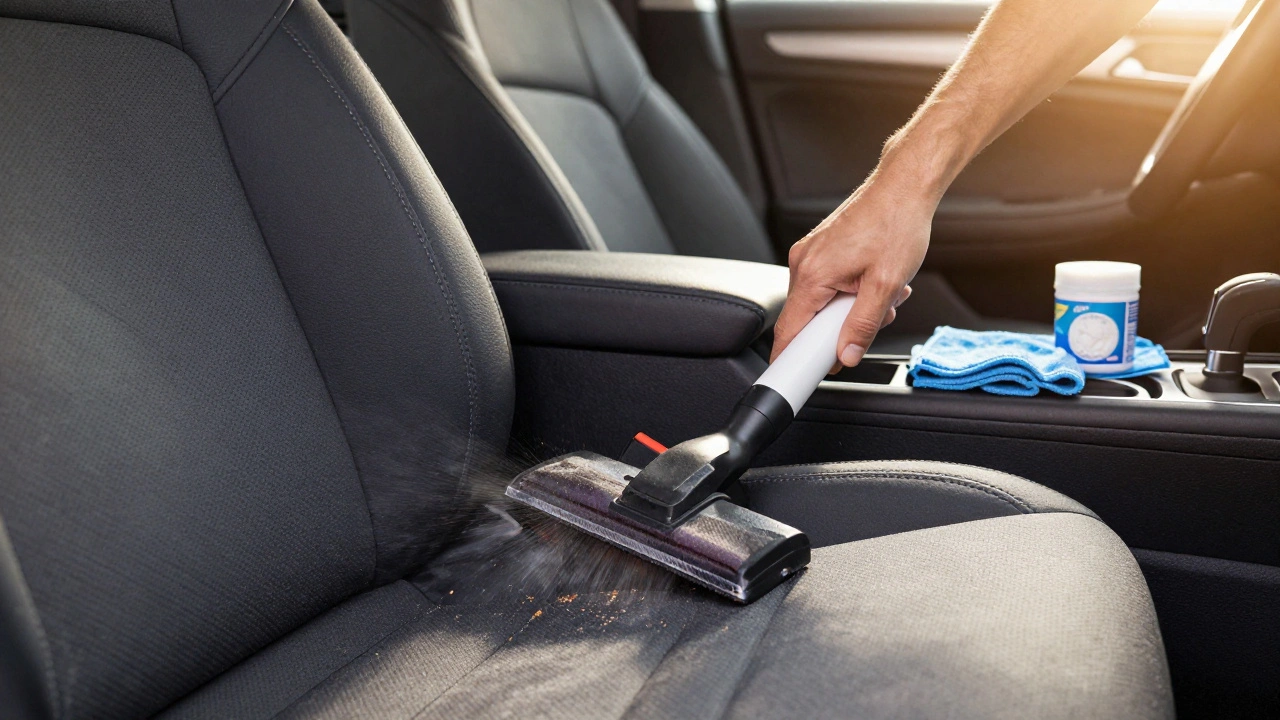
Before you even think about spraying anything, you must vacuum. This isn’t a quick once-over. This is the foundation. Food crumbs, pet hair, dust, and dirt act like sponges for odor molecules. If you skip this step, your cleaning solution will just push grime deeper into the upholstery instead of lifting it out.Use a vacuum with a crevice tool and go everywhere: between the seats, under the floor mats, along the seat tracks, into the seams, and even under the edge of the console. Pay special attention to the areas where people sit most-those spots absorb the most sweat, oils, and spills over time. A thorough vacuuming removes the physical carriers of odor so your next steps can actually work.
Step 2: Choose Your Weapon-Baking Soda or Commercial Cleaner
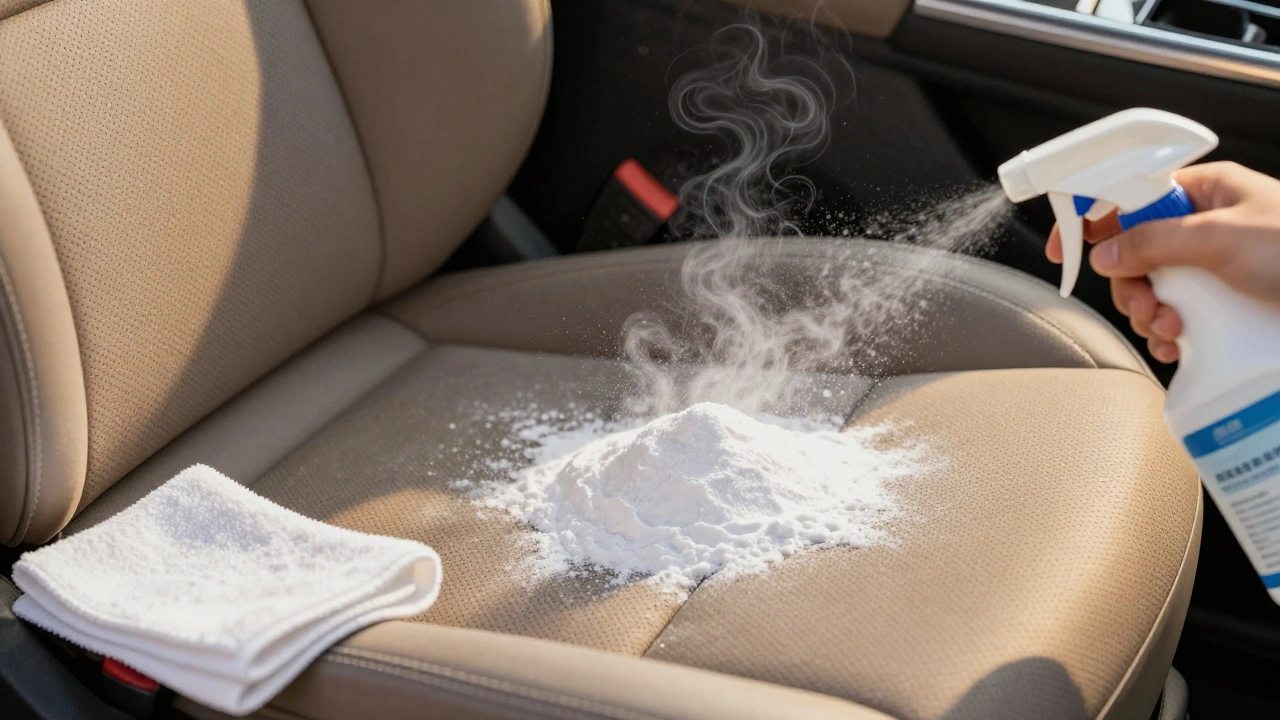
There are two main paths here: the budget-friendly DIY route or a targeted commercial solution. Both work, but they serve different needs.Baking soda is the go-to for most people. It’s cheap, safe, and works by absorbing odor molecules instead of covering them up. For light to moderate smells, sprinkle ARM & HAMMER Baking Soda generously over the seats and carpets. Let it sit for at least 15 minutes. For tougher smells-like pet accidents or old smoke-leave it overnight. The longer it sits, the more it pulls out the stink. Then vacuum it up. No rinsing. No residue. Just pure absorption.
For stubborn stains or greasy spots, make a paste: mix two parts baking soda with one part water. Dab it onto the stain, let it sit for 10 to 30 minutes, then wipe with a damp cloth. For lighter cleaning, dampen a rag, tap it into baking soda, and gently scrub in circles. Always test on a hidden spot first. Some fabrics fade or change texture when wet.
If you want something faster and stronger, try Complete Cabin Cleaner. It’s designed to penetrate fabric fibers and break down organic odors at the molecular level. Spray it on, let it sit for a few minutes, then scrub lightly with a soft brush or Scrub Buddy Pad. Wipe with a microfiber towel. It works on fabric, plastic, and even rubber without leaving a slick residue. For carpets, use a drill brush on low speed to get deep into the pile. Let it air dry with the windows cracked.
Step 3: Target the Source
Not all smells are the same. A one-size-fits-all approach fails here. You need to match the cleaner to the cause.- Pet accidents: Use an enzymatic cleaner. These contain live bacteria that eat the urine, feces, or saliva that causes the smell. Regular cleaners just move the mess around-enzymes destroy it. Spray it on, let it soak for 10-15 minutes, then blot. Don’t rinse. The enzymes need time to work.
- Cigarette smoke: This odor clings to everything: seats, headliner, even the vents. Clean upholstery with Complete Cabin Cleaner, then treat the air vents with a compressed air brush to loosen built-up tar. Replace the cabin air filter with one that has activated charcoal-it traps smoke particles before they re-enter the cabin.
- Food and drink spills: Blot immediately with a dry towel. Then use baking soda paste or a mild upholstery cleaner. Let it sit, scrub gently, and dry thoroughly. Moisture left behind leads to mold.
- Mold and mildew: These come from damp carpets or spilled water that wasn’t dried. You need an anti-microbial cleaner. Spray it on, let it sit, then dry with a fan or dehumidifier. If the smell returns, you still have a moisture problem-find and fix the leak.
Step 4: Clean the Air System
Many people forget that the smell isn’t just in the seats-it’s in the vents. When you turn on the AC, you’re blowing old odors right back into the cabin. Use compressed air or a specialized vent brush to loosen dust and debris from the air ducts. Then spray a small amount of Complete Cabin Cleaner or a disinfecting mist into each vent while the fan is on low. Run the system for 10 minutes to circulate the cleaner. Replace the cabin filter every 12-18 months, especially if you drive in dusty areas or have pets.Step 5: Dry, Ventilate, Prevent
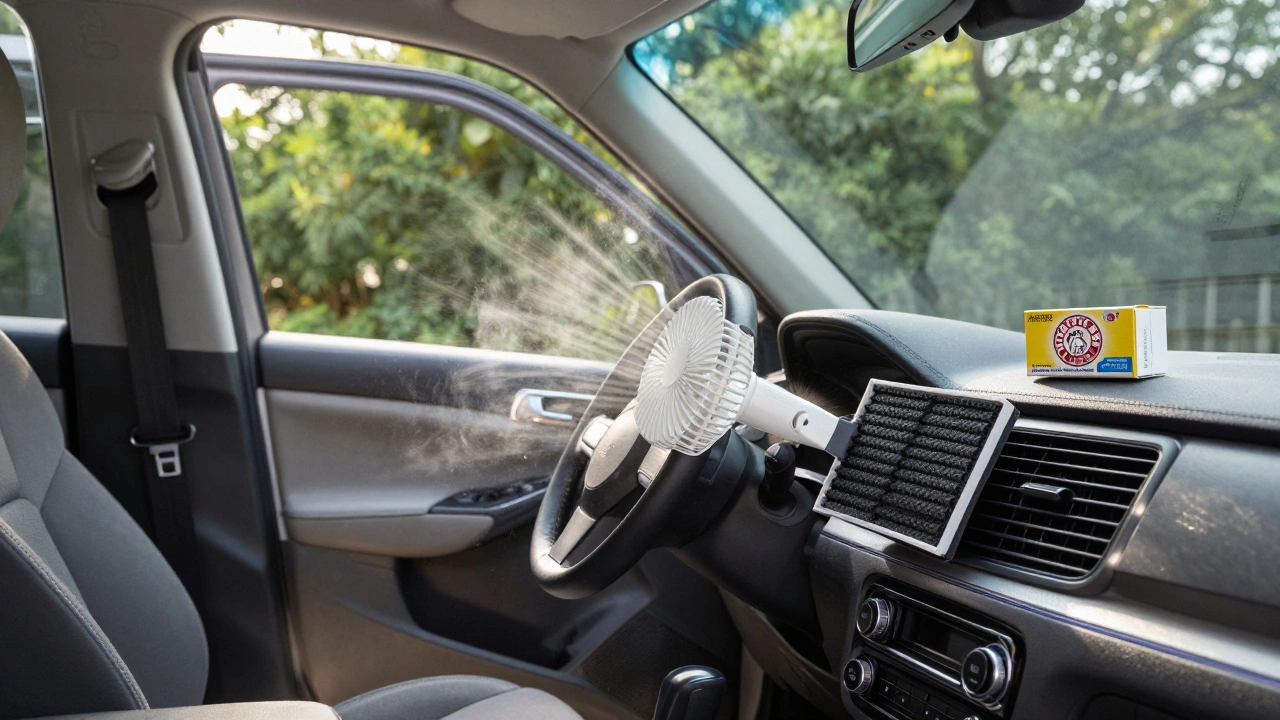
After cleaning, don’t rush. Wet upholstery breeds mold. Open all doors and windows. Use a portable fan to blow air through the car. If you can, park it in the sun for an hour-UV light helps kill odor-causing bacteria. Avoid using the AC immediately after a deep clean; it traps moisture.Prevention is easier than removal. Do these three things:
- Remove trash and food every day. Even a candy wrapper can ferment in heat.
- Wipe down seats and dashboards weekly with a dry microfiber towel. It removes oils and dust before they turn into odor.
- Keep an open box of ARM & HAMMER Fresh-n-Natural Odor Absorber in the car. It’s like a silent guardian-pulling smells out of the air 24/7.
And never, ever use those chemical air fresheners that hang from the mirror. They don’t remove odor-they just add another layer of fake scent on top. The real smell is still there, waiting to come back.
Tools You Actually Need
You don’t need a professional detailer’s whole kit. Just these basics:- Vacuum with crevice tool
- Microfiber towels (dedicated to car use only)
- Soft-bristle upholstery brush or toothbrush
- Empty spray bottle (for DIY baking soda solution)
- ARM & HAMMER Baking Soda
- Enzymatic cleaner (for pet messes)
- Complete Cabin Cleaner (for deep, fast results)
- Activated charcoal cabin air filter
Keep a dedicated microfiber towel just for cleaning the interior. Once it picks up grease or pet hair from other surfaces, it loses its effectiveness. Same with scrub pads-don’t use them on the kitchen sink.
| Method | Best For | Time Required | Cost | Effectiveness |
|---|---|---|---|---|
| Baking Soda | Light to moderate odors, general maintenance | 3 hours to overnight | $1-$5 | High (absorbs odors, not masks) |
| Complete Cabin Cleaner | Strong odors, smoke, food spills | 30-60 minutes | $15-$25 | Very High (penetrates fibers) |
| Enzymatic Cleaner | Pet accidents, urine, vomit | 10-20 minutes + drying | $10-$20 | Exceptional (breaks down organic matter) |
| Activated Charcoal Filter | Prevention, smoke, exhaust fumes | 5 minutes to install | $20-$30 (replace every 12-18 months) | High (stops odors at source) |
What Not to Do
- Don’t soak the fabric. Saturated upholstery takes days to dry and invites mold.
- Don’t use bleach or ammonia. They can damage fabric, discolor stitching, and create dangerous fumes when mixed with other cleaners.
- Don’t ignore the headliner. That fabric above your head holds smoke and pet odors. Wipe it gently with a damp microfiber towel and a bit of baking soda paste.
- Don’t skip the vacuum. It’s not optional. It’s step one.
Can I use vinegar to remove car seat odor?
Yes, white vinegar can help neutralize many odors, especially food and mildew smells. Mix equal parts vinegar and water in a spray bottle, lightly mist the seat, let it sit for 10 minutes, then blot with a dry towel. Vinegar smells strong at first, but it dissipates as it dries. Don’t use it on leather or suede-it can dry out the material. Always test on a hidden spot first.
How often should I deep clean my car seats?
If you drive daily and have pets or kids, deep clean every 3 months. For light use, every 6 months is enough. Between deep cleanings, wipe down surfaces weekly and use an odor-absorbing box in the car. Regular maintenance prevents smells from becoming embedded.
Will baking soda damage my car seats?
No, baking soda is non-toxic and gentle on most fabrics. But it can leave a fine residue if not vacuumed thoroughly. Always do a spot test on an inconspicuous area first-especially on dark or textured upholstery. If the fabric changes color or texture after drying, switch to a commercial cleaner.
Why does my car still smell after cleaning?
If the odor returns, you likely didn’t get to the source. Check under the floor mats for spilled liquids, inspect the seat tracks for trapped food, and test the cabin air filter. Mold can grow in the AC drain line or under the dashboard. If you’ve cleaned everything and the smell lingers, an ozone treatment (done professionally) may be needed to neutralize airborne molecules.
Is ozone treatment safe for car interiors?
Ozone treatment is effective for stubborn odors like smoke or mold, but it should only be done by professionals. Ozone can degrade rubber seals, plastic trim, and stitching over time if overused. It’s a last-resort option after all other methods fail. Never run an ozone generator yourself inside the car-it’s hazardous to breathe.